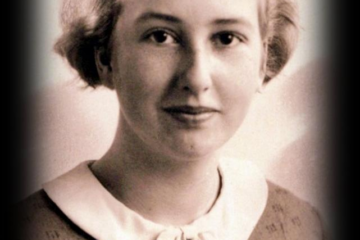
Wartime experiences in the Netherlands
Pieter Laning was born on 2 February 1914 and lived in Groningen, the Netherlands. During the German occupation in the Second World War, he became involved in the Dutch Resistance.
Kees Wierenga’s historical research records that Laning spent time hiding on a small island in the wetlands near Groningen to avoid German round-ups. He later recalled the discomfort of heavy rain and the boredom of remaining concealed.
A wartime Resistance record associated with fellow migrant Bart Jan Folkerts also identifies Piet Laning as having assisted with clandestine communications. He was subsequently arrested by the German Sicherheitsdienst (SD) and sentenced to forced labour on the German island of Borkum.
Laning survived the closing stages of the war, including the tragedy associated with the bombing of prisoner ships in Lübeck Bay in May 1945.
On 3 May 1945, British aircraft attacked German ships in Lübeck Bay, including the Cap Arcona and Thielbek, unaware that they were carrying thousands of concentration camp prisoners. More than 7,000 prisoners died in the attacks and their aftermath.
Kees Wierenga identifies Laning as a survivor of the Lübeck Bay disaster, although the available account does not establish precisely which vessel he was aboard or the circumstances of his survival.
Migration to Tasmania
After the war, Laning joined a group of men from Groningen who planned to emigrate to Tasmania and establish a building enterprise.
The group became known as the Groningen Seven (G7). Several members had been involved in wartime Resistance activities and shared a determination to establish new lives away from the destruction and uncertainty of post-war Europe.
In 1950, Laning became part of the Dutch settlement established at Kingston, south of Hobart, which became known as Little Groningen.
The migrants organised the Australian Building Corporation, combining their resources and skills to construct homes and establish themselves economically.
Illness and recovery
Laning’s early years in Tasmania were interrupted by serious illness.
Around 1952, he began experiencing pain in his back when coughing. He was diagnosed with tuberculosis and required almost a year of medical treatment and bed rest.
For someone who had survived the war and emigrated to begin a new life, this represented another major setback.
Nevertheless, Laning recovered and resumed his involvement in community activities.
A memorable community celebration in 1954
One of the most revealing accounts of Laning’s personality appears in Kees Wierenga’s history of the 25th wedding anniversary of Eerke and Toni van der Laan, celebrated in Kingston in November 1954.
Laning organised the festivities and served as master of ceremonies.
The celebration brought together Dutch migrants and other Kingston residents for an evening of songs, theatrical performances, humour and entertainment.
Wierenga describes Laning as an energetic and inventive organiser with a strong sense of humour.
The anniversary celebration became a memorable event in the history of Little Groningen. For people who had experienced war, persecution, displacement and the difficulties of migration, it represented an opportunity to celebrate survival, friendship and the rebuilding of their lives.
The festivities continued into the early hours of the following morning.
The original programme, together with Kees Wierenga’s commentary and translation, has been preserved in the DACC collection.
Historical significance
Pieter Laning’s story illustrates the experiences of Dutch migrants whose lives were profoundly affected by the Second World War.
His involvement in the Resistance, wartime imprisonment, migration to Tasmania, serious illness and subsequent participation in community life provide a personal perspective on the establishment of Little Groningen.
His role in the 1954 celebration also demonstrates the importance of social activities in bringing together migrants and strengthening community relationships.
Sources and further reading
- Kees Wierenga, Dutch Migration to Tasmania in 1950: Motivation, Intention and Assimilation, University of Tasmania, 2005.
- Kees Wierenga, The van der Laan’s wedding anniversary in Tasmania, including the original programme and historical commentary.
- Bart Jan Folkerts – Eulogy 1999, including the translated wartime Resistance record.
- Neuengamme Concentration Camp Memorial – The sinking of prisoner ships in Lübeck Bay.
Related research
This article forms part of the DACC’s Research Portal – Little Groningen: Dutch migration, faith and community in Kingston, Tasmania, which brings together historical research, family stories and documents relating to the Dutch Reformed community at Kingston.
This article is based principally on the historical research and documents collected by Kees Wierenga and preserved in the Dutch Australian Cultural Centre’s Tasmanian archive.
Further research may clarify the precise circumstances of Pieter Laning’s experiences in Lübeck Bay and provide additional information about his later life in Tasmania.