Dutch migrants and Tasmania’s building industry
The growth of Kingston following the Second World War was closely associated with Dutch migration. Among the businesses contributing to the area’s development was Laver Construction, a building company with connections to the Verdouw family and the wider Dutch community.
The company became involved in residential and commercial construction, including the expansion of Kingston’s shopping centre.
Its history also connects with another Dutch-Australian business family, the Vos family, who acquired the company in 1997.
The Verdouw family connection
The Verdouw family migrated from the Netherlands to Tasmania during the post-war years and settled in Kingston.
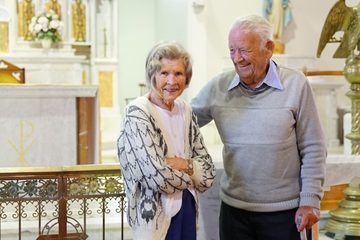
Dirk Verdouw, born in Leerdam in 1936, arrived in Australia at the age of sixteen. After working as a panel beater in Hobart for eighteen years, he joined his brothers’ building business, which he identified as Laver Construction.
In an interview published by Christian Homes Tasmania, Dirk recalled that his brothers offered him shares in the company. He subsequently worked there for 24 years.
His recollections provide a personal connection between the Dutch migrant community and the development of Tasmania’s construction industry.
The precise circumstances surrounding the establishment of Laver Construction and the original ownership arrangements require further documentation.
Commercial development in Kingston
Laver Construction was among the businesses involved in the expansion of Kingston’s commercial centre.
The history of Dutch migrant businessman Reg Doedens provides evidence of this development.
Doedens and his business partner Cees Overeem established Electrical and Plumbing Services in Kingston in 1953. Their activities subsequently expanded into retail premises, commercial property and land development.
Their projects contributed to the development of Channel Court, which became an important commercial centre for Kingston and the surrounding district.
The Doedens family history records that Channel Court eventually joined with a neighbouring shopping centre constructed by Laver.
Together, these developments contributed to the commercial expansion of central Kingston.
Although the businesses operated independently, their activities illustrate the substantial contribution made by Dutch migrant entrepreneurs to the district’s post-war development.
A Tasmanian construction company
Laver’s activities extended beyond Kingston.
Australian Government records identify Laver Constructions Pty Ltd as a Kingston-based contractor undertaking public building projects during the 1970s.
A 1974 Commonwealth Government Gazette records the company receiving a contract for partitioning work at the Continental Building in Hobart.
A 1976 Tasmanian Government Gazette also identifies Laver Constructions Pty Ltd, then based at Browns Road, Kingston, in connection with construction work at the Launceston General Hospital.
These records demonstrate that the business was participating in the wider Tasmanian construction industry by the mid-1970s.
Acquisition by the Vos family
The subsequent history of Laver Construction provides another Dutch-Australian connection.
Roelf Vos, a Dutch migrant entrepreneur, established a retail business in Deloraine in 1954. His activities expanded into grocery retailing, including a chain of supermarkets in northern Tasmania.
After the supermarket operations were sold to Woolworths in 1982, the Vos family increasingly concentrated on property development and construction.
In 1997, the family acquired Laver Pty Ltd, which had become an established Tasmanian construction and joinery business.
The acquisition brought Laver into the expanding Vos business group.
Under the Vos family, the enterprise continued to develop its construction and joinery operations. It subsequently operated under the name Vos Construction and Joinery.
The company’s later activities extended across Tasmania and into mainland Australia.
A continuing Dutch-Australian business connection
The history of Laver Construction illustrates how Dutch migrants contributed to Tasmania’s economic development through successive generations.
The Verdouw family’s involvement links the company to Kingston’s post-war migrant community, while its construction activities formed part of the district’s commercial and residential expansion.
The later acquisition by the Vos family provides a further connection with Dutch-Australian entrepreneurship.
Although the businesses developed in different circumstances, their histories reflect the transition from migrant settlement and small business formation to established commercial enterprises.
Laver Construction therefore forms part of the broader history of Dutch enterprise in Tasmania, alongside the Australian Building Corporation and other businesses established by Dutch migrants.
Sources and acknowledgement
- Dirk Verdouw – Personal interview, Christian Homes Tasmania. Dirk discusses his employment with his brothers at Laver Construction.
- Reg Doedens – A life of faith, resilience and community, DACC. Includes the development of Channel Court and Laver’s neighbouring shopping centre.
- Vos Construction and Joinery – Company history. Documents the Vos family’s business development and acquisition of Laver in 1997.
- Australian Government Gazette, 1974. Records Laver Constructions Pty Ltd undertaking work in Hobart.
- Tasmanian Government Gazette, December 1976. Identifies Laver Constructions Pty Ltd at Browns Road, Kingston.
The Dutch Australian Cultural Centre acknowledges the historical research of Kees Wierenga and the personal recollections preserved by Christian Homes Tasmania.
Related research
This article forms part of the DACC’s Research Portal – Little Groningen: Dutch migration, faith and community in Kingston, Tasmania.