From the Netherlands to Tasmania
Dirk Verdouw was born on 5 July 1936 in Leerdam, the Netherlands. His childhood was shaped by the Second World War and the economic difficulties experienced by his family in the years that followed.
His father operated a bakery and his mother a cake shop. According to Dirk’s recollections, the family lost much of its property during the German occupation. After the war, his father moved the family to Gouda, where Dirk continued his education at a Christian school.
Financial hardship forced Dirk to leave school at twelve. He began working as an apprentice motor mechanic.
His father subsequently explored opportunities to emigrate to Canada, the United States, Africa and New Zealand before deciding on Australia.
A Dutch contact helped the family establish connections with migrants already living in Tasmania. A Kingston resident whom Dirk remembered as Mr Groothouse arranged sponsorship for their migration.
Dirk was sixteen when he arrived in Australia.
Starting a new life in Kingston
The Verdouw family settled in James Avenue, Kingston, with assistance from the established Dutch community.
Like many young migrants, Dirk initially struggled with the English language. Although he hoped to continue working as a motor mechanic, he eventually obtained employment as a panel beater in Hobart.
He remained in that occupation for eighteen years.
Following a brief period working as a representative for Peters Ice Cream, Dirk joined his brothers’ building company, Laver Construction. He became a shareholder and worked with the business for the next 24 years.
Through his employment and voluntary activities, Dirk became part of the Dutch migrant community that contributed to Kingston’s post-war development.
Supporting Calvin School and community institutions
The Verdouw family was closely associated with Kingston’s Christian Reformed community.
Dirk’s brother Gerry Verdouw became the first president of the Association for Christian Homes for the Aged, established in 1972. The organisation subsequently developed into Christian Homes Tasmania.
Dirk also participated in community building projects, including voluntary construction work on a local Presbyterian church.
One of his most interesting recollections concerns the establishment of Calvin School.
As a youth group leader, Dirk helped organise fundraising by collecting apples from an orchard south of Hobart and selling them door to door. He recalled that the first fundraising effort raised approximately £48, a substantial amount at the time.
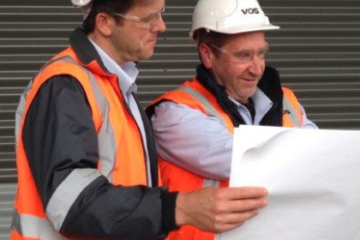
When construction commenced, Dirk contributed his welding skills. Together with his brother Gerry and a Mr Spoelstra, he undertook steelwork for the school.
His account illustrates the practical contribution made by Dutch migrants who volunteered their labour and skills to establish educational and community facilities.
Marriage and family life
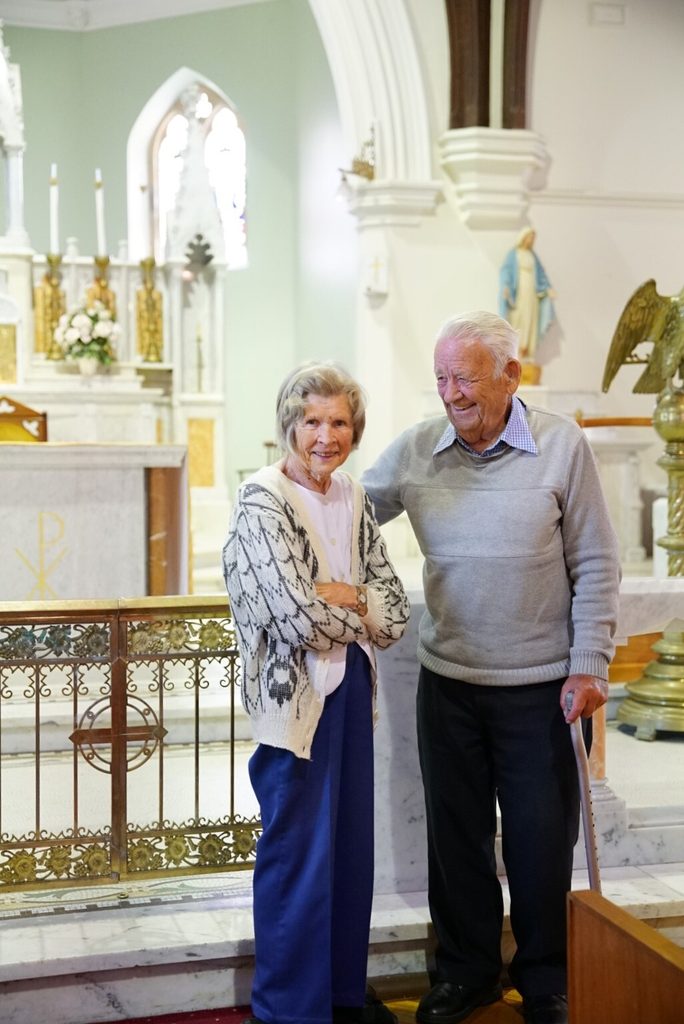
Dirk met his future wife, Dorcas, through a blind date arranged by a friend.
Dorcas had come from England to Australia and was working as a children’s nurse at Clarendon Children’s Home in Kingston, close to where Dirk lived.
The couple became engaged and married in 1960, when Dirk was 24.
They raised four sons and established an extensive family in Tasmania.
Dirk’s recollections emphasise the importance of family, faith and the relationships formed within the local community.
A continuing connection with Christian Homes Tasmania
After retiring from paid employment, Dirk remained active as a volunteer.
His activities included driving buses for older residents, assisting people with shopping and helping with building and maintenance work.
In later life, Dirk and Dorcas became residents of Hawthorn Village, a Christian Homes Tasmania aged care facility at Blackmans Bay.
Their connection with the organisation was particularly meaningful because Dirk’s brother Gerry had been involved in its establishment decades earlier.
In an interview published by Christian Homes Tasmania, Dirk reflected on his migration, working life, marriage and the development of Kingston.
His account provides a personal perspective on the contribution of Dutch migrants to Tasmania during the second half of the twentieth century.
Historical significance
Dirk Verdouw’s experiences reflect those of many young Dutch migrants who arrived in Australia during the post-war years.
He began with limited English and few financial resources but established a working life in Tasmania through employment, family connections and the support of the Dutch community.
His involvement in Calvin School, church construction and voluntary welfare activities demonstrates how migrants contributed not only to Kingston’s economic development but also to its educational and social institutions.
Together with the history of his brother Gerry’s involvement in Christian Homes Tasmania, Dirk’s story forms part of the wider history of Little Groningen and the Dutch contribution to southern Tasmania.
Sources and acknowledgement
This article is based principally on Dirk Verdouw’s personal recollections published by Christian Homes Tasmania.
- Dirk – A personal interview published by Christian Homes Tasmania. The original interview includes photographs of the Verdouw family, Dirk and Dorcas on their wedding day, and the couple in later life.
- Christian Homes Tasmania – From Dutch migrant initiative to aged care organisation.
- Kees Wierenga, Shaping Kingston – The Story of God’s Children in Kingston, documenting the development of Kingston’s Dutch Reformed community.
The Dutch Australian Cultural Centre acknowledges Christian Homes Tasmania for preserving and publishing Dirk Verdouw’s recollections.
Related research
This article forms part of the DACC’s Research Portal – Little Groningen: Dutch migration, faith and community in Kingston, Tasmania.