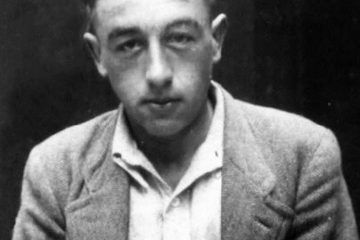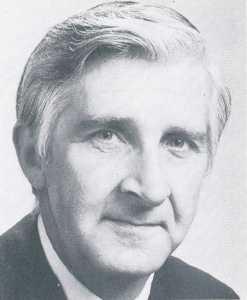
Dr William Graham Gosewinckel AO was a descendant of one of Australia’s early Dutch settler families and went on to become one of the nation’s most influential telecommunications pioneers. As the founding Chief Executive of AUSSAT, Australia’s first domestic satellite communications company, he helped lay the foundations for Australia’s modern satellite communications network.
Born in Melbourne on 24 February 1930, Graham descended from one of Victoria’s early Dutch migrant families. His ancestor William Gosewinckel, born in the Netherlands around 1824, settled in colonial Melbourne during the gold rush era. After marrying Irish immigrant Bridget O’Brien in 1859, William became a partner in a well-known café on the corner of Bourke and Swanston Streets. Like many early Dutch settlers, the family quietly became part of the fabric of Australian society while retaining its distinctive Dutch surname.
Graham developed an interest in radio engineering at a young age. During the Second World War he began work as a telegram messenger before joining the newly established Overseas Telecommunications Commission (OTC) in 1947. While working full-time he completed a Diploma of Radio Engineering at what is now RMIT University, beginning a career that would span almost five decades and coincide with the revolution in global telecommunications.
Over the following thirty years Graham became one of Australia’s leading telecommunications engineers. He held senior engineering and planning positions within OTC and represented Australia internationally during the formative years of satellite communications. He served as the inaugural Chairman of the INTELSAT Planning Committee, helping shape the future direction of the world’s first global satellite communications system. His work ensured Australia played a significant role in international satellite development rather than simply becoming a customer of overseas technology.
His greatest achievement came when the Australian Government appointed him the inaugural Chief Executive of AUSSAT Pty Ltd. Under his leadership the company successfully launched AUSSAT A1 in 1985 and AUSSAT A2 in 1986. These satellites revolutionised communications throughout Australia, providing reliable television distribution, telephone services and data links to remote communities across the continent. They also laid the foundations for the competitive satellite and telecommunications industries that followed. In 1992, AUSSAT was sold by the Australian Government and became the foundation of what is now Optus.
Following his time at AUSSAT, Graham continued to contribute to Australia’s telecommunications industry as Chief Executive of TelstraSaturn and Vodafone Pacific, while also serving on the boards of organisations including the Australian Rail Track Corporation and the Australian Maritime College.
I had the privilege of meeting Graham on several occasions. Our discussions centred on how Australia’s satellite infrastructure could eventually be used to stimulate broadband competition. As always, he combined deep technical knowledge with a strategic understanding of where telecommunications was heading.
In recognition of his outstanding contribution to Australian telecommunications, Graham was appointed an Officer of the Order of Australia (AO). He also became a Fellow of the Australian Academy of Technological Sciences and Engineering, reflecting the high regard in which he was held by both government and industry.
Dr William Graham Gosewinckel AO passed away in Sydney on 22 November 2013, aged 83. He left behind a remarkable legacy. Every Australian who has watched television via satellite, communicated from a remote community or benefited from Australia’s national satellite infrastructure has, in some way, benefited from the vision of this distinguished Dutch Australian pioneer.
Paul Budde