For nearly three decades, the Reverend Cornelis “Cor” Uidam occupied a distinctive place in Sydney’s Dutch community. He had come to Australia as a minister, but his work soon extended far beyond the church. He met migrant ships, visited hostels, helped families find their way through an unfamiliar society, challenged government policy, encouraged cooperation across denominations and played an important part in Dutch-Australian cultural and community organisations.
His life linked several important chapters of twentieth-century Dutch-Australian history: the Depression and German occupation in the Netherlands, postwar emigration, the difficult early years of migrant settlement, the gradual integration of the Dutch into Australian society and the later effort to preserve their cultural heritage.
Childhood, war and police service
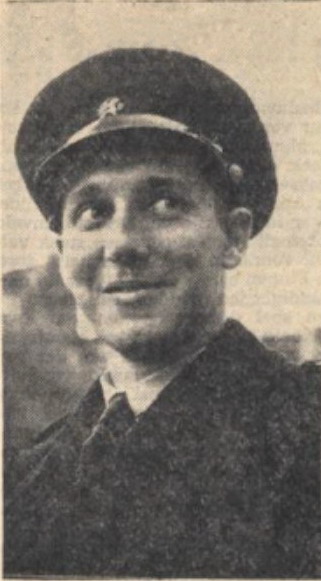
Cornelis Uidam was born in Haarlem on 17 July 1924. His father was a ship’s carpenter, and the collapse of the shipbuilding industry during the Depression brought severe financial insecurity. Cor later recalled that his family knew genuine poverty, although not hunger. His parents supplemented the family’s uncertain income by acting as caretakers of the Amsterdam metalworkers’ union building, where they received accommodation.
In 1938, the family moved to Amsterdam after his father found work in a shipyard. Cor completed secondary school in 1942, with a background in mathematics and science. To protect him from forced labour in Germany, his father secured work for him at the shipyard. He performed clerical and administrative duties and obtained a state bookkeeping diploma.
The final phase of the occupation brought the Hunger Winter of 1944–45. With food and fuel in desperately short supply, the Uidam family sought refuge in the ancestral area around Marken. Cor’s future wife, Emilie “Emmie” van Asselt, was meanwhile active in the Dutch Resistance under the code name “Tine,” transporting weapons and later carrying sensitive information. She kept this work secret even from Cor until the liberation.
After the war, Cor joined the Amsterdam police. Contemporary newspaper reports from 1951 provide a vivid picture of the young police officer studying theology between shifts. Having previously concentrated on mathematics and science, he first had to master Latin and Greek. He arranged his police duties so that he could attend lectures at the University of Amsterdam and used quiet periods on duty for study. During his later police service he worked with the children’s police, an experience that strengthened his interest in the social circumstances behind people’s problems.
Cor and Emmie married on 8 July 1948 in a double ceremony with Emmie’s twin sister Ger and Cor’s friend Piet Kops. Emmie’s support was indispensable during the demanding years in which he combined full-time police work, university study and a growing family.
A pioneering ministry in Limburg
Uidam completed his theological studies and was ordained in 1952. His first appointment was in the Maasbracht–Stevensweert area of Limburg, where he ministered among families connected with inland shipping. It was pioneering work in a predominantly Catholic region.
He helped establish accommodation for barge children, who otherwise faced serious disruption to their education, and promoted an interdenominational Christian school. He also entered local politics to advance the project. Although a Protestant minister, he attracted support from parts of the Catholic community. This combination of pastoral care, social action and practical organisation anticipated the role he would later play among migrants in Australia.
A new life aboard the *Johan van Oldenbarnevelt*
In 1960, Uidam accepted a call to become the second minister of the Dutch congregation within the Presbyterian Church in Sydney. Official Netherlands Emigration Service records list Cor, Emmie and their five children as a family of seven departing aboard the Johan van Oldenbarnevelt on 11 January 1960. Their destination was the Canterbury home of the Reverend C. Bregman, the congregation’s existing minister.
The voyage was itself part of Uidam’s new ministry. He served as spiritual adviser aboard the ship, while Emmie assisted Dutch passengers as a migrant welfare officer. After arriving in Sydney in February, the family initially encountered the same uncertainty experienced by many migrants: their expected accommodation was unavailable, their belongings had not arrived and several of the children had to be temporarily billeted elsewhere.
Uidam was inducted into the Dutch congregation shortly after his arrival. Although appointed as a minister, he quickly discovered that pastoral work among recent migrants could not be separated from their practical problems.
See alswo: MS Johan van Oldenbarnevelt – Dutch emigration ship to Australia
When pastoral care became migrant welfare
During the peak years of postwar migration, Dutch newcomers were scattered across an enormous area. Uidam travelled throughout metropolitan Sydney and regularly visited Newcastle, Wollongong, Canberra and the Blue Mountains. He met arriving migrants at ships and airports, conducted services in reception centres and hostels and visited families in their new homes.
Much of his work amounted to informal social work. Migrants approached him about employment, housing, education, money, health, legal difficulties, marriage problems and relations with Australian authorities. He sometimes preached at three locations on a Sunday, while spending much of the week travelling between individuals and families.
The surviving reports reveal both the scale and the changing nature of this work. The first generation initially needed Dutch-language services and practical settlement support. Their children, however, increasingly spoke English and became part of Australian churches and society. Uidam recognised that a Dutch congregation could not remain unchanged. He supported bilingual and English-language family services while continuing to provide Dutch worship for those who needed it.
Speaking out about Villawood
Uidam became nationally known in 1962 when he strongly criticised conditions in migrant hostels, particularly Villawood. A local newspaper reported his comparison between aspects of hostel life and the regimentation of concentration camps. The headline was dramatic and the analogy controversial.
His criticism needs to be understood in its context. Uidam was not claiming that Australian migrant hostels were literally equivalent to Nazi camps. He was attacking institutional features that he believed undermined normal family life: mass catering, long queues, rigid controls, poor facilities, lack of privacy and prolonged dependency. He feared that migrants who had expected a fresh start were instead becoming disillusioned and, in some cases, returning to the Netherlands.
The language was provocative, but it reflected his willingness to confront authorities when he believed migrant families were being failed. A Dutch Australian Weekly editorial published at the time similarly argued that deteriorating hostels should be replaced by more humane accommodation that gave families greater independence.
See also: Villawood Migrant Hostel – A New Beginning for Thousands of Migrants
Church, community and integration
Under Uidam and his colleagues, the Dutch congregation became much more than a place of Sunday worship. It provided a social network, information service and meeting point for migrants dispersed across the city. Services were held in Ultimo and at various suburban and migrant-centre locations. Youth days, choirs, family gatherings, commemorations, excursions and discussion groups brought people together.
Uidam also promoted cooperation beyond denominational boundaries. He worked with Dutch Catholic clergy and migrant organisations, participated in interchurch services and supported joint community activities. Events attended by civic and political figures—including a 1966 youth day addressed by Gough Whitlam—connected the Dutch congregation with wider Australian debates about immigration and integration.
He was not uncritical of Dutch institutions. In public exchanges he argued that some visiting clergy misunderstood the realities of migrant church life. Maintaining Dutch-language ministry remained important, particularly for the first generation, but he accepted that younger Dutch Australians would increasingly join English-speaking congregations. His task was to guide that transition without abandoning those who still depended on a recognisably Dutch community.
New challenges as the migrant generation aged
By the late 1970s, the community’s needs were changing. The urgent problems of arrival and settlement were giving way to loneliness, ageing and the possible loss of social support. In a 1978 article, Uidam drew attention to older Dutch people living alone or becoming isolated in institutions where their language and cultural background were poorly understood.
The congregation organised visiting programs, social gatherings, transport, Christmas dinners and excursions. Uidam argued that the problem required the involvement of the wider Dutch community, not simply the church. His concern anticipated later Dutch-Australian aged-care and welfare initiatives.
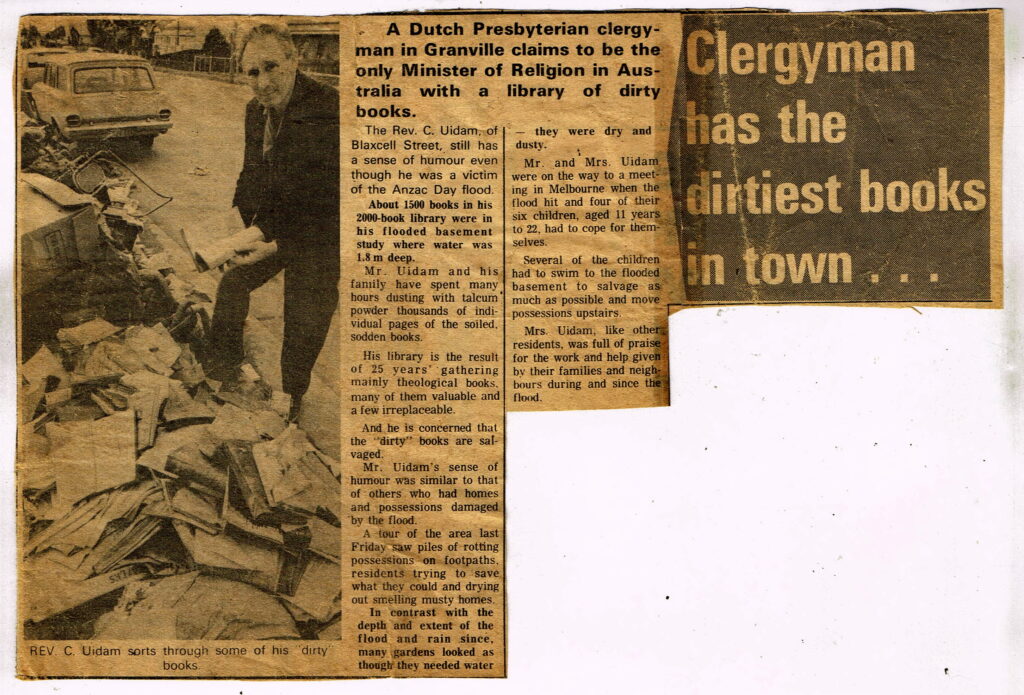
The 1974 Granville flood brought hardship directly to the Uidam family. Water approximately 1.8 metres deep inundated the basement of the manse in Blaxcell Street and affected about 1,500 volumes in Cor’s 2,000-book library. Cor and Emmie had been travelling to a church meeting in Melbourne, leaving their six children—then aged between 11 and 22—to rescue possessions and move what they could upstairs. Asked by a reporter about the destruction, Cor retained his characteristic humour, describing himself as the minister with the “dirtiest books in town.” A Dutch church emigration committee subsequently opened an appeal to help rebuild his library.
Scholar, writer and broadcaster
Uidam remained a serious student throughout his ministry. In 1970 he completed the Dutch doctoraal examination at the University of Amsterdam, with Hebrew and dogmatics as principal subjects. The qualification is sometimes described in later accounts as a doctorate, but the Dutch doctoraal was an advanced university degree rather than a PhD.
He also studied modern history at Macquarie University, completing a Master of Arts with Honours in the early 1980s. His research examined Australian church union between 1901 and 1925. His publications included Union and Renewal and De Ethnische Situatie, while Vier voor Tien collected 32 short talks prepared for Sydney’s multilingual radio station 2EA. These broadcasts ranged across faith, ageing, loneliness, social conduct and everyday moral questions.
His writing demonstrates that he was not only responding to individual needs. He was thinking more broadly about migration, ethnicity, church structures and the development of multicultural Australia.
Dutch-Australian cultural leadership
Uidam’s work increasingly extended into cultural and community organisation. He participated in Dutch festivals, art exhibitions, commemorations and discussions about establishing a permanent Dutch-Australian centre. In 1983, he used Australian Bureau of Statistics census data to map the distribution and age profile of Dutch-born residents across Sydney. The study was intended to inform decisions about a Dutch-Australian centre, aged-care facilities and the work of a community social worker.
He became closely involved with the Dutch Australian Cultural Centre and served on its Board for many years, holding several positions. A DACC tribute remembered his contribution as invaluable. Although not formally appointed treasurer, he exercised considerable influence over financial management and was known for finding savings others considered impossible. Colleagues also remembered him as a moderating influence who could keep discussions and organisations on an even keel.
In 1981, the Netherlands recognised his service to Dutch migrants and the wider community by appointing him a Knight in the Order of Orange-Nassau.
Retirement and legacy
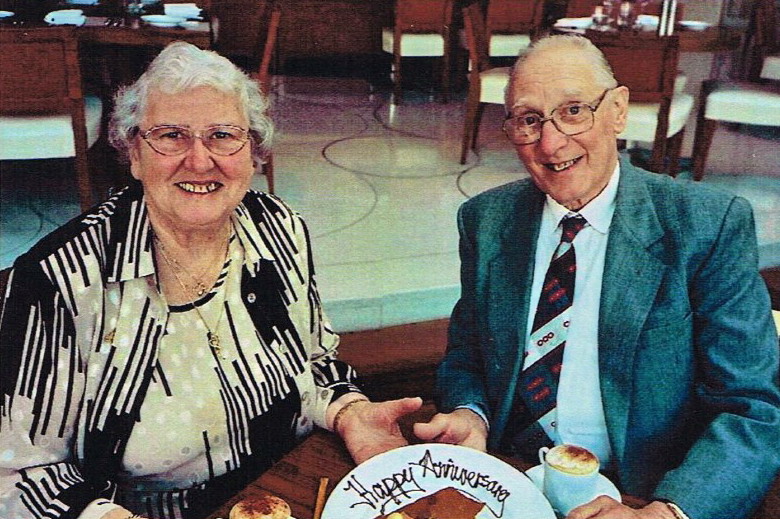
Uidam retired from the Dutch parish at the end of 1989 after almost 30 years of ministry in Sydney. Cor and Emmie moved to Epping, but retirement did not end his church work. He undertook periods of relief ministry in Bellingen and Leichhardt and continued to preach occasionally.
In 1991, he was asked to establish the archives of the New South Wales Synod of the Uniting Church. The work drew together his lifelong respect for scholarship, records and institutional memory. The experience also benefited the DACC, to which he contributed archival knowledge and advice.
Cor could be exacting, forceful and, to some, intimidating. The 1989 Dutch Australian Weekly profile did not conceal these qualities. He was highly prepared, strongly principled and resistant to being placed into convenient categories. Yet these characteristics were inseparable from his achievements. They enabled him to challenge complacency, defend migrants, create durable organisations and guide a community through profound social change.
Cornelis Uidam died at home on 10 August 2005 after a long illness. His life’s work cannot be confined to the history of one congregation. He helped Dutch migrants negotiate the practical and emotional challenges of settlement, encouraged their gradual participation in Australian society and helped preserve the records and cultural institutions through which their experiences could be remembered.
Together, those contributions make him an important figure in the history of the Dutch in Australia.
Sources
This profile is based on DACC archival material and contemporary Dutch and Australian newspaper reports; Netherlands Emigration Service records; Uidam’s publications, broadcasts and community reports; the 1989 Dutch Australian Weekly interview “Cor Uidam – een levensverhaal”; records of the Dutch congregation and Dutch Australian Cultural Centre; and family funeral and memorial material.