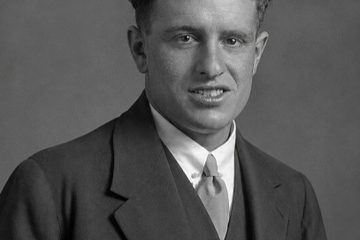
From occupied Java to Australia — and back into the Netherlands East Indies on clandestine intelligence
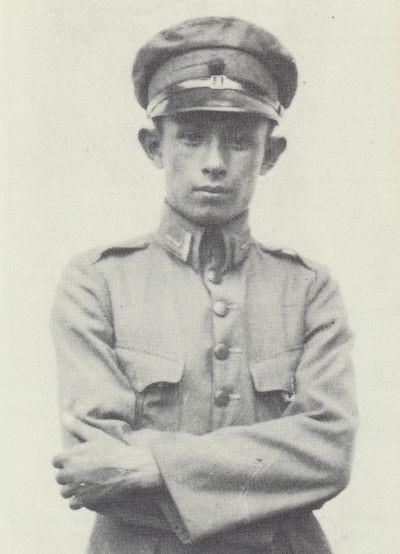
Hendrik Johan de Haas was one of the Dutch intelligence officers who voluntarily returned from Australia into Japanese-occupied territory during the final years of the Second World War.
Born in Batavia on 28 November 1904, De Haas was a civil engineer. He married Hendrina Maria van der Meer Mohr in Magelang on 6 February 1932, and the couple had two sons.
Following the Dutch surrender in March 1942, De Haas remained on Java and avoided Japanese captivity. He became involved in clandestine activities before escaping from the occupied Netherlands East Indies later that year. After an extraordinary journey lasting several months, he reached Australia on 31 December 1942.
Rather than remain in safety, De Haas became involved in the Dutch military and intelligence organisation being developed in Australia. He initially served as an instructor and was later attached to the Netherlands Forces Intelligence Service (NEFIS). In 1944 he was transferred to Camp Columbia in Brisbane, which had become the principal NEFIS headquarters in Australia.
De Haas subsequently volunteered for one of the most dangerous tasks undertaken by NEFIS: returning to the Japanese-occupied Netherlands East Indies to gather intelligence behind enemy lines.
In September 1944 he embarked on the operation known as GOLDFISH I. The eight-man party travelled from Australia by Catalina to Nila in the Banda Sea before continuing westwards by prahu. De Haas and Indonesian Sergeant Soeprapto eventually reached Java.
The operation became an extended clandestine journey through enemy-held territory. De Haas gathered valuable information, but the intelligence could not readily be transmitted to Allied headquarters. A second mission, GOLDFISH II, was subsequently sent partly to locate De Haas and Soeprapto and recover the intelligence they had collected.
De Haas eventually reached Java, but in January 1945 he was betrayed and captured by the Japanese Kempeitai. He was imprisoned and severely interrogated. Despite this treatment, surviving accounts indicate that he refused to reveal information that could compromise the intelligence organisation or the people who had assisted him.
He remained in Japanese hands through the final months of the war.
On 25 August 1945, ten days after Japan announced its surrender, Hendrik Johan de Haas was executed at Djember (now Jember) in East Java. Dutch war-dead records confirm his death there on that date.
De Haas’s story is particularly significant because it connects several stages of the Dutch intelligence war from Australia: escape from the occupied Netherlands East Indies, intelligence training and organisation in Australia, NEFIS headquarters at Camp Columbia, clandestine return to enemy-held territory, cooperation between Dutch and Indonesian personnel, and the enormous risks faced by agents operating without reliable communications or means of extraction.
His story also provides a powerful example of the transition from the costly experimental missions of 1942 to the more organised—but still extraordinarily dangerous—NEFIS special operations of 1944–45.
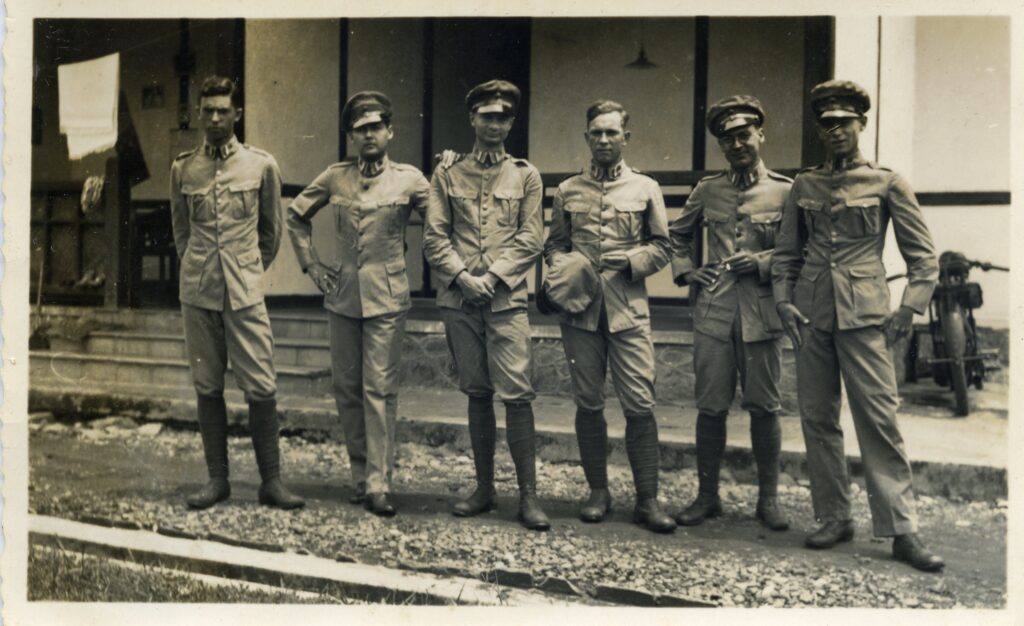
From occupied Java to Australia
After the surrender of the Netherlands East Indies in March 1942, Hendrik Johan de Haas remained on Japanese-occupied Java.
Rather than report for internment, he avoided capture and became involved in clandestine activities. For several months he lived under the constant risk of discovery while looking for an opportunity to escape from the occupied archipelago.
On 27 September 1942, De Haas finally left Java. What followed was an extraordinary journey through islands and waters controlled by the Japanese as he attempted to reach Allied territory.
The voyage took more than three months. Travelling through the eastern Netherlands East Indies, De Haas eventually succeeded in reaching Australia on 31 December 1942.
His arrival made him particularly valuable to the Dutch authorities. He had not only escaped from occupied territory but had recent first-hand knowledge of conditions on Java and elsewhere in the archipelago at a time when reliable information from the Netherlands East Indies was extremely difficult to obtain.
De Haas also brought something that would become increasingly important to Dutch intelligence operations: practical experience of moving through Japanese-occupied territory and dealing with the risks involved in clandestine activity.
Instead of regarding his arrival in Australia as the end of his war, De Haas chose to continue serving.
In February 1943 he was appointed as an instructor, passing on some of the knowledge and experience he had acquired. Later that year he was attached to the Dutch military organisation in Melbourne.
By 1944, his experience made him an obvious candidate for the expanding intelligence operations being organised by NEFIS.
In August 1944, De Haas was transferred to Camp Columbia in Brisbane, where NEFIS had established its headquarters following the move from Melbourne. He was made available for intelligence duties and, on 12 September 1944, was commissioned as a second lieutenant.
Within weeks, he was preparing to return to the Japanese-occupied Netherlands East Indies.
GOLDFISH I: returning behind enemy lines
Within weeks of his arrival at Camp Columbia, De Haas was selected for a major NEFIS special operation known as GOLDFISH I.
The operation was more substantial than a simple two-man intelligence mission. GOLDFISH I initially consisted of eight men and was intended to establish intelligence contacts and gather information across Japanese-occupied territory, with Java as an important objective.
On 21 September 1944, a Catalina flying boat of the Royal Netherlands Naval Air Service carried the party to the remote island of Nila in the Banda Sea. Another NEFIS party, TURNIP, was already operating there, providing GOLDFISH I with a forward base much closer to Japanese-occupied territory than Australia.
The objectives of GOLDFISH I were ambitious. The party was to investigate possibilities for supporting resistance on Java, identify suitable hiding places for future agents, gather military intelligence, assist prisoners of war and civilian internees where possible, and establish contact with reliable officials who might assist the Allies as Japanese control weakened.
From Nila, the party continued westwards by prahu.
This was a very different form of clandestine operation from the Catalina insertion itself. Once aboard small local sailing vessels, the agents could move among the islands in ways that were less conspicuous than Allied military aircraft or ships, but they also became dependent upon weather, local crews and conditions that could not be controlled from Australia.
Bad weather seriously disrupted the voyage.
The party became divided. Some members continued towards Java, while others remained farther east and subsequently gathered intelligence relating to Makassar and South Celebes.
De Haas and Indonesian Sergeant Soeprapto eventually reached Java.
Unlike an intelligence party equipped with a reliable long-range radio, however, the men could not simply transmit everything they learned directly to NEFIS headquarters.
They were now operating deep inside Japanese-occupied territory, increasingly isolated from the organisation that had sent them there.
De Haas and Soeprapto on Java
After the GOLDFISH I party became divided, De Haas and Sergeant Soeprapto eventually reached Java.
They were now operating deep inside Japanese-occupied territory and largely beyond the direct reach of NEFIS. Their task was to gather information about Japanese military activity and conditions on Java and to establish contacts that could assist Allied intelligence.
The principal problem was communications.
De Haas and Soeprapto were able to collect intelligence, but they had no reliable means of transmitting it directly to NEFIS. The value of what they learned therefore depended upon either establishing contact with another intelligence party or finding some other means of getting the information back to Allied headquarters.
Their situation became increasingly dangerous.
In early 1945, De Haas and Soeprapto were betrayed and arrested by the Japanese.
Both men were subjected to severe interrogation and torture. Soeprapto did not survive. Records based on the KNIL archive indicate that he died in Japanese captivity at Djember in January 1945.
De Haas survived the interrogation and remained a prisoner.
From Australia’s perspective, however, the fate of both men remained uncertain. NEFIS knew that De Haas and Soeprapto had remained behind on Java and potentially possessed valuable intelligence, but reliable information about what had happened to them had not reached headquarters.
Eventually, another mission was organised to find them.
He was subsequently imprisoned and interrogated. Surviving accounts state that he was severely tortured but refused to reveal information about the intelligence organisation or the people who had assisted him.
From Australia’s perspective, however, De Haas and Soeprapto had effectively disappeared.
NEFIS knew that the two men had remained behind on Java and potentially possessed valuable intelligence, but it did not know their fate.
Eventually, another mission was organised to find them.
GOLDFISH II: searching for the missing agents
On 30 May 1945, the Dutch submarine K-XIV left Australia carrying an eleven-man NEFIS party for a new operation designated GOLDFISH II.
One of its principal tasks was to find De Haas and Soeprapto.
If the two men could be located, the new party was to establish contact with them and transmit the intelligence they had gathered back to Allied headquarters by radio.
GOLDFISH II was landed on Satengar in the Paternoster Islands, east of Java. From there its members conducted searches and made visits to Java in an attempt to discover what had happened to the missing GOLDFISH I agents.
Eventually they found someone who knew their fate.
The informant indicated that the Japanese had been told about the presence of De Haas and Soeprapto. Fearful of the consequences, however, the informant was unwilling to provide further assistance.
The search could therefore proceed no further.
GOLDFISH II returned to Satengar and continued gathering intelligence from local people and crews moving through the islands. The party remained in the area until after the Japanese surrender and was eventually recovered by the Dutch submarine O 23.
For NEFIS, the search had confirmed that GOLDFISH I’s two missing agents had been betrayed to the Japanese. What the search party could not yet establish was that Soeprapto had already died in captivity, while De Haas remained a Japanese prisoner.
Betrayal and capture
While NEFIS was still trying to discover what had happened to GOLDFISH I, De Haas was already a prisoner of the Japanese.
In January 1945, after operating clandestinely on Java, he was betrayed at Panaroekan in East Java and arrested by the Kempeitai, the Japanese military police.
For an intelligence officer operating secretly behind enemy lines, capture was particularly dangerous. De Haas possessed information not only about his own mission but potentially about NEFIS operations, contacts and people who had assisted him.
He was imprisoned and subjected to severe interrogation and torture.
Surviving accounts state that De Haas refused to reveal information that could compromise the intelligence organisation or those who had helped him.
He remained a prisoner through the final months of the Pacific War.
Japan announced its acceptance of the Allied surrender terms on 15 August 1945. For De Haas, however, the end of the war did not bring freedom.
Ten days later, on 25 August 1945, Hendrik Johan de Haas was executed at Djember in East Java.
His death after Japan had announced its surrender makes the end of his story particularly tragic. De Haas had escaped from occupied Java in 1942, reached Australia, volunteered to return behind enemy lines and survived months of clandestine activity and imprisonment, only to be killed when the war itself was effectively over.
Remembering Hendrik Johan de Haas
Hendrik Johan de Haas did not survive to see the Netherlands East Indies liberated from Japanese occupation.
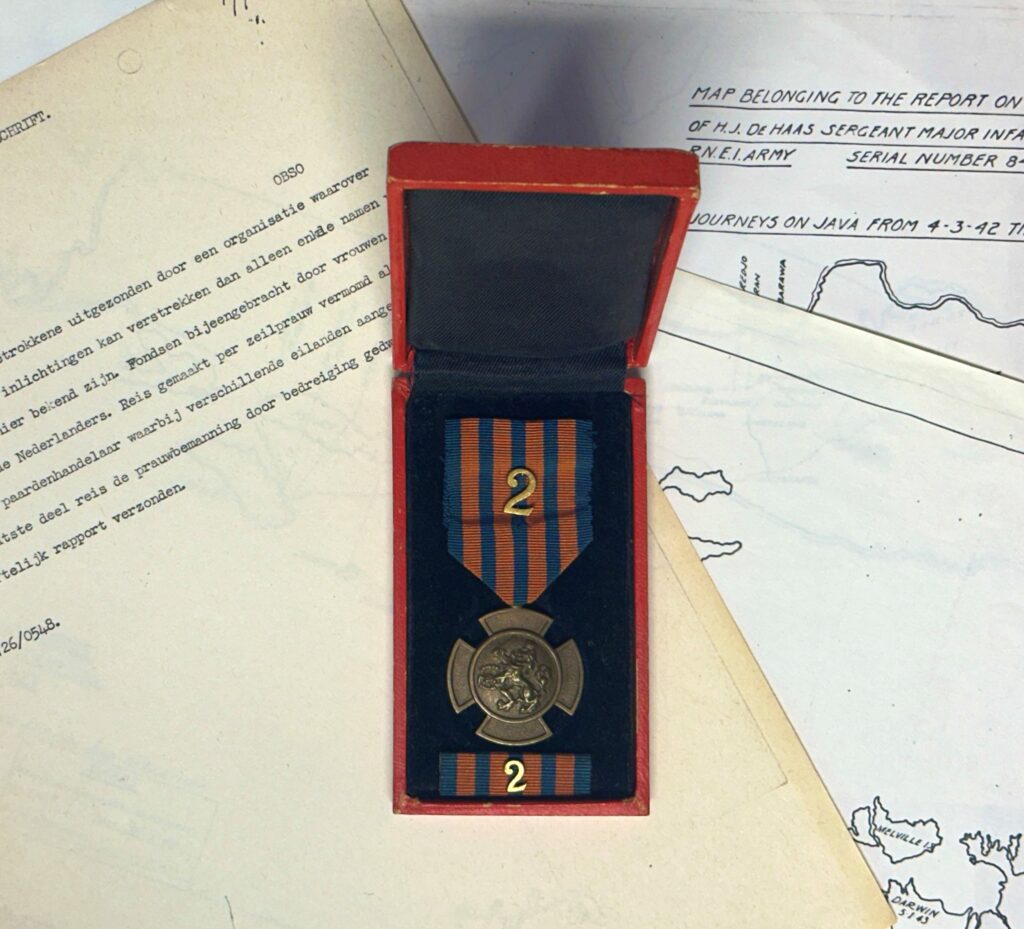
His wartime career had taken him through an extraordinary sequence of events: clandestine activity on occupied Java, escape to Australia in 1942, intelligence and training duties in Australia, service with NEFIS, and finally a voluntary return to Japanese-held territory with GOLDFISH I.
Objects and documents associated with De Haas have subsequently been preserved in Dutch museum and archival collections. Among them is the compass said to have been used during his remarkable escape from the Netherlands East Indies to Australia in 1942.
De Haas was also posthumously recognised for his wartime service. Existing records associated with his family and military history refer to several Dutch wartime decorations and Royal Decrees. Further research is required, however, to establish precisely how the individual awards and decrees relate to one another.
What is beyond doubt is the nature of his service.
Having already escaped from Japanese-occupied territory and reached the safety of Australia, De Haas volunteered to return. His subsequent work with GOLDFISH I placed him once again inside enemy-held territory, where capture carried an extreme risk of torture and execution.
He was killed at Djember on 25 August 1945, ten days after Japan had announced its surrender.
De Haas and the NEFIS intelligence war
The story of Hendrik Johan de Haas provides an unusually complete example of the intelligence war conducted between Australia and the Japanese-occupied Netherlands East Indies.
His experience connected both sides of that intelligence system. He had lived clandestinely under Japanese occupation and escaped to Australia with recent knowledge of conditions inside the archipelago. He subsequently became part of the Dutch military and intelligence organisation operating from Australia before volunteering to return behind enemy lines.
GOLDFISH I also demonstrates how NEFIS operations had evolved by late 1944. Australia remained the principal rear base, but forward locations such as Nila allowed parties to move progressively closer to occupied territory. Catalinas, submarines, local sailing vessels, radios and agents were combined in an increasingly elaborate intelligence network.
Yet technology and improved organisation could not remove the fundamental dangers.
De Haas and Soeprapto became isolated from NEFIS. Communications failed to provide a reliable link with headquarters. GOLDFISH II subsequently had to be sent partly to discover what had happened to them. By then De Haas had already been betrayed and captured.
His story therefore illustrates both the growing sophistication and the continuing vulnerability of NEFIS special operations.
Like the earlier members of Party LION, De Haas accepted the extraordinary risk of returning voluntarily from Australia into Japanese-occupied territory. Unlike them, he did so after the Dutch intelligence organisation had accumulated more than two years of operational experience.
The danger remained immense
Sources and further reading
J.J. Nortier, Acties in de archipel: De intelligence-operaties van NEFIS-III in de Pacific-oorlog, Franeker, 1985. Detailed study of NEFIS III intelligence operations in the Japanese-occupied Netherlands East Indies, including GOLDFISH and the missions of Hendrik Johan de Haas. See info on the book.
Hinke Piersma and Jeroen Kemperman, Moedige mensen: Helden in oorlogstijd, NIOD/KNAW. Includes an account of Hendrik Johan de Haas and Sergeant Soeprapto, their GOLDFISH mission, arrest and interrogation, and De Haas’s posthumous recognition.
Nationaal Archief, Persoonsdossiers Oorlogsgravenstichting, archive 2.19.255.01, file 56568B. Records Hendrik Johan de Haas, born in Batavia, and his death at Djember on 25 August 1945.
Lijst van gevallenen tijdens oorlogen en missies sinds de Tweede Wereldoorlog, entry for H.J. de Haas. Records his birth on 28 November 1904 in Batavia, death on 25 August 1945 at Djember, and identifies his unit/operation as NEFIS/GOLDFISH I.
Nationaal Archief, Marine en Leger Inlichtingendienst, Netherlands Forces Intelligence Service en Centrale Militaire Inlichtingendienst in Nederlands-Indië, archive 2.10.62. Extensive archival collection concerning NEFIS organisation, intelligence and special operations during and immediately after the Second World War.
Luisterpost Gorinchem, Activities Dutch secret services and the use of radio from Australia and Ceylon in WWII. Includes detailed research on GOLDFISH I and GOLDFISH II, the search for De Haas and Soeprapto, radio communications, Dutch submarines and forward operating bases.
Ons Land, Archief van H.J. de Haas. Collection of objects and documentation associated with De Haas, including the compass attributed to his escape from the Japanese-occupied Netherlands East Indies to Australia. The catalogue gives an incorrect birth year; authoritative records give 1904.
Further DACC research
For related articles, personal stories and archival research on NEFIS, NEFIS III, clandestine communications and Dutch and Indonesian intelligence missions into the Japanese-occupied Netherlands East Indies, see the DACC Research Portal – Dutch and Indonesian Intelligence and Special Operations from Australia during WWII.