The Dutch had explored the coast of New Holland since the voyages of Abel Tasman in the seventeenth century, but their direct involvement in the region declined during the eighteenth century as attention shifted to their core territories in Southeast Asia. By the early nineteenth century, however, Dutch colonial authorities were once again reconsidering their position in the region.
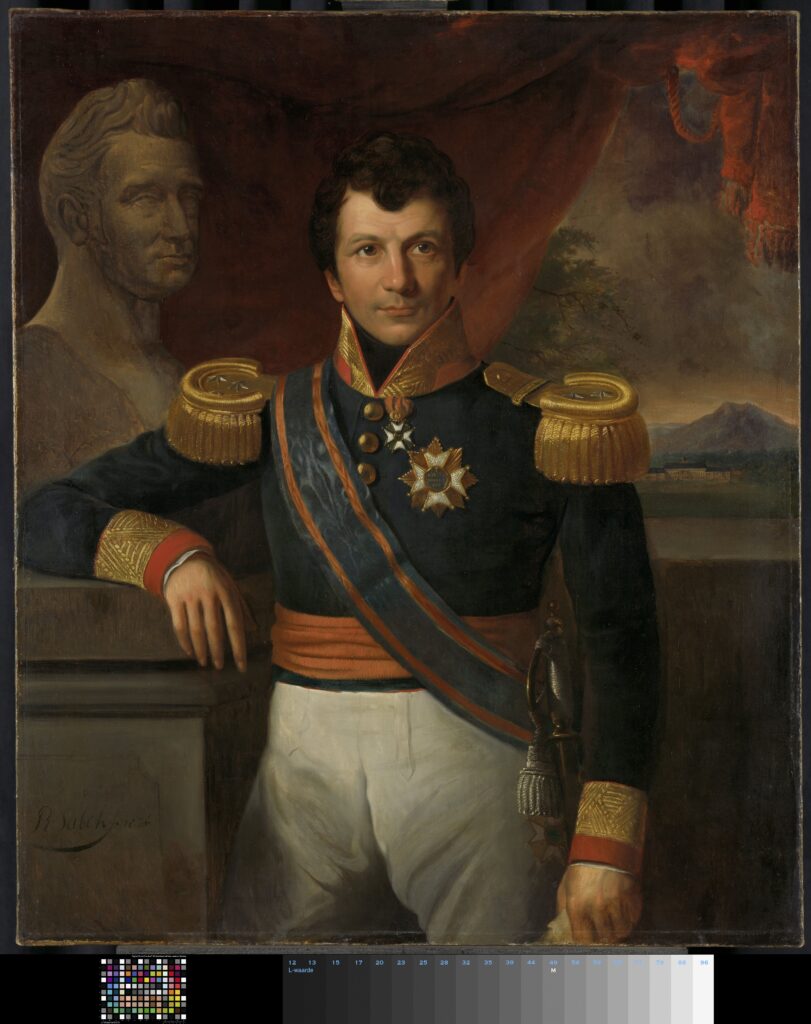
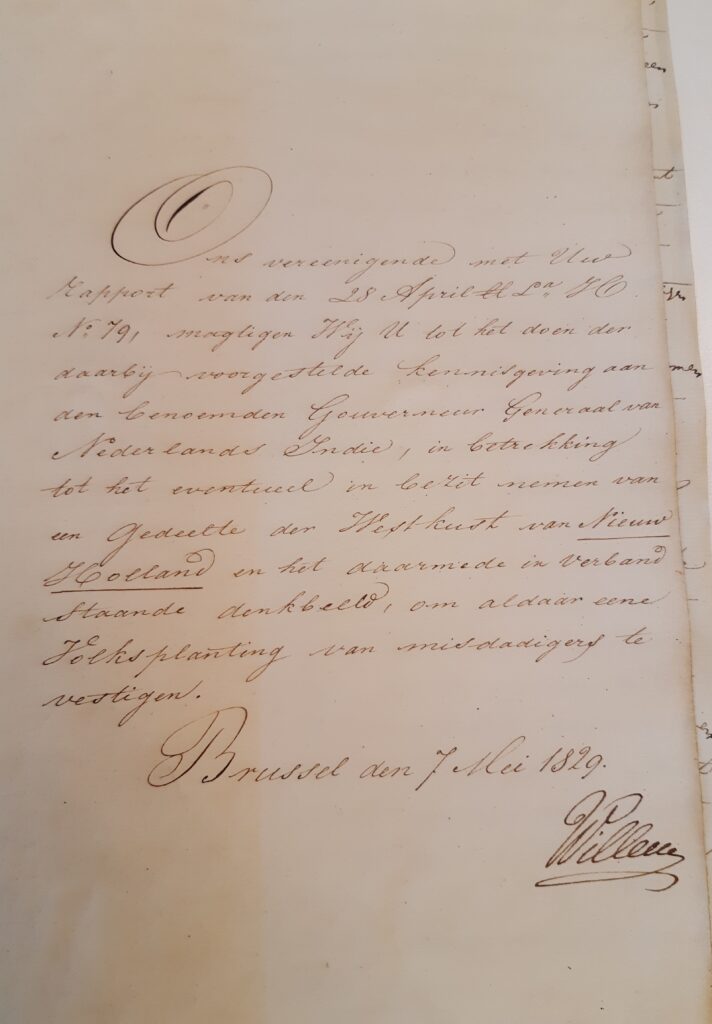
In a letter dated 21 October 1828, Willem I suggested to his Minister of Colonial Affairs that it might be “expedient” to allow the administration of the Dutch East Indies to establish a settlement on the west coast of New Holland. The proposal reflects a broader awareness of increasing European interest in the region and a desire to maintain some form of Dutch presence.
In practice, however, the idea did not progress. The Governor-General in Batavia appears to have had little confidence in the feasibility of such a settlement, given the logistical challenges and limited strategic value compared to the established centres of the Dutch East Indies.
At the same time, Britain was also becoming more alert to the strategic importance of the western coast of Australia, particularly in light of possible French ambitions. To pre-empt such developments, the British established the Swan River Colony in 1829. This effectively closed the window for any Dutch foothold on the Australian continent.
While the Australian proposal faded, the Netherlands did take a more concrete step elsewhere. In the same year, 1828, it formally claimed the western half of New Guinea, marking a shift away from speculative expansion towards securing the outer boundaries of the Dutch East Indies.

See also: Early nineteenth century English/Dutch rivalry in Eastern Indonesia and Australia