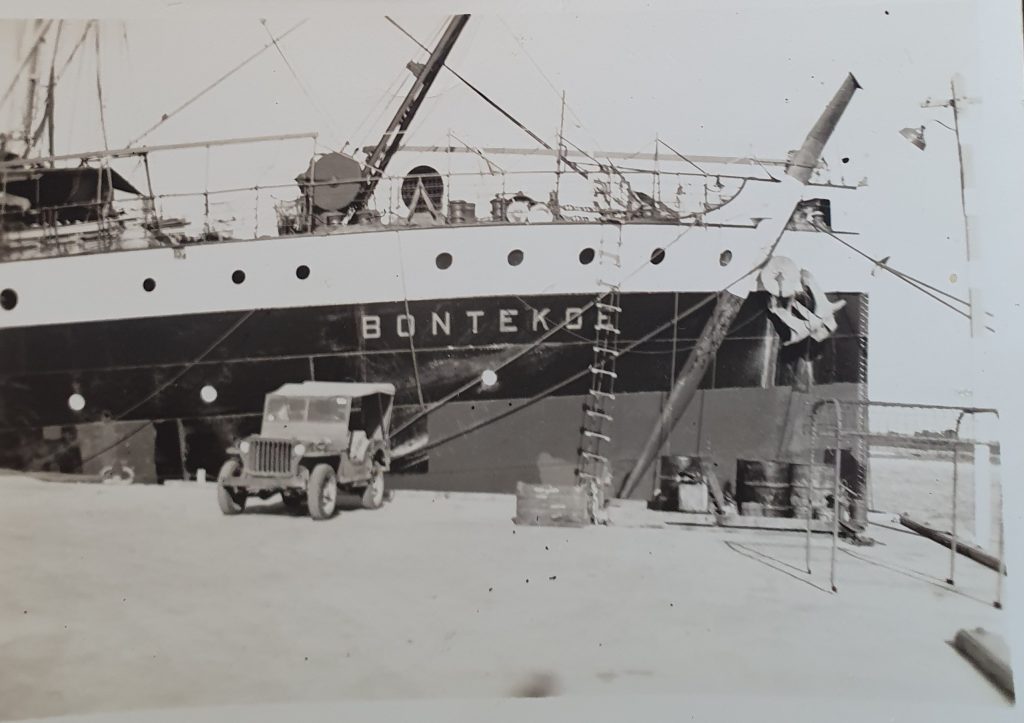
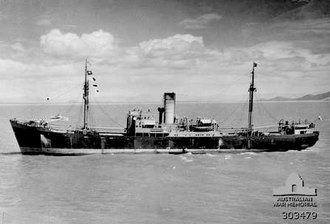
Between 21 February and 4 March 1943, the Koninklijke Paketvaart-Maatschappij vessels Bontekoe, Karsik and Van Heemskerk transported approximately 3,200 troops of the United States 162nd Infantry Regiment from Port Moresby to Oro Bay in Papua.
The movement, conducted in five convoy voyages, was designated Operation Accountant. The 162nd Infantry Regiment formed part of the United States 41st Infantry Division, which had trained in Australia before being deployed to New Guinea.[1]
Operation Accountant took place while KPM ships were also maintaining the Operation Lilliput supply route between Milne Bay and Oro Bay. It demonstrated that the Dutch vessels could transport a large American combat formation through the difficult and exposed coastal waters leading to Oro Bay.
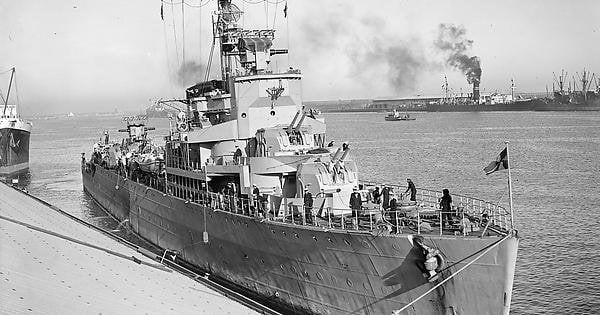
The operation also illustrates the multinational character of the Allied campaign. American troops travelled aboard Dutch-controlled ships commanded by Dutch officers and crewed largely by Indonesian seafarers, while four Australian corvettes—HMAS Ballarat, Bendigo, Echuca and Kapunda—provided escort during the operation.
The 41st Infantry Division in Australia
The United States 41st Infantry Division was a National Guard formation composed principally of units from the Pacific Northwest. It arrived in Australia during 1942 and trained at several locations while MacArthur’s command prepared it for operations in New Guinea.
The 162nd Infantry Regiment had its origins in the Oregon National Guard. It was mobilised for federal service in September 1940 and assigned to the 41st Division.[2]
By early 1943, the Allied forces that had fought at Buna, Gona and Sanananda were exhausted. The campaign had revealed serious problems in training, medical support, command and logistics. The United States 32nd Infantry Division had suffered heavy battle and disease casualties.
Fresh American troops were needed in New Guinea to relieve units that had endured the Papua campaign and to prepare for further Allied operations along the northern coast.
The 162nd Infantry Regiment became the first major element of the 41st Division moved forward from Australia.
Why the KPM ships were selected
Transporting an infantry regiment involved more than embarking soldiers. The ships also had to carry weapons, ammunition, communications equipment, vehicles, food, medical supplies and other material required to establish the regiment in a forward area.
The Allies still had limited numbers of suitable transports available in the South West Pacific. Large ocean-going ships could carry troops between major ports but were less suited to the poorly charted and inadequately developed waters around Oro Bay.
Bontekoe, Karsik and Van Heemskerk had already demonstrated their value in New Guinea.
Bontekoe had transported troops and construction equipment to Milne Bay and participated in the Lilliput convoys. Karsik had successfully carried Australian Stuart tanks to Oro Bay in December 1942. Van Heemskerk had taken part in Convoy ZK8, the reinforcement of Port Moresby and subsequent New Guinea supply operations.
Their relatively shallow draughts, manoeuvrability and experienced officers and crews made them suitable for the direct voyage to Oro Bay.
The movement to Oro Bay
Operation Accountant took place between 21 February and 4 March 1943. During five convoy voyages, Bontekoe, Karsik and Van Heemskerk transported approximately 3,200 members of the 162nd Infantry Regiment from Port Moresby to Oro Bay.[3]
The operation ran concurrently with Lilliput but had a distinct purpose. Operation Lilliput maintained the regular supply connection between Milne Bay and Oro Bay, while Accountant concentrated upon moving the American regiment and its equipment from Port Moresby into the forward operational area.
The ships were escorted during the operation by the Australian corvettes HMAS Ballarat, Bendigo, Echuca and Kapunda.[4]
The regiment’s safe delivery demonstrated that the route into Oro Bay had developed beyond an improvised supply line. It could now support the movement of a substantial combat formation and the equipment required for further Allied operations.
Conditions aboard the ships
The KPM vessels were commercial inter-island ships rather than purpose-built troop transports. Accommodation was limited, particularly when large numbers of soldiers and their equipment were embarked.
Troops slept and lived in crowded conditions during the voyage. Space was required for military stores as well as personnel, and the tropical heat added to the discomfort.
The ships also remained exposed to Japanese attack. Enemy aircraft continued operating over the New Guinea coast, and the recent losses suffered by merchant shipping demonstrated that reaching a harbour did not guarantee safety.
The vessels were operated by their established KPM personnel. Senior officers were generally Dutch, while much of the deck and engine-room work was performed by Indonesian, particularly Javanese, crew members.
The movement of an American regiment consequently depended upon the same multinational workforce that maintained the wider KPM supply system.
Reinforcing the Allied position
The 162nd Infantry Regiment’s arrival did not determine the outcome of the Buna–Gona campaign, which had effectively concluded before Operation Accountant began. The regiment was not transported to relieve the 32nd Division while it was still stalled outside Buna, as some accounts have suggested.
Instead, the operation brought fresh American troops into New Guinea following the costly Papua campaign. Their arrival allowed exhausted units to be relieved and helped prepare MacArthur’s forces for the next stage of the advance.
The 162nd Infantry Regiment subsequently participated in operations along the New Guinea coast, including the Nassau Bay landing and the campaign towards Salamaua during the middle of 1943.[5]
Operation Accountant should therefore be understood as part of the transition from the defensive and attritional fighting of 1942 to the expanding Allied offensive of 1943.
A direct Dutch contribution to an American formation
Convoy ZK8 had demonstrated that KPM ships could transport an Australian brigade to Port Moresby. Operation Accountant showed that the same fleet could carry an American regiment from Port Moresby through the difficult coastal approaches to the forward port at Oro Bay.
The operation brought together several Allied contributions:
- the United States supplied the troops and exercised operational control;
- KPM supplied the three transports and their established crews;
- Dutch officers commanded the vessels;
- Indonesian seafarers operated much of the machinery and performed the everyday work aboard them; and
- the Royal Australian Navy corvettes HMAS Ballarat, Bendigo, Echuca and Kapunda provided the escorts.
This cooperation was not always administratively straightforward. Dutch, British, Australian and American authorities had spent months negotiating the control of KPM shipping. Operation Accountant demonstrated the practical result: Dutch ships operating within an American-led command structure tto deliver American troops from Port Moresby to the developing Allied base at Oro Bay.
The subsequent fate of the ships
All three KPM ships continued serving in the South West Pacific after completing Operation Accountant.
Bontekoe remained involved in the Oro Bay supply route. Its officers later protested against voyages into inadequately protected forward ports following the losses suffered by KPM shipping.
Karsik continued operating as a transport and survived the war.
Van Heemskerk had only a short time remaining. On 14 April 1943, little more than a month after completing its Accountant voyages, the ship was attacked by Japanese aircraft while unloading at Milne Bay. It caught fire, was beached and later exploded.
The loss illustrates the risks that accompanied every KPM voyage into the New Guinea theatre.
An important measure of KPM’s value
Operation Accountant was smaller and shorter than Operation Lilliput, but it provides another measure of KPM’s strategic value.
The three ships transported approximately 3,200 troops into a forward area over less than two weeks. Without these vessels, the Allies would have needed to divert other scarce transports or delay the regiment’s movement.
Their contribution lay not merely in the number of ships available. KPM provided vessels and crews already experienced in the waters and operating conditions of the South West Pacific.
Operation Accountant was therefore a distinct Dutch and Indonesian contribution to the deployment of an American combat formation within the New Guinea theatre, following the regiment’s earlier training and deployment from Australia.
Related DACC articles
- The KPM lifeline: Operation Lilliput and the Allied advance in Papua
- SS Karsik: Carrying Australian tanks to the Battle of Buna
- SS Van Heemskerk: From Convoy ZK8 to its loss at Milne Bay
- Convoy ZK8: KPM ships carry Australian troops to Port Moresby
- Dutch Merchant Fleet and the Allied War Effort in Australia – Portal
Endnotes
[1] Jonathan Ford, “The Netherlands Merchant Navy in the Pacific War,” Journal of Australian Naval History, Vol. 6, No. 1, 2009, pp. 89–90; G. Hermon Gill, Royal Australian Navy 1942–1945, Australian War Memorial, Canberra, 1968, pp. 269–270.
[2] United States Department of the Army, The Army Lineage Book, Vol. II: Infantry, Washington, 1953; records of the United States 41st Infantry Division and 162nd Infantry Regiment.
[3] Ford, “The Netherlands Merchant Navy,” pp. 89–90; Gill, Royal Australian Navy 1942–1945, pp. 269–270.
[4] Gill, Royal Australian Navy 1942–1945; operational history of HMAS Bendigo.
[5] John Miller Jr, CARTWHEEL: The Reduction of Rabaul, United States Army in World War II: The War in the Pacific, Office of the Chief of Military History, Washington, 1959.
[6] Ford, “The Netherlands Merchant Navy,” pp. 82–83. Dutch, British, Australian and American authorities had spent months negotiating the control of KPM shipping.