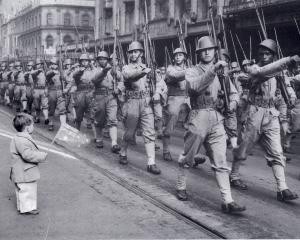
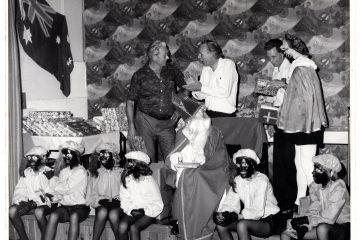
One of the most significant collections relating to the Dutch presence in Australia during the Second World War can now be found at the Northern Rivers Military Museum in Casino, New South Wales. The museum has developed a dedicated Camp Victory display that tells the remarkable story of the Royal Netherlands East Indies Army (KNIL) and its activities in Australia during and immediately after the war.
Located in the historic Casino Drill Hall, the Northern Rivers Military Museum preserves the military history of the region and highlights the important role that Camp Victory played in Australia’s wartime landscape. Among its many exhibits, the Camp Victory collection stands out as one of the few museum displays in Australia specifically dedicated to the Dutch East Indies forces and their connection with Australia during the final years of the war and the turbulent transition that followed.
Camp Victory was established on the outskirts of Casino and was transferred to Dutch control in 1943. The camp was granted extraterritorial status, allowing it to operate under Dutch authority and Dutch law. The name “Camp Victory” reflected Dutch hopes for the liberation of their homeland and a swift return to the Netherlands East Indies after the defeat of Japan. Approximately 3,000 KNIL personnel served there between 1943 and 1946.
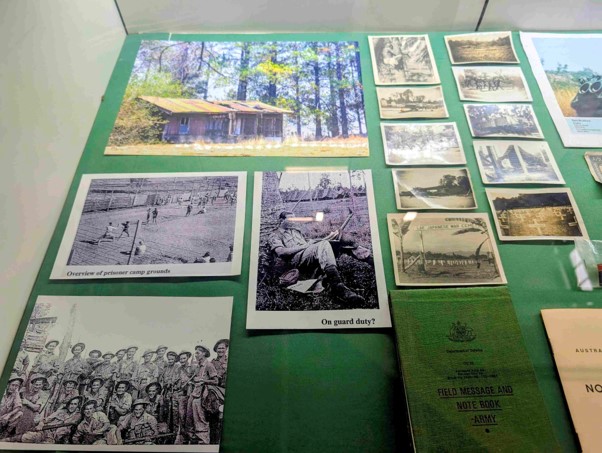
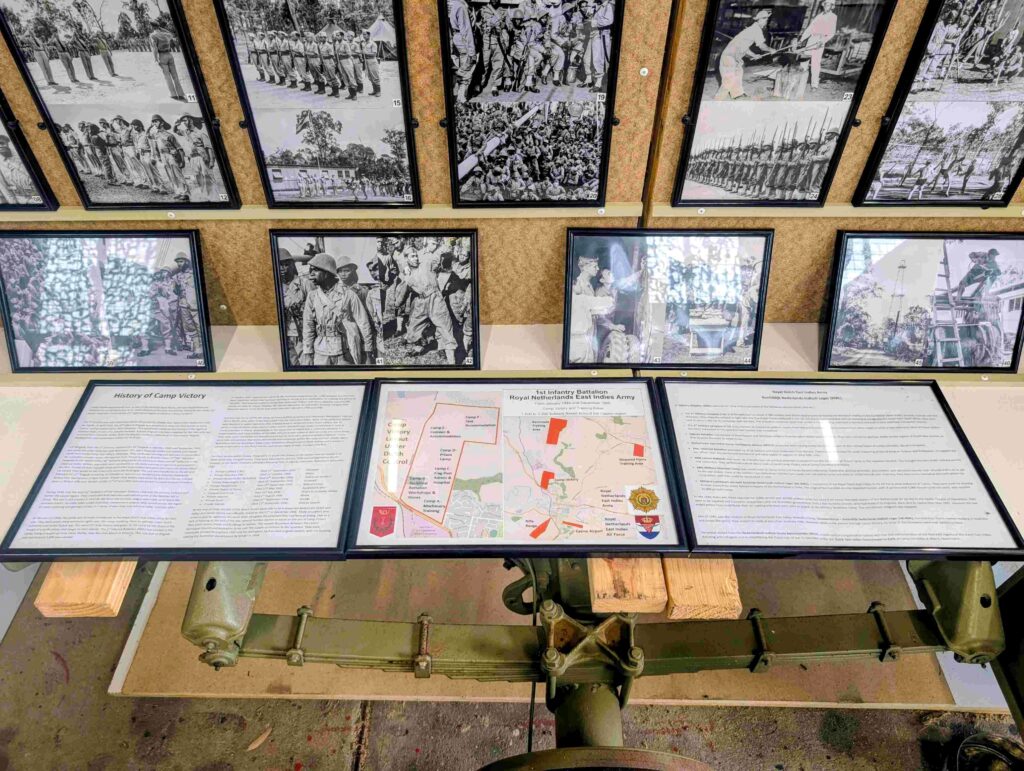
The camp was much more than a military barracks. It was a large and diverse complex consisting of training areas, workshops, headquarters, hospital facilities, accommodation areas and a detention camp. Nearby training grounds at Backmede and Disputed Plains supported military exercises and specialist instruction.
The personnel stationed at Camp Victory reflected the extraordinary diversity of the Dutch wartime forces. The 1st Infantry Company included approximately 500 soldiers from Suriname and the Dutch Caribbean. Indonesian soldiers from Java, Sumatra and other islands served in the 2nd Infantry Company. West Papuan and Moluccan troops formed the Papuan Battalion. Technical units trained oil industry specialists for the reopening of strategic oil fields in Borneo, while air force personnel of the ML-KNIL underwent training for future operations in the Pacific.
The camp also maintained close links with Camp Columbia in Brisbane, headquarters of the Netherlands East Indies Government-in-Exile. Personnel from the Netherlands East Indies Forces Intelligence Service (NEFIS) conducted field training around Casino as part of intelligence programmes coordinated from Camp Columbia. Labour battalions from Camp Victory were also employed on projects at Camp Columbia, illustrating the close operational relationship between the two centres.
However, the history of Camp Victory also reflects the profound political changes taking place in the aftermath of the war. Following Indonesia’s declaration of independence in August 1945, tensions emerged within Dutch military units throughout Australia. Some Indonesian personnel refused orders or participated in strikes supporting Indonesian independence. A detention camp was established at Camp Victory to hold political prisoners, Indonesian nationalists and military personnel who had been court-martialled. The resulting conflicts generated considerable controversy and attracted criticism from sections of the Australian community and trade union movement.
The human stories associated with Camp Victory remain visible today. Ten Dutch war graves are located in the Casino General Cemetery, commemorating men who died through illness, accidents, drowning, suicide and incidents connected with the detention camp. These graves serve as a lasting reminder of the diverse backgrounds and often difficult experiences of those who passed through the camp.
Camp Victory officially closed on 17 December 1946, marking the end of one of the last major Dutch military establishments in Australia. Yet its legacy remains highly relevant. The camp illustrates not only the close military cooperation between Australia and the Netherlands during the war, but also the complex transition from colonial rule to national independence that reshaped Southeast Asia in the post-war period.
The Camp Victory collection at the Northern Rivers Military Museum ensures that this important chapter of Dutch–Australian history is preserved for future generations. Together with related sites such as Camp Columbia in Brisbane, it helps tell a broader story of Allied cooperation, intelligence activities, military training, migration and decolonisation that linked Australia, the Netherlands, Indonesia, Suriname, the Caribbean and Papua in the final years of the Second World War and its aftermath.
For visitors interested in Dutch–Australian wartime history, the Camp Victory display provides a valuable opportunity to explore a fascinating and often overlooked part of our shared heritage.
Click here for more information on the history of Camp Victory
Camp Victory displays at the Museum
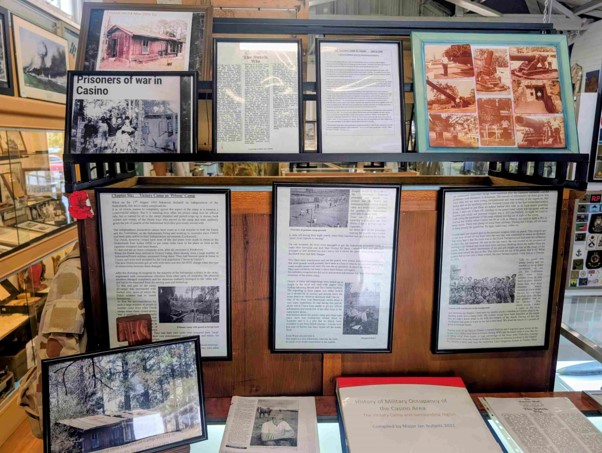
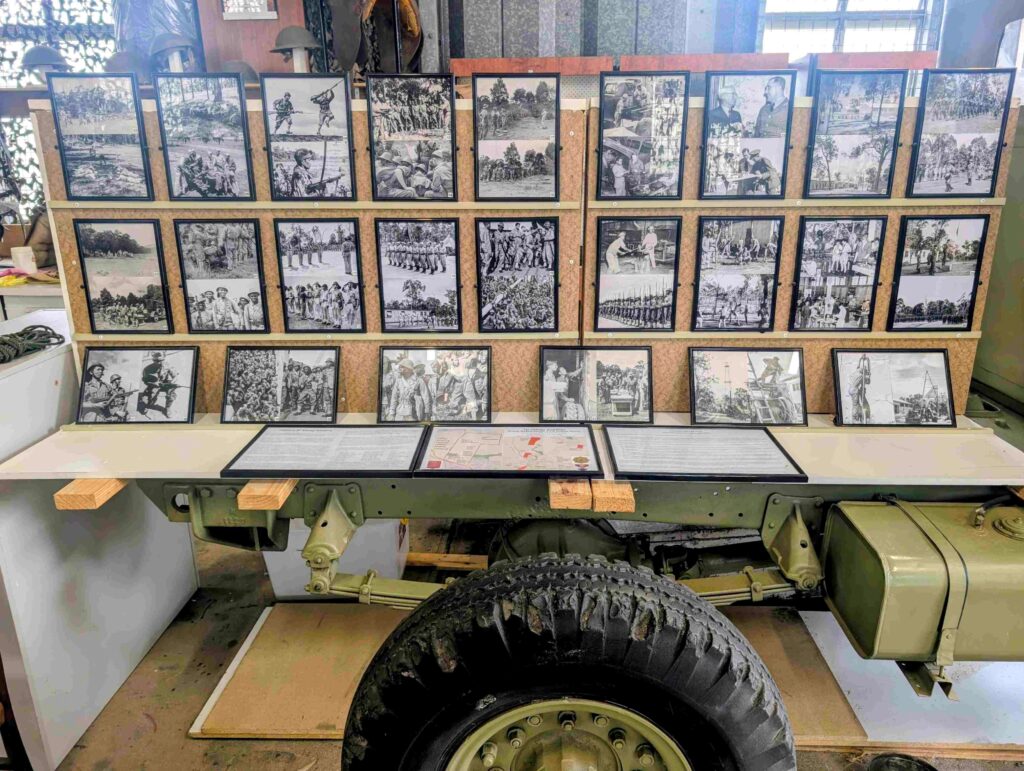
The following photographs provide an overview of the Camp Victory displays at the Northern Rivers Military Museum in Casino, New South Wales.
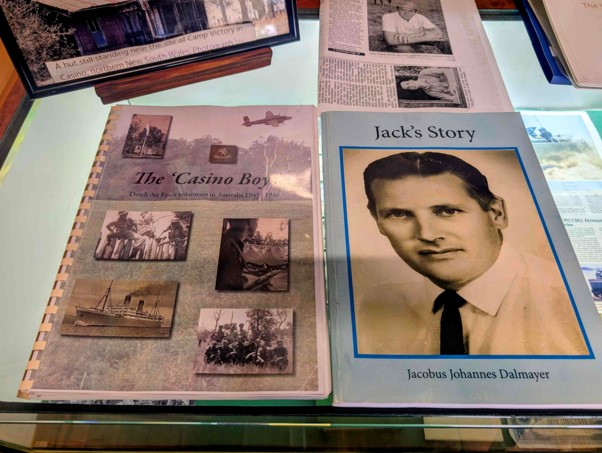
The exhibition is presented across two distinct display areas. One is located within the historic Casino Drill Hall and focuses on the later history of Camp Victory, including its role as a detention camp for Indonesian nationalists and military personnel during the turbulent period surrounding Indonesian independence. This section also highlights the personal stories of Dutch soldiers and airmen who remained in Australia after the war and settled in the Casino district. Several of these stories have been documented on the Dutch Australian Cultural Centre website.
A larger display is housed on the flatbed of a restored World War II Ford Blitz truck, exhibited in an adjacent shed alongside a 1916 French Nieuport 11 biplane. This display focuses on daily life and military service at Camp Victory and its surrounding training areas. It illustrates the diverse composition of the KNIL forces stationed at Casino, including soldiers from the Netherlands, Indonesia, Suriname, the Dutch Caribbean and New Guinea. Particular attention is given to the arrival in Australia of troops from Suriname and the Dutch Antilles, who travelled to Melbourne before being posted to Camp Victory.
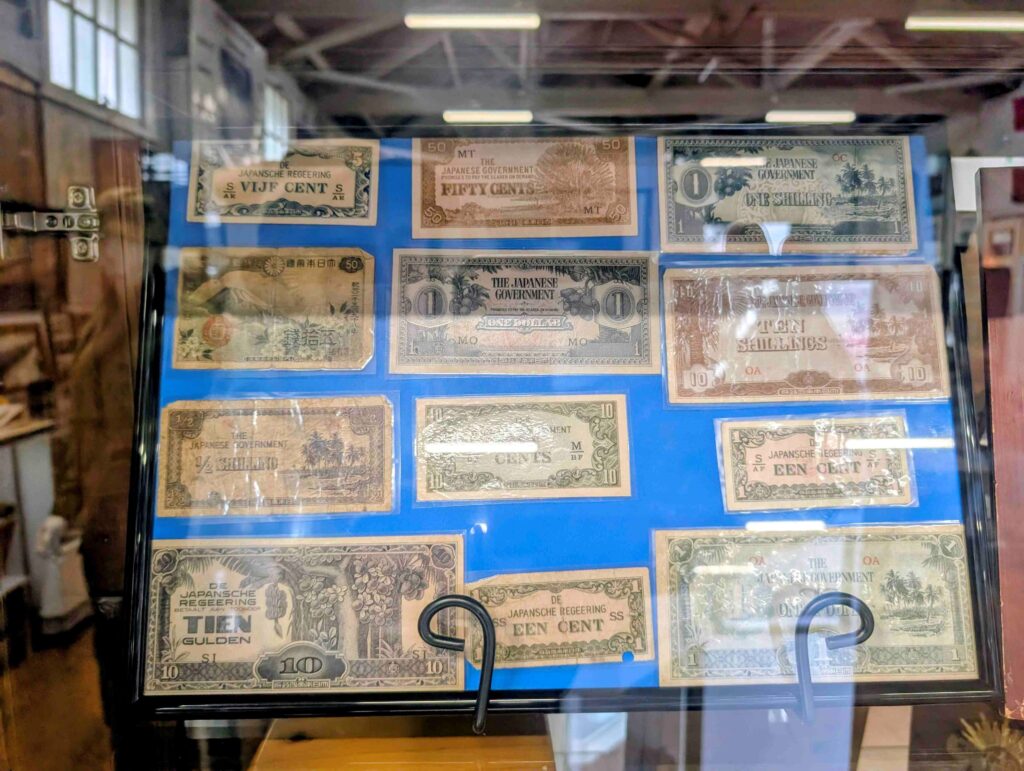
The museum also displays a collection of Japanese occupation currency denominated in guilders. Following the liberation of the Netherlands East Indies, stocks of this currency came into Dutch possession and were subsequently used at Camp Victory. According to local accounts, some Afro-Caribbean soldiers serving with the KNIL were paid in this occupation currency, which had little value outside the camp. These troops were also subject to restrictions on movement and interaction with the local population. Despite these limitations, many stories survive of friendships and relationships developing between camp personnel and local residents, becoming part of the district’s wartime heritage.
Visitors can also explore material relating to Camp Victory’s role in the Indonesian independence movement, including research that examines the camp’s place in the complex political and military developments that followed the end of the Second World War.
Lost property belonging to the internees
The Northern Rivers Military Museum has also preserved a remarkable 12-page document from 1946 listing property belonging to 156 people identified as internees associated with Camp Victory.
Rather than recording only military equipment, the document lists the personal possessions apparently lost or left behind by each individual. These included suits, shirts, shoes, watches, rings, cameras, fountain pens, books, writing materials, toiletries, cigarettes, money and large quantities of cotton, linen and woollen material. Some entries also include women’s clothing, children’s suits, handbags and household items.
The inventory provides an unusually personal glimpse into the lives of the Indonesian men held at Camp Victory. These were not merely names appearing in military and political records. Their suitcases contained the ordinary possessions with which they hoped to rebuild their lives after years of war, occupation and internment.
The document also raises important unanswered questions. It does not explain precisely how the property was lost, where it was stored, whether it was returned to its owners, or what subsequently happened to the people named. Nevertheless, it is a significant surviving record of the human consequences of the political conflict surrounding Indonesian independence and the detention of Indonesian nationalists and military personnel at Camp Victory.