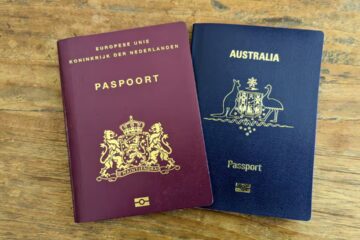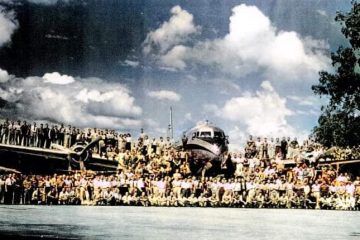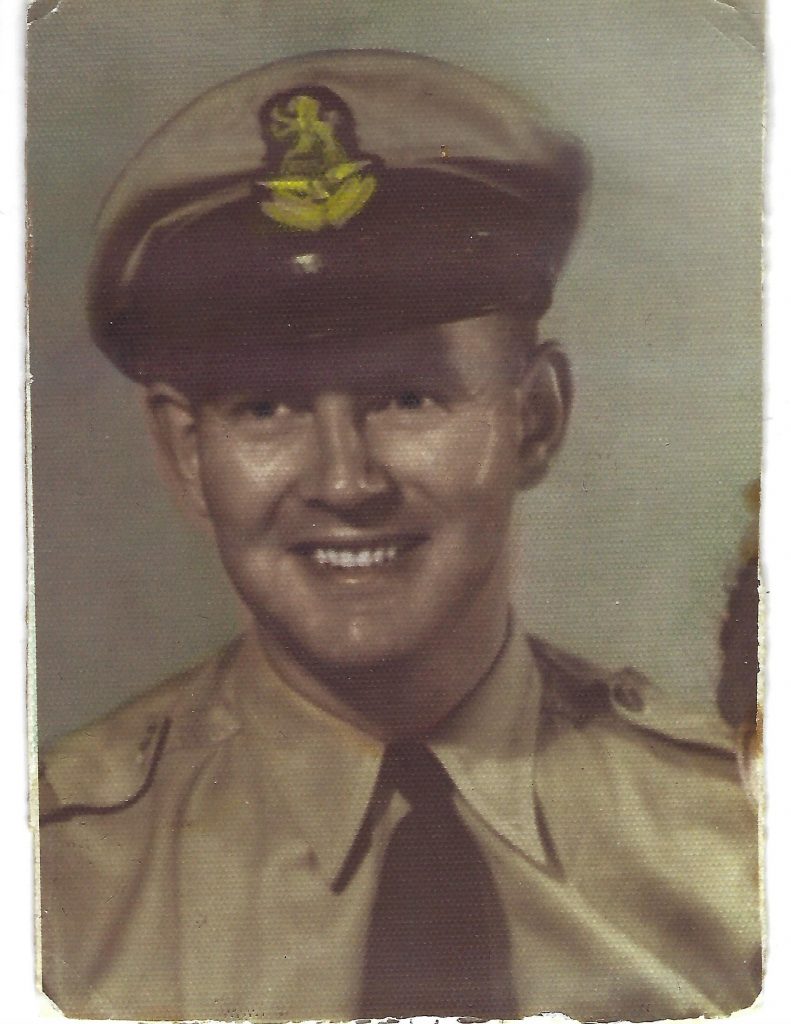
Dirk Bodemeijer was a Dutch aviation engineer whose career connected KLM, the Military Aviation service of the Royal Netherlands East Indies Army, the Netherlands Purchasing Commission in the United States, No. 120 (Netherlands East Indies) Squadron RAAF and the postwar reconstruction of aviation facilities in Indonesia and Dutch New Guinea.
His surviving curriculum vitae, official correspondence, photographs and military documents have been preserved by his son, Ron Bodemeijer.
Early life and aviation training
Dirk Bodemeijer was born at Princenhage in the Netherlands on 27 January 1910.
In July 1931, he obtained his mechanical engineering diploma from the Middelbare Technische School—MTS—in ’s-Hertogenbosch.
He joined KLM’s technical service in March 1932 and worked in Rotterdam and Amsterdam until September 1939. He then became a technical officer with the Military Aviation service of the Royal Netherlands East Indies Army—the ML-KNIL.
Before leaving the Netherlands East Indies, Bodemeijer worked at the ML-KNIL Central Workshops, where he supervised the instrument and electrical departments.
Transfer to the United States
In June 1940, the Netherlands East Indies Government selected Bodemeijer for service with the Netherlands Purchasing Commission in New York.
His surviving travel order, dated 10 July 1940, authorised him to travel from Batavia to New York by way of Hong Kong, Manila, Honolulu, San Francisco and Montreal. He was scheduled to leave Batavia on 17 July 1940 and arrive in New York on 27 August.
The journey reflected the increasingly important role of the United States in supplying aircraft and equipment to the Netherlands East Indies following the German occupation of the Netherlands.
Travel order to New York
The following document records Bodemeijer’s official transfer from Batavia to the Netherlands Purchasing Commission in New York in 1940.
The Netherlands Purchasing Commission
Bodemeijer remained in the United States until March 1944. As a member of the Netherlands Purchasing Commission, he participated in the procurement and inspection of aircraft, equipment and technical supplies for the Netherlands East Indies armed forces.
He also served as a Dutch liaison officer with the United States Army Air Forces. His technical knowledge was particularly valuable at a time when Dutch aircraft orders, training programs and military requirements had to be coordinated with rapidly expanding American production and operational organisations.
For his work in the United States, Bodemeijer received the American Legion of Merit in the degree of Legionnaire. The award recognised his exceptionally meritorious service to the United States Government between March 1942 and January 1944.
Legion of Merit
The following document records the award made to First Lieutenant Dirk Bodemeijer of the Netherlands East Indies Air Force.
No. 120 Squadron in Australia and New Guinea
After leaving the United States in March 1944, Bodemeijer travelled to Australia. As a captain technical officer, he was placed in charge of the technical service supporting No. 120 (Netherlands East Indies) Squadron RAAF.
No. 120 Squadron had been formed at Canberra in December 1943 and was equipped with P-40 Kittyhawk fighters. It subsequently moved through Bundaberg before deploying to Merauke in Netherlands New Guinea.
Bodemeijer’s responsibilities included aircraft maintenance, technical personnel, equipment, electrical and instrument services and the supply of replacement components. The surviving correspondence demonstrates that this work also involved liaising with Australian and Netherlands East Indies authorities over costs, stores, transport and the movement of equipment.
Forced landing of B-25 Mitchell N5-202
One surviving newspaper cutting concerns B-25 Mitchell N5-202, which was forced down near Bundaberg in April 1944.
The aircraft had recently arrived from the United States and was being flown from Bundaberg to Canberra. It encountered low cloud and poor weather and, after becoming short of fuel, made a forced landing on rough ground.
The occupants were Flying Officer Tellegen, Sergeant Strengholt and Captain Technical Officer Dirk Bodemeijer. All three escaped serious injury, although the aircraft was damaged.
N5-202 was a B-25D-35 Mitchell with United States serial number 43-3767. It was subsequently transferred to the RAAF and became A47-15.
Technical and administrative work at Bundaberg
The family documents include correspondence written while Bodemeijer was stationed at Bundaberg in 1944.
A memorandum of 2 June 1944 concerns the costs of maintaining terminal equipment issued to Netherlands East Indies units. Bodemeijer argued that these expenses should not be charged to the squadron’s technical maintenance section because much of the equipment was being operated by other organisations.
A second memorandum, dated 21 June 1944, records the arrival of a shipment of Harley-Davidson motorcycles at North Wharf in Sydney. Bodemeijer asked the Netherlands East Indies liaison officer at Casino to arrange their unloading, storage and subsequent transport.
Although these may appear to be routine administrative matters, they illustrate the complicated supply and maintenance system upon which the Dutch squadrons depended.
Documents relating to Bundaberg
This seven-page collection includes the newspaper account of the forced landing of N5-202, correspondence concerning technical equipment and maintenance costs, and the arrangements for handling motorcycles and other Netherlands East Indies military stores.
Postwar reconstruction at Kemajoran and Biak
Bodemeijer remained with the ML-KNIL after the war. In June 1946, he became head of the technical service at Kemajoran airfield in Batavia. He remained responsible for its technical operations until the airfield’s civil aviation facilities were transferred to KLM.
He was also placed in charge of developing fire-brigade and gas-protection facilities.
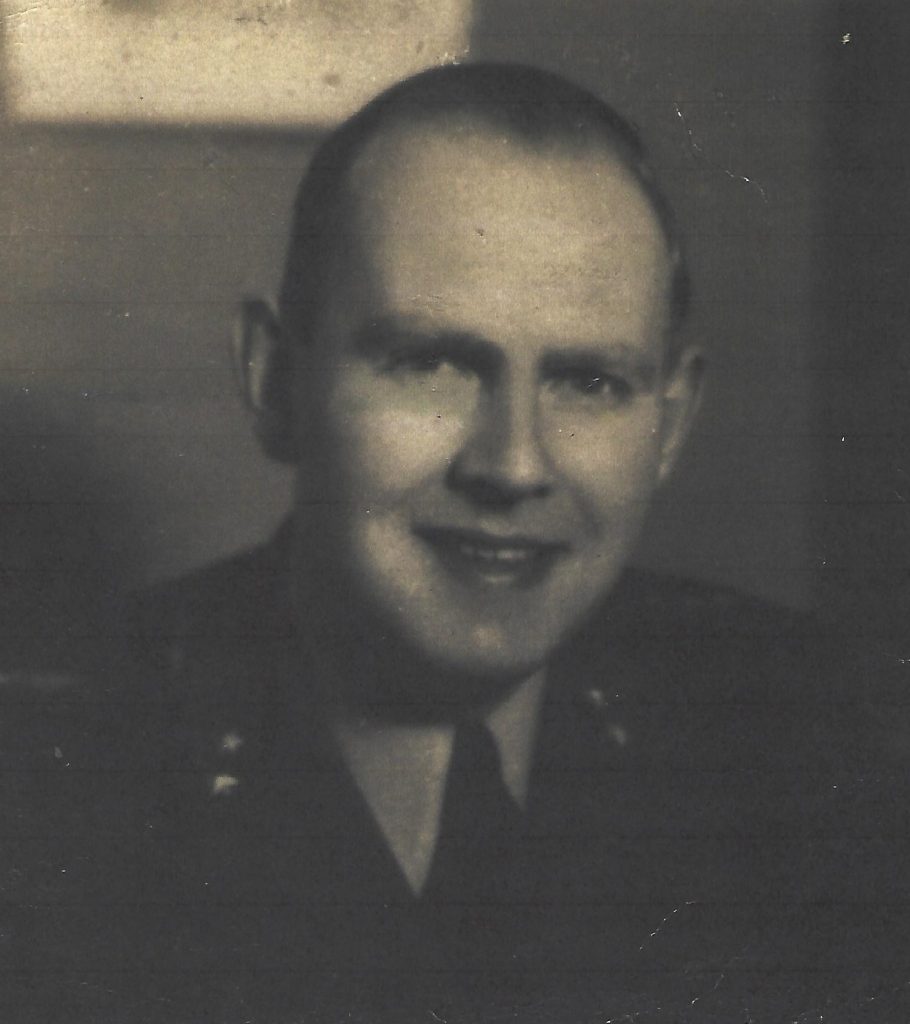
While stationed in Batavia, Bodemeijer worked with Indonesian mechanics to inspect and restore the technical installations of the Hotel des Indes. The hotel’s equipment had deteriorated during the Japanese occupation.
Because the municipal electricity supply was unreliable, an emergency installation using two petrol-powered generators operating in parallel was constructed to maintain the hotel’s water supply and refrigeration equipment.
Bodemeijer was subsequently transferred to Biak in Dutch New Guinea. There he organised and maintained an extensive range of base facilities, including:
- the motor-transport maintenance workshop;
- water and electricity services;
- a butchery and bakery;
- cold-storage facilities;
- ice-making machinery; and
- an automatic laundry.
These duties demonstrate that a military aviation technical officer could be responsible for far more than maintaining aircraft. Operational air bases depended upon complete systems of transport, power generation, food production, refrigeration, water supply and emergency services.
Military decorations
The surviving service record lists the following distinctions:
- appointment as a Knight in the Order of Orange-Nassau with Swords;
- the War Commemorative Cross with two campaign clasps;
- the United States Legion of Merit; and
- honourable discharge from military service in 1949.
The available documents also record his progression from lieutenant technical officer to captain technical officer.
A career with Lockheed
After completing his Netherlands East Indies military service in December 1949, Bodemeijer settled in California with his family.
In November 1950, he joined the Lockheed Aircraft Corporation at Burbank as a service engineer. He remained with Lockheed for thirty years.
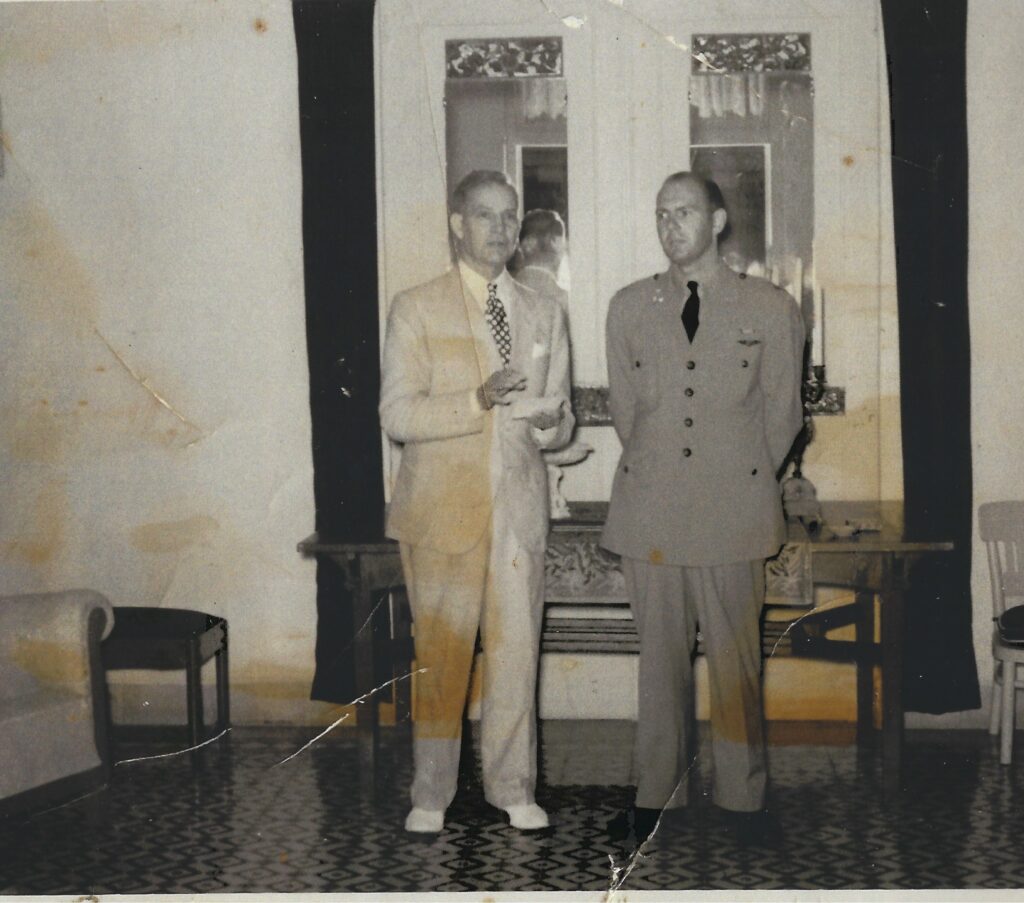
Family archive
The following document brings together additional records retained by Bodemeijer’s son, Ron. It includes biographical information, military appointments, decorations and material relating to Bodemeijer’s technical career.
View Dirk Bodemeijer’s historical documents
Historical significance
Dirk Bodemeijer’s career demonstrates the essential contribution of technical officers to Dutch military aviation.
His work extended from prewar KLM engineering and ML-KNIL workshops to aircraft procurement in the United States, fighter-squadron maintenance in Australia and New Guinea, and the reconstruction of aviation and civil infrastructure after the war.
The surviving documents also provide an unusually detailed record of the administrative, engineering and logistical work undertaken behind the operational history of No. 120 Squadron.
Related DACC articles
- No. 120 (Netherlands East Indies) Squadron RAAF: Dutch Kittyhawks over New Guinea
- The strategic position of Merauke during World War II
- The NEI Personnel and Equipment Pool Squadron—Canberra and Bundaberg
- DACC Air Force Research Portal
Sources and acknowledgements
The principal sources for this article are Dirk Bodemeijer’s curriculum vitae and the personal papers preserved by his son, Ron Bodemeijer.