An unexpected change of orders
In March 1944, a perceived Japanese naval threat led to the rapid deployment of Dutch and Australian aircraft to Western Australia.
The emergency involved both No. 18 (Netherlands East Indies) Squadron RAAF and No. 120 (Netherlands East Indies) Squadron RAAF.
No. 18 Squadron was already flying operational missions with B-25 Mitchell bombers from Batchelor in the Northern Territory. No. 120 Squadron had recently been formed in Canberra and was preparing to deploy its P-40N Kittyhawks to Merauke in Netherlands New Guinea.
Instead, aircraft and personnel from both squadrons were temporarily sent west to help defend the Western Australian coast.
The perceived Japanese naval threat
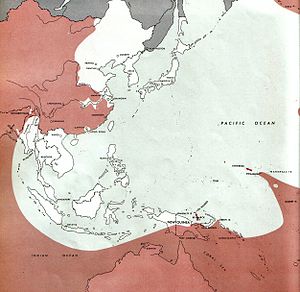
In February 1944, American carrier aircraft attacked the major Japanese naval base at Truk during Operation Hailstone. Japanese naval units had already begun moving from Truk towards bases closer to their Southeast Asian fuel supplies, including Singapore and the Netherlands East Indies.
Allied intelligence closely monitored these movements.
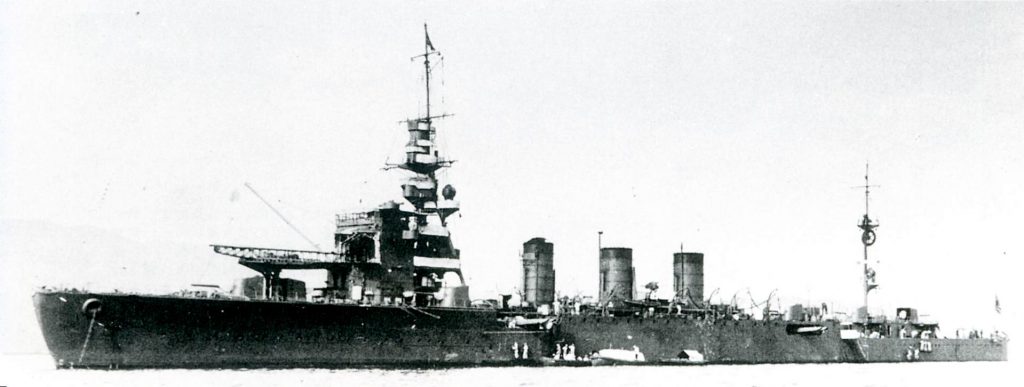
On 6 March, the American submarine USS Haddo sighted Japanese warships near the Sunda Strait between Java and Sumatra. One of the vessels identified was the light cruiser Kinu. These reports contributed to fears that a Japanese force might enter the Indian Ocean.
Australian authorities were particularly concerned about the possibility of a raid against Fremantle, Perth, Geraldton, Exmouth Gulf or Allied shipping off the Western Australian coast.
A full-scale Japanese invasion of Western Australia was no longer considered likely by 1944. However, a naval raid or carrier-borne air attack remained possible, and the available reports could not safely be ignored.
Memories of the 1942 Indian Ocean raid
The concern was influenced by memories of Japan’s Indian Ocean raid of April 1942.
During that operation, a Japanese carrier force commanded by Vice Admiral Chūichi Nagumo attacked Colombo and Trincomalee in Ceylon—now Sri Lanka—and inflicted serious losses on British naval and merchant shipping.
The 1942 operation demonstrated that Japanese naval aviation could strike far into the Indian Ocean. Australian commanders therefore treated the March 1944 reports seriously, even though Japan’s strategic position had deteriorated considerably during the intervening two years.
raft carried personnel, equipment, spare parts and supplies required to keep the fighters operational after their arrival.
Across the Australian continent
The deployment required No. 120 Squadron’s aircraft to cross almost the entire Australian continent.
The route took the Kittyhawks from Canberra along the southern coast through Adelaide and Ceduna, across the Nullarbor to Kalgoorlie and then north towards Exmouth Gulf.
Their eventual destination was Potshot, the wartime Allied base near the present town of Exmouth.
The long-distance movement was a demanding undertaking for single-engined fighters. The pilots encountered inadequate maps, sandstorms, heavy rain, strong winds and difficult landing conditions. They also had to cross enormous areas in which an emergency landing could leave an airman isolated far from assistance.
A Dutch pilot’s account
An unidentified Dutch pilot recorded the difficult journey. His account, reproduced by O.G. Ward, described becoming lost in a sandstorm and making an emergency landing in a field that was too small. The aircraft passed through a fence, but the pilot escaped injury.
The following day, he located a B-25 travelling in the same direction and followed it across the desert. The Mitchell effectively became his navigation guide during the remaining flight.
The pilot described arriving at Potshot in severe rain and wind with almost no visibility. Despite the conditions, his landing was successful and was praised by personnel on the ground.
He also recorded the primitive living conditions at the base: mud, sand, pests and personnel sleeping on the ground in unstable tents.
The account captures the difficulties faced by pilots moving short-range fighters over approximately 2,800 miles of unfamiliar Australian territory.
The account from one of the Dutch pilots.
“The trip to this strip wasn’t just one of pink and moonshine. First of all, it’s a distance of about 2800 miles and I had to fly in the most cursed bad weather with maps that weren’t worth a cut. The result was that I got lost in a sandstorm and had to make an emergency landing where I flew through a fence because the field was too small. Anyway, I got off well. The next day I picked up a B-25, which was heading in the same direction, so I flew quietly after him and was quite safe. After three days of endless long hours over those cursed Australian deserts … [illegible] If you make an emergency landing in this area, you are also screwed. We arrived here in the worst weather there was. I couldn’t see a thing but I quietly used the B-25 as my blind flying instrument. Best of all, when I made that landing in the pouring rain and storm, everyone came to compliment me on the beautiful landing. We are lying here in the mud and the mess is indescribable. Fortunately, it is now somewhat dry and the sand is not so dirty. We sleep in rickety tents on the ground, but that’s fine. The pests are terrible and present in large numbers. More tomorrow . . . “
aval attack against Western Australia was launched.
The available submarine reports and intelligence had not provided Allied commanders with a complete picture. Faced with that uncertainty, Australian authorities chose to reinforce the west coast rather than risk leaving important ports and naval facilities inadequately defended.
General Douglas MacArthur monitored the situation, but forces committed to operations farther north were not diverted to Australia on the scale that would have been required to meet an invasion.
Return to normal duties
Once the immediate concern had passed, the deployed squadrons were ordered to return to their previous assignments.
No. 18 Squadron resumed its bombing, reconnaissance and anti-shipping operations from the Northern Territory.
No. 120 Squadron returned east before continuing its planned deployment to Merauke. The movement to Netherlands New Guinea resumed during April, with its main party arriving at Merauke on 7 May 1944.
During the return journey, two No. 120 Squadron Kittyhawks—C3-524 and C3-527—became lost while flying from Potshot to Canberra. Their pilots, Second Lieutenant A.J. Geerts and Sergeant J.D. Brameyer, abandoned the aircraft by parachute and survived. Both Kittyhawks crashed near Mildura.
Historical significance
The Western Australian Emergency proved to be a false alarm in the sense that the anticipated major attack did not occur. It was nevertheless a reasonable military response to incomplete intelligence about genuine Japanese naval movements.
For the Dutch squadrons, the deployment was significant because it demonstrated their role in the direct defence of Australia as well as in the wider campaign to liberate the Netherlands East Indies.
It also tested the ability of a newly formed fighter squadron to move its personnel, aircraft, maintenance equipment and supplies across a continent at short notice.
The episode therefore forms an important part of the shared Dutch–Australian wartime history of both No. 18 and No. 120 Squadrons.
onja Peters’ account of Operation Potshot
Dr Nonja Peters has documented the experiences of the Dutch airmen sent to Western Australia in Chapter 8 of her book A Touch of Dutch.
Her account provides additional detail about the deployment to Potshot, the conditions encountered by the Dutch personnel and the broader Dutch presence in wartime Western Australia. It complements the operational history above with a Western Australian and personal perspective.
The chapter is reproduced below with the author’s permission. Its original text and illustrations have been retained.
Nonja Peters, “Operation Potshot: Dutch Airmen in the Defence of Western Australia, 1944,” in A Touch of Dutch, Chapter 8, pp. 114–119.
For the full pdf of the book click here.
Sources and further reading
- O.G. Ward, De Militaire Luchtvaart van het KNIL in de jaren 1942–1945
- No. 18 (Netherlands East Indies) Squadron RAAF during World War II
- No. 120 (Netherlands East Indies) Squadron RAAF
- Operations Record Books of Nos. 18 and 120 Squadrons, National Archives of Australia
- DACC Air Force Research Portal