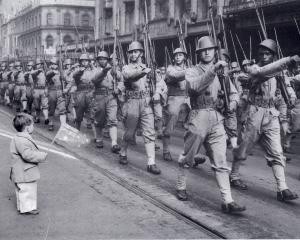
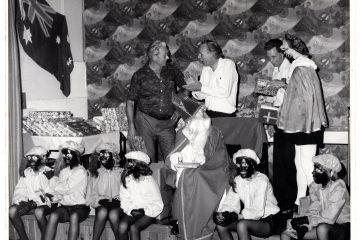
The evacuation of the Netherlands East Indies flying schools was one of the largest movements of Dutch military aviation personnel during the collapse of the colony in early 1942.
Hundreds of student pilots, instructors, observers, wireless operators, air gunners and technical personnel escaped to Australia. Although their stay was brief, Australia provided the immediate refuge from which the training organisation could be transferred to the United States.
Many of its graduates later returned to Australia and served with the Dutch and joint Netherlands East Indies–RAAF squadrons operating in the Southwest Pacific.
Bringing the training organisations together
Before the Japanese invasion, aviation training in the Netherlands East Indies involved several organisations:
- the Military Aviation Service of the Royal Netherlands East Indies Army—ML-KNIL;
- the Royal Netherlands Naval Air Service—MLD; and
- the Vrijwillig Vlieger Corps—VVC, or Volunteer Flying Corps, which trained civilian volunteers and private pilots.
As the military situation deteriorated, arrangements were made to combine and evacuate these training activities.
On 10 January 1942, during discussions associated with the establishment of the American-British-Dutch-Australian Command—ABDACOM—Dutch representatives raised the possibility of transferring the flying schools to Australia.
Australia’s Chief of the Air Staff, Air Chief Marshal Sir Charles Burnett, advised that the Royal Australian Air Force was already under considerable pressure to expand its own training system. The Dutch students would therefore have to fit within the available Australian training capacity and follow an acceptable RAAF syllabus.
The RAAF training syllabus was sent to Batavia for examination and was accepted by the Dutch authorities.
Major M. van Haselen, commander of the ML-KNIL flying school, and naval pilot H.L.A. van der Kroef travelled to Australia on 1 February 1942 to prepare for the proposed transfer.
Australian approval was subsequently obtained for Dutch aviation students to continue training, provided that sufficient aircraft and equipment could be made available.
The planned student strength
Van Haselen presented the Australians with a proposed training strength of 300 student pilots:
- 40 advanced students who had completed approximately 60 hours on Ryan monoplanes, 60 hours on Koolhoven aircraft and 12½ hours on Lockheed aircraft;
- 60 students who had completed approximately 60 hours on Ryan monoplanes;
- 120 elementary students with approximately 10 to 15 hours on Tiger Moths; and
- 80 students who were ready to begin flying training.
The proposal also envisaged air-gunner training and instruction for observers, wireless operators and other aviation specialists.
This strength list is important because it shows the scale of the training organisation the Dutch hoped to preserve.
Evacuation by sea and air
Preparations for the evacuation accelerated from 18 February 1942 as Japanese forces advanced towards Java.
One group of students embarked at Tandjong Priok, the port of Batavia, aboard the approximately 14,000-ton motor ship Boissevain.
A second group departed Surabaya aboard the approximately 9,000-ton Tjinegara. This vessel also carried aviation personnel, equipment and Ryan training aircraft. The Tjinegara reached Adelaide on 4 March and later continued to Sydney, arriving there on 9 March.
Instructors and other personnel also escaped in Dutch military, naval and civil aircraft. The ML-KNIL Transport Department, KNILM—the civil airline of the Netherlands East Indies—and Royal Netherlands Naval Air Service flying boats all contributed to the evacuation.
Other students with little or no flying experience escaped from Tjilatjap aboard ships including the Abbekerk and Zaandam. They disembarked at Melbourne and were temporarily housed at the Melbourne Showgrounds.
Not everyone could be evacuated. Many military personnel and family members remained behind and subsequently became prisoners or civilian internees.
Temporary training in Australia
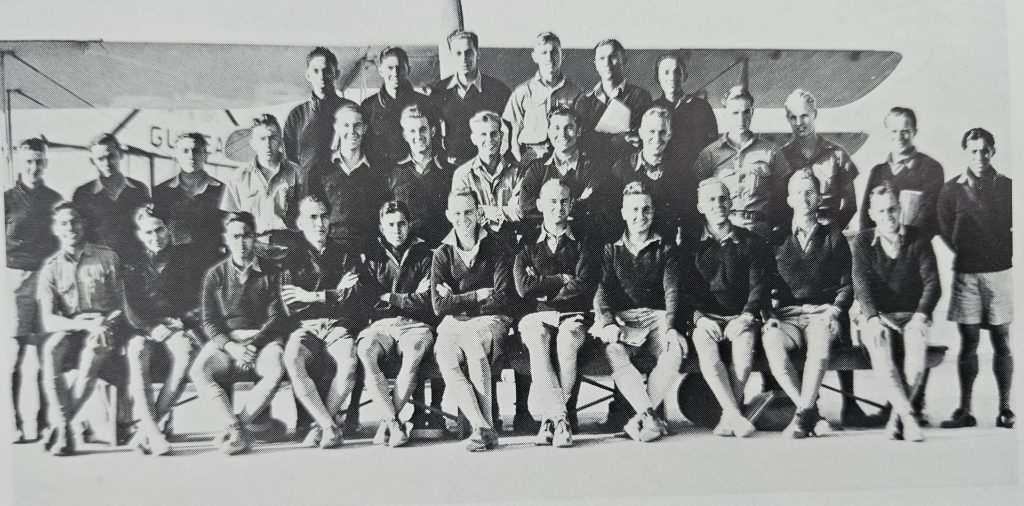
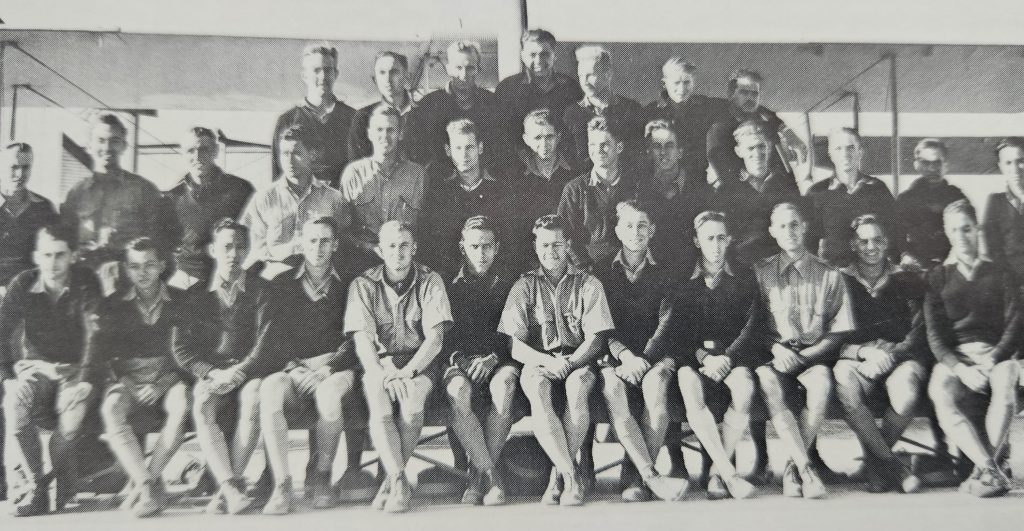
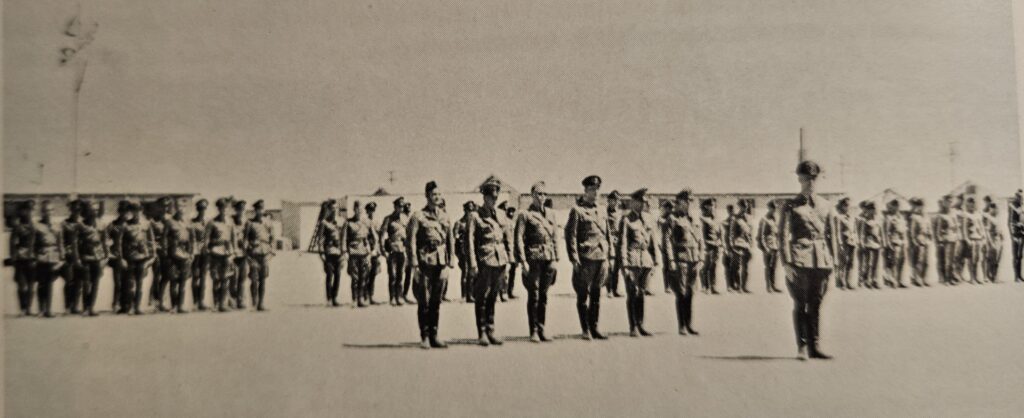
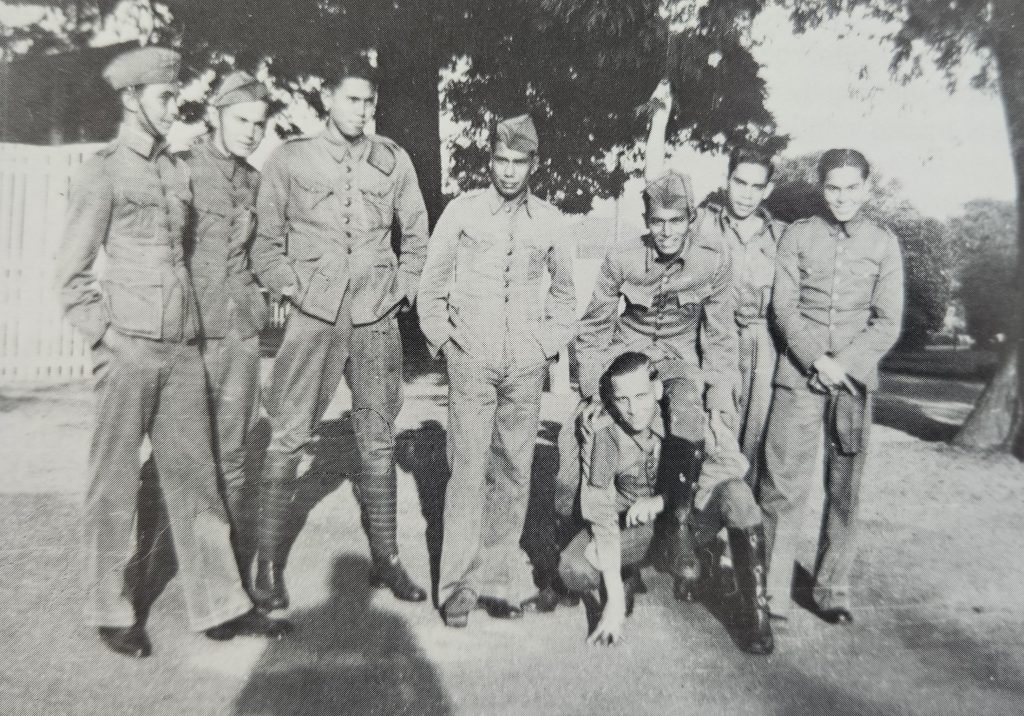
More advanced students were sent to RAAF Station Mallala in South Australia, where No. 6 Service Flying Training School was based.
Less experienced students were accommodated at Parafield, near Adelaide. They were organised into A Flight and B Flight and included former members of the militarised VVC and civilian pilots who had volunteered for service after the outbreak of the Pacific War.
The least experienced group, including trainee observers and bombardiers, remained temporarily in Melbourne while decisions were made about its future.
The Royal Netherlands Naval Air Service training organisation, together with surviving training aircraft, was temporarily associated with the RAAF flying-boat base at Rathmines in New South Wales.
Why training could not continue in Australia
Australia was able to provide immediate refuge, but continuing such a large Dutch training program presented serious difficulties.
The RAAF was undergoing a rapid wartime expansion and urgently required its training schools, aircraft and instructors. Australia also faced shortages of aviation fuel, spare parts, serviceable aircraft and suitable airfields. American forces were arriving in growing numbers, placing further demands on bases and supplies.
There was also a genuine fear of Japanese attack following the bombing of Darwin and Broome.
Dutch and Allied authorities therefore considered three possibilities:
- continuing the training in Australia;
- transferring the organisation to British India; or
- moving it to the United States.
On 15 March 1942, Lieutenant Governor-General Hubertus van Mook informed the Dutch government in London that Australian and Allied authorities supported transferring the students, instructors and training organisation to the United States. This would release Australian facilities for the expansion of the RAAF.
Departure aboard the Mariposa
On 18 April 1942, the American liner Mariposa, operated by the Matson Navigation Company, departed Melbourne for San Francisco carrying the Dutch aviation students, instructors, specialists and accompanying family members.
A Dutch report compiled shortly after the departure recorded the following personnel.
Royal Netherlands Naval Air Service
- 16 flying instructors;
- 134 student pilots;
- 7 observer instructors;
- 4 air-gunner instructors;
- 17 trainee air gunners;
- 2 reserve naval officers;
- 1 medical officer;
- 2 radio instructors;
- 15 trainee wireless operators;
- 1 radio officer;
- 1 administrative officer;
- 1 skipper;
- 7 marines;
- 1 sergeant-writer;
- 1 military nurse;
- 45 women; and
- 12 children.
ML-KNIL
- 30 flying instructors;
- 305 student pilots;
- 2 observer instructors;
- 11 trainee observers;
- 6 language and technical instructors;
- 3 radio instructors;
- 1 radio-service officer;
- 2 administrative officers;
- 4 administrative non-commissioned officers;
- 1 medical officer;
- 1 dentist;
- 45 women; and
- 45 children.
The preservation of this passenger inventory is important because it demonstrates that the evacuation involved complete training and support organisations rather than pilots alone.
The Mariposa arrived in San Francisco on 3 May 1942. Personnel then travelled to Jackson, Mississippi, where the Royal Netherlands Military Flying School became the centre of Dutch aviation training in the United States.
The Royal Netherlands Military Flying School
The school at Jackson trained personnel for the ML-KNIL and Royal Netherlands Naval Air Service. Its graduates subsequently served in Australia, the Southwest Pacific, Ceylon and the European theatre.
Recorded training results were:
| Type of training | Commenced | Graduated |
|---|---|---|
| Primary flying | 320 | 191 |
| Basic flying | 316 | 277 |
| Advanced single-engine | 101 | 101 |
| Advanced twin-engine | 147 | 143 |
| B-25 operational training | 127 | 120 |
| P-40 operational training | 60 | 57 |
| PBY Catalina training | 20 | 20 |
| Bombardier training | 104 | 102 |
| Seaplane navigation | 13 | 13 |
| Navigation for second pilots | 30 | 30 |
| Observer training | 29 | 26 |
| Wireless operator/mechanic | 89 | 77 |
| Air-gunner training | 273 | 269 |
Specialist personnel were also trained, including:
- 7 intelligence officers;
- 6 armaments officers;
- 8 liaison officers;
- 2 Bendix gun-turret fitters;
- 8 Sperry bomb-aiming equipment fitters;
- 2 aircraft-instrument fitters;
- 2 Curtiss-Wright engine fitters;
- 3 Allison engine fitters;
- 2 photographic-intelligence officers;
- 4 meteorologists; and
- 5 Bendix and Martin gun-turret instructors.
These figures should not necessarily be interpreted as representing separate individuals in every category, because some students progressed through several consecutive stages of training.
Importance for Dutch air operations from Australia
The evacuation preserved a large body of young aviation personnel who might otherwise have been captured when Java surrendered.
Australia provided their first place of safety and allowed the different groups to be assembled and reorganised. The transfer to the United States then provided the aircraft, instructors and facilities required to complete their training.
Many graduates returned to Australia and supplied aircrew and specialists for No. 18 and No. 120 (Netherlands East Indies) Squadrons RAAF, the Netherlands East Indies military transport organisation and Dutch naval aviation.
The evacuation therefore formed an essential link between the destruction of Dutch air power in the Netherlands East Indies and its reconstruction in Australia and the United States.
Related DACC articles
- Dutch and Netherlands East Indies Air Forces in Australia during World War II—Research Portal
- Building Dutch Air Power in World War II
- The fall of the Netherlands East Indies, March 1942
- Royal Netherlands Indies Airline—KNILM and its Australian connection
Principal source
De Militaire Luchtvaart van het KNIL in de jaren 1942–1945, held by the National Library of Australia.
Netherlands East Indies aircrews training in Australia – archival document
The document below provides additional information about the Netherlands East Indies aviation personnel who were evacuated to Australia in early 1942. It describes their arrival, temporary accommodation and training at Australian airfields before most of the students and instructors were transferred to the United States.