A remarkable Dutch merchant ship and its escape to Australia
Among the many Dutch merchant ships that played a vital role in the defence of Australia during the Second World War, few have a more remarkable story than the MS Abbekerk. Carrying arms and ammunition through increasingly dangerous waters, surviving the collapse of Singapore and the Netherlands East Indies, and finally bringing hundreds of Allied servicemen and civilians safely to Australia, the Abbekerk stands as a powerful example of the courage and resilience of the Dutch Merchant Navy.
This article centres on the extraordinary experiences of Captain Adriaan Willem Kik, who served as Fourth Engineer aboard the Abbekerk during those dramatic months of early 1942. His vivid memoir, The Long Voyage, provides a rare first-hand account of one of the most hazardous evacuation voyages of the Pacific War.
The memoir was first published as an edited extract in The Dutch Contribution to the Defence of Australia during the War in the Pacific, 1941–1945, compiled by Ben van Essen and Jan Vel of Adelaide. The booklet was produced in November 2007 to coincide with the unveiling of the Dutch commemorative plaque on Adelaide’s Pathway of Honour, honouring the Dutch servicemen and women who helped defend Australia during the Second World War. Readers interested in that publication and the Adelaide memorial can find separate articles elsewhere on the DACC website.
Ben van Essen and Jan Vel generously granted the DAAAG permission to publish Captain Kik’s memoir on its website, ensuring that his remarkable story would reach a wider audience. Following the closure of DAAAG, the Dutch Australian Cultural Centre is pleased to preserve this important historical account for future generations.
A merchant ship at war
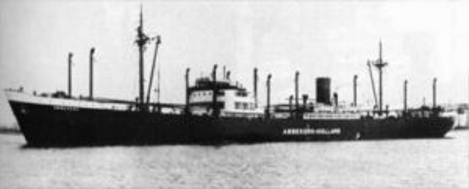
Like hundreds of Dutch merchant vessels, the Abbekerk became part of the Allied war effort almost immediately after the outbreak of the Second World War. Dutch merchant ships continued operating under increasingly dangerous conditions, transporting troops, aircraft, ammunition, fuel and vital supplies across the globe.
By early 1942 the strategic situation in Southeast Asia had become desperate. Japanese forces had swept through Malaya, Singapore was under attack, and the Netherlands East Indies faced invasion. Merchant ships such as the Abbekerk suddenly found themselves operating in active war zones, often under constant threat from enemy aircraft, submarines and surface warships.
Captain Kik’s memoir begins as the ship finally reaches Singapore carrying a dangerous cargo of bombs and military stores. Almost immediately the crew found themselves caught in the relentless Japanese air attacks on the city. Chinese dockworkers, terrified by the nature of the cargo and the increasing bombardments, refused to unload the ship, leaving the crew themselves to discharge as much of the ammunition as possible while the city descended into chaos.
Following the fall of Singapore, the Abbekerk moved first to Oosthaven on southern Sumatra before proceeding to Tjilatjap (now Cilacap) on Java’s south coast, the last major Allied evacuation port in the Netherlands East Indies.
There the ship’s role changed dramatically. Still carrying large quantities of ammunition that could not be unloaded in time, she was hurriedly converted into an evacuation ship. Hundreds of Allied military personnel and civilians crowded aboard as Japanese forces rapidly closed in.
Unknown to the passengers sleeping in the holds, thousands of tonnes of ammunition still remained beneath them.
The voyage to Australia
The voyage from Java to Australia became a race against time.
The Abbekerk sailed with a group of twenty-four merchant ships attempting to escape before Java fell to the Japanese. Japanese warships, submarines and reconnaissance aircraft patrolled the surrounding seas, while distress calls from ships under attack were received almost daily.
Captain Kik vividly recalls the tension of serving below decks in the engine room, unable to see what was happening outside yet fully aware that at any moment a torpedo or bomb might end the voyage. The crew constantly wondered whether they would become the next victim.
A Japanese reconnaissance aircraft eventually located the ship, but fortunately no attack followed. Altering course under cover of darkness and maintaining full speed, the Abbekerk finally reached Fremantle.
The crew later learned just how fortunate they had been.
Of the twenty-four ships that departed Tjilatjap during those desperate final days, only thirteen reached safety.
Captain Kik’s remarkable memoir
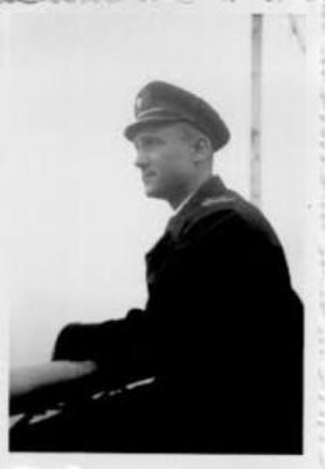
What makes Captain Kik’s account so compelling is not simply the events themselves but the humanity with which he describes them.
He recalls the fighter aircraft crashing beside the ship in Singapore Harbour; the frightened Chinese dockworkers refusing to unload the bombs; the camaraderie with the British anti-aircraft gunners who became part of the ship’s company; the uncertainty of sailing through enemy-controlled waters; and finally the overwhelming relief of reaching Australia alive.
After months of darkness, blackout restrictions and constant danger, Fremantle seemed almost unreal.
The lights of the city remained on throughout the night.
The shops were full.
The streets were peaceful.
For Captain Kik and his fellow crew members, Australia represented not simply safety, but a return to normal life after months of living under the constant threat of enemy attack.
His memoir captures these emotions with remarkable honesty and simplicity, allowing readers to experience the uncertainty, fear, hope and relief of those extraordinary weeks through the eyes of someone who lived them.
The Dutch Merchant Navy’s contribution
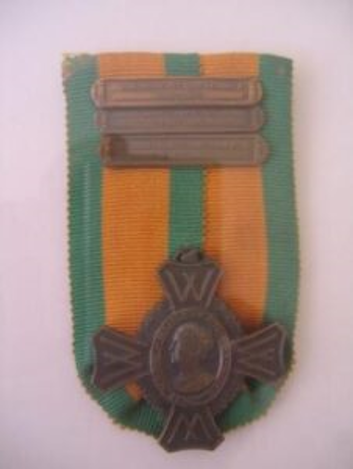
The story of the Abbekerk also represents the wider contribution of the Dutch Merchant Navy during the Second World War.
Dutch merchant vessels became indispensable to Allied logistics after both the Netherlands and the Netherlands East Indies were occupied. Operating under constant danger, they transported troops, refugees, food, fuel, aircraft, ammunition and essential supplies across every theatre of war.
The price was enormous.
During the war 351 Dutch merchant ships were lost. Approximately 12,000 Dutch merchant seamen, together with 6,500 crew members of other nationalities, served aboard these vessels. Around 3,600 lost their lives in the Allied cause.
Those who survived were later awarded the War Memorial Cross (Oorlogsherinneringskruis) in recognition of their wartime service.
Preserving an important story
The publication of Captain Kik’s memoir in the 2007 Adelaide booklet ensured that one remarkable chapter of Dutch–Australian wartime history would not be forgotten. Thanks to the foresight of Ben van Essen and Jan Vel, and their permission for DAAAG to republish the memoir, this personal account has continued to reach new generations of readers.
Today the Dutch Australian Cultural Centre is proud to preserve this story as part of Australia’s shared Dutch wartime heritage.
Captain Adriaan Willem Kik’s recollections remind us that behind every merchant ship lay a crew of ordinary men facing extraordinary circumstances. Their courage helped sustain the Allied war effort during its darkest days and ensured that countless soldiers, civilians and refugees reached the safety of Australia.
The pages that follow contain Captain Kik’s own account—The Long Voyage—one of the finest first-hand descriptions of the dramatic evacuation of the Netherlands East Indies and the remarkable escape of the MS Abbekerk.