NEFIS and Allied intelligence cooperation in the Southwest Pacific Area
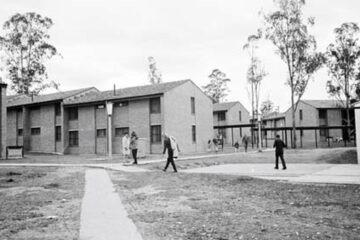
By 1944, Camp Columbia at Wacol had become the principal Australian centre of the Netherlands East Indies wartime administration. Among the organisations operating from the camp was the Netherlands Forces Intelligence Service (NEFIS), the principal Dutch intelligence organisation operating from Australia.
NEFIS had itself been established in Melbourne following the Japanese conquest of the Netherlands East Indies in early 1942. By the time it relocated to Camp Columbia, it had developed into a substantial organisation covering intelligence collection and interrogation, counter-intelligence, clandestine operations, military intelligence and civil-affairs intelligence.
The Australian War Memorial describes NEFIS as perhaps the most important use made of the relatively small number of Netherlands East Indies Army personnel available in Australia. It grew from about 50 personnel in 1942 to more than 350 by the end of the war.
But NEFIS did not operate in isolation. Camp Columbia connected it to a much larger intelligence world.
Brisbane had become an important Allied intelligence centre within the Southwest Pacific Area (SWPA). Australian, American, British and Dutch organisations gathered intelligence, intercepted communications, interrogated refugees and prisoners, conducted clandestine operations and supported Allied forces advancing through New Guinea and the Japanese-occupied Netherlands East Indies.
These organisations shared an enemy, but they did not necessarily share the same priorities. Their experience provides a fascinating example of international wartime cooperation — and of the difficulties that arose when secret organisations with different chains of command and national objectives were required to work together.
For NEFIS there was an additional complication. It had to help the Allies defeat Japan while simultaneously gathering the political, economic and social intelligence the Netherlands believed it would need when Dutch authority was restored in the Netherlands East Indies.
That dual role shaped both NEFIS’s contribution to the Allied war and many of its disagreements with its intelligence partners.
Brisbane becomes an Allied intelligence centre
General Douglas MacArthur initially established his Australian headquarters in Melbourne after arriving in March 1942. In July he transferred his General Headquarters, Southwest Pacific Area (GHQ SWPA), to Brisbane.
The movement north brought with it an extraordinary concentration of military command, communications, intelligence and special-operations organisations.
Among them was the Allied Intelligence Bureau (AIB), established in Brisbane in1942 as an umbrella organisation intended to coordinate several forms of clandestine intelligence, special operations and propaganda within the Southwest Pacific Area.
Secret Intelligence Australia (SIA) represented another strand of this intelligence world. Despite its name, SIA was associated with Britain’s Secret Intelligence Service, or SIS/MI6, rather than being simply an Australian military intelligence organisation. Headed by Roy Kendall, it also operated from Brisbane, with its headquarters at Craigroyston in New Farm.
Other organisations had quite different functions. The Services Reconnaissance Department (SRD) and Z Special Unit became associated particularly with clandestine reconnaissance and special operations. The Far Eastern Liaison Office (FELO) concentrated on propaganda and psychological warfare. Coastwatchers gathered intelligence from behind Japanese lines. Central Bureau and FRUMEL worked in the separate but critically important field of signals intelligence and codebreaking.
These were distinct organisations. They should not be treated as interchangeable components of a single Allied intelligence service. Their functions, command structures and national allegiances differed.
Nevertheless, Brisbane became one of the places where their activities converged.
When NEFIS subsequently moved from Melbourne to Camp Columbia, the Dutch intelligence service was therefore moving into one of the principal Allied command and intelligence centres of the Southwest Pacific Area.
NEFIS was created in Australia
The Japanese conquest of the Netherlands East Indies destroyed much of the pre-war Dutch intelligence network.
Dutch naval liaison officer Commander G.B. Salm began gathering information from refugees and military personnel reaching Australia, while Dutch cryptographic specialists evacuated from Java continued their work from Australia and the United States.
In April 1942 Admiral Conrad Helfrich instructed Salm to establish an intelligence organisation within MacArthur’s Southwest Pacific Area command. From these arrangements emerged NEFIS.
This makes NEFIS unusual within Dutch military history. Although it served the Netherlands East Indies and drew heavily upon Dutch and Indonesian personnel and knowledge, the wartime organisation itself was created in exile on Australian soil. The Australian War Memorial similarly dates its establishment in Melbourne to shortly after the fall of the NEI.
NEFIS possessed something the Allies badly needed: detailed knowledge of the enormous Indonesian archipelago, including its languages, geography, administration, shipping, communications and local communities.
What the Dutch could no longer contribute in large numbers of combat troops, they could increasingly contribute through specialist regional knowledge and intelligence.
AIB and the problem of coordination
The Allies faced a broader problem. Numerous organisations were gathering intelligence or planning clandestine operations behind Japanese lines.
AIB was intended to bring some order to this increasingly crowded field.
NEFIS initially came under AIB Controller Colonel C.G. Roberts. Almost immediately, however, a fundamental problem emerged.
Roberts wanted a coordinated Allied intelligence structure. Salm and the Netherlands East Indies Commission believed that intelligence concerning Dutch territory should remain substantially under Dutch control.
When the Dutch successfully pressed MacArthur’s headquarters for greater independence in handling political, economic and military intelligence concerning the NEI, Roberts reportedly threatened to resign.
A compromise followed. Senior Dutch intelligence officer Simon Spoor received direct access to GHQ, while Salm headed the NEI regional section within the AIB arrangements.
Australian military historian Dr Jack Ford, whose extensive research into wartime relations between Australia and the Netherlands East Indies is published in Allies in a Bind: Australia and the Netherlands East Indies in the Second World War, points to one practical consequence: the proliferation of intelligence organisations forced the Dutch to spread their already limited pool of experienced personnel across several different bodies.
The fundamental problem had already emerged: how could allied countries share intelligence while retaining control over their own sources, organisations and national interests?
Cooperation was extensive in the field
Arguments about command did not prevent extensive operational cooperation.
In December 1942, eleven NEFIS personnel went to Darwin to help establish a joint AIB–NEFIS forward base.
Even earlier, Operation Mackerel had attempted to insert a NEFIS intelligence party into Java. Although unsuccessful in producing significant intelligence, it provided useful experience in planning clandestine operations.
NEFIS personnel subsequently trained at facilities also used by Australian special-operations personnel, while Australians participated in some Dutch-led operations.
The distinction between organisational rivalry and operational cooperation is important. NEFIS could resist Allied control at headquarters while simultaneously depending upon Allied aircraft, submarines, communications, training facilities and personnel in the field.
The Australian War Memorial’s account of Dutch submarines provides one example. Dutch submarines operating from Fremantle were among the vessels used to insert and, less frequently, recover NEFIS reconnaissance parties in the occupied NEI.
At headquarters, intelligence organisations could argue over authority. In the field, Dutch, Indonesian, Australian, British and American personnel often depended upon one another.
Korps Insulinde — Dutch commandos enter the secret war
NEFIS was primarily an intelligence organisation. Gathering, analysing and distributing intelligence, however, was different from physically sending trained men into Japanese-occupied territory.
The Dutch also needed personnel capable of clandestine military operations.
Korps Insulinde provided such a capability.
Its origins lay partly among soldiers of the Princess Irene Brigade who had been sent from Britain towards the Asian theatre. Following the Japanese conquest of the Netherlands East Indies, Dutch forces regrouped in Ceylon, present-day Sri Lanka. There, in August 1942, Korps Insulinde was formally established for special operations in Japanese-occupied territory.
It was important because Korps Insulinde was a commando formation, not simply another group of intelligence officers.
Its men received specialist training for operating behind enemy lines. Their work could include clandestine reconnaissance and intelligence gathering, establishing contact with local populations, and preparing or supporting guerrilla activity. Small parties could be inserted into enemy-held territory by submarine and expected to operate covertly and independently.
Korps Insulinde was one of the pioneering Dutch commando formations of the Second World War. At approximately the same period, Dutch soldiers in Britain were being trained as No. 2 (Dutch) Troop within the British No. 10 (Inter-Allied) Commando. Both formations became part of the historical tradition from which the post-war Dutch commando forces developed.
From 1943, trained Korps Insulinde personnel became associated with NEFIS III, the section responsible for secret intelligence and special operations.
The relationship was complementary. NEFIS could determine intelligence requirements, develop networks and process the information obtained. Korps Insulinde supplied specially trained soldiers capable of physically entering enemy-held territory and operating there.
Korps Insulinde also illustrates how international the secret war had become. Its origins included Dutch troops reorganised in Britain; the unit was established and trained in British Ceylon; its personnel became connected with NEFIS, established in Australia; and its operations took them back into the Japanese-occupied Netherlands East Indies.
NEFIS supporting the Allied advance
Clandestine operations were only one part of NEFIS’s contribution. As Allied forces advanced through New Guinea and towards the eastern Netherlands East Indies, its broader intelligence capabilities became increasingly valuable.
In these areas Dutch and Allied military objectives largely coincided.
Dutch and Indonesian personnel possessed languages, geographical knowledge and familiarity with local communities that were difficult for American and Australian forces to obtain elsewhere. NEFIS interrogation teams questioned refugees, rescued prisoners, civilians and others emerging from Japanese-controlled territory. They gathered information about Japanese troop strengths, defensive positions, shipping, communications and airfields.
The Australian War Memorial considers this less spectacular work — particularly interrogation, cartography and the processing of information — probably NEFIS’s most valuable contribution.
Some clandestine operations were also successful. The Oaktree party in Dutch New Guinea remained behind Japanese lines for more than two years, providing valuable intelligence while maintaining contact with local communities.
The Dutch contribution was also evident around Timor. Dutch and Australian troops fought together there, while the demands for interpreters, liaison officers and NEFIS personnel placed considerable pressure on the small KNIL force available in Australia.
By 1945, NEFIS specialists were accompanying Allied forces returning to parts of the NEI.
One important area was Borneo, the large island west of Celebes and north of Java. Much of southern and eastern Borneo then formed part of the Netherlands East Indies.
Tarakan is an island off the north-eastern coast of Borneo, while Balikpapan lies further south on Borneo’s east coast, in what is today the Indonesian province of East Kalimantan. Both were strategically important because of their oilfields and associated port facilities.
When Australian forces landed on Tarakan on 1 May 1945, they were accompanied by a company of 140 KNIL soldiers serving as scouts and interpreters and by NEFIS intelligence and civil-affairs specialists.
Two months later, the Australian 7th Division landed at Balikpapan, again accompanied by a KNIL infantry company and Dutch support personnel.
These operations demonstrate how far cooperation had developed. Dutch and Indonesian regional knowledge was no longer simply being collected in intelligence reports in Australia. NEFIS personnel and information were directly supporting Australian forces returning to NEI territory.
NEFIS and General Krueger’s Sixth Army
There was also an important connection with Lieutenant-General Walter Krueger’s US Sixth Army.
Sixth Army had earlier maintained its headquarters at Camp Columbia before moving north as the Allied advance progressed.
In 1944, NEFIS sent Major G.L. Reinderhoff to Krueger’s headquarters in New Guinea to assist American planners preparing future operations.
The significance of this relationship was practical. American forces advancing through New Guinea towards the NEI required intelligence about geography, local populations, communications and Japanese dispositions. NEFIS possessed specialist regional knowledge that could help provide it.
We should not infer an organisational relationship simply because Sixth Army and NEFIS successively occupied Camp Columbia. Reinderhoff’s assignment, however, provides direct evidence of intelligence cooperation between NEFIS and Krueger’s command.
There is therefore an intriguing continuity in Camp Columbia’s history. It first housed the headquarters of an American army advancing through the Southwest Pacific Area and subsequently became the headquarters of a Dutch intelligence organisation contributing specialist knowledge relevant to that advance.
A major Dutch contribution
NEFIS’s importance should also be seen within the wider Dutch contribution to the Pacific War.
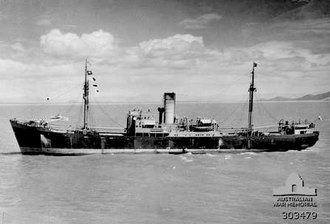
The Dutch merchant fleet made an enormous material contribution. Dutch ships carried troops, equipment and supplies from Australia into the forward operational areas. During 1942–43, the Australian War Memorial records that the vast majority of supplies reaching Allied troops in New Guinea were transported by Dutch ships. It describes the merchant fleet as the greatest Dutch contribution to final Allied victory.
The surviving Dutch land forces in Australia were much smaller.
Within those limitations, however, the Australian War Memorial concludes that perhaps their most important use was NEFIS.
It is therefore reasonable to identify two very different but complementary Dutch contributions.
The merchant fleet provided ships, crews and transport.
NEFIS provided intelligence, languages, cartography, interrogation expertise and detailed knowledge of the Netherlands East Indies.
Both supplied capabilities the wider Allied war effort needed.
When cooperation failed
The intelligence war also produced disasters.
During 1942 and 1943 NEFIS repeatedly attempted to insert intelligence parties into Japanese-occupied territory. Many agents disappeared or were captured and executed.
The Tiger parties sent into Java suffered devastating losses. Similar fates befell the Walnut party in the Aroe Islands and the Whiting party in Dutch New Guinea. Nearly 40 lives were lost in these operations.
NEFIS blamed some failures on AIB training methods. Salm believed techniques developed for Australian conditions were poorly suited to the very different social and geographical circumstances of the NEI.
The losses strengthened Dutch demands for greater operational independence.
MacArthur eventually allowed NEFIS greater control over its training, codebreaking and distribution of intelligence.
Yet NEFIS continued using Allied facilities and working with Allied organisations.
A characteristic pattern emerged: operational cooperation combined with institutional independence.
Intelligence organisations and their own empires
NEFIS was not alone in protecting its independence.
AIB had been established partly because the proliferation of intelligence and special-operations organisations threatened duplication and confusion. Yet organisations within the broader system continued to develop their own personnel, communications, transport, training facilities and chains of command.
Contemporary assessments could be sharply critical, describing components as developing almost into “private armies” and establishing their own machinery without sufficient regard for efficiency.
This was partly inherent in intelligence work.
Secret organisations protect agents and sources. Information is compartmentalised. Secure communications are essential. Sharing too much information can compromise an operation.
But the same practices can produce institutional isolation.
Organisations could compete for personnel, resources and desirable operations. They could duplicate one another’s work or withhold information that might have been useful elsewhere.
The dilemma had no simple solution.
Too much independence encouraged duplication and empire-building. Too much centralisation risked losing the specialist expertise that made organisations such as NEFIS valuable.
A different Dutch objective
There was another reason why NEFIS did not always fit comfortably within Allied intelligence priorities.
The Allies needed intelligence to defeat Japan.
The Dutch needed that too, but they also needed information about the political, economic and social situation inside the occupied NEI.
The difference became particularly apparent over Java.
MacArthur’s intelligence chief, Major-General Charles Willoughby, naturally prioritised intelligence concerning territories where Allied military operations were approaching. Dutch officials such as Hubertus van der Plas also wanted information from areas where no Allied invasion was imminent because they were thinking about what would happen when Dutch administration returned.
NEFIS therefore had two overlapping missions: supporting Allied military operations and preparing for the future of the Netherlands East Indies.
Where these objectives coincided — particularly across New Guinea and the eastern NEI — cooperation could be extensive.
Where they diverged, tensions became more apparent.
From military intelligence to civil administration
By 1944–45 this second objective was becoming increasingly important.
NEFIS had developed a Civil Affairs Intelligence section alongside its military intelligence, counter-intelligence and operational functions. The boundary between gathering information for military operations and preparing for the restoration of civil government was becoming increasingly blurred. The breadth of the organisation is reflected in the AWM’s description of its seven principal intelligence sections.
This did not mean that all Dutch officials envisaged simply restoring the pre-war colonial system unchanged. Dutch thinking about the post-war constitutional relationship with Indonesia was itself evolving.
Nevertheless, the restoration of Dutch governmental authority remained a central objective.
For many Allied intelligence organisations, the future political administration of the NEI remained secondary to defeating Japan.
For the Dutch it could not be separated so easily.
Rivalry within the Dutch system
The organisational problem even appeared within the Dutch administration itself.
As Allied forces recovered NEI territory, the Netherlands Indies Civil Administration (NICA) followed them to restore civil government.
NEFIS created Echelon M, subsequently known as ADVANEFIS, to accompany NICA into liberated areas.
A dispute developed over control. Although the intelligence personnel remained formally part of NEFIS, in the field they came under local NICA commanders and were required to report through them.
NEFIS objected.
There was also competition for scarce personnel, equipment, communications and transport. Jack Ford records that after drawing resources from the KNIL, NEFIS and NICA began effectively poaching resources from each other.
Institutional rivalry was therefore not simply Dutch versus Australian, British or American authority. Organisations belonging to the same national administration could also defend their own responsibilities and resources.
The Indonesian question
By 1945 another development was transforming the intelligence problem.
The Netherlands East Indies to which the Dutch intended to return was no longer the society they had left in 1942.
Japanese occupation had profoundly altered Indonesian politics. Nationalist leaders including Sukarno and Mohammad Hatta had acquired unprecedented prominence, while expectations of independence had grown dramatically.
Political intelligence from Java therefore became increasingly important to Dutch planners.
This helps explain why NEFIS could regard intelligence from Java as essential even when MacArthur’s headquarters considered information from areas of immediate military operations more urgent.
What appeared from an Allied military headquarters to be a secondary intelligence requirement could appear from Camp Columbia as essential preparation for the political future of the Netherlands East Indies.
The intelligence disagreement was becoming inseparable from the political struggle that would follow Japan’s surrender.
Camp Columbia and Brisbane’s hidden intelligence war
The presence of NEFIS at Camp Columbia adds another dimension to Brisbane’s wartime history.
Brisbane was not simply the location of MacArthur’s GHQ. It had become an important Allied intelligence centre within the Southwest Pacific Area, with British, Australian, American and Dutch organisations operating from locations across Brisbane and Queensland.
Camp Columbia became an important Dutch node within that network.
From there, NEFIS was connected to an intelligence and operational system extending through New Guinea, Timor, the Moluccas, Borneo and other parts of the Japanese-occupied Netherlands East Indies.
Its experience demonstrates the central paradox of Allied intelligence cooperation.
The Allies depended upon one another. Dutch and Indonesian personnel supplied regional knowledge and languages; Australian, British and American organisations provided operational resources, transport, communications and wider intelligence capabilities.
At the same time, each organisation protected its sources, responsibilities and national interests.
Where their objectives coincided, cooperation could be remarkably effective. Where they diverged, disputes over control and priorities became much more apparent.
From Camp Columbia, NEFIS therefore participated in a secret war extending thousands of kilometres beyond Brisbane.
Its story reveals another reason why Brisbane’s wartime significance went well beyond MacArthur’s headquarters: the city had also become one of the places where the multinational Allied intelligence war was coordinated, contested and ultimately made to work.
Sources and further reading
Jack Ford, Allies in a Bind: Australia and the Netherlands East Indies in the Second World War. Ford’s research is particularly important for the creation and development of NEFIS, its relationship with AIB, disputes over operational control, cooperation with Allied forces and the later NEFIS–NICA relationship.
Australian War Memorial — NEFIS — institutional history of NEFIS, including its structure, clandestine operations, cartographic and interrogation work and expansion during 1942–45.
Australian War Memorial — The Dutch in Australia — overview of Dutch military activity in Australia and the significance of NEFIS within the surviving KNIL forces.
Australian War Memorial — Australia’s OBOE operations — Australian operations at Tarakan and Balikpapan and the involvement of KNIL and NEFIS personnel.
Australian War Memorial — Dutch merchant shipping in the south-west Pacific — overview of the major Dutch merchant shipping contribution to Allied operations from Australia.
Netherlands National Archives (Nationaal Archief), archive 2.10.62, Marine en Leger Inlichtingendienst, Netherlands Forces Intelligence Service en Centrale Militaire Inlichtingendienst — records concerning NEFIS organisation, operations and intelligence relationships, including Korps Insulinde.
Australian War Memorial and National Archives of Australia records concerning AIB, SIA, SRD, Z Special Unit, FELO, Central Bureau, FRUMEL and other wartime intelligence and special-operations organisations.
Further archival research remains warranted into the direct operational relationship between SIA and NEFIS, particularly during the period when NEFIS operated from Camp Columbia.