Introduction
In September 1944, a significant development took place within the Indonesian community in Australia with the formation of the Serikat Indonesia Baroe (SIBAR), or New Indonesia Association. Established in Melbourne, SIBAR marked an important moment in the evolution of Indonesian political activity in Australia during the Second World War.
While Australia had initially hosted – for the Dutch Government – Indonesian seamen, soldiers and political detainees from the Netherlands East Indies as part of wartime necessity, these interactions increasingly developed into a more organised political movement. SIBAR represents the point at which Indonesian aspirations for independence began to take a more structured and visible form within Australia.
Background: from labour conflict to political organisation
The emergence of SIBAR needs to be understood against the backdrop of earlier wartime developments. The Indonesian seamen’s strike of 1942 highlighted tensions over labour conditions, while the subsequent transfer and detention of Indonesian political prisoners from Tanah Merah (Boven-Digoel) introduced a strong political dimension.
Many of these political detainees — often referred to as Digulists — had been imprisoned by the Dutch colonial authorities for their nationalist and left-wing views. Their evacuation to Australia during the war, and their subsequent detention and release, proved to be a turning point. Through interaction with Australian unions, civil society organisations and political networks, they were able to engage more openly in political discussion and organisation.
Figures such as Sardjono (Sordjono), a former Boven-Digoel detainee, became part of this emerging environment. Their experiences under Dutch colonial rule, combined with their exposure to Australian labour and political structures, contributed significantly to the development of organised Indonesian political activity.
Formation of SIBAR
SIBAR was established in Melbourne in September 1944 as a unifying political organisation for Indonesians in Australia. It brought together several smaller groups that had previously operated independently, creating a more coordinated structure through which political ideas and activities could be developed.
The organisation aimed to represent Indonesian interests and to provide a platform for political expression during a period in which the future of the Netherlands East Indies was increasingly uncertain.
Branches were soon established in Sydney and Casino, reflecting the geographical spread of Indonesian communities across wartime Australia and linking directly to areas where former detainees had been held or resettled.
Membership, Digulists and ideological influence

A defining feature of SIBAR was the prominent role played by former Tanah Merah detainees. These Digulists brought with them political experience, ideological commitment and organisational capacity.
Sardjono is a key example of this group. After his release from detention in Australia, he became involved in political and organisational activities and contributed to the development of Indonesian political discourse. As editor of Penjoeloeh, an Indonesian-language publication, he helped articulate nationalist ideas and foster political awareness within the Indonesian community.
Other former detainees, including individuals associated with the Indonesian Communist Party (PKI) and broader nationalist movements, also became active within this network. Their presence gave SIBAR a strong ideological dimension, combining nationalism with elements of left-wing political thought.
Links with Dutch organisations and emerging contradictions
Many of these politically active Indonesians, including Sardjono, also became involved in structures linked to the Netherlands East Indies Government-in-exile, such as the Netherlands Government Information Service (NIGIS).
This created a striking contradiction. NIGIS had been established to support Dutch wartime objectives, including political warfare in the occupied Netherlands East Indies. Yet in Australia it became, at least in part, a space where Indonesian nationalist and left-wing ideas could develop.
The involvement of figures such as the Dutch filmmaker Joris Ivens further reinforced concerns about ideological influence. According to contemporary security assessments, Ivens was regarded as a significant communist figure, highlighting the extent to which these wartime organisations were entangled in broader political currents.
Australian connections and political awareness
SIBAR’s development was closely linked to its connections with Australian unions and political organisations. These relationships had been forged during earlier labour disputes and continued to play a key role.
Australian unions provided:
- organisational support
- political networks
- a platform for Indonesian voices
Through these interactions, Indonesian activists — including former Digulists — were able to communicate their experiences and aspirations more effectively. This contributed to a growing awareness within Australian society of the Indonesian struggle for independence.
Dutch concerns and political tension
The growth of SIBAR and the increasing influence of former detainees did not go unnoticed by Dutch authorities. Officials within the NEI administration in exile became increasingly concerned about the loss of control over Indonesian personnel.
In December 1944, Hubertus van der Plas warned H. V. Evatt that former internees — particularly those from Tanah Merah — had established links with the Australian Communist Party and had assumed leadership roles within organisations such as SIBAR, especially in Sydney and Casino.
This warning reflects the extent to which individuals like Sardjono had moved from being controlled detainees to influential political actors.
Significance
The formation of SIBAR represents a key stage in the transformation of Indonesian activity in Australia:
- from labour-based interaction
- to organised political mobilisation
The role of Digulists such as Sardjono was central to this transition. Their experiences, combined with the opportunities provided by wartime Australia, enabled them to shape political discourse and organisation in ways that would have been impossible under normal colonial conditions.
Conclusion
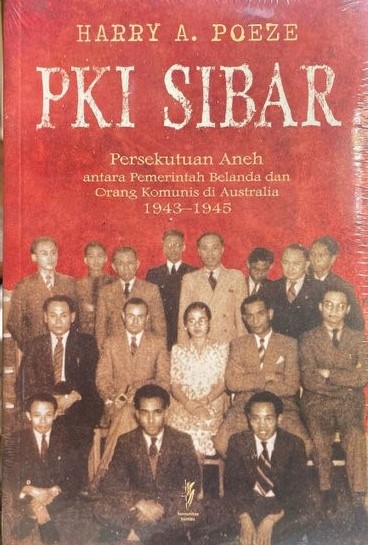
Serikat Indonesia Baroe (SIBAR) stands as an important example of how wartime Australia became a space for political transformation. Established in Melbourne in 1944, it provided a platform for Indonesians — including former Tanah Merah detainees such as Sardjono — to organise, articulate their aspirations and engage with broader political networks.
The involvement of these Digulists gave SIBAR both its strength and its significance. It was not simply a community organisation but part of a wider movement that connected wartime experiences in Australia with the struggle for Indonesian independence.
In this sense, SIBAR forms a crucial link in the chain of events that saw Indonesian labour disputes evolve into political mobilisation and, ultimately, into a broader movement for national liberation.
Many of these individuals were politically engaged and brought with them a range of ideological perspectives. Among them were members or sympathisers of the Indonesian Communist Party (PKI), as well as broader nationalist elements.
This diversity contributed to SIBAR’s dynamism but also made it a subject of concern for Dutch authorities. The presence of politically active individuals, including those with left-wing affiliations, meant that SIBAR was seen not merely as a community organisation but as a potential centre of political mobilisation.
Paul Budde (April 2026)