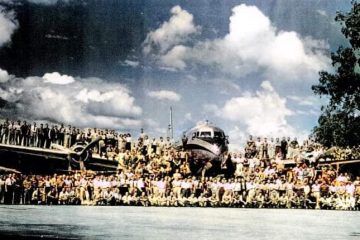
Among the many functions of the Netherlands East Indies Government-in-exile based at Camp Columbia in Brisbane during World War II, one of the most strategically significant—and least remembered—was the work of NIGIS, the Netherlands Indies Government Information Service. Operating in close cooperation with Allied information and propaganda units, NIGIS served as the Dutch government’s voice to the world during its years in exile.
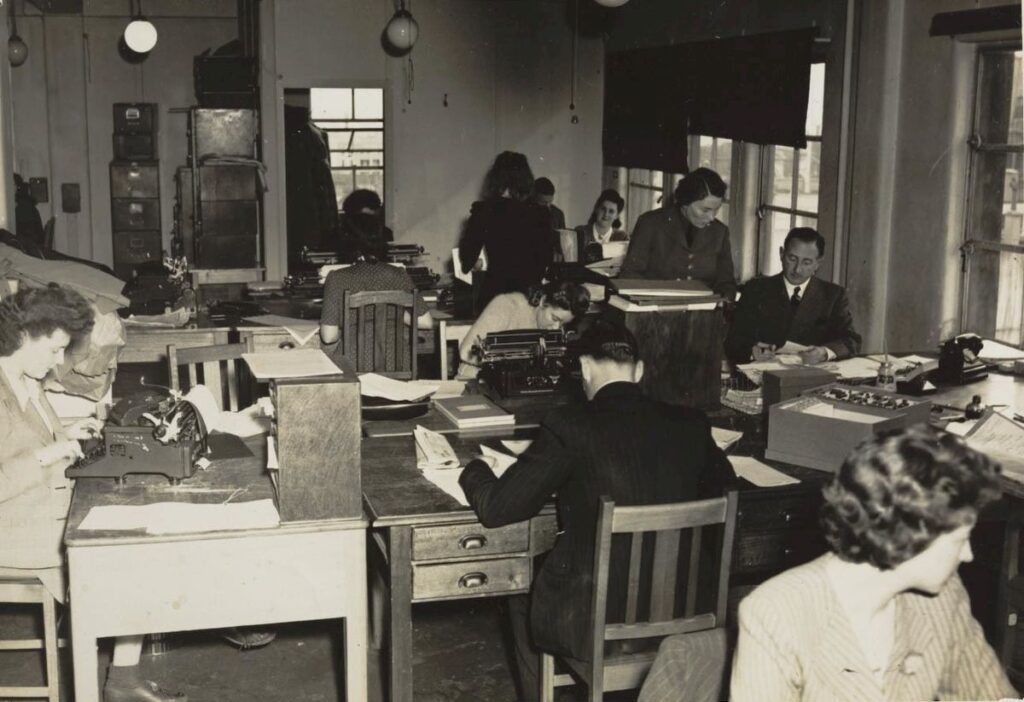
Established in Australia in 1942, NIGIS expanded its activities during the following years and later operated from Brisbane as the Netherlands East Indies administration shifted its centre of operations northward.
That is safer historically. There may be a few other statements in this relatively early article that should be tightened now that the portal research has become much more detailed.
A wartime information hub
NIGIS was part press office, part propaganda bureau, and part diplomatic mission. From its offices at Camp Columbia, it produced:
- Official communiqués from the NEI government-in-exile
- Leaflets, posters, and bulletins for the Dutch diaspora and Allied audiences
- News articles and opinion pieces for English-language Australian newspapers
- Radio content broadcast in English and Dutch to both local and international audiences
- Public diplomacy materials to counter Japanese propaganda in Asia
Its mission was not only to maintain Dutch visibility in Allied strategic planning, but also to reassert Dutch sovereignty over its East Indies territories—which by then had been declared part of a future independent Indonesia by nationalists like Sukarno and Hatta, under Japanese patronage.
Cooperation with Allied services
NIGIS worked closely with comparable Allied propaganda units, such as:
- Australia’s Department of Information
- The British Ministry of Information
- The United States Office of War Information (OWI)
These collaborations allowed NIGIS materials to be distributed more widely—reaching troops, civilian populations, and diplomatic missions. Dutch-language materials were particularly aimed at Indonesian audiences, urging continued loyalty to the Dutch crown and warning against Japanese occupation propaganda.
A contested legacy
While NIGIS was critical to the Dutch wartime strategy of projecting legitimacy and continuity, its legacy is complex. On the one hand, it offered a vital communications lifeline for a government cut off from its territory and population. On the other, it also became an instrument of colonial messaging at a time when Indonesian nationalist sentiment—encouraged by the Japanese and growing independently—was gaining strength.
NIGIS’s portrayal of the Dutch East Indies as temporarily “lost” but soon to be “restored” contrasted sharply with the emerging political realities on the ground. The messages it broadcast during the war did not anticipate the rapid rise of the Indonesian independence movement, nor the post-war struggle that would lead to the end of Dutch colonial rule.
Digulists
A further complexity emerged from the interaction between NIGIS and Indonesian political detainees from Tanah Merah (Boven-Digoel), often referred to as Digulists. After their release from internment in Australia, several of these politically experienced and ideologically committed individuals became involved—formally or informally—in networks connected to NIGIS. This created a striking contradiction. An organisation established to promote Dutch authority and restore colonial legitimacy became, in part, a space where Indonesian nationalist and left-wing ideas circulated. Figures such as Sardjono (Sordjono), a former Digulist and editor of the Indonesian-language publication Penjoeloeh, contributed to this evolving political discourse. In this way, NIGIS not only projected Dutch messaging outward but was also influenced from within by the very political forces that would ultimately challenge Dutch rule in Indonesia.
NIGIS at Camp Columbia
Once the NEI government relocated to Camp Columbia in 1944, NIGIS operated alongside military NICA, NEFIS, and KNIL command units. The Wacol complex thus became not just a military centre, but also a communication and information hub, producing both internal government materials and outward-facing content. Its facilities included translation teams, editors, and access to regional radio networks.
Although NIGIS is today virtually unknown, it formed a crucial part of the Dutch wartime infrastructure in Australia—linking government, diplomacy, military efforts, and the wider public sphere.
Preserving the record
Records of NIGIS activities are held in several key archives, including:
- The Nationaal Archief (The Hague) – within the broader collections of the NEI government-in-exile
- The Australian National Archives – which contains Dutch-produced wartime propaganda monitored by Australian censors
- Australian newspaper archives (via Trove) – where NIGIS press releases and opinion articles appeared in English-language publications from 1943–45
Despite this, NIGIS is rarely referenced in Dutch or Australian historiography. Its materials offer valuable insight into wartime communication strategies, colonial assumptions, and how governments in exile maintained their political relevance abroad.
Why NIGIS matters today
Understanding NIGIS helps us see Camp Columbia not only as a military site, but as a place where ideas, narratives, and political authority were actively shaped. It also offers a lens into the Dutch-Australian wartime relationship—one that extended beyond logistics and troops into media, diplomacy, and contested visions of the post-war world.
See also: WWII Propaganda Flights from Australia to Java
Sources and further reading
- Nationaal Archief, Ministerie van Koloniën te Londen, archive 2.10.45. Contains specific files concerning the establishment and activities of the Netherlands Indies Government Information Service (NIGIS) in Australia and provides important primary documentation of the organisation within the wartime Netherlands Indies administration.
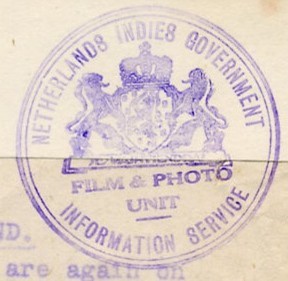
- Nationaal Archief, NEFIS archive 2.10.62. Useful for understanding NIGIS’s relationship with the wider Dutch intelligence organisation in Australia. The archive records, for example, that NEFIS in Melbourne used the NIGIS Film and Photo Unit before establishing its own Technical Photo Section following the move to Brisbane.
- Nationaal Archief, Bevelhebber Strijdkrachten Oosten, archive 2.12.37. Includes the Australian Press Digest compiled by NIGIS for 1944–45 and related wartime press and information material.
- Australian War Memorial, NIGIS photographic collection. The AWM holds photographs produced by or associated with the Netherlands Indies Government Information Service, providing evidence of its extensive wartime photographic and information activities. Individual NIGIS photographs are identified in the collection as public domain where copyright has expired.
- Queensland Government, Camp Columbia (Dutch Forces 1944–45). Provides background on the relocation of Netherlands East Indies organisations, including NIGIS, NEFIS and NICA, from Melbourne to the Camp Columbia/Wacol area in 1944.
Further DACC research
For the wider history of the Netherlands East Indies government-in-exile, NEFIS, NICA and Dutch and Indonesian wartime activities in Australia, see the DACC Research Portal – Dutch and Indonesian Intelligence and Special Operations from Australia during WWII.