In a quiet cemetery in the Dutch city of Eindhoven, far from Australia, two young Royal Australian Air Force (RAAF) airmen continue to be remembered. Their graves are not tended by family members, but by a Dutch family who never knew them in life. For decades they have marked the airmen’s birthdays, placed flowers on their graves, and passed this responsibility on to the next generation.
This story is not unique. Across the Netherlands, since 1945 thousands of Dutch citizens have adopted the graves of Allied soldiers. Among them are Australians: young men who travelled halfway across the world to fight in a European war and never returned home.
Australian airmen in the war over Europe
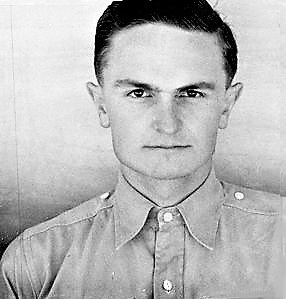
Crew killed: Sergeant Beverly Morton Harvey R/88469 RCAF / Flight Sergeant Marrows 905358 RAF / Sergeant McPherson 1194240 RAF. Source: Virtual Australian War Memorial
Sergeants Farquharson Proctor from Brighton in Victoria and Mervyn Lionel Vivian Hass from Oakey in Queensland were members of No. 464 Squadron RAAF. Like many Australian airmen in Europe, they had trained under the Empire Air Training Scheme and were integrated into Royal Air Force operations.
On 6 December 1942, they took part in Operation Oyster, a daring low-level daylight attack on the Philips industrial complex in Eindhoven. The factory was a major supplier of electronic components to the German military. The mission was successful in damaging the facilities, but at great cost. Several aircraft were shot down by anti-aircraft fire, including the one carrying Proctor and Hass.
Both men were killed. They were buried in Eindhoven-Woensel General Cemetery, alongside hundreds of other Allied servicemen.
Their story reflects a broader reality. While Australia’s military contribution to the European theatre of the Second World War is often overshadowed by campaigns in the Pacific, thousands of Australian airmen served and died in Europe. Their graves remain scattered across the continent, often far from the reach of their families.
Distance and absence
For Australian families, the loss was compounded by distance. In the immediate post-war decades, travel to Europe was rare and expensive. Many families never visited the graves of their sons, brothers or husbands.
This created a unique situation. Unlike British or European war dead, whose graves might be visited by relatives, Australian graves often stood unattended by family members. Yet they did not remain neglected. In the Netherlands, local communities stepped in.
The Dutch tradition of grave adoption
At the end of the war in 1945, Dutch citizens faced the task of commemorating thousands of Allied soldiers who had died liberating their country. Rather than leaving remembrance solely to governments or military authorities, many communities developed a more personal response.
Graves were “adopted” by individuals or families. The practice became particularly formalised at places such as the American cemetery at Margraten, where every grave was assigned to a Dutch adopter. Another good example is the war cemetery in Oosterbeek, near Arnhem with over 1700 graves of military dies during the Battle of Arnhem (A Bridge to far).But the tradition extended far beyond that site, including Commonwealth cemeteries and smaller local burial grounds.
Adoption does not imply ownership. Rather, it represents a commitment to remembrance. Adopters visit graves regularly, place flowers and learn about the individual buried there. In many cases, they establish contact with surviving relatives abroad. Importantly, the responsibility is often passed down through generations.
Dutch organisations such as the Oorlogsgravenstichting (Netherlands War Graves Foundation) and local adoption foundations have supported and guided these practices, ensuring that remembrance remains respectful, accurate and sustainable.
A family in Eindhoven
The graves of Proctor and Hass were adopted by the family of Erik Adriaensen, who lived near Eindhoven. His connection began through an interest in a wartime aircraft crash in the area. This led him to the cemetery and to the graves of the two Australian airmen.
Over time, the act of visiting their graves became a ritual for Erik and his family. On the airmen’s birthdays, Liberation Day, All Souls’ Day and Christmas Eve the family would visit the graves, place flowers and reflect on the lives of the two young men.
This was not a formal obligation, but a deeply personal commitment. After Erik Adriaensen’s death, his wife and children continued the practice, ensuring that the memory of the two Australians would not fade.
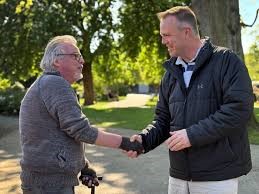
In recent years, this quiet act of remembrance has come to wider attention. Representatives of the Australian Defence Force visited the family to express their gratitude, recognising the significance of their long-standing care for Australian war graves.
See also: The grave adopters still caring for fallen Australian soldiers – ABC News 26 April 2026
Two systems of remembrance
The story highlights an important contrast in how wartime memory is preserved. In Australia, remembrance is often centralised and national. Institutions such as the Australian War Memorial record names, ranks and units, and national ceremonies honour the fallen collectively.
In the Netherlands, remembrance has taken a more local and personal form. Individual graves are visited, stories are told at a community level and the presence of the dead remains physically embedded in everyday landscapes. For Australian war dead in Europe, these two systems intersect. Their names are recorded in Australia, but their graves are cared for in Dutch towns and villages.
A shared responsibility
The adoption of Australian graves by Dutch families represents more than an act of gratitude. It reflects a shared understanding of the cost of war and the value of freedom.
For the Dutch, these graves are a reminder of liberation after five years of occupation. For Australians, they are a reminder of a global commitment that extended far beyond the Pacific.
The relationship is not one-sided. In recent years, increased engagement by Australian institutions has helped reconnect these graves with their country of origin. Visits by Defence representatives, embassy staff and occasionally family members have reinforced the link between the two nations.
Continuing relevance
As the generation that experienced the war passes away, the continuation of this tradition is not guaranteed. However, there are strong indications that it will endure. In the Netherlands, schools, community groups and younger family members are increasingly involved in remembrance activities. Digital initiatives are also helping to document the stories of those buried in war cemeteries, ensuring that their identities are preserved.
The graves of Proctor and Hass, like those of many others, are therefore not relics of a distant past. They remain part of an ongoing story: one that connects Australia and the Netherlands through shared history and mutual respect.
Conclusion
The presence of Australian war graves in the Netherlands is a reminder of the global nature of the Second World War. The care given to these graves by Dutch families adds another dimension to that history. It shows that remembrance does not end with burial, nor is it confined by national borders. Instead, it can become a living practice, carried forward by those who recognise its importance. The Dutch practice of adopting graves of Australian and Allied soldiers honours the young Australian men who never returned home. In doing so, the Dutch ensure that the men’s sacrifice remains visible, personal and remembered.