Introduction
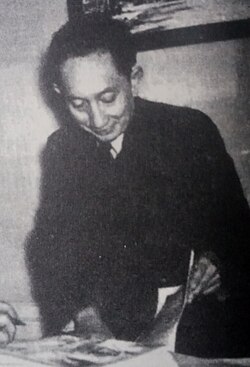
Sardjono (often also written as Sordjono) was one of a group of Indonesian political detainees whose wartime journey from Dutch colonial imprisonment to Australia placed him at the centre of a significant historical transition. His experience reflects the broader trajectory of many Indonesians who, during the Second World War, moved from being subjects of colonial control to active participants in political movements advocating independence.
His story connects several key locations and developments: detention at Boven-Digoel (Tanah Merah), transfer to Australia, internment at Cowra, release under Australian pressure, and subsequent political involvement through organisations such as the Netherlands Government Information Service (NIGIS) and Indonesian political networks.
From colonial detention to wartime evacuation
Before the war, Sardjono was among those detained by the Dutch colonial administration in Boven-Digoel (Tanah Merah), a remote camp in Dutch New Guinea used to isolate Indonesian political activists and nationalists. Many of the detainees were associated with anti-colonial movements, including elements linked to the Indonesian Communist Party (PKI).
With the rapid Japanese advance through Southeast Asia in 1942–43, the Dutch authorities evacuated these prisoners to Australia. This was presented as a security measure, but it effectively transferred the system of colonial detention onto Australian soil.
Internment in Australia: Cowra
Upon arrival in Australia, Sardjono was among those placed in internment facilities. As documented by Jack Ford, Indonesian political detainees from Tanah Merah were held in camps including Cowra, where they were placed within designated compounds of the prisoner-of-war camp.
This created a highly unusual situation. Sardjono and others were not enemy combatants but political detainees held under Dutch authority within an Australian-run POW camp. Their detention raised questions about legality and sovereignty, particularly as Australian law did not readily accommodate the imprisonment of colonial political detainees.
Release and changing circumstances
The detention of Indonesian political prisoners soon became controversial. Australian unions, civil society organisations and sections of the public questioned both the legal basis and the morality of their continued imprisonment.
Under growing pressure, the Australian government intervened. In April 1944, most Indonesian internees at Cowra were released. A smaller group initially classified as “dangerous” by the Dutch authorities was also largely freed following review, as the Australian Government found no substantive evidence to support the Dutch claims.
Sardjono was among those who benefited from this shift. His release marked a turning point, transforming his status from detainee to active participant in the political life of Indonesians in Australia.
Political activity in Australia
Following his release, Sardjono became involved in Indonesian political and organisational activities in Australia. Like a number of former detainees, he gravitated towards structures associated with the Netherlands East Indies Government-in-exile.
One of these was the Netherlands Government Information Service (NIGIS). Originally established to support Dutch wartime political objectives, NIGIS became, somewhat paradoxically, a space in which Indonesian political ideas circulated and developed.
Sardjono’s involvement reflects the complex and often contradictory nature of these organisations. While formally part of the Dutch wartime framework, they increasingly became influenced by Indonesian nationalists and individuals with left-wing or anti-colonial perspectives.
At the same time, Indonesian political organisation in Australia was becoming more structured. The formation of the Serikat Indonesia Baroe (SIBAR) in 1944 brought together various groups and provided a platform for coordinated political activity. Former detainees such as Sardjono played a role in this broader movement, contributing to the articulation of Indonesian aspirations for independence.
Return to Indonesia and role in independence
After the end of the war, Sardjono returned to Indonesia at a time when the struggle for independence had entered a decisive phase. The experiences of Indonesians in Australia — including detention, interaction with unions and political organisations, and exposure to new forms of political organisation — influenced their role in the independence movement.
While detailed records of Sardjono’s specific activities in Indonesia may be limited, individuals from this cohort contributed to the broader nationalist effort that led to the eventual recognition of Indonesian independence in 1949.
Their wartime experiences in Australia had provided:
- organisational experience
- international connections
- exposure to political debate and mobilisation
These factors played a part in shaping the post-war political landscape.
Significance
Sardjono’s story illustrates a broader historical pattern. The attempt by the Dutch authorities to control Indonesian political activists through detention did not eliminate their influence. Instead, the transfer of these individuals to Australia created new opportunities for political engagement.
Through their interactions with Australian society, former detainees such as Sardjono became part of a process that:
- increased awareness of Indonesian independence
- contributed to political organisation in exile
- influenced post-war developments in Indonesia
In this sense, Sardjono represents a generation whose experiences bridged colonial repression and national liberation.
Conclusion
The life of Sardjono provides a valuable lens through which to understand the complexities of wartime Australia and its connection to Indonesian history. From detention in Boven-Digoel to internment at Cowra and political activity in Australia, his journey reflects the broader transformation of Indonesian political identity during this period.
His story underscores the unintended consequences of colonial policy. What began as an effort to suppress political dissent ultimately contributed to the spread of nationalist ideas and the emergence of new political networks.
Through figures such as Sardjono, the links between Australia, the Netherlands and Indonesia during the Second World War take on a deeply human dimension — one that connects individual experience with wider historical change.
Paul Budde (April 2026)