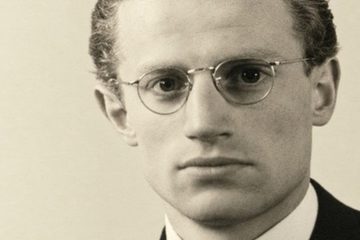
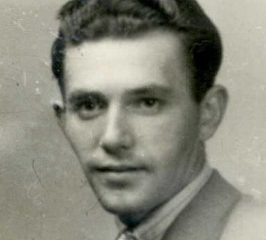
Alois (Wies) Amrein was born in Fort de Kock (now Bukittinggi) in Sumatra in the Dutch East Indies (now Indonesia) on 27 February 1910. His parents were Felix Amrein, who was originally from Switzerland, and Indonesian woman Maria Lucia Siken; Wies received Swiss nationality at birth. In 1934, Wies married Hetty Johan.
Enlistment and capture
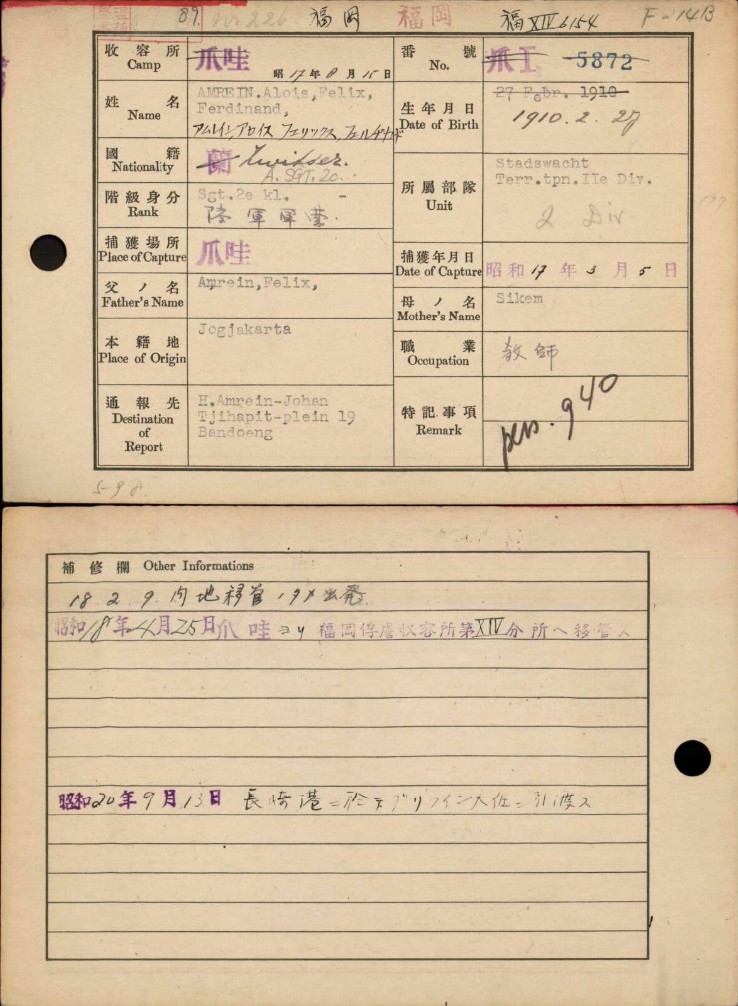
Wies enlisted in the Royal Netherlands East Indies Army (Koninklijk Nederlands Indisch Leger, KNIL). In doing so he followed his father into a military career: Felix Amrein joined the colonial forces in December 1896, initially signing up for a six-year period. Decades later, Wies also voluntarily joined the Dutch forces – as a Swiss national he was not required to enlist. The KNIL accepted him as a sergeant. When Japan invaded the Indies in early 1942, Wies was part of the Stadswacht (a milita company). Shortly after the invasion, Japanese forces captured Wies and took him as a prisoner.
Wies was transported to Japan. He ended up in prisoner of war (POW) camp Fukuoka 14B, located at Nagasaki in south-western Japan. This camp housed Dutch, Australian and British POWs captured by the Japanese. According to research by Henk Beekhuis and Maureen Hoyer (on Maureen, see the end of this article), between 400 and 500 of the camp’s POWs were Dutch; Wies Amrein was one of them. Conditions at Fukuoka 14B were harsh: illness and disease were rife, and POWs were subjected to forced labour including at the nearby Mitsubishi Steel factory.
On 9 August 1945, Americans deployed the atomic bomb known as ‘Fat Man’ above Nagasaki. The bomb caused destruction on a massive scale. Camp Fukuoka 14B was less than two kilometres from the centre of the explosion, and the bomb killed seven of the camp’s POWs. Luckily, Wies Amrein survived the bombing.
After the war
Allied forces evacuated camp Fukuoka 14B in September 1945. American troops took Wies first to Okinawa, then to Manilla. Eventually, he returned to Bandung where he reunited with his family. Separated from his family for four years, Wies returned to children who were much older than he had left them: his young son, Alfred, was around ten years old when Wies returned.
The family continued to live in the Indies/Indonesia. By this time Indonesians were fighting the Dutch for independence, and the Netherlands finally recognised Indonesian sovereignty in December 1949. The Amrein family stayed in Indonesia until 1953, when the changed political situation prompted them to migrate to the Netherlands. The Amrein’s eldest son, Alfred, now lives in Australia on Queensland’s Sunshine Coast.
Recognition
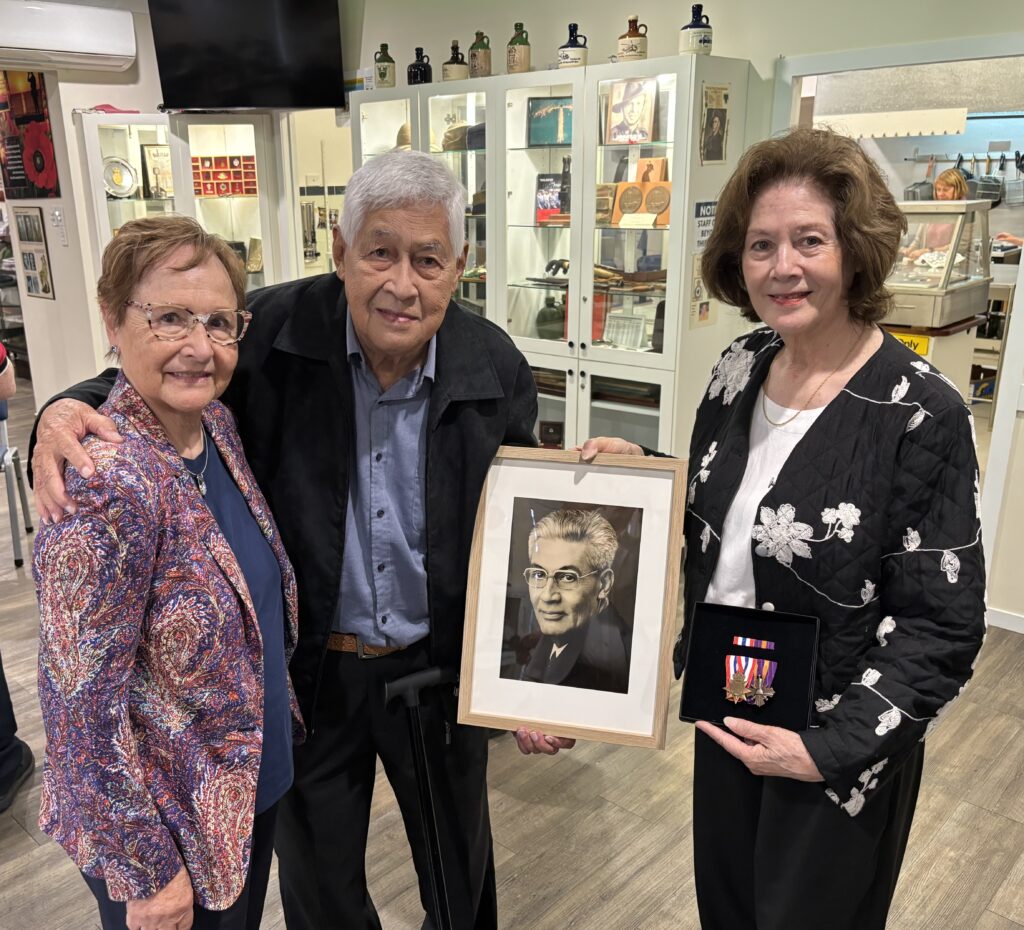
On 26 May 2026, in a ceremony at the Glass House Mountains in Queensland, Alois Amrein was posthumously recognised for his courage and sacrifices during the Second World War. The Netherlands Defence Attaché to Australia and New Zealand, Colonel Gerbe Verhaaf, presented two medals to Wies’ son Alfred and daughter Meike, to honour their father. Meike, who travelled from the Netherlands to attend the ceremony, also gave a speech.
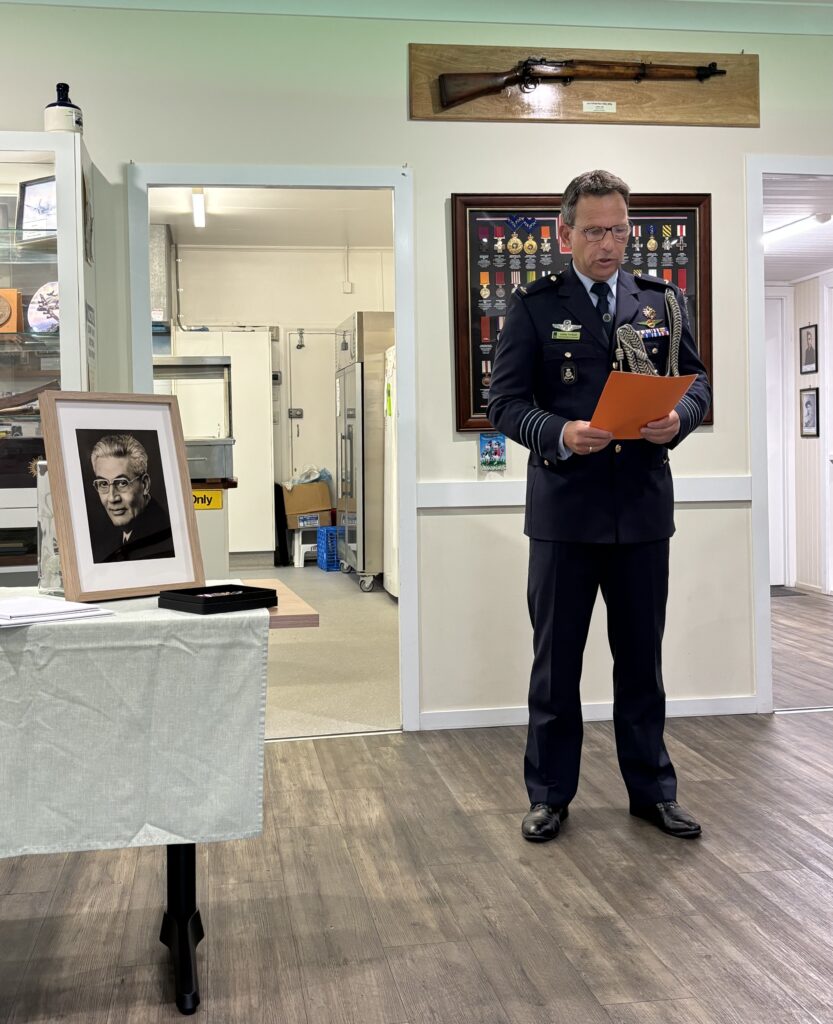
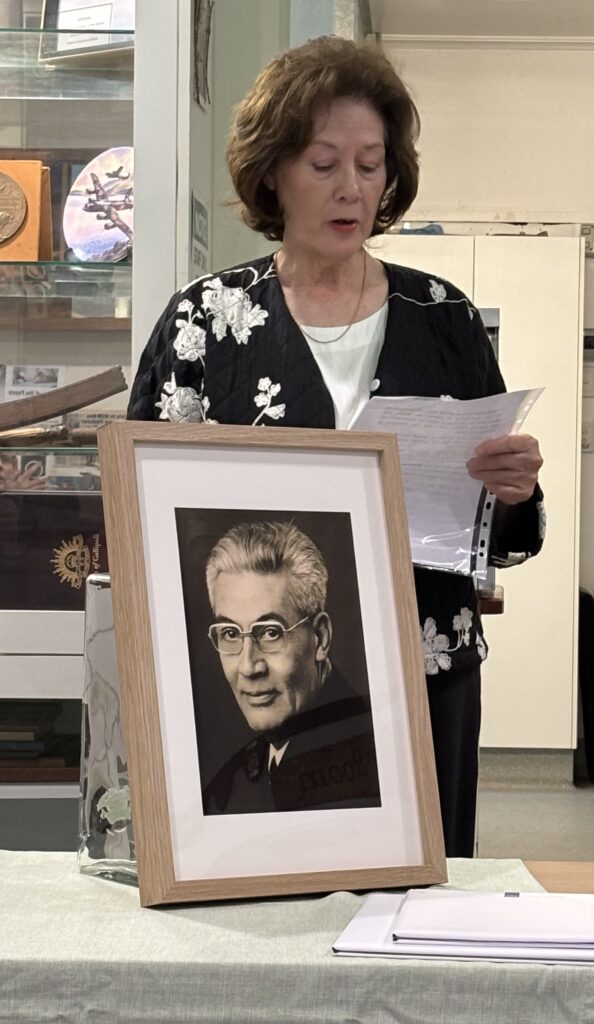
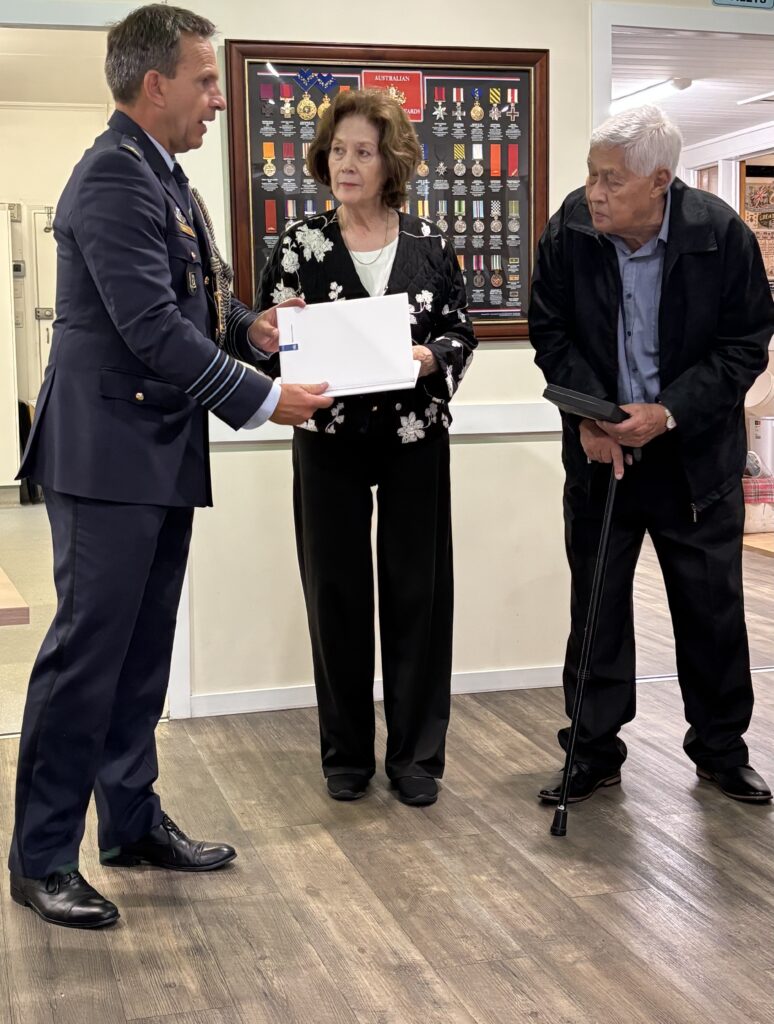
The medal ceremony made local news:
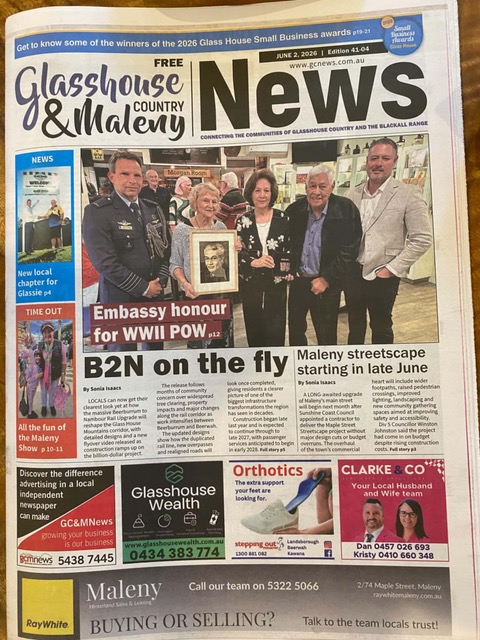
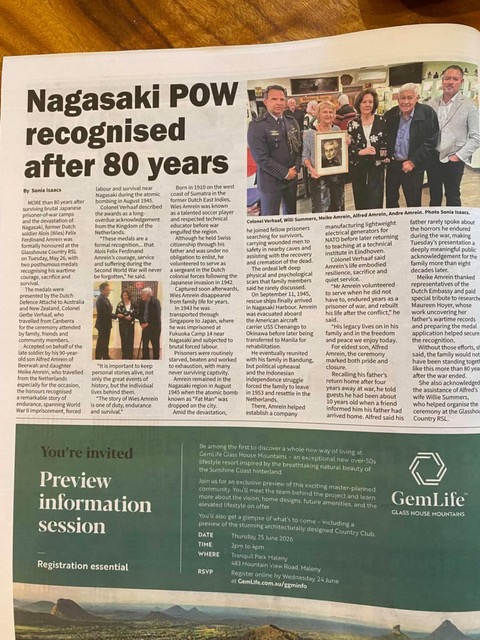
Photographs of the articles about Alois Amrein in Glasshouse Country & Maleny News courtesy of Maureen Hoyer.
Research support
The Amrein family received support in their quest for recognition for Alois from Maureen Hoyer, an independent researcher. Maureen, whose father was also imprisoned in camp Fukuoka 14, researched Alois Amrein’s wartime experiences, and the posthumous recognition of Alois is in large part thanks to her support. She has been researching camp Fukuoka 14B since 2004 and has helped many relatives of former POWs trace their fathers’ footsteps during the war. Speaking to the DACC, Maureen offered to provide similar support to other family members of former Dutch East Indies soldiers who believe their relative(s) deserve posthumous recognition. If you would like to contact Maureen, please email us at dutchaustraliancc@gmail.com.
Additional sources
- List of names of Dutch POWs in Camp Fukuoka 14B
- Overview of Camp Fukuoka 14 on the Mansell website
- Military personnel records for Felix Amrein at the Netherlands National Archives (record 1 and record 2)
- Passport application form for Alois Amrein in the Oud-Indisch Paspoort Archief, Centrum voor Familiegeschiedenis
- Passport application form for Hetty Johan in the Oud-Indisch Paspoort Archief, Centrum voor Familiegeschiedenis