For more than three decades, the Finsbury Migrant Hostel—later renamed the Pennington Migrant Hostel—was one of Australia’s largest migrant accommodation centres. Located in Adelaide’s western suburbs, it became a temporary home for tens of thousands of migrants and refugees who arrived in South Australia after the Second World War.
Although the Dutch Australian Cultural Centre has not yet identified specific Dutch families who stayed at Finsbury/Pennington, the hostel formed part of the national network of Commonwealth migrant accommodation that welcomed new arrivals from across Europe. As research continues, this article will be expanded with Dutch family stories connected to the hostel.
This article forms part of the DACC research series Dutch Gateways to Australia, documenting the migrant reception centres and hostels that helped shape Australia’s post-war migration story.
Establishing the hostel
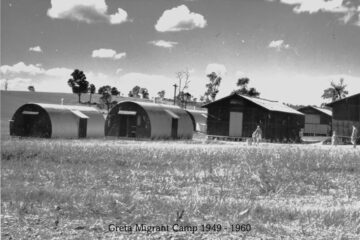
The Finsbury Migrant Hostel officially opened on 1 January 1950 on Grand Junction Road at Finsbury North, later known as Pennington. The site had previously been used during the Second World War to accommodate workers employed at the nearby Pennington Munitions Factory. Rather than constructing an entirely new facility, the Commonwealth converted the existing military-style accommodation into a migrant hostel.
Initially known as the Finsbury Migrant Hostel, it was renamed the Pennington Migrant Hostel in October 1966. The hostel continued operating until September 1985, making it the longest-running migrant hostel in South Australia.
A city of temporary homes
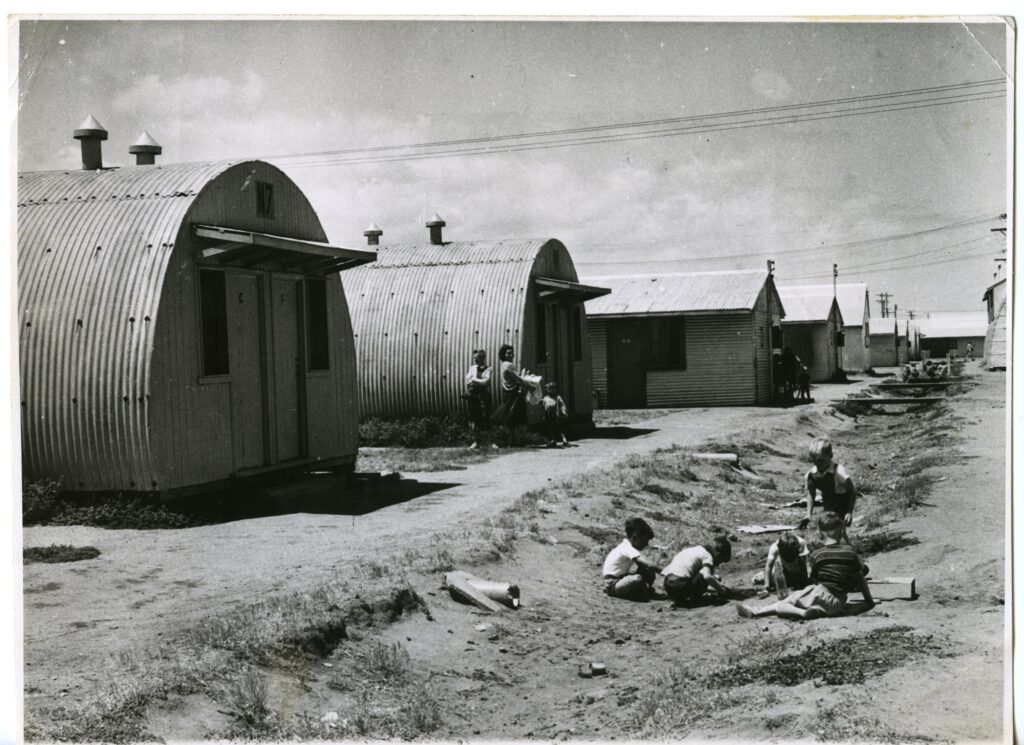
At its peak, Finsbury/Pennington accommodated more than 2,000 residents, making it one of Australia’s largest migrant hostels. Families lived in converted Nissen huts, Romney huts and Quonset huts, most of them surplus military buildings from the Second World War. The huts were divided into small family units with only the most basic furnishings. Bathrooms, laundries and dining facilities were shared by all residents.
Like many migrant hostels of the period, accommodation was intended to be temporary. Migrants generally remained until employment and permanent housing became available, although some families stayed for several years because of housing shortages.
Life at Finsbury/Pennington
Life at the hostel reflected both the opportunities and the hardships of post-war migration.
Residents represented many nationalities and cultures. Children attended local schools while adults sought employment, learnt English and adjusted to Australian life. The hostel provided welfare services, childcare, recreation, sporting activities and English language classes, helping new arrivals establish themselves in South Australia.
At the same time, living conditions could be difficult. The converted military huts offered little insulation from Adelaide’s hot summers and cold winters. Families had limited privacy, and complaints about accommodation, food and communal facilities were common. In 1952, dissatisfaction over living conditions resulted in a rent strike at Finsbury, one of the best-known protests within Australia’s migrant hostel system.
Despite these challenges, many former residents later remembered the hostel as a place where lasting friendships were formed and where people from many different backgrounds supported one another as they began new lives in Australia.
A community within a community
The hostel became an important part of Adelaide’s western suburbs. Churches, schools, sporting clubs and community organisations all played a role in helping migrants settle into Australian society.
The nearby Our Lady of Mount Carmel Catholic Church became an important meeting place for many Catholic migrant families. The rapid growth of the congregation, fuelled by residents of the hostel, led to the construction of a larger church building in 1960.
Over time, many former residents settled permanently in the surrounding suburbs, contributing to the social, cultural and economic development of Adelaide.
Remembering Finsbury/Pennington
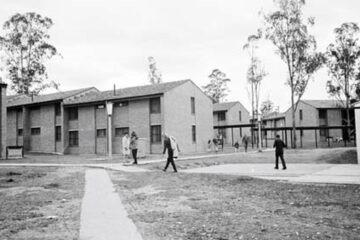
Most of the original hostel buildings have disappeared, but the site’s history has not been forgotten. The City of Charles Sturt, together with former residents, historians and the University of Adelaide’s Hostel Stories Project, has undertaken extensive work to preserve the memories of those who lived there.
Today, Pennington Gardens Reserve includes memorials recognising the thousands of migrants who passed through the hostel. Former residents have contributed photographs, documents and personal recollections, ensuring that this important chapter of South Australia’s migration history is preserved for future generations.
A place in the Dutch migration story
Although the DACC has not yet identified documented Dutch families associated with Finsbury/Pennington, it almost certainly accommodated Dutch migrants at various times during its thirty-five years of operation. As Australia’s largest migrant groups during the 1950s and 1960s included many assisted migrants from the Netherlands, further research may reveal Dutch families whose first Australian home was at Finsbury or Pennington.
The Dutch Australian Cultural Centre is continuing to identify Dutch migrants who stayed at the Finsbury/Pennington Migrant Hostel. As further family histories, photographs and oral histories are located, they will be incorporated into this article. Readers who have memories or family connections with the hostel are warmly invited to contact the DACC.
As additional information becomes available, this article will be expanded with links to DACC biographies, photographs and oral histories, ensuring that the Dutch experience forms part of the wider history of this remarkable migrant hostel.
Finsbury/Pennington stands alongside Woodside, Bonegilla, Wacol, Villawood, Benalla and the other hostels in this DACC series as one of the places where thousands of migrants took their first steps towards becoming Australians.