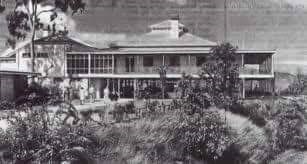
During the Second World War, a large house on a hill overlooking Cairns became one of Australia’s most secret military establishments.
Fairview House at Mooroobool, known to wartime personnel simply as the “House on the Hill”, became the headquarters of the Z Experimental Station, or ZES. Established in 1942, it is remembered primarily for its association with Australian special operations and Z Special Unit, including preparations connected with Operation Jaywick, the celebrated raid on Japanese shipping in Singapore Harbour.
But this familiar Australian story overlooks another important part of the station’s history.
Dutch and Indonesian personnel from the Netherlands East Indies were involved at ZES from its earliest period. After a major reorganisation of Allied intelligence in 1943, the facility increasingly became a training, communications, holding and operational staging centre for NEFIS III, the Secret Intelligence and Special Operations component of the Netherlands Forces Intelligence Service.
From Cairns, Dutch and Indonesian operatives were trained and prepared for missions back into Japanese-occupied territory.
The House on the Hill was therefore not simply an Australian commando school. For an important period of the Pacific War it became a centre of Dutch-Australian-Indonesian intelligence cooperation.
Why Cairns?
Z Experimental Station was established at Fairview Farm, Mooroobool, in June–July 1942.
The site was selected partly because of its excellent wireless reception. It was sufficiently isolated from Cairns to provide some security and was strategically well placed for operations moving north towards New Guinea and the Netherlands East Indies.
The station was initially associated with Secret Intelligence Australia (SIA) and the Inter-Allied Services Department (ISD). These were distinct organisations: SIA was connected with Britain’s Secret Intelligence Service, or SIS/MI6, while ISD was concerned particularly with clandestine special operations.
Peter Dunn’s research identifies Commander Roy Kendall, head of SIA, as playing an important role in selecting the location.
At ZES, operatives could be trained in weapons, demolitions, signals, sea and jungle operations and clandestine communications. Personnel awaiting missions could also be held there, while equipment arriving from southern Australia could be assembled before men and supplies were moved forward by submarine, aircraft or other transport.
The station was therefore much more than a training school. It formed part of the operational infrastructure supporting the secret war north of Australia.
The Netherlands East Indies was involved from the beginning
The Dutch and Indonesian presence at ZES did not begin with its later use by NEFIS III. Personnel from the Netherlands East Indies were already deeply involved during the earlier ISD period.
Research based on surviving ISD records shows that by December 1942 its operational personnel included 27 Australians and 53 personnel from the Netherlands East Indies. Altogether, 71 NEI personnel were attached to ISD, including Dutch and Indonesian soldiers, sailors, police, wireless operators, mechanics and other specialists. They were distributed between Melbourne, Darwin, Cairns and other operational facilities.
Peter Dunn’s reconstruction of ZES indicates that Australians and NEI personnel were present at Cairns in roughly equal numbers during this early period and that a large majority of the NEI personnel were Indonesian.
That exact proportion is difficult to verify independently because many original ZES records were destroyed when ISD was disbanded. Nevertheless, the surviving evidence leaves little doubt that Indonesian personnel formed a substantial part of the Dutch/NEI presence at Cairns.
This is important. Describing ZES simply as a place where “Dutch personnel” trained risks obscuring the multinational character of the NEI forces themselves.
Julius Tahija — an Ambonese intelligence instructor in Queensland
One of the most remarkable people associated with ZES was Julius Tahija.
Tahija was an Ambonese officer of the Royal Netherlands East Indies Army, the KNIL. He had already experienced combat against the Japanese and later received the Militaire Willems-Orde, the Netherlands’ highest military decoration.
After reaching Australia, Tahija was attached to Z Experimental Station, where he became deputy intelligence instructor, with particular responsibility for jungle-survival training. He served as assistant to the station’s senior intelligence instructor, Captain Richard O. D. Noone, an anthropologist with extensive experience in Malaya.
Tahija subsequently participated in clandestine activities himself, including reconnaissance and work connected with local guerrillas and supply caches.
His presence at Cairns demonstrates how valuable personnel from the NEI could be.
Australian and British instructors could teach explosives, signals or military techniques. Men such as Tahija could also provide something more difficult to reproduce: knowledge of Indonesian societies, languages, climate, terrain and local behaviour.
This was exactly the sort of specialist knowledge that became increasingly important as Allied organisations attempted to send agents back into Japanese-occupied territory.
Early training was not always appropriate
The Cairns training system nevertheless had serious weaknesses.
Dutch historian Loe de Jong records that prospective agents destined for the Netherlands East Indies were trained at ZES in combat techniques, weapons and sabotage. But he also notes that in 1942 their training was not yet sufficiently adapted to the particular circumstances they would encounter in the NEI. Training in clandestine landings was also inadequate.
Australian military historian Dr Jack Ford reached a similar conclusion in his extensive study of the Dutch wartime presence in Australia, Allies in a Bind.
Ford records disastrous losses among several early intelligence parties sent from Australia into Java and the Aru Islands during 1942–43. These operations developed initially through the NEI Section within the Australian clandestine-services structure, with responsibility subsequently passing to NEFIS. Dutch intelligence chief Commander G.B. Salm blamed some of the failures on Allied training methods, which he believed were insufficiently adapted to the very different circumstances agents encountered in the Netherlands East Indies.
These failures contributed to Dutch demands for greater control over their own intelligence operations and training.
NEFIS subsequently gained substantially greater control over the training of its personnel and the handling and distribution of the intelligence they produced. Ford records that a new six-month NEFIS training program was developed, including six weeks of strict isolation before an operational mission. Training was normally undertaken either at Cairns or at the joint NEFIS/AIB forward base in Darwin.
Cairns was therefore becoming increasingly important to the developing Dutch intelligence organisation.
Security and operational weaknesses
The problems at ZES were not limited to training methods.
Security was a persistent concern. Cairns had initially been attractive because of its relative isolation, but as the town became an increasingly important military assembly area, maintaining secrecy became more difficult. Personnel awaiting missions could remain at the station for long periods, sometimes for weeks, creating problems for morale and operational security.
Peter Dunn’s reconstruction of ZES also notes that shortages of instructors, equipment and transport initially hampered the station’s effectiveness. Many original ISD-era records were deliberately destroyed when the organisation was disbanded, making it difficult to reconstruct the full extent of these problems.
Later Dutch assessments were also critical of aspects of NEFIS preparation and security. Historian Rémy Limpach has argued that security at the Cairns training establishment was inadequate and that Japanese intelligence obtained useful information about NEFIS methods and personnel. He also points to poorly prepared operations in which agents were sometimes inadequately equipped or insufficiently prepared for the conditions they would encounter.
These problems had potentially lethal consequences. Intelligence agents entering Japanese-occupied territory depended on secrecy, suitable cover identities, appropriate clothing, local knowledge and secure communications. A weakness in any of these areas could expose an entire mission.
The shortcomings at Cairns should therefore be seen alongside the broader operational failures recorded by Jack Ford. They help explain why the Dutch increasingly pushed for greater control over NEFIS training and why later courses became longer, more specialised and more closely tailored to the conditions of the Netherlands East Indies.
Korps Insulinde and the Australian connection
Another source of personnel with special-operations experience was Korps Insulinde, although its origins were separate from NEFIS and the Australian intelligence organisations.
After Japan entered the war, the Netherlands planned to send part of the Prinses Irene Brigade from Britain to reinforce the Netherlands East Indies. A detachment of about 150 men departed on 10 January 1942, but by the time it reached Colombo in Ceylon the Japanese conquest of the NEI had made the original mission impossible.
Most of the detachment subsequently left for Britain or Australia. A smaller group remained in Asia and volunteered for special-operations training. Korps Insulinde was formally established on 1 August 1942 and operated from Ceylon, principally undertaking clandestine missions into Japanese-occupied Sumatra.
Korps Insulinde therefore developed separately from NEFIS III in Australia. The two histories nevertheless became connected through the movement of trained personnel.
Jack Ford records that NEFIS obtained about 50 Korps Insulinde personnel from Ceylon. These men brought experience of British special-operations training and added to the pool of personnel available to Dutch intelligence in Australia. Other Korps Insulinde personnel remained in the Ceylon and Indian theatre under Major Frits Mollinger.
The connection illustrates the international character of Dutch special operations during the war. Personnel originating in Dutch forces reorganised in Britain could be sent to Asia, receive specialist British training, and subsequently become involved in clandestine operations directed towards the Japanese-occupied Netherlands East Indies from different Allied bases.
ZES becomes a NEFIS III facility
A major reorganisation of Allied clandestine organisations occurred in 1943.
ISD was dissolved and the Australian special-operations organisation was re-established as Special Operations Australia (SOA), operating under the cover name Services Reconnaissance Department (SRD).
Z Experimental Station did not simply pass into the new Australian organisation.
Instead, following the reorganisation, ZES was made available within the Allied Intelligence Bureau for use by NEFIS III, which inherited the special-operations responsibilities previously undertaken by the NEI Section.
This was an important change in the history of the House on the Hill.
Australian special-operations training increasingly moved elsewhere, particularly to the Fraser Commando School. By late 1943, ZES was increasingly associated with the Dutch/NEI intelligence organisation.
NEFIS III continued to train Indonesian and Dutch operatives at Cairns and used the station for training, communications, holding personnel and staging clandestine operations.
The popular description of Fairview House simply as a “Z Special Unit base” therefore tells only part of its wartime history.
A Dutch intelligence training centre in Queensland
By 1944 the Dutch role at ZES was firmly established.
Surviving photographs associated with Jack Ford’s NEFIS research identify Major Frits Mollinger as head of the Cairns training centre and Lou Bierens de Haan as his second-in-command. Bierens de Haan himself later recalled that he became second-in-command of the intelligence training school at Cairns in February 1944.
Both men brought previous special-operations experience to the Australian training establishment. As discussed above, their backgrounds also illustrate the connections that developed between the separate Dutch special-operations networks in Ceylon and Australia.
Fairview House had therefore become an important part of the Dutch/NEI intelligence system operating from Australia, where agents were prepared for clandestine missions into Japanese-occupied territory.
This did not make ZES an exclusively Dutch establishment. Australian and Dutch organisations continued to share facilities, expertise and operational support when required.
From Cairns back into occupied territory
Training at Cairns was intended for a very practical purpose: preparing people to operate inside enemy-held territory.
Dutch naval flying boats were among the means used to insert and retrieve these agents. In January 1945, Dutch naval aviator Wil Hamers flew a Catalina from Cairns carrying the eight-man NEFIS Party APPLE — four Dutch and four Indonesian servicemen under Lieutenant Oscar Drijber — to the coast of Borneo south of Tarakan. Their task was to gather intelligence about Japanese strength and activity, identify possible landing areas and routes inland, and, if possible, establish a forward radio post ahead of the planned Allied invasion.
The mission illustrates both the increasing operational reach of NEFIS III and the continuing difficulties its agents faced. The party was unable to establish radio contact and found little willingness among local inhabitants to assist. It nevertheless obtained some intelligence, including information about Japanese strength on Tarakan. After eleven days ashore, Hamers returned on 24 January and successfully extracted all eight men by Catalina.
These missions were extraordinarily dangerous.
Agents might have to land secretly from submarines or small vessels, move through communities under Japanese control, establish wireless communications, locate friendly contacts, collect intelligence and survive without conventional military support.
The operational record was mixed, and some of the early missions ended disastrously.
Several parties sent into Java, the Aru Islands and other occupied territories were captured, disappeared or lost members to Japanese forces. Some of these missions originated under the earlier NEI Section arrangements before NEFIS III inherited responsibility for Dutch/NEI special operations.
Experience from these failures contributed to changes in training, equipment and operational methods. Later parties generally benefited from the lessons learned during the difficult experimental phase of 1942–43, although clandestine operations inside occupied territory remained extremely hazardous.
The Cairns school therefore formed one link in a much larger intelligence chain: recruitment and selection in Australia; training and preparation at facilities such as ZES; insertion by submarine, aircraft or boat; intelligence collection inside occupied territory; wireless transmission back to Australia; and eventual use of that intelligence by Allied commanders.
Australians also joined Dutch-led missions
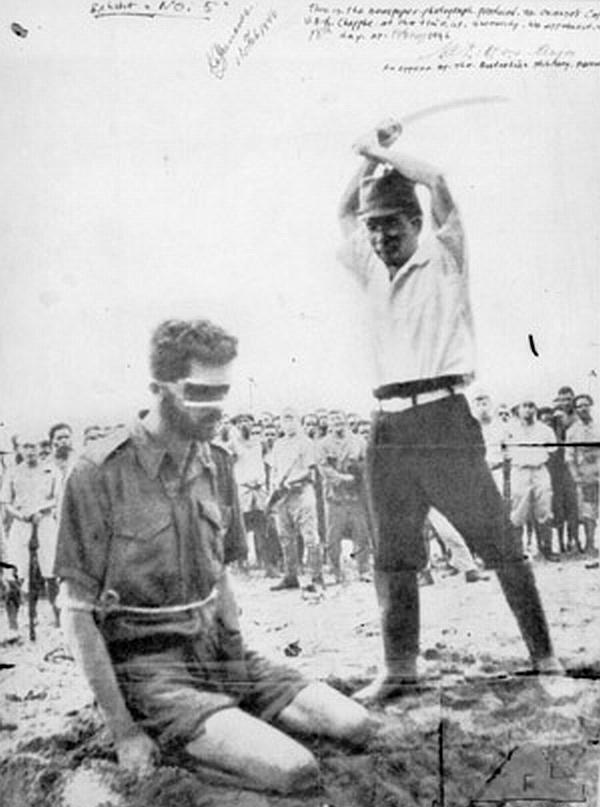
The relationship was not simply one of Dutch and Indonesian personnel using an Australian base. Australian servicemen also became directly involved in operations organised through the Netherlands East Indies section of the Allied clandestine-services organisation.
One of the best-known examples was Sergeant Leonard Siffleet.
Siffleet trained at Z Experimental Station in late 1942 and was selected as the radio operator for Party WHITING, an intelligence mission intended to establish a coastwatching and intelligence presence near Hollandia in Dutch New Guinea.
WHITING belonged to the earlier NEI Section period of operations from Australia, before NEFIS III inherited responsibility for Dutch/NEI special operations. Siffleet’s involvement therefore provides another example of the multinational character of the secret war being organised through facilities such as ZES.
The mission ended tragically. Siffleet was captured by Japanese forces and executed near Aitape in October 1943.
His story demonstrates how thoroughly national boundaries could blur in clandestine operations. An Australian serviceman could train at Cairns and serve alongside Dutch and Indonesian personnel on a mission into the Japanese-occupied Netherlands East Indies.
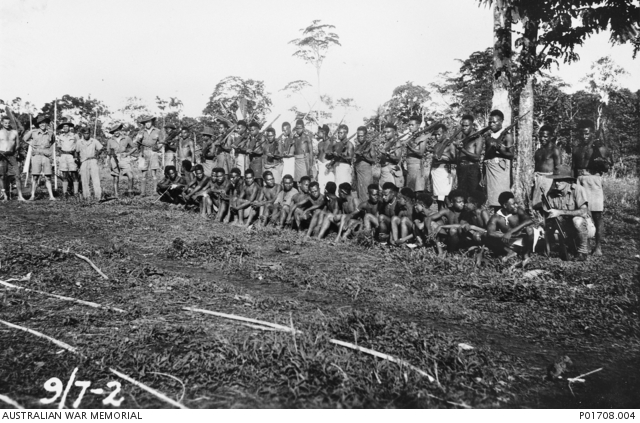
Dutch-Australian cooperation continued
The transfer of ZES to NEFIS did not end Australian use of the facility.
Peter Dunn’s research indicates that in 1945 the Dutch establishment at Cairns provided accommodation and transport to Australian SRD personnel attending courses in jungle food, jungle living and jungle tactics.
That is a useful reminder that the increasing Dutch role at ZES did not mean separation from the wider Allied special-operations network.
Dutch and Australian intelligence and special-operations organisations remained institutionally distinct, but they continued to exchange facilities, expertise and operational assistance when required.
The story of ZES was therefore not one of one nationality replacing another.
It was one of changing organisational control within an Allied intelligence system that remained highly interconnected.
A particularly Indonesian contribution
Perhaps the most overlooked part of the story is the role of Indonesians themselves.
The Netherlands East Indies intelligence organisations depended heavily upon men with local languages and knowledge of particular islands and communities.
Some were KNIL soldiers. Others came from the Royal Netherlands Navy, police, shipping or civilian backgrounds.
At Cairns they trained alongside Australians and Europeans for missions in which cultural knowledge could be as important as military skill.
The surviving evidence concerning Julius Tahija is a particularly striking example. An Ambonese KNIL officer was not merely receiving Australian or British instruction; he was helping instruct others.
This complicates any simple description of ZES as an Australian or even a Dutch wartime establishment.
It was a genuinely multinational environment involving Australians, British personnel, Dutch Europeans and Indonesians from across the Netherlands East Indies.
Part of a wider Queensland intelligence network
ZES was not the only Queensland location associated with both Dutch personnel and Allied clandestine operations. In Brisbane, Miegunyah House at Newstead had been used as a safe house for members of Z Special Unit connected with Operation Jaywick. In 1945 the house was commissioned by the Dutch Government, at a time when a number of Brisbane properties were being used by Dutch military and government personnel. The precise Dutch organisation that occupied Miegunyah has not yet been established.
The forgotten history of the House on the Hill
Today, the Z Experimental Station is generally remembered through the history of Australian special operations and Z Special Unit.
That history is important.
Operation Jaywick and the men who undertook Australia’s clandestine war against Japan deserve the place they hold in Australian military memory.
But the history of Fairview House was broader.
Dutch and Indonesian personnel were present from the station’s early days. Men from the NEI formed a substantial proportion of the operatives associated with ISD. Julius Tahija helped train agents there. Personnel with experience in Korps Insulinde and other Dutch special-operations organisations became connected with the Australian-based intelligence system.
From a Queensland farmhouse overlooking Cairns, men were being prepared to return secretly to Java, New Guinea, the Moluccas and other parts of the occupied Netherlands East Indies.
The House on the Hill therefore deserves recognition as more than an Australian special-operations site.
It was also one of the places where the Netherlands rebuilt a clandestine operational capability after losing the Netherlands East Indies — and where Australian, Dutch and Indonesian personnel fought a secret war together.
Paul Budde August 2026
Sources and further reading
Further research: Explore related articles, personal stories and archival sources in the DACC Research Portal – Dutch and Indonesian Intelligence and Special Operations from Australia during WWII.
Peter Dunn OAM, “Z Experimental Station Cairns (ZES) – The House on the Hill, Fairview Farm, Mooroobool, Cairns during WWII”, Australia @ War. Peter Dunn’s reconstruction is particularly useful for the establishment, personnel, facilities and changing wartime role of ZES.
Dr Jonathan (Jack) Ford, Allies in a Bind: Australia and the Netherlands East Indies in the Second World War, particularly his discussion of the establishment of NEFIS, Korps Insulinde personnel, training at Cairns and the operational experiences of NEFIS parties. Ford’s research draws extensively on Australian, Dutch, British and American archival material.
L. de Jong, Het Koninkrijk der Nederlanden in de Tweede Wereldoorlog, Deel 11c: Nederlands-Indië III (1986). The major Dutch official historical treatment of the final wartime period in the Netherlands East Indies and another work identified in the Nationaal Archief finding aid.
Australian War Memorial, glossary and collections relating to Z Experimental Station, Z Special Unit and the Services Reconnaissance Department.
Queensland Government, Anzac Square & Memorial Galleries, “Cairns ‘Z’ Experimental Station Commando Training School”.
Netherlands Ministry of Defence, “Korps Insulinde” — official history of the formation and development of Korps Insulinde and its relationship to Dutch wartime commando forces.
SOA and Z Experimental Station (ZES) Lynette Silver. Detailed history of Z Experimental Station, the organisational transition, ZES’s transfer to NEFIS III and the changing Australian training arrangements.
Further archival research, particularly in National Archives of Australia Series A3269 and the Nationaal Archief NEFIS collection, access 2.10.62, may reveal more information about individual personnel trained at Cairns and the specific missions staged from ZES.