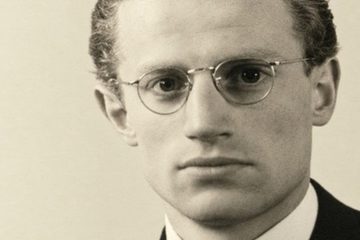
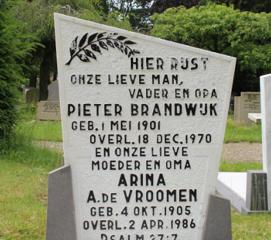
Jan Lavooy was born in Sliedrecht on 21 March 1913. He was the son of Johannes Lavooi (1881–1969), a barge skipper, and Marigje Bot (1883–1966). Jan grew up in a family of seven children.
From 1914, the family lived at Wijk B 292 in Sliedrecht, an address later renumbered as Wijk B 541. The house no longer exists. His parents subsequently lived at 15 Piet Heinstraat, where they celebrated their golden wedding anniversary in May 1955.
On 22 June 1950, Jan departed from Schiphol aboard a KLM flight to Melbourne, occupying seat I3. He travelled with his four-year-old daughter, Maarije Agnes, who had been born on 20 December 1946.
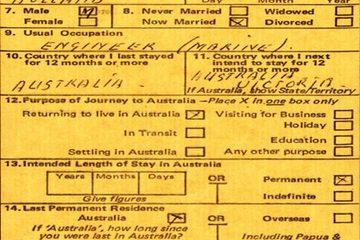
An immigration document held by the National Archives of Australia records that Jan was divorced when he arrived. The identity of his first wife and the circumstances surrounding the end of their marriage are not presently known. Further research may also clarify why Maarije travelled to Australia with her father.
In Australia, Jan married Edith Gwendoline “Gwen”, who had been born on 21 September 1914. A notice celebrating his parents’ fiftieth wedding anniversary in 1955 mentioned “Jan Lavooy and G. Gwen” and recorded that they were living in Australia.
Jan died on 5 October 1995. Edith died on 25 October 2010. They are commemorated at Shoalhaven Memorial Gardens in Worrigee, New South Wales. The cemetery information indicates that Jan and Edith had a family with several children, although further details about them have yet to be established.
More research is needed into Jan’s first marriage, the identity of Maarije Agnes’s mother and the composition of his Australian family. Australian immigration, marriage, birth and death records, together with newspaper notices, may provide further information.
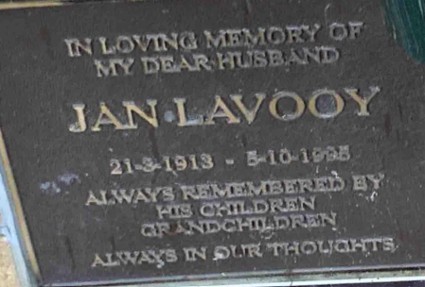
This account is based on family-history and migration research undertaken by Fred Stuij. Source document: National Archives of Australia. Gravestone photographs and cemetery information: BillionGraves. Jan Lavooij.pdf
For the wider history of this organised migration project, see From Sliedrecht to Williamstown: Dutch dredging workers in post-war Australia.
More related company histories, archival sources and personal stories are available through the Dutch Dredging in Australia Research Portal.