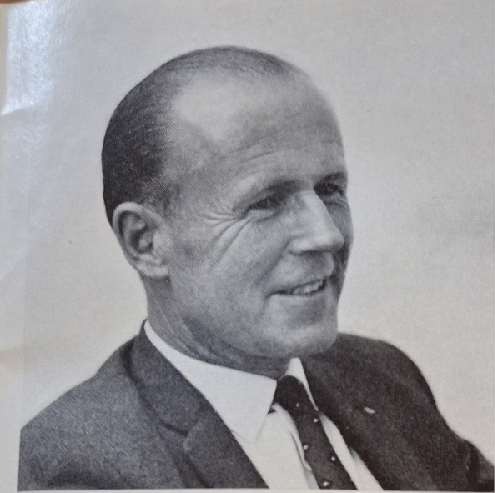
Hans Ferwerda was one of the principal figures in the establishment and development of Australian Dredging & General Works. Sent to Melbourne by Van Hattum & Blankevoort in 1950, he helped manage the company’s first Australian project and subsequently spent much of his career developing its operations throughout Australia and the wider region.
His story connects Dutch civil engineering, the wartime experiences of a generation of young Dutch professionals, post-war migration and the emergence of a permanent Australian dredging industry.
Early life and engineering education
Hans Ferwerda was born in Haarlem on 13 August 1917, the son of Johan, also known as Georg, Ferwerda and Elisabeth, known as Bets, Advokaat.
After completing preliminary engineering studies, he enrolled at the Technische Hogeschool Delft, now Delft University of Technology, in 1938 to study civil engineering. His studies were interrupted by the German occupation of the Netherlands.
On 6 February 1943, German forces raided universities across the Netherlands following the shooting of Dutch SS General Hendrik Seyffardt. Approximately 600 students were arrested. Hans was among those detained during a lecture at Delft.
He was taken first to Scheveningen and then held as a hostage in the Vught concentration camp. He was released on 1 April 1943 after nearly two months. His later recollections indicate that he considered himself fortunate to have been included among the students released rather than sent to Germany as forced labourers.
Career with Van Hattum & Blankevoort
Hans formally joined the Dutch civil engineering company Van Hattum & Blankevoort on 29 April 1943. With the Technical University closed, he worked during the final two years of the war as an assistant site manager in the Noordoostpolder, the Wilhelminapolder and at the company’s shipyard in Spaarndam.
After the liberation, he briefly helped locate and recover company equipment before being given the opportunity to complete his civil engineering studies.
From 1946 until the end of 1949, Hans worked on a range of Dutch civil engineering projects. These included breakwaters at Huisduinen, the harbour works at Harlingen and work associated with the Hartelkanaal. He also spent the winter of 1947–1948 working in Ireland.
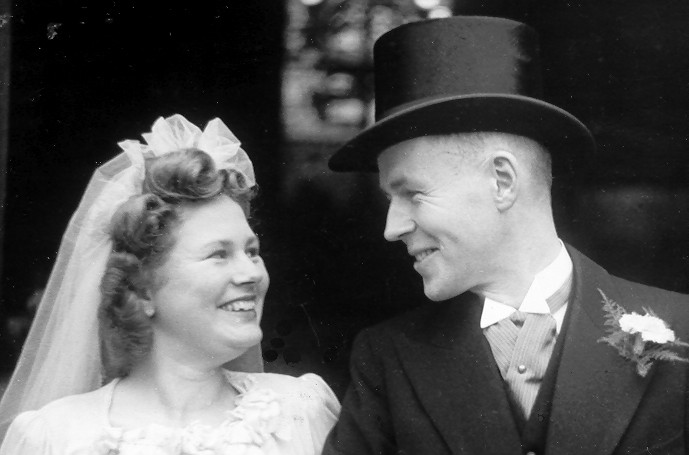
On 30 November 1945, Hans married Johanna Elisabeth Blankevoort, generally known as Hank. She was a direct descendant of Cornelis Blankevoort, born in Monnickendam in 1820, whose contracting business formed the Blankevoort side of Van Hattum & Blankevoort. This gave the family both a personal and professional connection with the company.
Establishing an Australian company
In 1949, representatives of Dutch and British contracting companies investigated an opportunity to undertake major dredging work for the Melbourne Harbor Trust Commissioners.
Following the successful tender, Australian Dredging & General Works Pty Ltd was established in February 1950. The participating companies were:
- Adriaan Volker’s Maatschappij tot het Uitvoeren van Openbare Werken;
- Van Hattum & Blankevoort;
- Dredging & Construction Company, a British subsidiary of Adriaan Volker; and
- Harbour & General Works, the British subsidiary associated with Van Hattum & Blankevoort.
The company was formed with an initial share capital of £A5,000. Adriaan Volker and Van Hattum & Blankevoort each contributed £A1,750, while the two British companies each contributed £A750.
Hans arrived in Melbourne on 4 February 1950. He was followed later by Marinus Stigter, the representative of Adriaan Volker.
A company agreement dated 15 March 1950 recorded that Hans Ferwerda and Marinus Stigter had been appointed associate directors of Australian Dredging & General Works. Both had received powers of attorney in Melbourne on 23 February and were jointly responsible for the proper execution of the Melbourne project.
Each could conduct correspondence independently, although they were expected to keep one another fully informed. Administration in the Netherlands was handled by Van Hattum & Blankevoort, while the financing of the project was shared principally by Van Hattum & Blankevoort and Adriaan Volker.
Preparing for the Dutch workforce
One of the most difficult immediate tasks was finding accommodation for the approximately 80 Dutch workers, some of whom would be accompanied by their wives and children.
Family correspondence from early 1950 indicates that Stigter was particularly concerned with personnel matters, while Hans was given primary responsibility for locating accommodation. This helps explain why Hans arrived in Melbourne several months before the main groups of workers.
Research by his daughter, Fiona Ferwerda, has so far identified at least four hostel or boarding-house arrangements and approximately twenty houses in Williamstown associated with Australian Dredging & General Works. Many of the houses appear to have been intended for migrant families.
Some were apparently purchased by the company, although the precise ownership and later disposal of the properties require further investigation. Two accommodation establishments were subsequently identified in local directories as “Dutch Camp” and “Ye Olde Dutch Flats”.
This accommodation program was an essential part of the organised migration project. Australian Dredging did not simply recruit workers in the Netherlands. It arranged their air travel, employment and initial accommodation, creating a structured pathway through which Dutch workers and their families could begin their lives in Australia.
The Ferwerda family comes to Australia
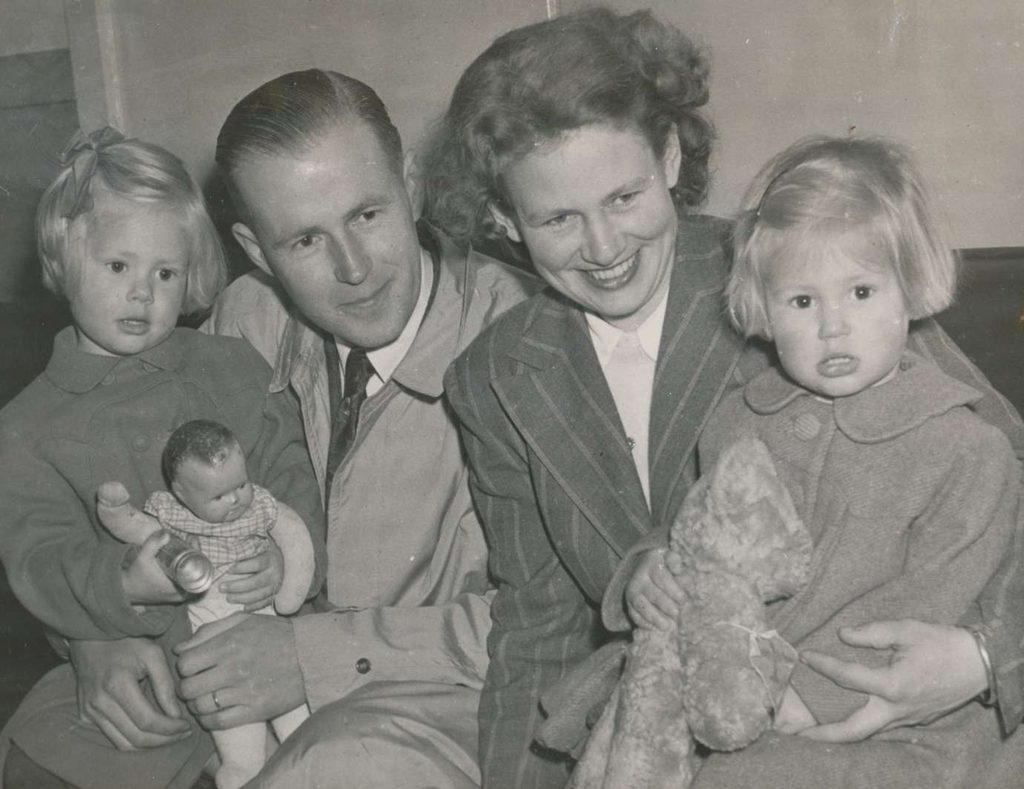
Hans initially travelled to Australia alone. Hank remained temporarily in the Netherlands with their daughters Marianne, aged three, and Rinske, aged eighteen months.
In May 1950, Hank and the two girls left the Netherlands to join him. Their journey included stops in Bangkok and Jakarta before they arrived in Sydney on 22 May 1950. Hans was waiting there to meet them.
The family then travelled to Melbourne and established their home in Williamstown, where they lived from 1950 until 1955.
Hans and Hank had initially expected their stay in Australia to last approximately three years. However, the availability of further dredging work, the friendships they made and their enjoyment of Australian life influenced their decision to remain.
Developing Australian Dredging & General Works
The first major project undertaken by Australian Dredging & General Works was the River Entrance Dock at Fishermans Bend for the Melbourne Harbor Trust Commissioners. Dutch dredging equipment was shipped to Australia, while the specialised workers and their families were brought out on two specially organised KLM flights in June and July 1950.
The work began in September 1950 and was completed approximately two years later.
Even before the Melbourne contract was finished, the company secured further work. Its early projects included:
- port extensions at Albany in Western Australia;
- deepening the approach channels and berths at Geelong;
- further dredging to enable larger tankers to reach the Shell refinery at Corio; and
- dredging for the Caltex refinery development at Botany Bay in New South Wales between 1953 and 1955.
These contracts persuaded the parent companies that Australian Dredging & General Works had a future beyond the original Melbourne project.
Hans was closely involved in finding and negotiating further work. His responsibilities took him around Australia and later to New Zealand, Indonesia and Malaysia. He described his position as General Manager, although over the years he also served as chief representative, executive secretary and director.
The company experienced periods of both rapid expansion and economic difficulty. During one downturn, its office staff was reportedly reduced to only three people, requiring Hans to perform many different administrative and managerial duties.
From a Dutch project to an Australian company
In 1959, Australian Dredging extended its operations to New Zealand. Further projects followed at Geelong, Western Port, Newcastle, Gladstone, Melbourne and New Plymouth.
Hans was appointed a director of Australian Dredging & General Works in 1962.
Under his leadership and that of his colleagues, the business gradually changed from a Dutch company using imported Dutch personnel and equipment into an Australian enterprise with Australian co-directors, engineers, crews and locally constructed dredging vessels.
By 1968, the company was undertaking a significant construction program for its own equipment. Its Australian-built plant included the cutter suction dredges Platypus and Crocodile, hopper barges and other specialised vessels. Australian Dredging had by then become one of the country’s three principal dredging contractors.
The company’s continuing Dutch connections nevertheless remained important. It could draw upon the technical experience, equipment and personnel of its European parent companies when tendering for large or specialised projects.
A permanent life in Australia
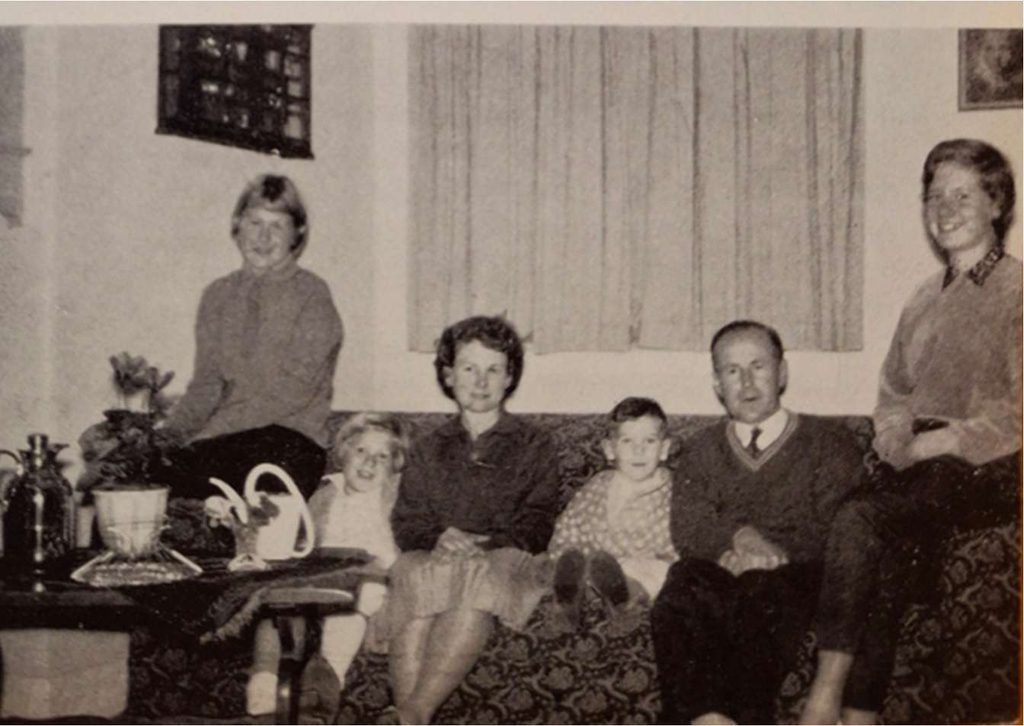
Hans and Hank remained in Australia for the rest of their lives. After living in Williamstown from 1950 until 1955, they moved with their family to Melbourne’s eastern suburbs.
In February 1990, Hans returned as a former managing director to address the company’s 40th-anniversary celebration, held aboard the Polly Woodside in Melbourne. He was one of five members of the original Australian undertaking present at the event, alongside Ben Meertens, John Korevaar, Arie Breedveld and Wim Verschuur. Their attendance demonstrated the enduring personal connections created by the company’s establishment and the organised migration of its Dutch workforce in 1950.
Hans died in 2003 at the age of 86.
His career illustrates an important but sometimes overlooked part of post-war Dutch migration. He did not arrive as an individual migrant seeking employment after reaching Australia. He was sent as a senior representative of a Dutch engineering company to establish a major industrial undertaking.
That project brought Dutch equipment, technical knowledge, workers and families to Australia. What was originally intended to be a limited contract became a permanent Australian business, while a temporary professional assignment became a new life for the Ferwerda family.
Further research
The Ferwerda family archive contains correspondence, photographs, company documents, advertising material and newspaper reports relating to Australian Dredging & General Works.
Research is continuing into the Williamstown properties used to accommodate the workers and their families, the allocation of those properties, and the later careers of the Dutch personnel.
This work contributes to the wider DACC project documenting the people, companies and engineering projects associated with Dutch dredging in Australia.
Related DACC articles
- Dutch Dredging in Australia Research Portal
- From Sliedrecht to Williamstown: Dutch dredging workers and their families in post-war Australia
- The Dutch companies behind Australian Dredging & General Works
Documents supplied by Fiona Ferwerda
The following family history was researched and written by Fiona Ferwerda and is reproduced by the DACC with her permission.
Hans and Hank Ferwerda: an occupation story
This family history was researched and written by Fiona Ferwerda. It provides an extensive account of Hans Ferwerda and Johanna “Hank” Blankevoort, their families, their experiences during the German occupation of the Netherlands and the circumstances preceding their move to Australia in 1950. The document contains considerably more family and wartime detail than could be included in the present DACC article.
Hans Ferwerda’s 25th anniversary with Van Hattum & Blankevoort – 1968
This article was published in a Van Hattum & Blankevoort company newsletter to mark Hans Ferwerda’s 25 years with the company. It records his appointment in 1943, his involvement in establishing Australian Dredging and General Works and his continuing management role in Australia.
An unusual migrant – Australian Dredging and General Works
Published in the Port of Melbourne Quarterly in 1968, this article by A. van Gent presents Australian Dredging and General Works as an unusual example of industrial migration. It describes how the company brought Dutch dredging equipment, technical expertise and skilled personnel to Australia, before developing into a more broadly Australian enterprise.
The article also discusses the company’s early projects, the expansion of its operations and the development of its dredging fleet. It includes contemporary photographs of vessels and works undertaken in and around the Port of Melbourne.
Company documents
Two contemporary company records provide further information about the ownership and corporate structure of Australian Dredging and General Works:
- Australian Dredging and General Works company agreement, 15 March 1950
- Australian Dredging and General Works company profile, Nat and Droog, 1969
They are available at the end of this article: Australian Dredging and General Works (1950–2011): Dutch engineering in post-war Australia
Sources and acknowledgements
This article is based primarily on company documents and family material preserved and researched by Fiona Ferwerda, daughter of Hans and Johanna “Hank” Ferwerda.
Principal sources include:
- Fiona Ferwerda, Hans and Hank: An Occupation Story, family history, revised November 2025;
- “Agreements regarding work in Melbourne”, agreement between Adriaan Volker and Van Hattum & Blankevoort, 15 March 1950;
- “Hans Ferwerda: 1943–1968, 25 years with Van Hattum & Blankevoort”, Nat and Droog, July 1968;
- A. van Gent, “An Unusual Migrant”, Port of Melbourne Quarterly, July 1968; and
- “Australian Dredging and General Works Pty Limited”, Nat and Droog, 1969.
- Australian Dredging and General Works Pty Ltd, Australian Dredging – 40 Years, 1990.
The Dutch Australian Cultural Centre thanks Fiona Ferwerda for making this material available and for her continuing research into her family and Australian Dredging & General Works.