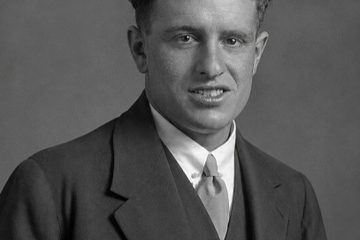
Ferdinand “Ferdi” Boers arrived in Australia from the Netherlands as an 18-year-old toolmaking apprentice in 1954.
Although he brought translated apprenticeship papers with him, Ferdi initially had to accept work as a labourer at the Emmco whitegoods factory in Orange, New South Wales. The intervention of an Estonian supervisor eventually allowed him to resume his training. Ferdi qualified as a toolmaker, became a leading hand and, after further study, advanced to become a design draughtsman. He remained in that position until his retirement from Electrolux.
His story illustrates many of the experiences shared by post-war Dutch migrants: childhood memories of war, assisted migration, life at Bonegilla, the loss and eventual recognition of occupational skills, temporary hostel accommodation and the gradual construction of a family home.
It is also a story of music and community participation. The clarinet Ferdi carried from the Netherlands became his most treasured migration object and helped connect him with the social and cultural life of his adopted regional city.
A wartime childhood in Valkenswaard
Ferdi Boers was born in 1936 in Valkenswaard, near the Belgian border in the southern Netherlands.
His childhood was shaped by the German occupation. His school was first occupied by German forces and later used by British and American troops. Ferdi remembered that local children had seen pictures of bananas, oranges and chocolates but had never tasted them until Allied soldiers distributed these unfamiliar foods.
The final period of the war brought severe hunger. Ferdi’s mother exchanged her jewellery with a farmer for rye so that she could make bread. Money had lost much of its usefulness, and the family survived largely on bread and apples.
Ferdi’s father, Joe Boers, was a cigar maker and musician who played double bass in a band four nights a week. During the German withdrawal, men attending the local Roman Catholic church were surrounded and taken away in trucks for forced labour in Germany.
Joe escaped and, according to Ferdi’s recollection, walked all the way from Berlin to Valkenswaard. After reaching home, he had to remain in hiding.
These wartime experiences formed the background to the family’s later decision to leave the Netherlands.
Searching for a country that would accept them
After the war, Joe returned to cigar making and professional music, but he believed the family could not make ends meet.
The Boers family initially considered migrating to the United States. Their application could not proceed because they did not have an American sponsor. They then considered Canada and New Zealand but encountered the same obstacle.
Australia offered another possibility.
By this time, Ferdi had begun a toolmaking apprenticeship with Philips and had completed his second year. His younger brother Keith was also an apprentice.
The family departed Amsterdam in September 1954. After sailing to Fremantle and Melbourne, they travelled by train to the Bonegilla Migrant Reception and Training Centre in north-eastern Victoria.
Six weeks at Bonegilla
The family spent approximately six weeks at Bonegilla.
For Ferdi, the transition was overwhelming. The family had left a familiar European community and found itself living in barracks, unable to speak English and unprepared for the Australian climate and food.
Ferdi later recalled:
“The five of us cried—we couldn’t speak the language and we were homesick and we had to rough it. The food was shocking. We weren’t used to eating lamb. And it was stinking hot.”
Bonegilla was the largest of Australia’s post-war migrant reception centres. More than 300,000 migrants passed through it between 1947 and 1971.
The centre provided temporary accommodation while government employment officers allocated migrants to regions and industries requiring workers. Families could consequently find themselves sent to places about which they knew almost nothing.
After approximately five weeks, Joe was called to the employment office. The family was informed that it would be moving to Orange in central-western New South Wales, where the Emmco whitegoods factory required workers.
From Bonegilla to Orange
The family travelled from Albury through Sydney to Orange, arriving at about ten o’clock at night. Two taxis were waiting at the railway station to take the Boers family to the Commonwealth migrant hostel in Edward Street.
The presence of another Dutch family offered some immediate reassurance. Mr De Graff, a Dutch electrician employed by Emmco, was already living there.
The following morning, the family members were allocated their jobs.
Joe had been a skilled cigar maker in the Netherlands, but there was no demand for traditional hand-made cigar production in Australia. He was assigned to work as a labourer in Emmco’s paint shop.
Ferdi had brought translated papers documenting his Dutch apprenticeship. Nevertheless, he also began as a labourer.
His first task was assisting Jock Ferguson, an experienced welder who manufactured lids for refrigerator compressors. Ferdi removed the newly welded lids, immersed them in water and tested them for leaks.
It was a considerable occupational step backwards for a young man already training in precision toolmaking.
Recognition from another migrant
Ferdi’s prospects changed when Leon Kiho, an Estonian migrant who supervised the machine shop, asked whether he possessed documentation of his apprenticeship.
Kiho recognised Ferdi’s previous training and advocated on his behalf. Ferdi was eventually permitted to enter the third year of his apprenticeship at the factory and the second year of his technical-college course. The lower college placement reflected his limited English rather than his technical ability.
Ferdi remembered Kiho with lasting gratitude:
“I was the first ‘New Australian’ apprentice at Emmco and am forever grateful to Leon, who had the foresight to push for me to be allowed to continue my apprenticeship.”
His experience demonstrates the importance of individual intervention. Australia had recruited European migrants for their industrial and technical skills, but certification systems, language barriers and workplace procedures could prevent those skills from being recognised.
In Ferdi’s case, another European migrant understood the problem and helped him overcome it.
Learning English and imperial measurements
Continuing his apprenticeship required Ferdi to negotiate two significant changes.
Dutch technical training used the metric system, while Australian industry still worked in inches and other imperial measurements. Ferdi had to relearn the numerical language of his trade while simultaneously learning English.
Technical-college examinations presented a further difficulty. Ferdi could understand the questions but could not yet write adequate answers in English. A Dutchman named De Jong assisted by translating his answers from Dutch into English.
Ferdi also devised his own intensive language program. He walked from the hostel to the Strand Theatre five nights a week and watched the same film repeatedly. Hearing familiar dialogue night after night helped him connect spoken English with the action on the screen.
English classes were also provided at the Commonwealth hostel, but ordinary encounters could remain difficult. Ferdi remembered being sent to purchase evaporated milk and asking for a tin of “eedeel milk,” provoking laughter.
His mother faced even greater difficulties when shopping. Unable to remember the English word for pork, she reportedly made snorting noises to the butcher to explain what she wanted.
These memories were later told with humour, but they reflect how even the most routine tasks became challenging when migrants were expected to function immediately in an unfamiliar language.
Becoming a qualified toolmaker
Ferdi completed his apprenticeship in 1957.
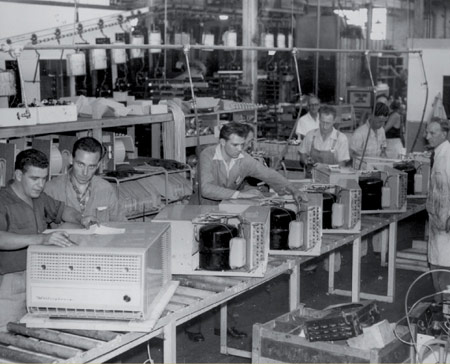
By 1962, he was working as a leading hand in the factory’s air-conditioning section. His brother Keith also completed an apprenticeship at Emmco and was subsequently offered employment in Sydney.
Ferdi continued his studies and later became a design draughtsman. This represented a considerable progression from the unskilled factory work he had initially been required to accept despite arriving with two years of Dutch toolmaking training. He was still employed as a design draughtsman when he retired from Electrolux.
Ferdi spent most of his working life at the Orange factory as it changed ownership and identity from Emmco to Email and eventually Electrolux.
The factory was one of the most important centres of post-war migrant employment in Orange. Its workforce included Dutch, Italian, German, Polish, Ukrainian, Estonian and other European migrants.
These workers contributed to the transformation of Orange from a regional agricultural centre into an important manufacturing city. The factory produced refrigerators, freezers and other household appliances for Australian homes, while offering migrants employment, apprenticeships and pathways into skilled trades.
When Electrolux announced the closure of the Orange factory in 2013, Ferdi described it as a terrible loss for the city. The factory had not merely provided wages. For Ferdi and many other migrants, it had eventually provided the training and technical opportunities upon which their Australian lives were built.
Building a family home
The Boers family remained at the Orange migrant hostel for approximately three or four months while Joe saved what money he could.
They had arrived in Australia with virtually nothing. Eventually, they purchased a block of land in Frederica Street. The property contained a garage with a dirt floor and an attached lean-to that could be used as a kitchen. A curtain divided the interior, while a separate shed with a chip heater served as the bathroom.
This rudimentary structure became the family’s first independent home.
Joe’s employment at Emmco was insecure. He was dismissed two months before Christmas during one of the factory’s periodic mass layoffs.
An advertisement subsequently appeared in the local newspaper for a tool storeman at Orange Technical College. Joe obtained the position and remained at the college until his retirement.
The appointment also brought valuable social connections. Building teachers from the college helped Joe construct the family’s permanent house, assisted by Ferdi and Keith.
The family’s progression—from Bonegilla to the Orange hostel, then to a garage and finally to a completed home—was shared by many post-war migrants. Home ownership was achieved through savings, family labour and assistance from friends and workmates rather than immediate prosperity.
Marriage and family life in Australia
In 1961, Ferdi married the daughter of British assisted migrants who had come to Australia under the scheme popularly associated with the term “£10 Poms.”
The couple shared childhood experiences shaped by the Second World War. Ferdi had lived through the German occupation and wartime hunger in the Netherlands, while his future wife had been evacuated from London to Wales during the Blitz.
They subsequently had a son and a daughter and later welcomed grandchildren. Their children and grandchildren identify proudly as Australians, completing the family’s transition from two European wartime childhoods to an established Australian family.
The clarinet from the Netherlands
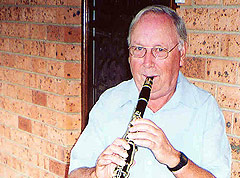
Among the few possessions Ferdi brought to Australia was the clarinet he had played in a military band in the Netherlands.
The instrument became one of his most significant migration belongings. Although it eventually became unplayable, Ferdi retained it for its sentimental value.
After settling in Orange, he discovered the Orange City Band. As it was a brass band, Ferdi changed instruments and learned to play the cornet.
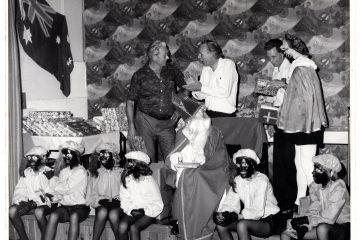
Music became an important pathway into the local community. Ferdi joined the Bloomfield Theatrical Society, where he performed with other European migrants, including Czech migrants Danny Broz and Carl Domin.
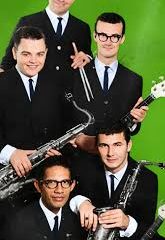
He and his father also formed a dance band called the Skymasters, with Joe playing double bass. The band performed at balls held at the Orange Ex-Services Club, Amoco Hall, the CWA Hall and the Star Ballroom.
The Skymasters also played at Greek community balls in Orange. These events could continue from eight o’clock in the evening until five the following morning, with Ferdi’s group alternating with a Greek band brought from Sydney.
Music allowed Dutch and other European migrants to participate in the cultural life of Orange while contributing their own skills and traditions to the city.
Although the clarinet eventually became unplayable, Ferdi preserved it in its original case because of its sentimental importance. The instrument and case will eventually be donated to the Orange Regional Museum, ensuring that this tangible connection between his Dutch childhood and Australian life remains part of the history of Orange.
Sport and community participation
Ferdi’s community involvement extended beyond music.
He joined the Emmco Soccer Club, whose membership included many European migrants. Soccer provided a familiar sport and an important social network for people adapting to life in Australia.
Ferdi also joined the local sailing club. The Boers and Runeman families helped establish the Orange Canoeing Club.
These activities complicate the idea that assimilation simply required migrants to abandon their former identities. Ferdi became part of Orange through workplaces, music, theatre and sport. Integration occurred by contributing to community life and forming relationships with Australians and migrants from many backgrounds.
Decades later, Ferdi remained active in local sport. In 2017, when he was in his early eighties, the Central Western Daily reported that he had achieved another hole-in-one at Duntryleague Golf Club.
A Dutch migrant’s contribution to regional Australia
Ferdi Boers was not a nationally famous Australian. His historical importance lies elsewhere.
His story demonstrates how post-war migrants helped build Australian regional industries and communities. Ferdi arrived with valuable technical training but initially had to work as an unskilled labourer. Recognition from another migrant allowed him to resume his apprenticeship, qualify as a toolmaker, become a leading hand and eventually advance through further study to become a design draughtsman at Electrolux.
His family moved from wartime deprivation in the Netherlands to Bonegilla, a migrant hostel and a garage with a dirt floor before constructing a permanent home.
At the same time, Ferdi’s contribution extended beyond industrial work. Through the Orange City Band, the Skymasters, theatre, soccer, sailing, canoeing and golf, he became deeply involved in the social life of Orange.
The clarinet he carried from the Netherlands symbolises that journey. It connected a Dutch wartime childhood with a new Australian life and reminds us that migrants brought more than labour. They brought skills, music, memories and a willingness to create new communities.
Ferdi Boers’ life is therefore both a personal migration story and part of the larger history of post-war Australia. His progression from an unrecognised Dutch apprentice to a skilled tradesman, draftsman and active citizen reflects the contribution made by thousands of migrants whose work transformed Australian industry and regional society.
In 2026, at the age of 90, Ferdi listened with considerable interest as the completed profile was read to him by his wife and confirmed that its account of his life was accurate.
Paul Budde August 2026
Sources and further reading
- Ferdi Boers—Belongings, NSW Migration Heritage Centre
- Jobs for Everyone—Postwar Migration to the Orange District, NSW Migration Heritage Centre
- Ferdi Boers’ clarinet—Half a World Away
- Half a World Away—Postwar Migration to the Orange District
- Resources and oral-history interviews—Half a World Away
- “A terrible loss for Orange: Electrolux gave Ferdi the tools of his trade”—Central Western Daily, 28 October 2013
- “Gallery: Electrolux through the years”—Central Western Daily, 25 October 2013
- “Ferdi fires another ace, laughs it off”—Central Western Daily, 12 October 2017
- Orange Dutch Society