Dutch migrants are frequently remembered as some of Australia’s most successful post-war settlers. They worked hard, bought homes, established businesses and integrated rapidly into Australian society. Their children entered universities, professions and public life.
This image is not inaccurate, but it conceals the difficult circumstances from which much of that success emerged.
Many Dutch migrants began their Australian lives in migrant camps or temporary accommodation. Qualifications and occupational experience acquired in the Netherlands were not always recognised. Skilled workers and professionals accepted factory, construction and other manual jobs below their previous occupational status. Migrants encountered ridicule, workplace hostility and pressure to abandon their language and Anglicise their names.
For some, self-employment provided a way out. Unable or unwilling to remain in subordinate employment, Dutch migrants established contracting businesses, workshops, shops, farms and family enterprises. These businesses helped families recover their independence and created opportunities for the next generation.
The journey from industrial labour to business ownership and the professions is therefore not simply a story of effortless Dutch assimilation. It is a story of occupational loss, prejudice, family sacrifice, entrepreneurship and intergenerational advancement.
Recruited for Australia’s labour needs
After the Second World War, Australia embarked on an ambitious immigration program intended to increase its population, strengthen national defence and provide labour for a rapidly expanding economy.
When the desired number of British migrants could not be obtained, the Australian Government turned to other European countries. Dutch migrants were considered particularly desirable. They were white Europeans, frequently Protestant or Catholic, and were believed to be industrious, adaptable and capable of assimilating rapidly.
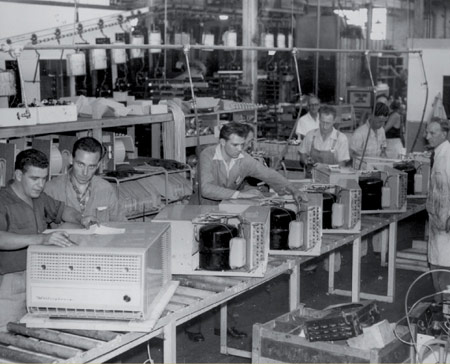
Historian Nonja Peters explains that Australia recruited Dutch tradespeople and semi-skilled workers for manufacturing, heavy industry, building and construction, metalworking and public utilities. Skilled migrants were attractive because they could contribute immediately to the Australian economy without the cost of local apprenticeships and training.
This selection process also shaped the opportunities available to migrants after arrival. Australia was not primarily recruiting Dutch academics, managers and professionals. It wanted workers for particular parts of the economy.
Assisted migrants were generally directed through the Commonwealth Employment Service and expected to accept the work allocated to them. Some migration arrangements required them to remain for two years in the type of employment for which they had been selected.
The underlying approach was later criticised as treating migrants as “factory fodder.” In 1975, Prime Minister Gough Whitlam used that expression when arguing that earlier governments had been interested in migrants principally until they arrived and entered the workforce.
The phrase was politically charged, but it captured an important aspect of the post-war program. Migrants were welcomed because Australia needed their labour. Their previous status, qualifications, personal histories and cultural identities were often considered less important.
Qualifications lost and status reduced
Many Dutch migrants discovered that qualifications and occupational experience acquired in the Netherlands did not automatically transfer to Australia.
Different certification systems, trade-union requirements, language difficulties and demands to pass Australian examinations prevented some migrants from continuing in their former occupations. Skilled tradespeople could find themselves classified as unskilled labourers. Professionals sometimes entered factories, construction work or other jobs far below their qualifications.
Nonja Peters records that some Dutch tradesmen were unable to pass local trade tests or satisfy union requirements and consequently accepted unskilled work or retrained. Only some were able to regain their Australian trade certificates.
The problem was not confined to the Dutch. Occupational downgrading was experienced by migrants from many countries. However, it sits uneasily beside the later image of the Dutch as migrants whose integration into Australia was naturally and immediately successful.
Johnny Young’s family provides one familiar example. Before becoming one of Australia’s best-known entertainers, Johnny was Johnny de Jong, a migrant child from Rotterdam. His family passed through migrant accommodation, moved several times between Australia and the Netherlands and eventually settled in Western Australia. His father, Fokke Jan de Jong, worked as a welder on industrial projects including the Kwinana Oil Refinery.
The children of such families often achieved opportunities their parents could not immediately access. This was rarely accidental. Parents accepted reduced occupational status, worked overtime, saved intensively and concentrated their resources on housing and education.
Prejudice behind the “model migrant” story
Dutch migrants occupied a comparatively privileged position within Australia’s racially ordered immigration system. They were sometimes described as “surrogate British” and ranked highly among the non-British migrants Australia was prepared to accept.
This position should not be confused with complete social acceptance.
Dutch migrants still arrived as “New Australians.” Their accents, names, food and customs distinguished them from the predominantly Anglo-Australian population. Children could be teased at school, while adults encountered stereotypes and hostility in workplaces and neighbourhoods.
Nonja Peters found that Australian employers often valued Dutch employees as ambitious and hardworking. They were regarded as willing to work overtime and determined to save enough money to build a house or become self-employed.
The same qualities could produce resentment among fellow workers. Dutch employees who suggested different or more efficient workplace practices could be characterised as “arrogant and opinionated.” Their determination to work quickly and accumulate overtime could also be interpreted as disrupting established workplace expectations.
One Dutch-Australian family recalled that the father was harassed for working too hard. Fellow workers gave him the worst jobs and, on one occasion, soldered his lunch box closed so that he could not eat his lunch. Such an experience cannot be regarded as representative of every Australian workplace, but it illustrates the intensely personal form prejudice could take.
Dutch migrants were expected to fit in, but fitting in sometimes required them to conceal the characteristics that made them recognisably Dutch.
Changing names to fit in
Name changes were one of the most visible consequences of assimilation.
Johannes became John, Pieter became Peter, Cornelis became Cor or Carl, and Jan became John. Johnny de Jong became Johnny Young. In some families, surnames were shortened, translated or changed altogether.
A study of Dutch child migrants held in the DACC collection records the experience of Martien, who changed his name to Martin and also altered his surname because he did not want people to know that he was Dutch. He obtained his master’s degree under the shortened name and, for approximately 50 years, avoided speaking or reading Dutch and denied his Dutch identity when questioned. Only later in life did he return to using Martien.
An unusual name did not inevitably prevent advancement, and it is difficult to prove why an individual was rejected for a particular job. Nevertheless, the decision of migrants to Anglicise even their surnames demonstrates that they believed a recognisably foreign identity could be a social or professional disadvantage.
Name-changing formed part of a much broader expectation. Migrant children were not gradually introduced into Australian society. They were expected to adapt almost immediately.
A “sink-or-swim” education
Historian Nonja Peters has described the education experienced by post-war migrant children as a “sink-or-swim” policy.
Once children entered the Australian schoolyard, they were expected to become Australian. There was little specialist English-language assistance and limited recognition of the disruption, war experiences or cultural dislocation they carried with them. If children failed to cope, the failure was frequently attributed to them rather than to the education system.
Many learned not to talk about their backgrounds. Peters observed that it was almost as though migrant children were expected to have no past.
The official assumption was that rapid immersion would accelerate integration. In practice, it could leave children caught between two worlds. They were not always considered Australian by their classmates, yet visibly associating with other migrants could expose them to further ridicule.
Australian childhood culture had its own markers of belonging. Knowledge of rugby, cars, fishing and other familiar activities helped children participate in playground conversations and family social life. Migrant children who did not share that knowledge could feel that they were neither sufficiently Australian to be accepted nor free to remain visibly Dutch.
Hiding difference in the schoolyard
Food was one of the most immediate signs of difference.
Dutch and other European lunches looked and smelled unfamiliar to Australian children accustomed to simpler sandwiches and meat pies. Some migrant children asked their parents not to give them continental meats or other recognisably European food.
One Dutch-Australian recalled hiding in the school toilets to eat lunch because other children would make fun of the food or destroy it. Concealment seemed safer than attracting attention.
Such experiences help explain why some children rejected the Dutch language, disliked their Dutch names and avoided association with other migrants. These were not necessarily rejections of their families. They were strategies for surviving the “sink-or-swim” school environment.
The result was the rapid disappearance of the Dutch language and the development of what researchers have called an “invisible” Dutch community. Dutch migrants appeared to assimilate exceptionally well partly because many learned to keep their identity inside the family home.
Isolated from both communities
Assimilation did not necessarily produce a sense of belonging.
Some Dutch migrants felt that they were not Australian enough to be fully accepted by Australians. At the same time, mixing too visibly with their “own sort” could reinforce their identification as foreigners and expose them to further ostracism.
The strategy intended to secure acceptance could therefore deepen their isolation. Migrants were discouraged from maintaining a separate cultural identity but were not always welcomed as equals within Australian society.
Family separation added another dimension. Many migrants had left their entire extended family in the Netherlands. International travel remained prohibitively expensive, while telephone calls were rare and costly.
Children could grow up without grandparents, aunts, uncles or cousins nearby. Apart from their parents and siblings, they sometimes had no relatives in Australia and little prospect of visiting those overseas.
This absence affected both generations. Parents had lost the family networks that traditionally provided emotional support, childcare and practical assistance. Children grew up without the wider circle of relatives that might have offered them reassurance when their parents were struggling.
The family cost of relentless work
The celebrated Dutch willingness to work hard also carried a considerable personal cost.
For many families, overtime was not primarily a route to prosperity. It was necessary to pay rent, accumulate a housing deposit and meet ordinary household expenses.
Fathers could leave home in darkness to catch buses or trains to factories and return too exhausted to participate fully in family life. Many households did not yet own a car, making already long working days even longer.
One Dutch-Australian remembered a father regularly falling asleep while stirring his porridge in the early morning. Unable to finish his breakfast or coffee, he would rush from the house to catch public transport to work.
He frequently worked Saturdays as well as extensive overtime during the week. On days when he was too busy or tired to eat at work, he returned home with his untouched sandwiches and gave them to his child rather than waste them. By then, the bread was dry and the cheese warm and stale, but the child ate the sandwiches to make him happy.
Years of demanding factory labour left the father’s hands heavily calloused and made him physically strong. The repetitive work and exhaustion also affected him emotionally. Grinding away in factories for years, often in work below his capabilities, became a source of depression.
Sunday might be his only opportunity to recover. Normal childhood noise could provoke anger from a parent whose physical and mental reserves had been depleted by the working week.
Such recollections complicate the familiar story of hardworking migrants successfully building a new life. The work did provide rent, housing and opportunities for the children, but it could also produce exhaustion, depression, irritability and emotional distance within the family.
The children benefited from their parents’ sacrifices, yet they also lived with the consequences. Economic advancement and intergenerational mobility were sometimes purchased through the first generation’s physical exhaustion and the loss of ordinary family time.
The Dutch became known as successful migrants, but this success was not effortless. It was built within families that were simultaneously confronting occupational downgrading, social isolation and the expectation that both parents and children would either adapt or sink.
The hidden contribution of Dutch women
Many Dutch small businesses were family enterprises, even when only the husband was publicly identified as the proprietor.
Wives kept the accounts, answered correspondence, dealt with customers, provided unpaid labour and maintained the household while the business became established. Shops, bakeries, farms, workshops and contracting businesses frequently depended on the labour of both spouses and, later, their children.
Nonja’s research shows that Dutch women’s contribution was often essential but poorly recognised. The traditional assumption that the man earned the family income could conceal the wife’s extensive involvement in creating and operating the enterprise.
Family labour reduced costs and enabled businesses to survive their vulnerable early years. Trust was also important. Dutch business owners initially recruited relatives, church members and other Dutch migrants because they knew their skills and believed they shared similar standards of reliability and workmanship.
Over time, these businesses expanded beyond the Dutch community. They entered horticulture, construction, manufacturing, retailing, food production, importing, aged care, engineering and professional services.
Creating opportunities for the next generation
The first generation’s businesses provided more than immediate employment. They created assets, networks and educational opportunities that changed the position of the next generation.
Children often worked in the family enterprise for board and pocket money. Their labour contributed to the business, but they simultaneously benefited from growing up in Australia. They spoke English fluently, attended Australian schools and developed local social and professional networks their parents had lacked.
Some continued the family business. Others entered universities and moved into teaching, medicine, law, engineering, management, entertainment, academia and public service.
The occupational advancement of the children should not be interpreted as evidence that the parents had lacked ability. In many cases, the opposite was true. The first generation possessed skills, discipline and experience but entered an environment in which their qualifications and social standing had been devalued.
Their children began from a stronger position because of what their parents had built.
The progress from factory work to self-employment and then into the professions frequently occurred across two or three generations. It was a family achievement rather than an individual transformation.
Success was real—but it was not effortless
The Dutch did become one of Australia’s most economically and socially integrated migrant groups. They bought homes, established businesses and contributed substantially to Australian agriculture, construction, manufacturing, culture and professional life.
However, describing them only as successful “model migrants” risks removing the struggle from the story.
Their success was shaped by long hours, occupational sacrifice, unpaid family labour and the suppression of language and identity. Some experienced ridicule and discrimination. Others returned to the Netherlands because the reality of settlement differed so greatly from the life migration propaganda had promised.
The Dutch also benefited from their racial position within the White Australia system. Their experiences cannot simply be equated with those of migrants who were excluded or subjected to more severe racial discrimination. Indisch Dutch applicants, in particular, could face scrutiny of their ancestry and appearance that Netherlands-born white Dutch migrants did not experience.
The Dutch story therefore contains both disadvantage and relative privilege. They were favoured as immigrants but were still expected to assimilate. They were recruited for their skills but could find those skills unrecognised. They were praised as hardworking yet sometimes resented for working too hard.
A recurring migration story
The experiences of Dutch migrants during the 1950s and 1960s reveal a recurring feature of migration history. Countries frequently welcome migrants for the labour, skills and population growth they provide while remaining uneasy about the social and cultural changes associated with their arrival.
Economic pressures involving employment, housing and public services can intensify these concerns. Debate about the scale and management of migration is legitimate, but history shows how easily criticism of migration policy can become suspicion or mistreatment of migrants themselves.
Dutch migrants were once the unfamiliar “New Australians.” They encountered ridicule, workplace discrimination, non-recognition of qualifications and pressure to abandon their language and identity. Yet many subsequently established businesses, entered the professions and created opportunities for their children. The group that initially appeared foreign gradually became part of Australian society.
This pattern has occurred with successive generations of migrants. The countries of origin change, as do the political and economic circumstances, but the underlying tension remains: migrants are needed for their contribution while being feared for the changes their arrival may bring.
Many families once viewed primarily as industrial labour are now recognised as part of the social and economic foundation of modern Australia. Their experiences suggest that the contribution of today’s migrants may likewise prove much greater—and much more enduring—than contemporary anxieties recognise.
The Dutch journey from “factory fodder” to business ownership and the professions is therefore more than a Dutch-Australian success story. It is a reminder that migration is rarely effortless, that integration occurs across generations and that those initially treated as outsiders can profoundly shape the future of their adopted country.
Sources and further reading
- Nonja Peters, The Enterprising Dutch.
- Nonja Peters, “Expectation versus Reality: Postwar Dutch Migration to Australia.” See pdf
- Nonja Peters, A Touch of Dutch: Maritime, Military, Migration and Mercantile Connections on the Western Third, 1616–2016.
- Dutch Identity and Assimilation in Australia: An Interpretative Approach.
- Old Ties, New Beginnings: Dutch Women in Australia.
- Gough Whitlam, press conference transcript, 1975.
- L. Taksa and S. Groutsis, “Managing Diverse Commodities? From Factory Fodder to Business Asset.”
- DACC, “Successful, but not effortless: Dutch migrants and the reality behind return migration.”
- The ‘invisible migrants’ no-one talked about—until now”—SBS News, 11 July 2026