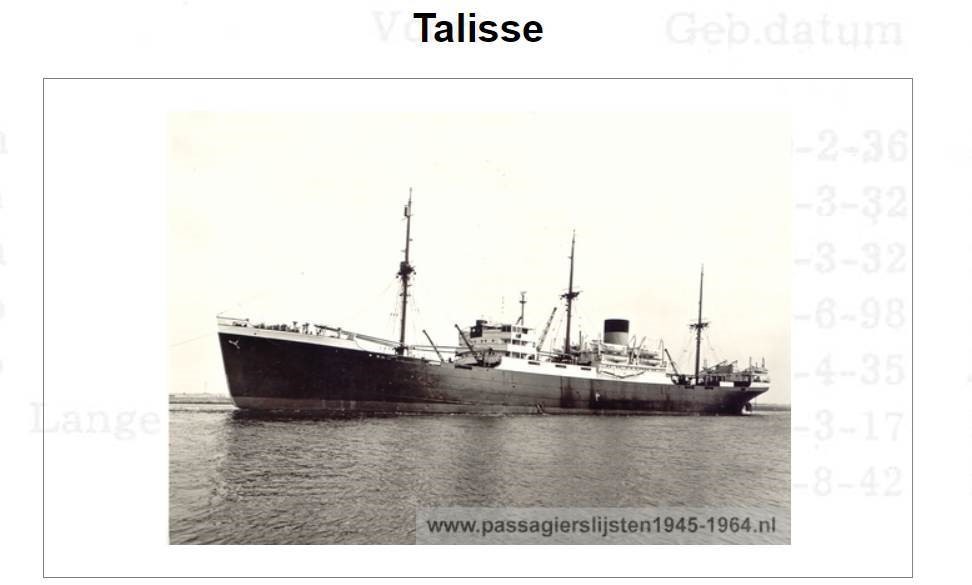
On 27 March 1948, Adolf Petrus Gerardus Mulder and his wife, Cornelia Wilhelmina Maria Mulder–van Riek, departed Rotterdam aboard the motor ship Talisse.
Known as Dolf and Corrie, the young couple had been married for less than a year. They were part of one of the earliest organised groups of Dutch emigrants to travel to Australia after the Second World War.
Their son Greg Mulder has preserved passenger lists, newspaper reports, photographs and family records documenting the voyage and his parents’ early years in Australia. Together, these records provide a revealing account of the opportunities and difficulties experienced by the first wave of postwar Dutch migrants.
Seeking a new future
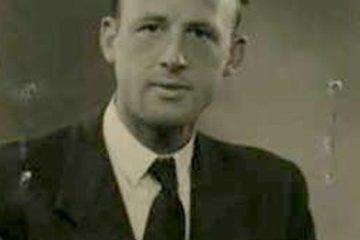
Dolf was born in Lisse on 10 September 1916. Before emigrating, he worked as a field labourer in the bulb-growing district surrounding Lisse.
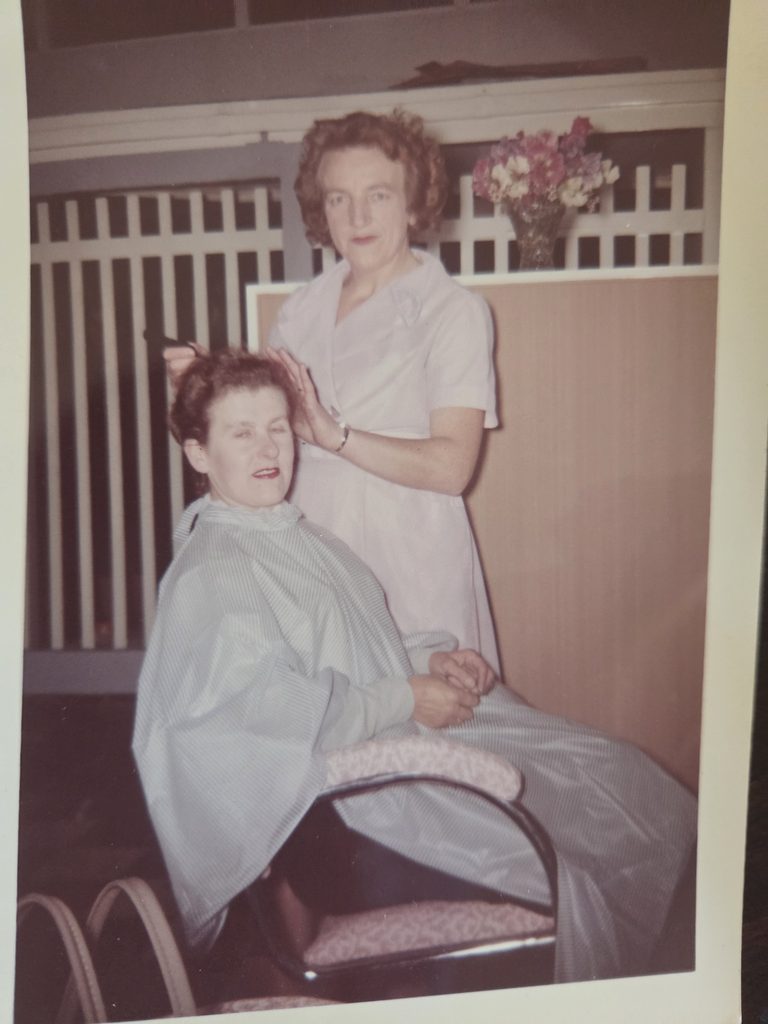
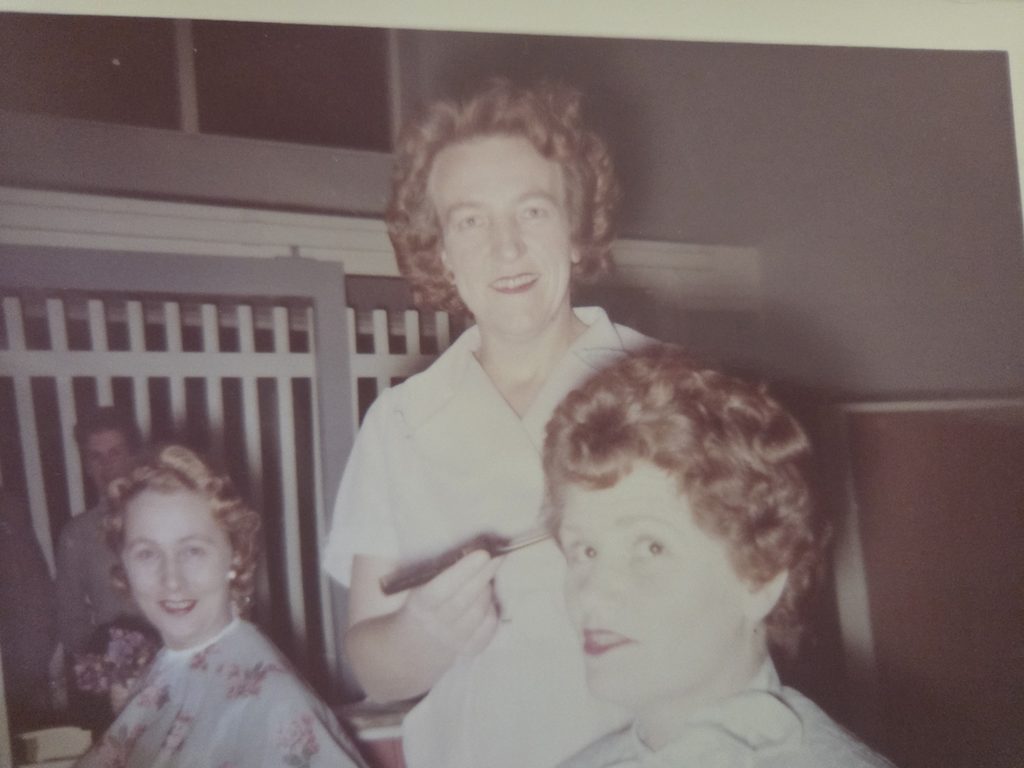
Corrie was born in Nieuw-Vennep on 12 July 1917. Her father was a wheelwright, or wagenmaker, and Corrie trained as a ladies’ hairdresser.
The couple married in a civil ceremony in late May 1947, followed by their church wedding at St Agatha Catholic Church in Lisse on 2 June 1947.
The Netherlands faced severe housing shortages, limited employment opportunities and considerable social and economic disruption following the Second World War. Dolf also disliked what he saw as the rigid, top-down hierarchy of postwar Dutch society. He decided that emigration offered a better future for the family and for the children he and Corrie hoped to have.
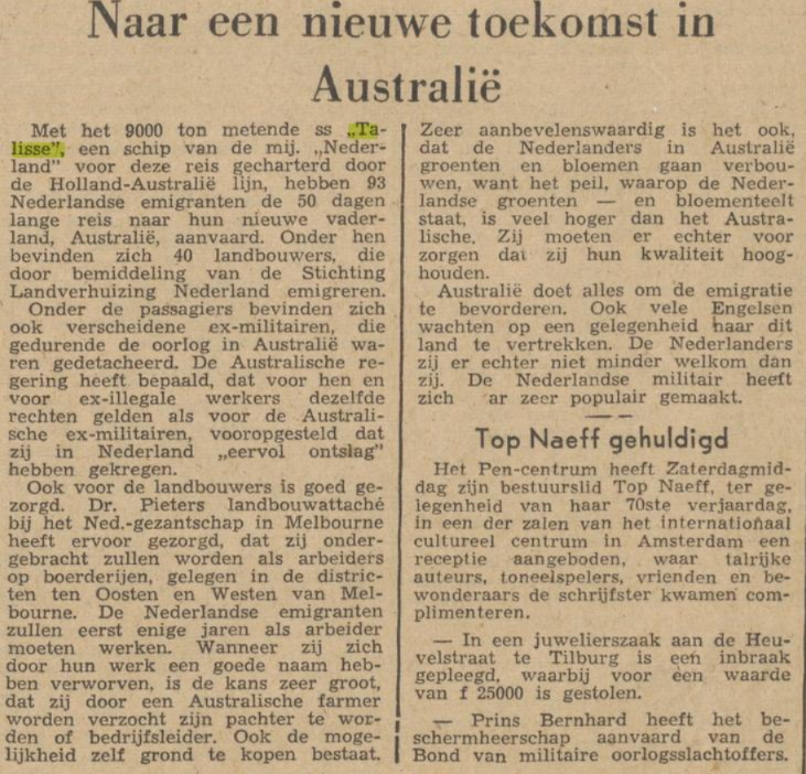
One of the newspaper articles preserved by the family appeared under the heading “Naar een nieuwe toekomst in Australië”—“Towards a new future in Australia”. It explained that Australia offered opportunities for Dutch farmers, gardeners and agricultural workers, while warning that migrants would need to adapt and be prepared to work hard under unfamiliar conditions.
Another newspaper report described approximately 40 agricultural workers aboard the Talisse as the first Dutch emigrants travelling under a new scheme. Whether all the Dutch passengers, including Dolf, formally travelled under this scheme is unclear. Nevertheless, they were undoubtedly among the earliest organised groups of Dutch postwar migrants to Australia.
Departure aboard the Talisse
The Talisse departed Rotterdam at approximately three o’clock on the afternoon of Saturday 27 March 1948.
The ship was primarily a cargo vessel but also carried passengers. Some contemporary reports refer to 93 passengers, while the postscript on the surviving passenger list records a total of 95. The passengers’ destinations included Fremantle, Adelaide, Melbourne, Sydney and Brisbane.
The passenger list (below) records Dolf as an agricultural worker, aged 31, travelling with his wife, Corrie, aged 30. Their destination was Brisbane.
One of their fellow passengers, W. F. van den Burg, wrote a series of newspaper reports about the voyage under the title Op reis naar Australië—On the way to Australia. He had no family connection with the Mulders but was one of the emigrants aboard.
His reports were sent back to the Netherlands and published in several instalments. They provide a contemporary account of the departure, conditions aboard the ship and the passengers’ experiences during the journey.
One of W. F. van den Burg’s newspaper reports describing the journey aboard the Talisse.
Van den Burg described the emotional farewell at Rotterdam as the passengers watched the Netherlands disappear from view. The travellers were leaving family, friends and familiar surroundings without knowing when—or whether—they would see them again.
The passengers had to arrange their travel documents, baggage and provisions before departure. The men were accommodated in cabins shared by two or four people. Conditions were relatively simple, although Van den Burg reported that the food was good and that the passengers were well treated.
The Talisse first sailed to Antwerp. From there, it travelled through the Scheldt towards the English Channel.
The North Sea and English Channel were rough, and seasickness quickly affected many passengers. Clothes and belongings moved around the cabins as the ship rolled. At mealtimes, plates and dishes sometimes had to be prevented from sliding off the tables.
Despite these uncomfortable beginnings, the passengers gradually adjusted to life aboard the ship and formed their own temporary community.
Through the Mediterranean
After passing Gibraltar, the Talisse entered the Mediterranean. It called at Marseille and Genoa, allowing passengers to go ashore and experience places that were entirely new to many of them.
Van den Burg recorded their impressions of the ports, shops, buildings, food and people they encountered. In Marseille, passengers explored the city and surrounding hills. In Genoa, they toured the city and travelled by cable car into the mountains.
The reports reflect the attitudes and language of their time, but they also capture the passengers’ curiosity and excitement. For many, the journey was their first significant experience outside the Netherlands and neighbouring parts of Europe.
The voyage reports recorded the passengers’ experiences during calls at Mediterranean ports.
The ship continued to Port Said and entered the Suez Canal. Van den Burg described the slow passage through the canal and observed military posts, convoys and remnants of wartime defences along the route.
The Second World War had ended less than three years earlier, and reminders of the conflict were still present throughout the voyage.
From the canal, the Talisse entered the Red Sea. The passengers encountered intense heat, while the ship travelled through waters in which wartime mines remained a concern.
Across the Indian Ocean
The voyage continued to Aden and then Bombay, where passengers visited the city and saw the Gateway of India.
Their reports describe the traffic, shops, clothing and religious customs they encountered, as well as the striking contrast between wealth and poverty. These experiences were unfamiliar to people whose lives until then had been spent primarily in the Netherlands.
At Cochin, the passengers were taken ashore in small boats. Van den Burg described the palm-lined waterways, houses, markets and the old Dutch cemetery, which was a reminder of the historical Dutch presence in southern India.
Some passengers also travelled to Alleppey, now known as Alappuzha.
Van den Burg’s reports described the Suez Canal, India and other places visited during the journey.
The surviving newspaper series does not appear to include a final account of the voyage from India to Australia. The last known instalment was published on 26 May 1948, more than two weeks after the Talisse had arrived in Australia.
Below. Photographs during the trip.
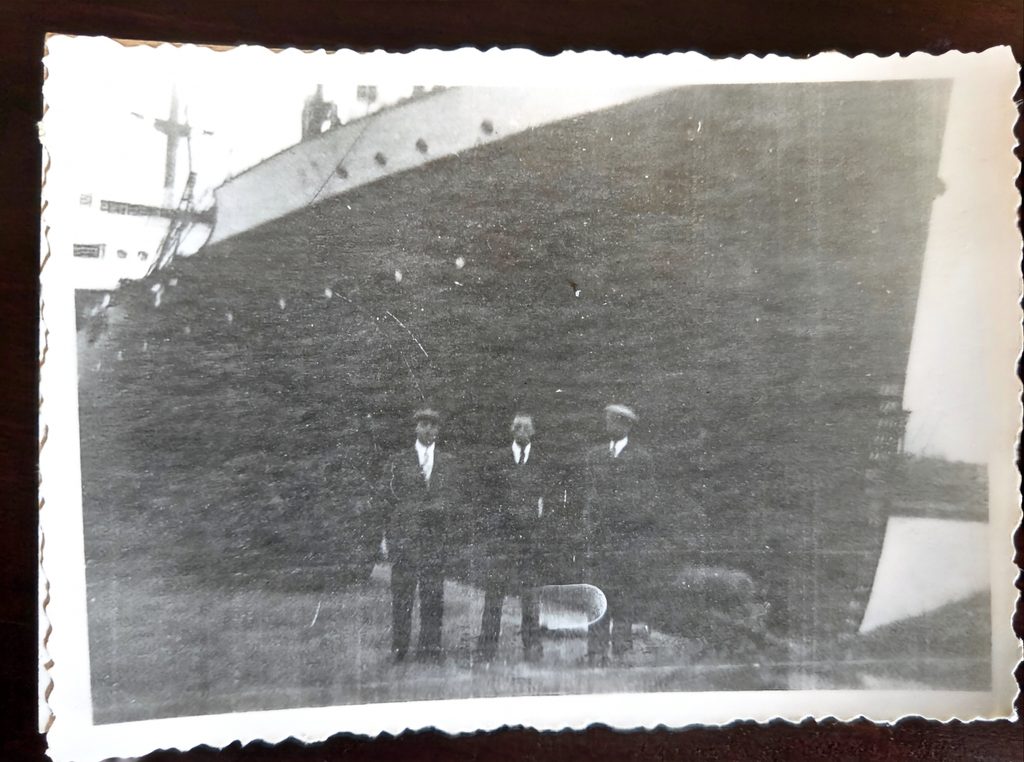
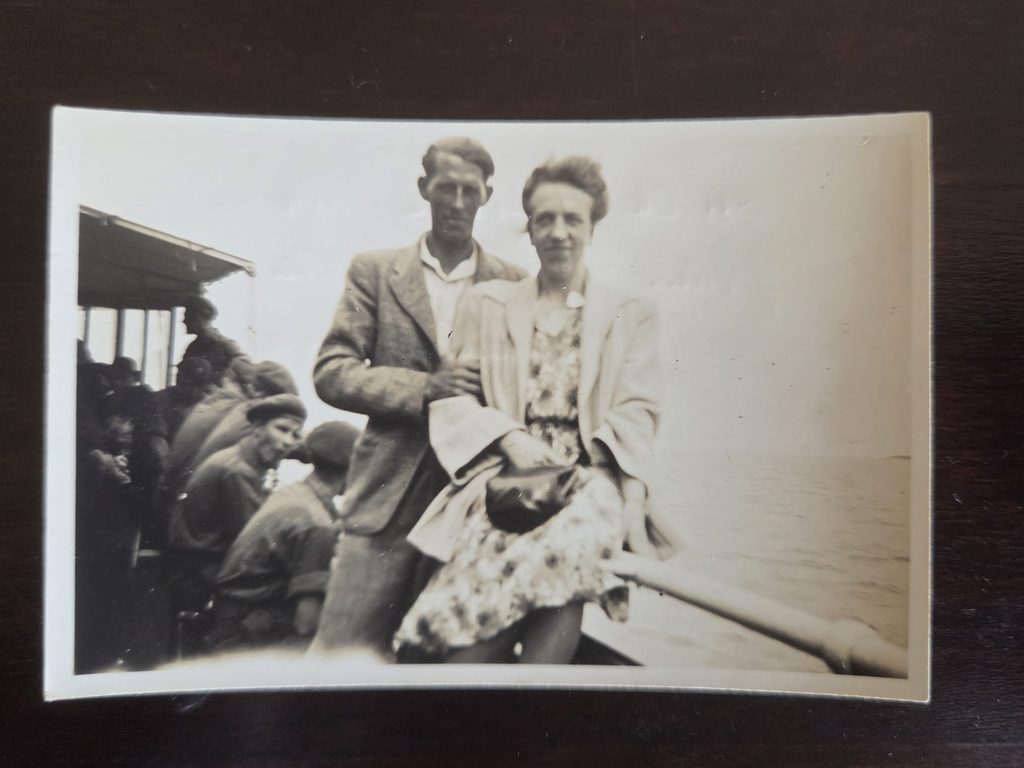
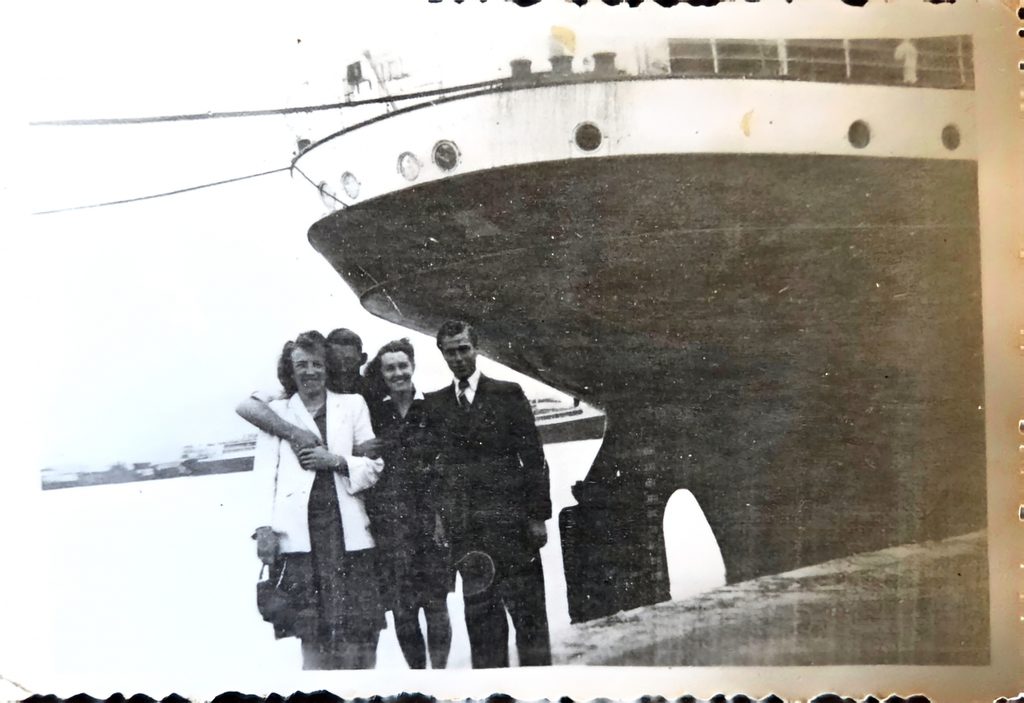
Below. Lunch menu Talisse 5 April 1948
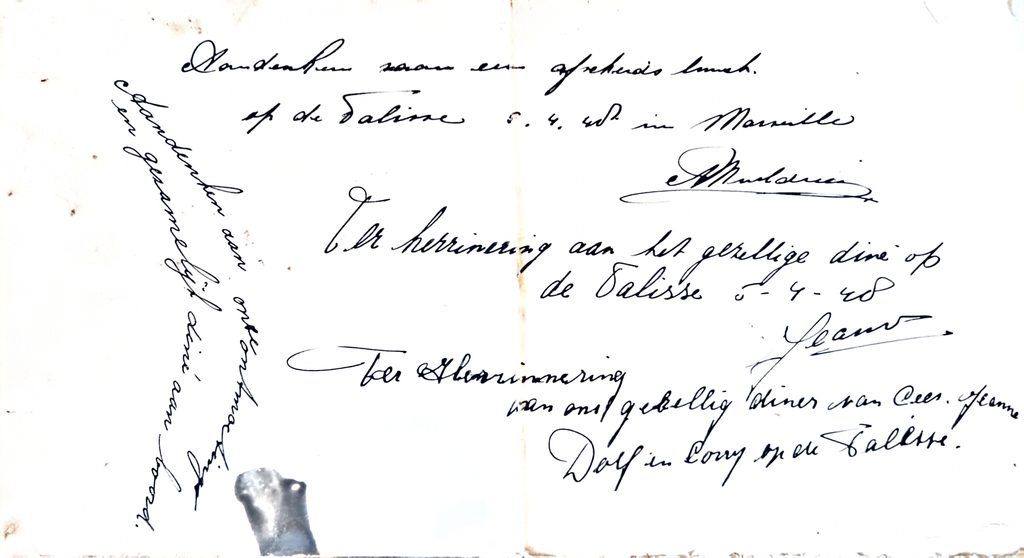
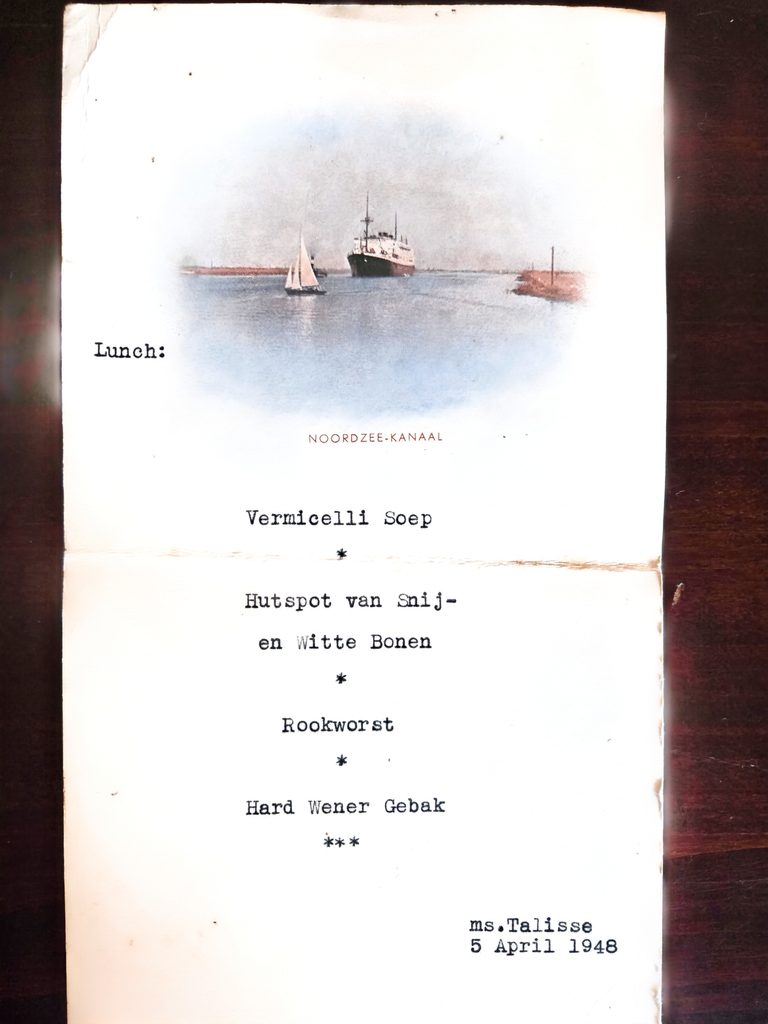
Arrival in Australia
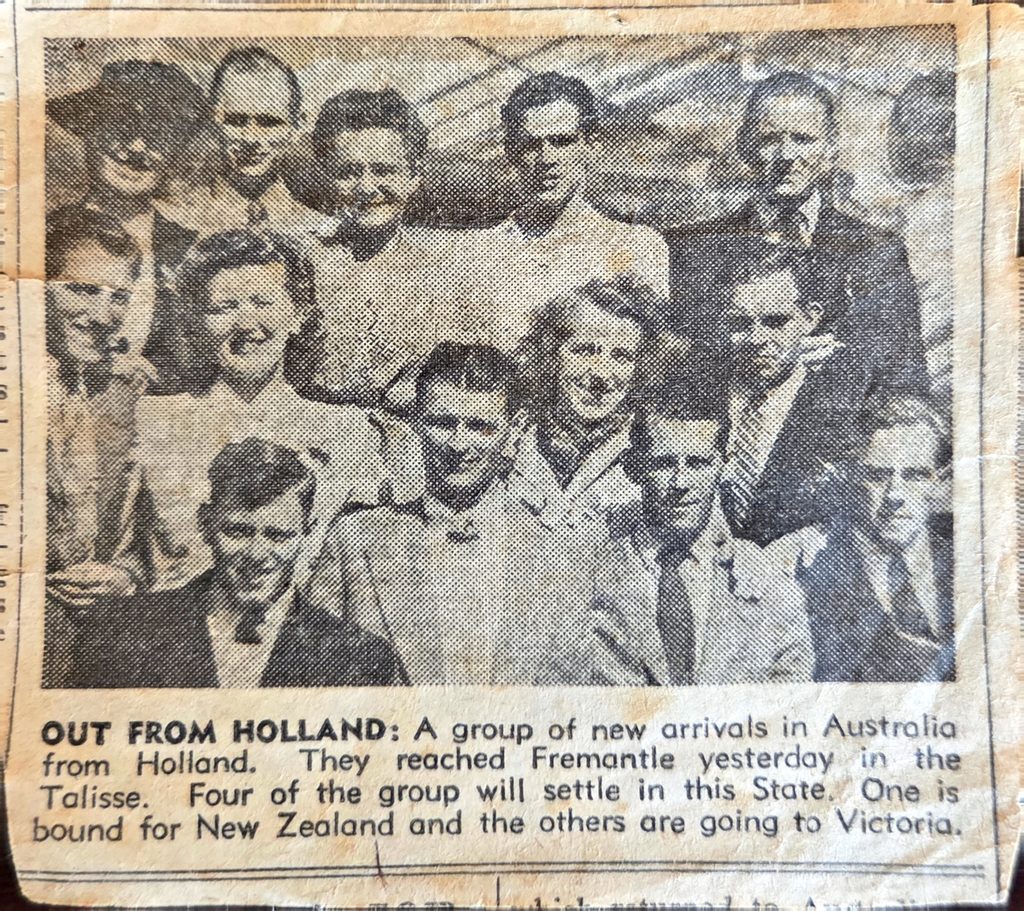
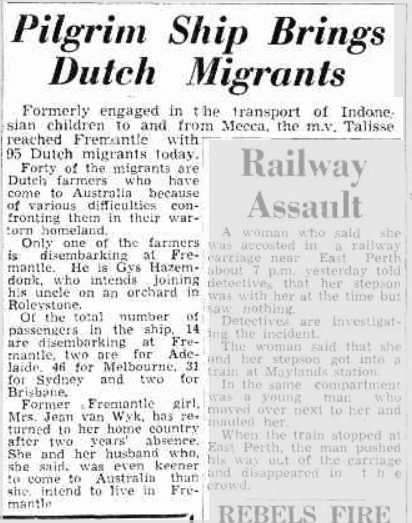
The Talisse reached Fremantle on 11 May 1948 after a voyage of approximately six weeks.
The Perth Daily News reported the arrival under the heading “Pilgrim Ship Brings Dutch Migrants”. The title referred to the vessel’s earlier role carrying Indonesian pilgrims to and from Mecca.
The newspaper reported that approximately 40 of the passengers were Dutch farmers seeking a new future because of the difficulties confronting them in postwar Europe.
Some passengers disembarked at Fremantle, while others continued to Adelaide, Melbourne, Sydney and Brisbane. Dolf and Corrie remained aboard for the journey to Brisbane.
The difficult early years
On 20 May 1948, shortly after arriving in Australia, Dolf began working for L. C. Dobbie at Cottonvale in Queensland. The property appears to have been a fruit-growing enterprise. Dolf’s recorded occupations were bulb grower and gardener.
Probably Dolf Mulder’s first workplace in Australia. His records list L. C. Dobbie, Cottonvale, Queensland. This appears to have been a fruit-growing business.
Dolf remained there until October 1948 and then moved to Old Cleveland Road in Belmont, Brisbane. He again worked as a gardener, apparently including work for the local council.
In March 1949, the family moved to Kyogle in northern New South Wales. Their first son, Adolf Petrus Gerardus Mulder, known as Peter, was born there on 12 April 1949.
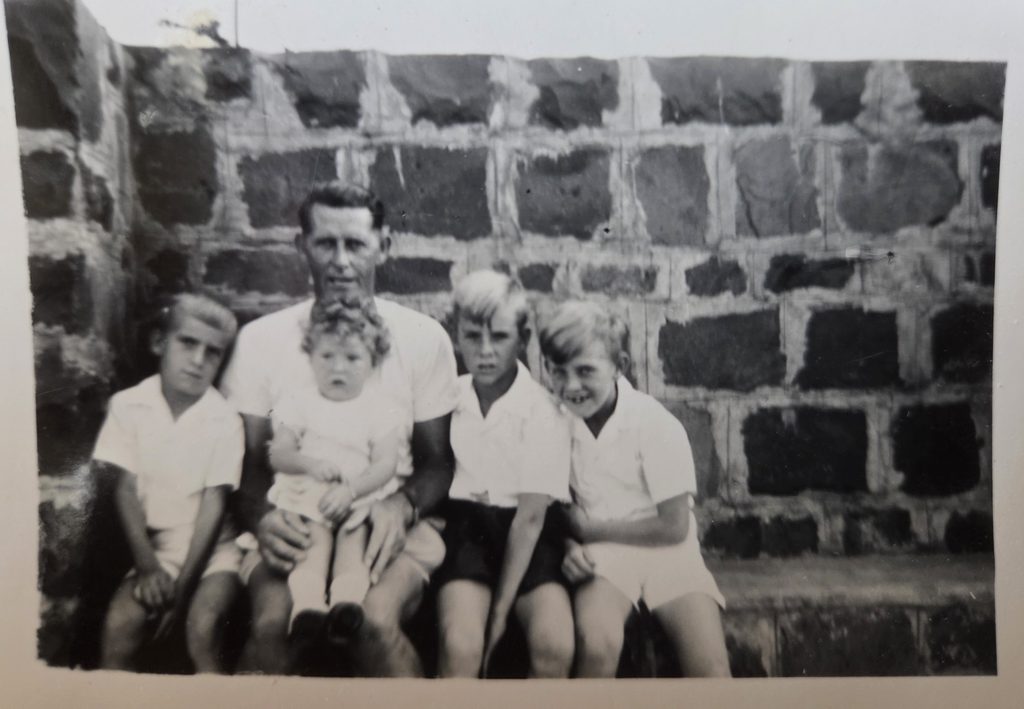
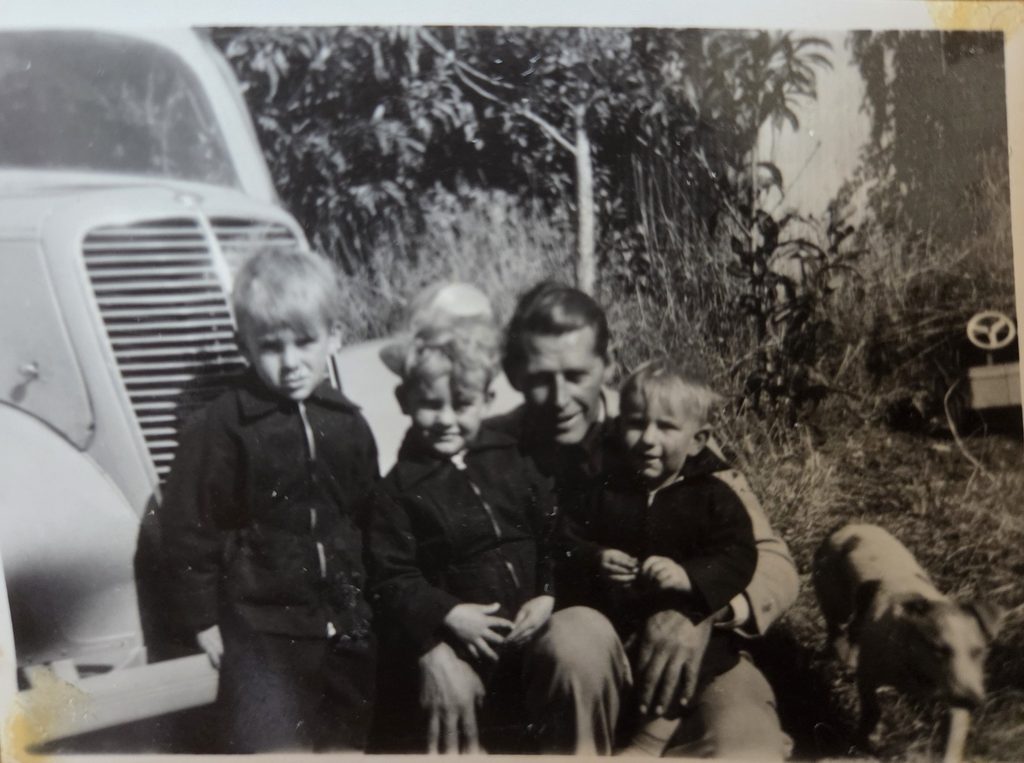
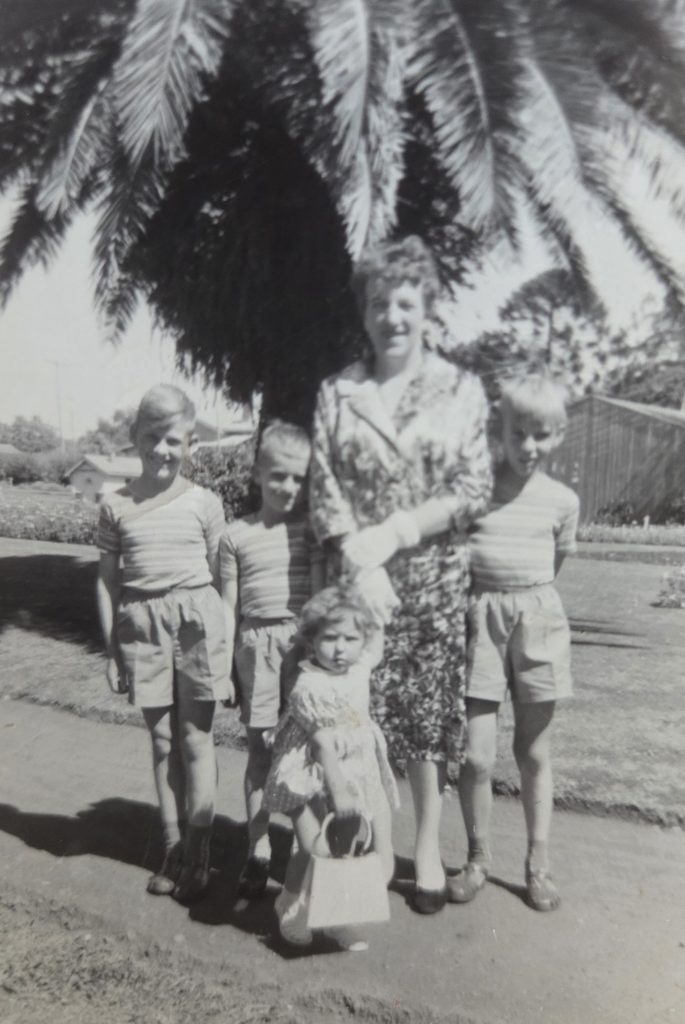
The family moved to Toowoomba at the beginning of 1951, possibly because Dutch friends were already living there. Their second son, Gerardus Martinus, known as Gerard, was born in Toowoomba on 28 February 1951. Gregory Charles, known as Greg, followed on 26 October 1952, and their daughter, Charmaine Anna, was born on 11 September 1957.
Their early years in Australia were difficult. Dolf was away working throughout the day, while Corrie was often at home in unfamiliar surroundings and initially spoke no English.
Dolf had spent some time working in England before the Second World War and therefore arrived with a reasonable command of English. Corrie began learning the language with his help, including by reading newspaper comic strips with him.
Corrie later resumed her work as a ladies’ hairdresser in Australia. Greg would eventually follow her into the same profession.
Below: The Mulder family in Toowoomba
Building a Dutch community in Toowoomba
Dolf and Corrie were practising Roman Catholics and became part of a small but close Dutch migrant community in the Toowoomba region.
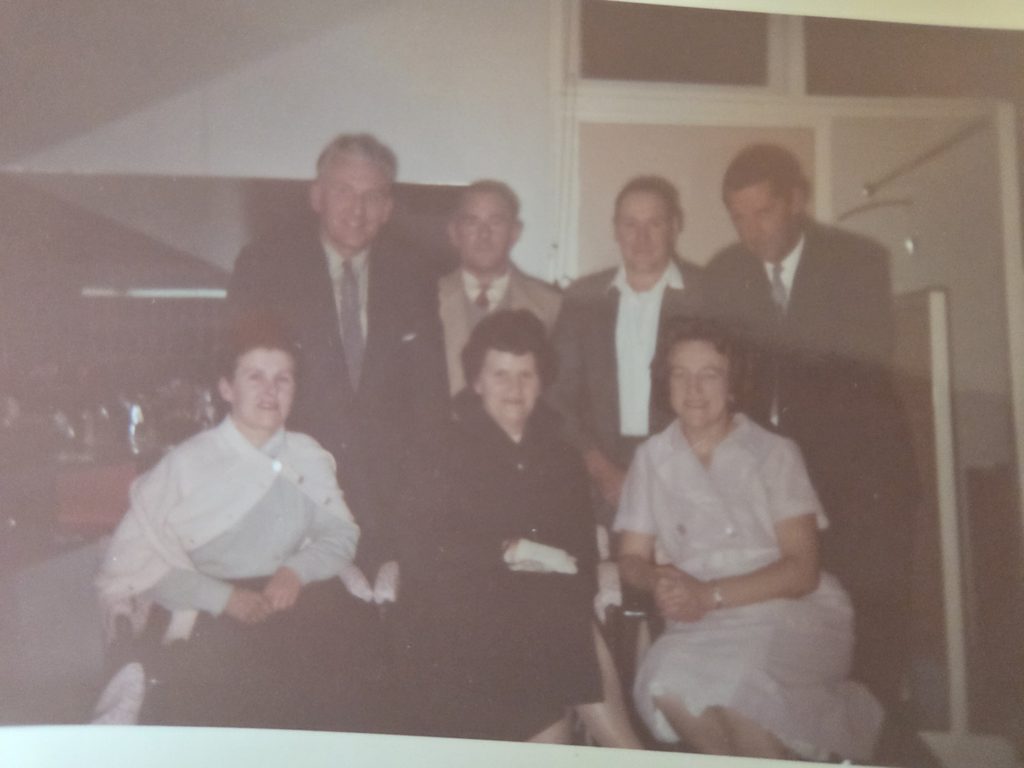
Around 1951, they sponsored another Dutch couple, Piet and Annie van Herk, to emigrate to Australia. The Van Herks initially stayed in the Mulder family home and remained lifelong friends.
Other close Dutch friends included Bé and Corrie Jager and Gerard and Fons Roelands. Greg and the other Mulder children referred to these family friends as their surrogate aunts and uncles.
The community also supported Dutch migrants who were struggling with homesickness. On one occasion, a couple from Lisse who were living in Brisbane came to Toowoomba during the Christmas period. They were considering whether they could remain in Australia and eventually returned to the Netherlands.
The story illustrates how important informal Dutch networks were during the early years of migration. In the absence of extended family, migrants created new circles of mutual assistance, friendship and surrogate kinship.
Below: Members of Toowoomba’s Dutch community photographed in Corrie Mulder’s hairdressing salon. They include Bé and Corrie Jager, Gerard and Fons Roelands, and Annie and Piet van Herk. Courtesy of the Mulder family.
Maintaining contact with the Netherlands
Before international telephone calls became widely affordable, contact with family in the Netherlands was maintained primarily through letters.
In October or November 1953, Dolf and Corrie made an audio recording on a 78 rpm record and sent copies to their families in the Netherlands as Christmas presents. Greg still has the original recording.
This unusual family document preserves something letters could not: the voices of the family in Australia speaking directly to relatives on the other side of the world.
Contact with the Netherlands became closer after Greg moved there in 1970.
Corrie made her first return visit in 1973. Dolf and Corrie travelled to the Netherlands together in 1981 and made their final visit in 1993.
A jack of all trades
Dolf undertook many different kinds of work during his life in Australia and was remembered as a jack of all trades.
For the final 15 years of his working life, he was the caretaker and gardener at Toowoomba’s local lawn cemetery. This work drew upon the gardening experience that had begun with his first recorded Australian employment at Cottonvale.
The family’s addresses in Toowoomba included Hume Street, Tor Street, Alderley Street, Burstow Street and Herries Street.
Dolf remained in Toowoomba until his death on 6 April 1995. Corrie died there on 17 May 2005.
Childhood memories and a return to the Netherlands
Greg remembers a happy childhood in Toowoomba. Among his strongest memories are the family’s Sunday picnics at different locations around southeastern Queensland and holidays on the Sunshine Coast and Gold Coast.
Corrie nevertheless continued to experience periods of homesickness. She often told her children about the Netherlands and encouraged them to visit the country one day.
Greg became a ladies’ hairdresser and, at the age of 17, decided to travel to the Netherlands to learn European hairstyling techniques. Corrie had a sister there who also operated a ladies’ hairdressing salon, giving him an opportunity to work and develop his skills.
He moved to the Netherlands in 1970 and has lived there ever since.
His journey created a new connection between the country his parents had left and the Australian family they established. It also strengthened family ties across the two countries.
Preserving a migration story
The Mulder family records connect the personal experience of one couple with the larger history of postwar Dutch migration to Australia.
The newspaper reports written aboard the Talisse are especially valuable because they record the journey before its outcome was known: the farewell at Rotterdam, seasickness in the English Channel, unfamiliar ports and cultures, and the mixture of excitement and uncertainty as the passengers approached a country most had never seen.
For Dolf and Corrie, Australia offered opportunity but also brought hard work, isolation and homesickness. Through persistence and the support of other migrants, they established a home, raised four children and became part of Toowoomba’s Dutch community.
Their experience reflects a broader pattern. Dutch migrants frequently relied upon one another for accommodation, employment, companionship and practical assistance. Friends became surrogate family members, helping newcomers build a sense of belonging far from the Netherlands.
Dolf had left because he wanted a different future for his family and their future children. The life Dolf and Corrie created in Australia—and Greg’s later return to the Netherlands—became the fulfilment of that decision.
This article is based on documents, photographs and family recollections collected and supplied by Greg Mulder. The Dutch Australian Cultural Centre thanks Greg and the Mulder family for sharing their story.