Early life and wartime experiences
Jan Thomas Steen was born on 30 August 1912 in Groningen, the Netherlands. He worked as a municipal official and lived with his family at Van Heemskerckstraat 26b in Groningen. His wife, Elsina Aaltje Steen, was born in 1915.
During the German occupation of the Netherlands, Steen was involved in the Dutch Resistance. According to historian Kees Wierenga, he was known by the Resistance name Tom.
His position as a registrar provided opportunities to assist people threatened by the occupying authorities. He destroyed civil registration records, making it more difficult for the Gestapo to identify and trace individuals. He also participated in the theft of ration coupons, which were essential for people living in hiding.
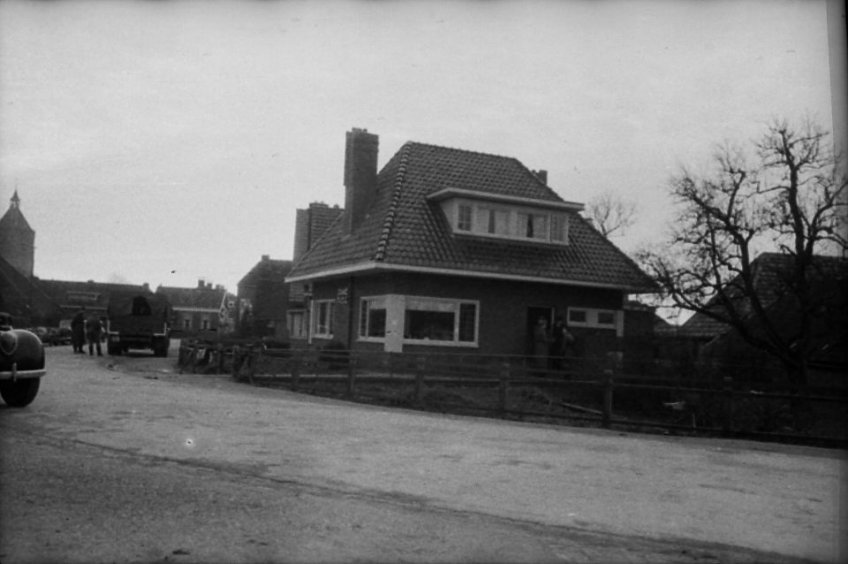
Steen’s Resistance activities forced him and his family into hiding. On 11 February 1944, German security officers raided the house known as Zonnehoek at Middelstum, where Steen and other Resistance members were sheltering. Steen narrowly escaped, but the raid resulted in the deaths of several members of the household and Resistance group.
Later that year, Steen and his family were hiding with a farming family at Avercost. His daughter Frederika Elsje—known as Freddie—was born there on 2 September 1944. Ten days later, nappies hanging on the clothesline attracted the attention of a collaborator. After the farmer learned that the family was about to be reported, the Steens were hurriedly moved to another hiding place.
Steen reportedly had a price on his head. After the liberation he returned to municipal employment but was denied promotion. He continued carrying a pistol for protection until at least 1947. These experiences help explain why he and several fellow Resistance families eventually decided to leave the Netherlands.
Migration to Tasmania in 1950
Following the war, Steen joined a group of men from Groningen who planned to emigrate to Tasmania.
The group, subsequently known as the Groningen Seven, shared wartime experiences and connections through the Dutch Reformed community. Their objective was to establish a building enterprise that would provide employment and housing for the participating families.
Steen was 37 when the migration project began in 1950. He and his wife had three young children, aged approximately three to seven.
The migrants established the Australian Building Corporation at Kingston, south of Hobart. Through their building activities, they contributed to the development of the settlement that became known as Little Groningen.
The community gradually expanded beyond its original building enterprise, establishing churches, schools and other organisations.
Community life in Kingston
An insight into Steen’s participation in the early Dutch community is provided by the programme for the 25th wedding anniversary of Eerke and Toni van der Laan, celebrated at Kingston on 12 November 1954.
The programme included humorous songs, sketches and performances involving members of the migrant community.
Steen appeared in the anniversary programme under the humorous stage name “Tommy Moustache”. His familiar name, Tom, had also been used during his Resistance activities.
Kees Wierenga’s account of the celebrations demonstrates the close relationships that developed among families who had endured wartime persecution and subsequently established new lives in Tasmania.
The anniversary was remembered as a celebration of freedom, friendship and the achievements of the early migrant community.
Historical significance
Jan Thomas Steen belonged to the founding generation of Little Groningen. His story illustrates the connection between wartime Resistance activities in the Netherlands and organised Dutch migration to Australia after 1945.
His participation in the Groningen Seven and the early Kingston community forms part of the broader history of Dutch migrants who helped establish new businesses, homes and community institutions in Tasmania.
Further information about Steen’s family, professional activities and later life in Australia would help complete his biography.
Sources and acknowledgement
This article is based principally on research by Kees Wierenga, whose historical collection was entrusted to the Dutch Australian Cultural Centre.
- Dutch Migration to Tasmania in 1950 – Motivation, Intention and Assimilation, Kees Wierenga, University of Tasmania, 2005.
- The van der Laan’s wedding anniversary in Tasmania, Kees Wierenga, including the translated anniversary programme and historical commentary.
- Little Groningen – Tasmania.
- Frederika Steen – Libraries ACT
- Resistance in Groningen – De Verhalen van Groningen
Related research
This article forms part of the DACC’s Research Portal – Little Groningen: Dutch migration, faith and community in Kingston, Tasmania.