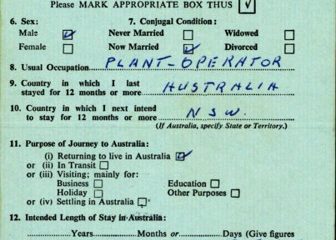
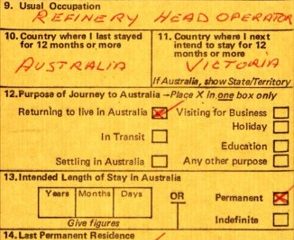
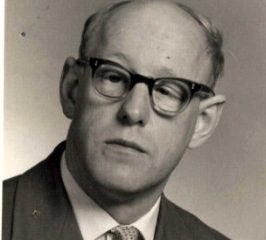
Karel Frederik Lodewijk Morlang was born in Vlissingen on 3 December 1919, the son of Jan Morlang and Catharina de Buck. His father served as a sailor and victualling steward with the Royal Netherlands Navy, and Karel later followed him into naval service.
On 29 July 1943, Karel married Agnes Knight, who had been born in Dundee, Scotland, on 19 February 1922. She was the daughter of Alexander Knight and Barbara Lawrie. Their son, Karel Frederik Lodewijk Morlang Jr, later known as Carl, was born on 18 June 1944.
The family migrated to Australia in stages. Karel departed from Schiphol on 22 June 1950 aboard the first KLM flight associated with the organised movement of Dutch dredging workers and their families. He occupied seat G3 and arrived in Australia on 27 June.
Agnes followed on the second KLM flight, departing from Schiphol on 22 July 1950 with Melbourne as her destination. Listed as Mrs A. Morlang, she occupied seat F5 and arrived in Australia on 27 July.
Their six-year-old son does not appear on the passenger lists examined so far, although he subsequently lived in Australia. He may have travelled separately or been recorded differently, but further documentation is needed to establish how and when he arrived.
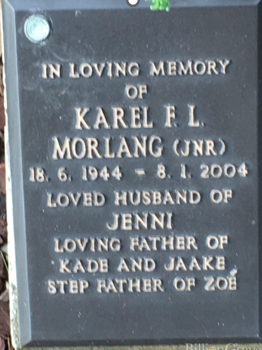
Carl later married Jenni and died on 8 January 2004. He was buried at Altona Memorial Park in Melbourne. His life brought together the family’s Dutch, Scottish and Australian backgrounds.
Karel died in Altona, Victoria, on 2 November 1975, aged 55. His journey from the naval city of Vlissingen to Australia reflects the wider story of post-war migration in which workers and their families travelled separately before reuniting and establishing permanent lives in their new country.
This account is based on family-history and migration research undertaken by Fred Stuij. Sources include the Amsterdam City Archives, National Archives of Australia and Altona Memorial Park records available through BillionGraves.
For the wider history of this organised migration project, see From Sliedrecht to Williamstown: Dutch dredging workers in post-war Australia.
More related company histories, archival sources and personal stories are available through the Dutch Dredging in Australia Research Portal.