Adrianus Antonius “Arie” de Bruin was born in Wateringen on 30 August 1917, the son of Cornelis Jacobus de Bruin and Agatha Jacoba van de Hut.
In February 1936, the young Arie was recorded as a marine living at the Marine Barracks at Oostplein in Rotterdam. His career with the Netherlands Marine Corps subsequently took him far beyond the Netherlands.
Military service in the Netherlands East Indies
Following the Second World War, Arie served with the Dutch Marine Brigade in the Netherlands East Indies from 1946 until 1949. Dutch marines were deployed under difficult and dangerous conditions during the Indonesian struggle for independence.
Arie was wounded during his service. In 1995, nearly half a century later, he was formally awarded the Draaginsigne Gewonden, the Dutch Wound Badge, in recognition of the injuries he had sustained. The decoration was presented to him in Wateringen by Mayor W. van den Bos.
An important personal record of his experiences has also survived. In 2019, Mrs N. Aylward-de Bruin donated Arie’s autobiography and a painting he had created, bearing the words Welkom Thuis (“Welcome Home”), to the Dutch Marines Museum. These items may provide further information about his military service and personal experiences.
Journey to Australia
Following the transfer of sovereignty to Indonesia in late 1949, many Dutch servicemen and civilians faced decisions about their future. Arie chose Australia.
He departed by air on 22 July 1950 and arrived in Sydney four days later, on 26 July. The passenger list records him simply as “A.A. de Bruin”, occupying seat B2 ( See: seating arrangement KLM plane).
Arie was married to Maria Kleinheinz, although the available information does not establish whether she accompanied him to Australia or joined him later. Further research is also needed to determine where they lived in Australia, how long they remained and whether Arie was directly connected with the Dutch dredging workers who arrived during the same period.
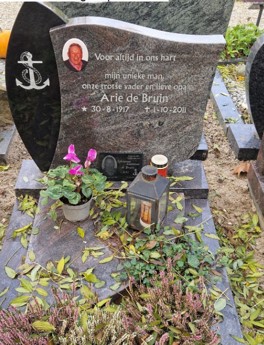
Arie eventually returned to the Netherlands. He died on 1 October 2011 and was buried at Kwintsheul, close to his birthplace in the Westland region.
His life extended across several continents: from Wateringen and the Rotterdam Marine Barracks to military service in the Netherlands East Indies, followed by migration to Australia and an eventual return to the Netherlands.
This story was uncovered during research into the Dutch workers and migrants who travelled to Australia in 1950. Their wider story is described in From Sliedrecht to Williamstown: Dutch dredging workers in post-war Australia.
For the wider history and related company, project and personal stories, see the Dutch dredging in Australia – Research Portal.
This summary is based on research supplied from the Netherlands. The complete Dutch account is attached below.