This article was written by Rob Dijksman (Hulsberg, The Netherlands) and is published here with his permission.
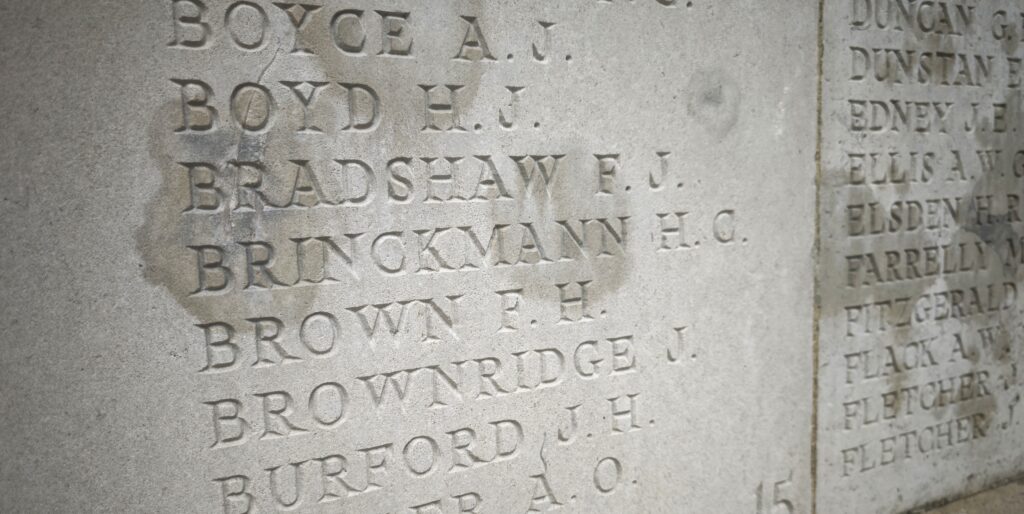
The memorial wall at the VC Corner Cemetery in the village of Fromelles in northern France bears 1,299 names. Brinckmann H.C. is one of them. On 19 July 1916, Hendrik was killed in action at the Battle of Fromelles, three hundred kilometres from where he was born: the Jordaan in Amsterdam. For Australia, that was the most dramatic day in its history.
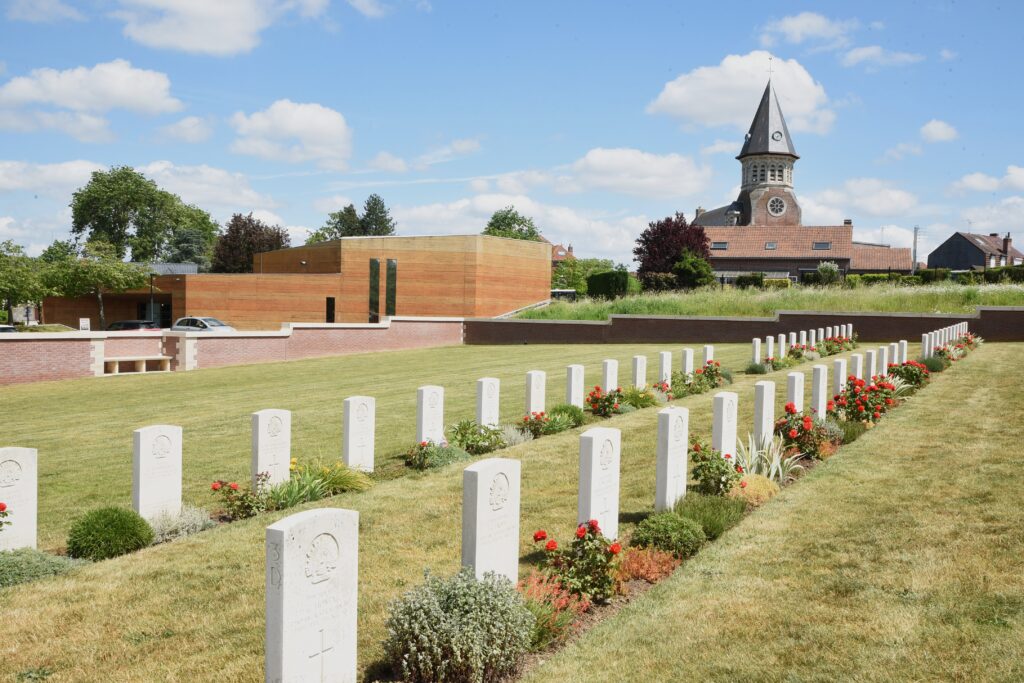
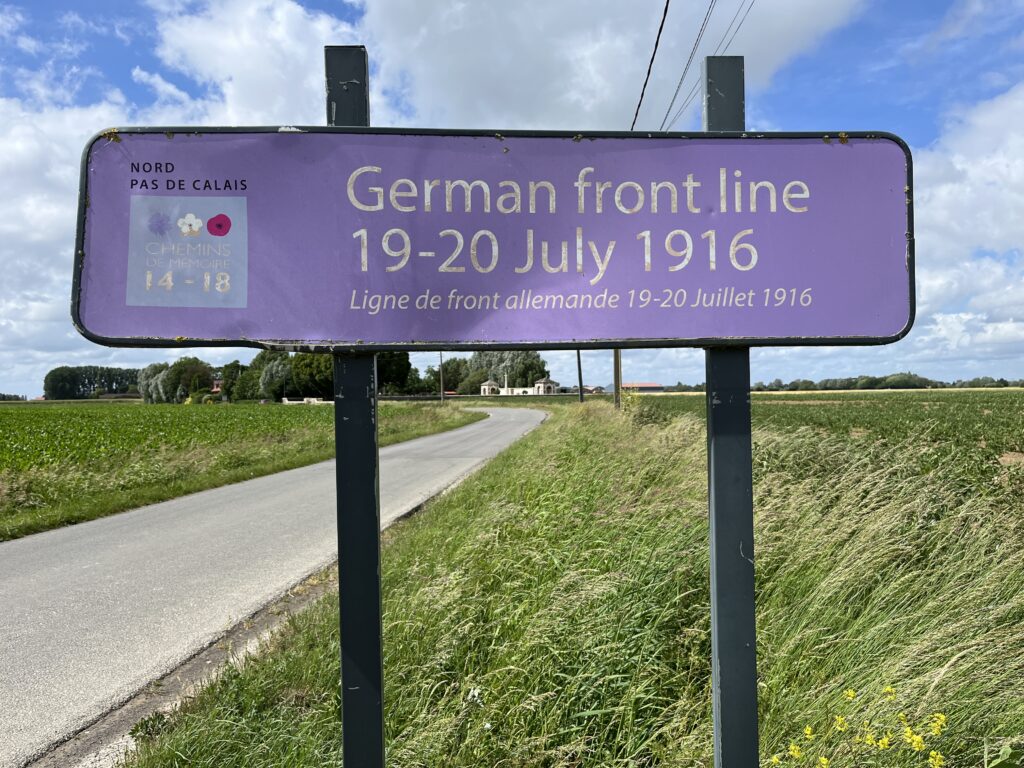
When you drive through it on a weekday, some twenty kilometres south-west of Lille, you won’t see a soul on the streets. Fromelles is a typical French farming village. Here, in the countryside, it is impossible to imagine how the First World War could have wreaked such terrible havoc during the Battle of Fromelles. The Germans had evacuated the entire population. In 1918, after the armistice, not a single stone was left standing, and after two years, the no-man’s-land was littered with the remains of 410 unidentifiable Australians. Most French people have never even heard of it. In Australia, however, it’s a different story. 19 July went down in history as the most dramatic, blood-soaked 24 hours in their military history.
Moving stories
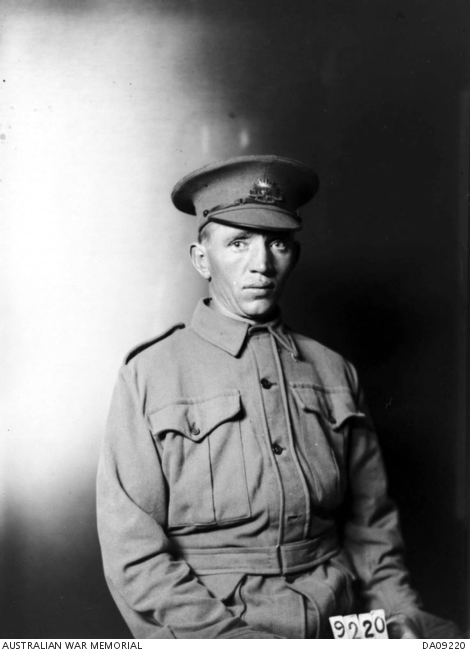
To take a walk across a battlefield where, 110 years on, there is hardly anything left to see from that era – apart from a few bunker ruins – you do need to familiarise yourself a little with the history beforehand. Only then the open farmland comes to life. Next to the Pheasant Wood Military Cemetery lies the informative Musée de la Bataille de Fromelles. With reconstructed trenches, display cases full of artefacts, photographs, films and personal accounts, it offers a poignant insight into what happened that day. The individual stories are particularly moving. Geoffrey Bouillet, the museum’s historian, shares one of them. ‘One of the fallen, Hendrick Cornelius Brinckmann of the 59th Battalion of the Australian Infantry, had Dutch roots. He was born in Amsterdam.’ A man with a somewhat sombre expression appears on the screen.
Jordaan
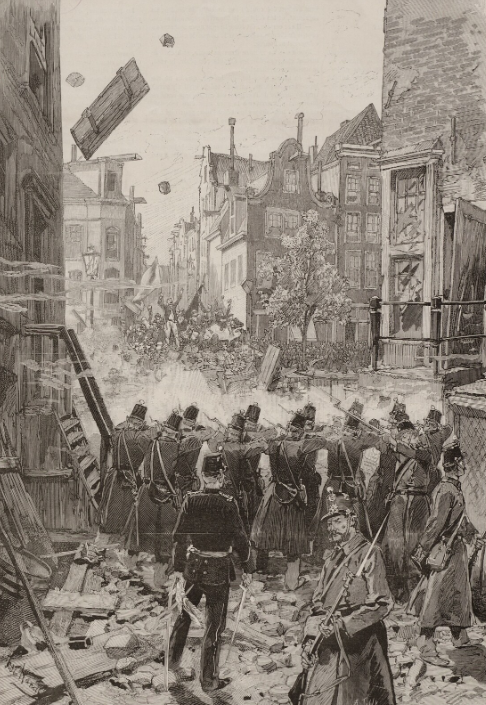
In the 1880s, the Jordaan, with 80,000 inhabitants, was the most densely populated neighbourhood in Amsterdam. Mostly poor families lived there crammed together. There was a strong sense of community, as was evident in July 1886 when the authorities ruthlessly enforced the ban on the popular pastime of ‘eel pulling’ in the Lindengracht. The crackdown on the ensuing popular uprising resulted in 29 deaths.
In that impoverished neighbourhood, two years later, on 8 September 1888, Hendrik Cornelis Brinckman was born, the third of nine children. His father, Johan, was a boilermaker; his mother, Sophia, a housewife. Primary education was still in its infancy; the Compulsory Education Act was not introduced until 1901. Most children still had to work to supplement the meagre family income.
Ship’s boy
For centuries, the merchant navy and the Royal Navy had offered a decent job for boys with little or no education: ship’s boy. ‘Ketelbinkies’, as they were also known, occupied the lowest rung of the crew hierarchy. Until 1874, they were often under the age of twelve. Van Houten’s Children’s Act put an end to that.
In 1904, Hendrik moved to the training ship Admiraal van Wassenaar in the Oosterdok of the Naval Establishment at Kattenburg. The ship had served as a frigate for twenty years from 1857. It then served as a training and guard ship in Amsterdam until 1913, when it was scrapped.
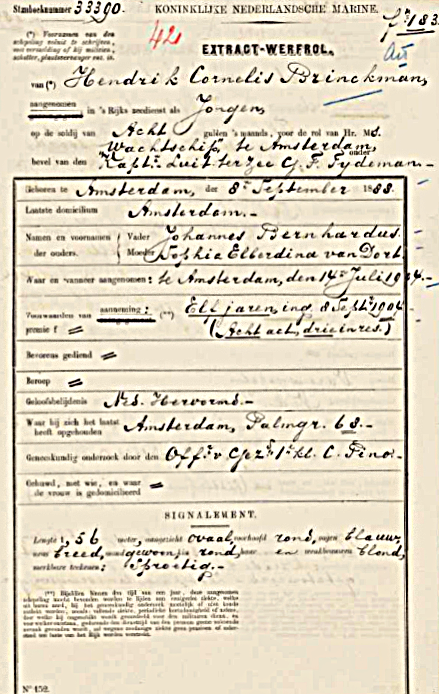
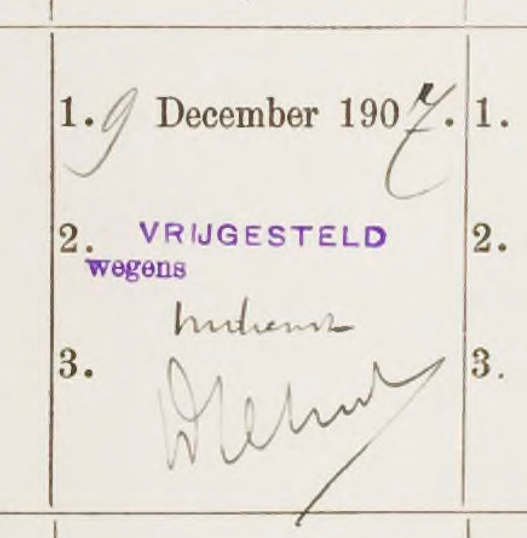
On 14 July he was enlisted for eleven years as a boy in the Royal Dutch Navy under Commander G.F. Tydeman on a monthly pay of eight guilders. Medical officer C. Pino described him as fair-haired with blue eyes, freckled and 1.56 m tall. Hendrik was 19 years old when, according to the Enrolment Register dated 9 December 1907, he was exempted from military service. A handwritten note reads ‘in dienst (in service)’. Another column mentions ‘Helder’ and ‘Koninklijke Marine (Royal Netherlands Navy)’. He did not resurface until three years later on the other side of the world, in Australia.
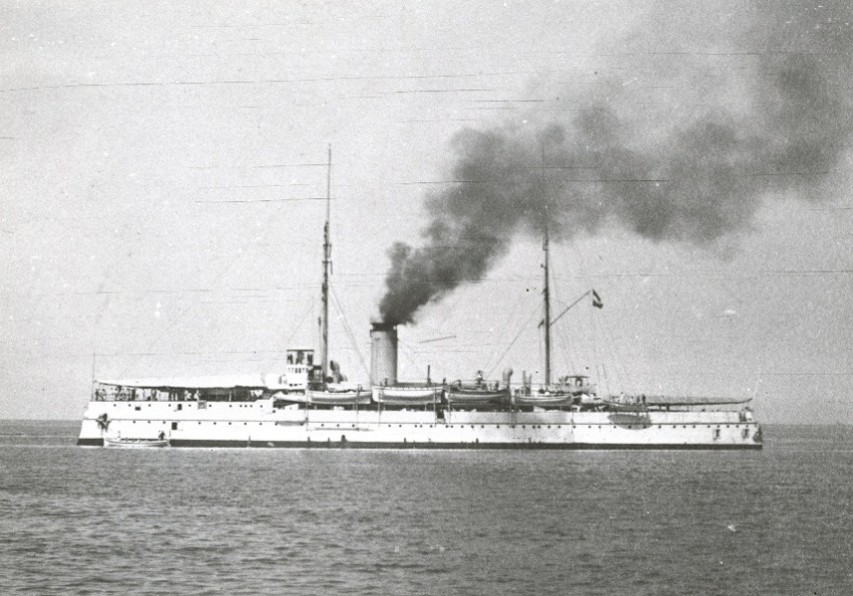
It is no longer possible to determine whether Hendrik sailed to the Dutch East Indies in March 1908 aboard Hr.Ms. Koningin Regentes, which had just undergone a thorough refit by De Schelde in Vlissingen. All naval muster rolls were destroyed in the summer of 2026 due to their advanced state of decay. What is certain, however, is that Hendrik disembarked from the Koningin Regentes for good in Melbourne in October 1910.
A show of force
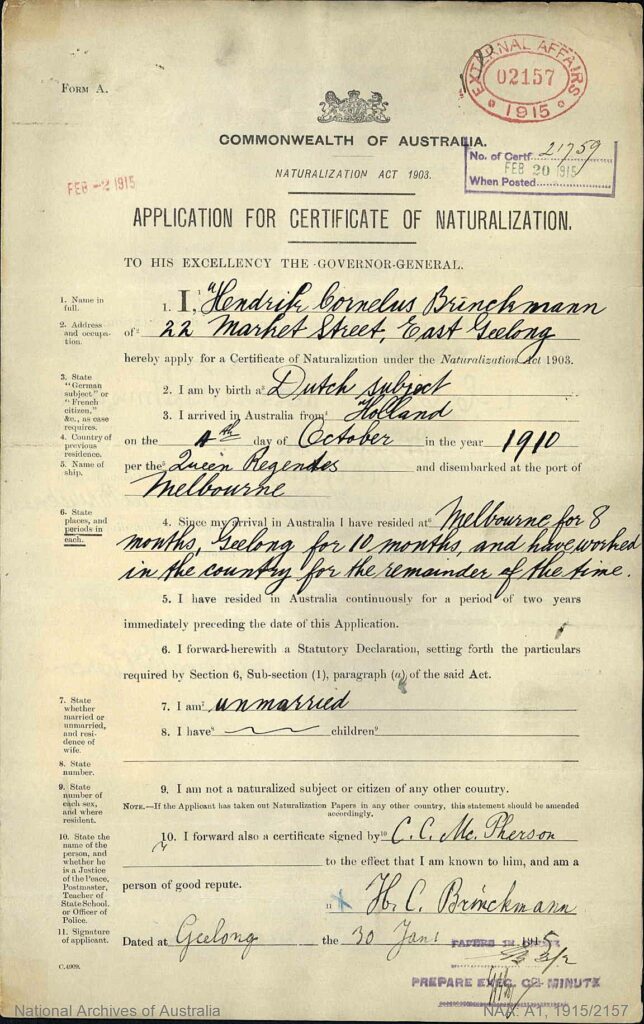
On 30 January 1915, Hendrik stated in his application for a certificate of naturalisation that he had arrived in Australia on 4 October 1910 aboard the ‘Queen Regentes’. Hr.Ms. Koningin Regentes was part of a Royal Netherlands Navy squadron which, under the command of Captain W. van Voss and comprising three armoured ships, set sail from Surabaya on 15 August 1910 via Ambon – where they refuelled – and, as a show of force, called at six port cities: Brisbane, Sydney, Melbourne, Hobart, Adelaide and Fremantle. The other two were the sister ships Hr.Ms. De Ruyter and Hr.Ms. Hertog Hendrik. The thousand crew members and 109 non-commissioned officers were led by 58 officers. The officers, dressed in immaculate white uniforms, made quite an impression on the white-painted squadron with its yellow funnels. Whole families of curious Aussies flocked to the ships. Hendrik will undoubtedly have taken part in the many festivities organised by committees in every port. The programme booklets are full of excursions, dinners and receptions for officers hosted by governors and mayors, sports competitions and sightseeing trips. A short video featuring the squadron in Melbourne harbour can be found on YouTube.
Desertion
It was one of the first significant goodwill visits by the Dutch Navy to Australia in the twentieth century and heralded closer cooperation between the Dutch and Australian navies during the Second World War. Following the Japanese invasion of the Dutch East Indies, Dutch naval units subsequently operated from Australian ports.
A week before the squadron set sail from Melbourne for Hobart on 11 October, ordinary seaman Hendrik Brinckman decided to stay in Australia. Of course, it was desertion. But you’re 22, and back home there’s no chance of finding work. Here, they welcome you with open arms everywhere – in the mines, the hospitality industry and agriculture – with well-paid work. Hendrik isn’t the first. Since Brisbane, 55 men have already deserted, writes the journalist travelling with the squadron for the Algemeen Handelsblad.
More details about the desertions came to light after the ships dropped anchor again in the roadstead off Surabaya on 18 November. A crew member gave a fairly detailed account of the events to the Soerabaijsche Handelsblad. In the first ports, the situation was not too bad. But in Adelaide, the numbers were significant: 64 (De Ruyter – 25, Hertog Hendrik – 21, Koningin Regentes – 18). The final port, Fremantle, also contributed the most to the total of 145 desertions, with 40 cases. He also recounts that the officers tried in vain to get the men back on board.
British
Hendrik spent the first eight months in Melbourne, the capital of the state of Victoria. For the next three years, he worked as a labourer in the countryside before settling in Geelong in early 1914, a town with a population of around 18,000, situated on Port Phillip Bay, like Melbourne, 75 kilometres further north. He becomes engaged to Frances McCormack, a seamstress and the 25-year-old daughter of William McCormack, who works for the railways. Next to her mother Honora’s name is listed ‘home duties’, meaning housewife.
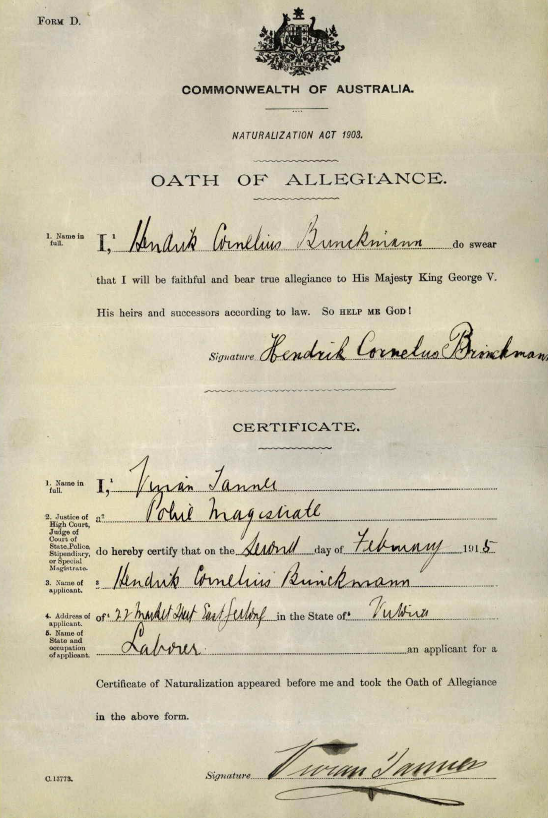
Six months later, the First World War broke out in Europe. Australia had been an independent Commonwealth within the British Empire since 1 January 1901. However, it had no legislation establishing its own national identity. The Aussies are therefore British. To be able to enlist in the Australian army, Hendrik must therefore become a British citizen. On 30 January 1915, he completes his application for a certificate of naturalization at the post office in the village of Wallington. Postmistress Christina Cameron McPherson acts as his witness. Three weeks later, he is officially a subject of King George V.
To Egypt
On 9 April 1915, Hendrik enlisted with the 7th Battalion of the Australian Imperial Force. As a private, he became part of the 7th Reinforcement, the seventh contingent of soldiers who, following their training in Egypt and Europe, were to maintain the battalion’s operational strength at the front. Lieutenant-Colonel Harold ‘Pompey’ Elliott formed the 7th Battalion within two weeks of the outbreak of the war.
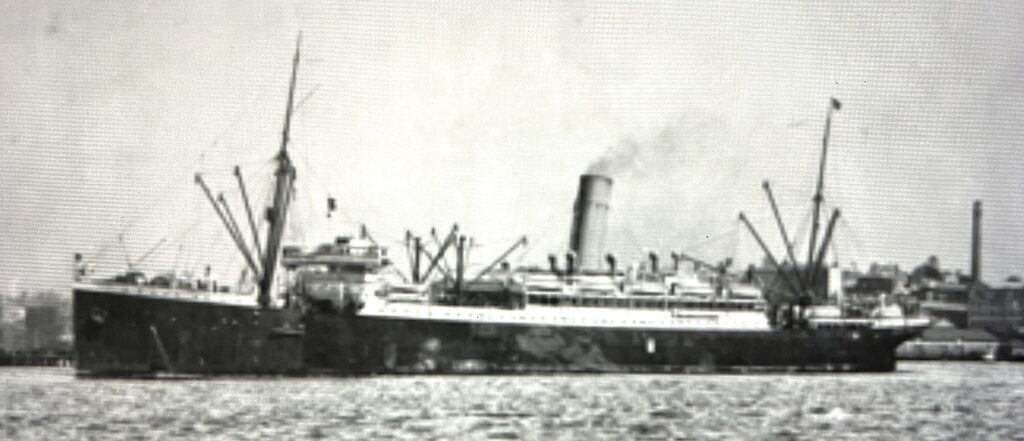
On 16 July, Frances McCormack is surely one of the thousands of family members, friends and onlookers gathered at Melbourne’s Town Pier to see off the HMAT Demosthenes. The requisitioned, relatively new ocean liner – built in 1911 by Harland & Wolff in Belfast – is setting out on the first of its five voyages to Egypt. On board are 1,352 soldiers. A further 159 were taken on board at Fremantle. After nearly a month at sea, they entered the port of Suez.
The following month at Tel el Kebir camp Hendrik faced eight hours of intensive training every day: basic infantry drills, trench digging and weapons training.
Gallipoli
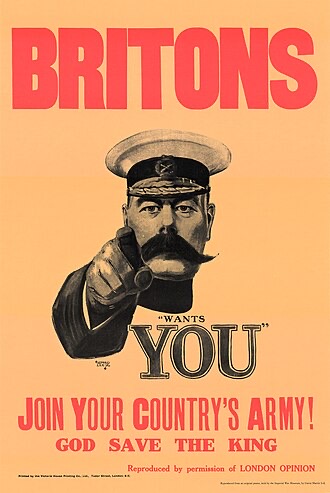
On 28 July 1914, Australia, via its mother country Great Britain, became embroiled in a conflict that really had nothing to do with it: the First World War. On posters, the British Minister of War, Lord Kitchener – wearing a field marshal’s cap and pointing an imperious index finger – made it clear to his compatriots that he needed their help. Join your country’s army!
In early 1915, the British believed that the Ottoman Empire, which had sided with Germany and Austria-Hungary, would withdraw from the war once its capital, Constantinople, had been captured. Together with the French, in February they sent their naval forces to the Gallipoli Peninsula and the Dardanelles Strait to secure safe passage for their war fleet to the Turkish capital. However, the Turks proved to be much stronger than expected and the entire operation was called off after heavy losses. First Lord of the Admiralty Winston Churchill was dismissed. Kitchener remained convinced that the Turks would flee once his troops landed.
Fiasco
Early in the morning of 25 April, a second attempt was made and the Battle of Gallipoli began. For the ANZACs, the Australian and New Zealand Army Corps, this was their first major operation. It turned out to be a disaster. Due to a strong current, some of the 12,000 men landed in the wrong place and came under heavy Turkish fire. The attack at Ari Burna was repelled by Mustafa Kemal Atatürk, the future president of Turkey. Over the following months, the fighting developed into a bloody trench war.
On 11 September, Hendrik sailed with the MEF, the Mediterranean Expeditionary Force, on SS Kingstonian to Gallipoli, a journey taking six days. The 7th Infantry ANZAC-Battalion had just departed for Lemnos on the SS Omanieh for a ten weeks’ rest, after more than four months of heavy fighting in which nearly half their men had been killed. As soon as the battalion returned to Gallipoli on 25 November aboard the SS El Kahira, Hendrik and his 66-man 7th Reinforcement, which had until then been held in reserve, were taken on strength of the battalion. It then once again had a strength of five hundred men.
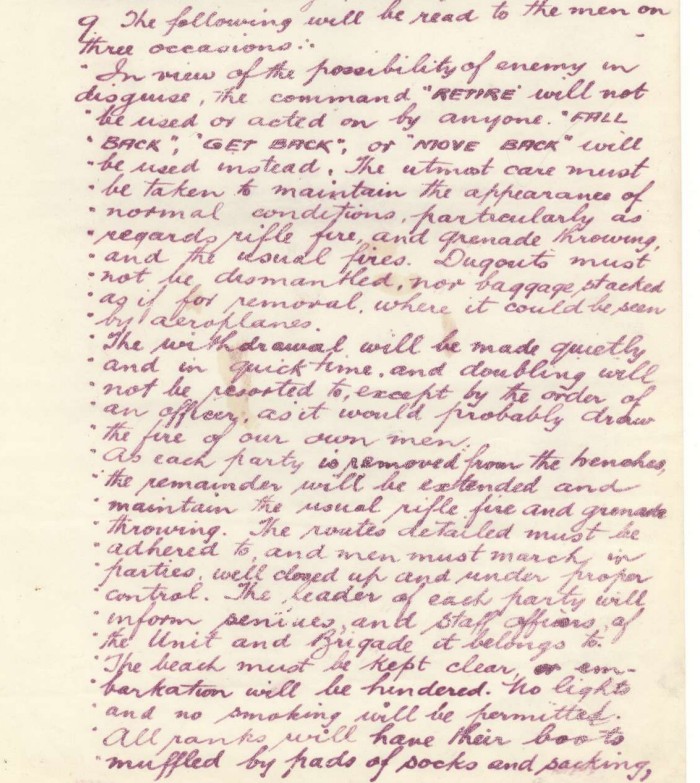
After Kitchener had assessed the situation on the ground and concluded it was hopeless, the decision was taken in London on 19 November: immediate withdrawal. In two pitch-black nights, the 7th Battalion withdraws from the trenches in small groups, with five-minute intervals between them. Ammunition is buried; mortars and catapults are loaded onto the ships. In dead silence, with rags wrapped round his shoes to avoid making any noise, Hendrik walks to the beach. On 21 December, the battalion is back in Serpi, the camp on Lemnos.
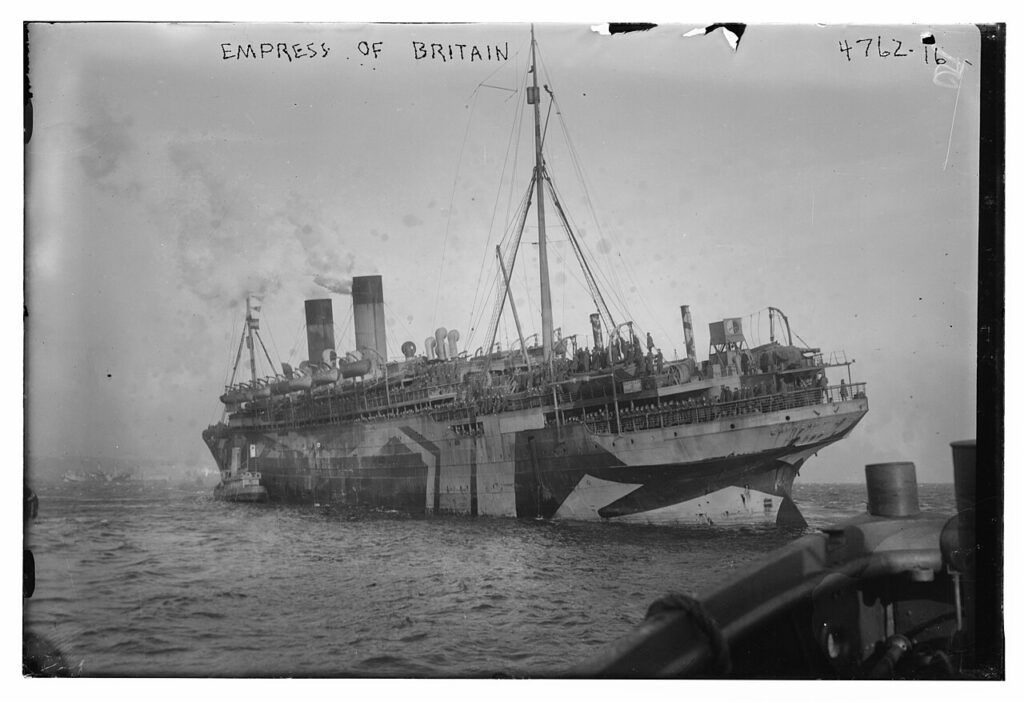
On 7 January 1916, Hendrik was back in Alexandria aboard the Empress of Britain, one of the 69 merchant ships requisitioned for military service. Two days later, the very last Australians left Gallipoli. 19,000 men were wounded during the campaign and 8,709 killed. As a final gesture, a priest scattered acacia-seeds over the graves.
The Battle of Tel el Kebir
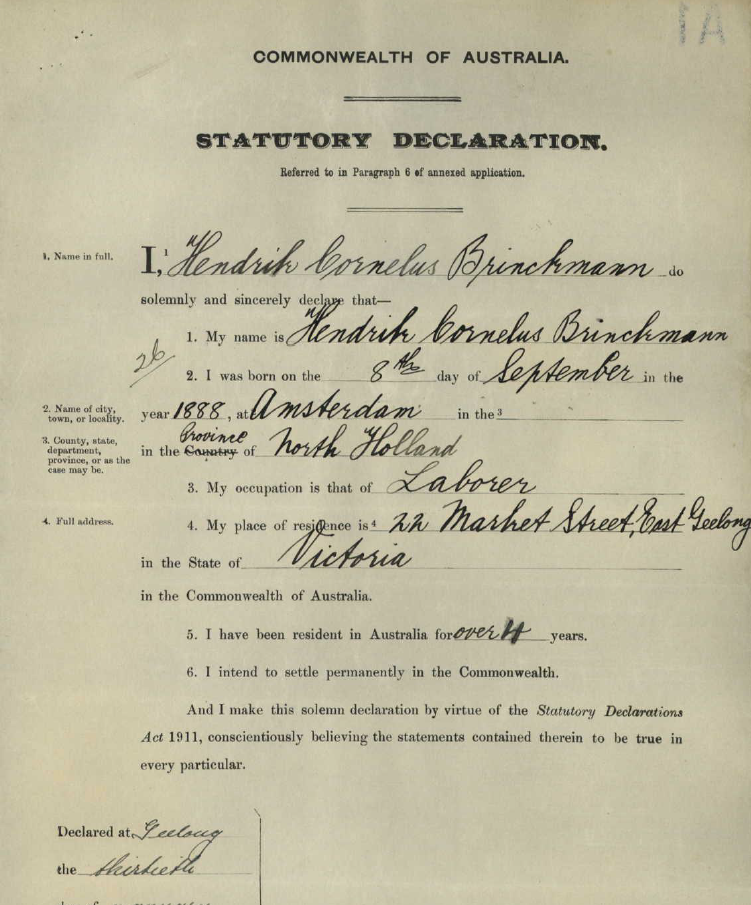
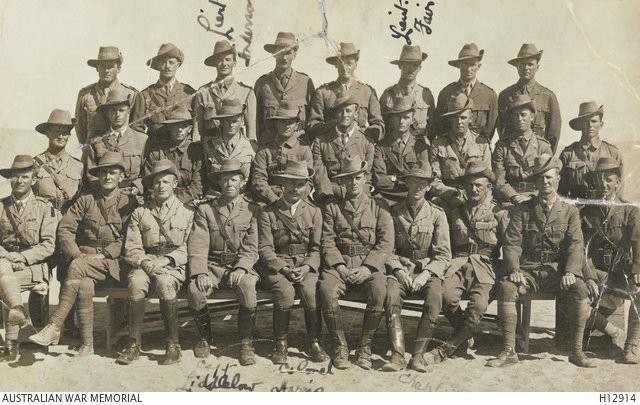
Following the evacuation from Gallipoli, the AIF underwent a massive expansion and reorganisation in Egypt in early 1916. On 24 February, Hendrik was transferred to the newly formed 59th Australian Infantry Battalion at Tel el Kebir. It consisted mainly of soldiers from rural Victoria. Around half came from Hendrik’s former 7th Battalion.
For the British, the desert town was still fresh in their memory. In 1882, during the Anglo-Egyptian War, they defeated Colonel Ahmed ‘Urabi’s army there in a decisive battle that lasted just one hour. The rebel leader had sought to depose Khedive (viceroy) Tewfik Pasha and put an end to British and French influence. The victory restored British control over Egypt and the Suez Canal for the following decades.
Behind the stoves
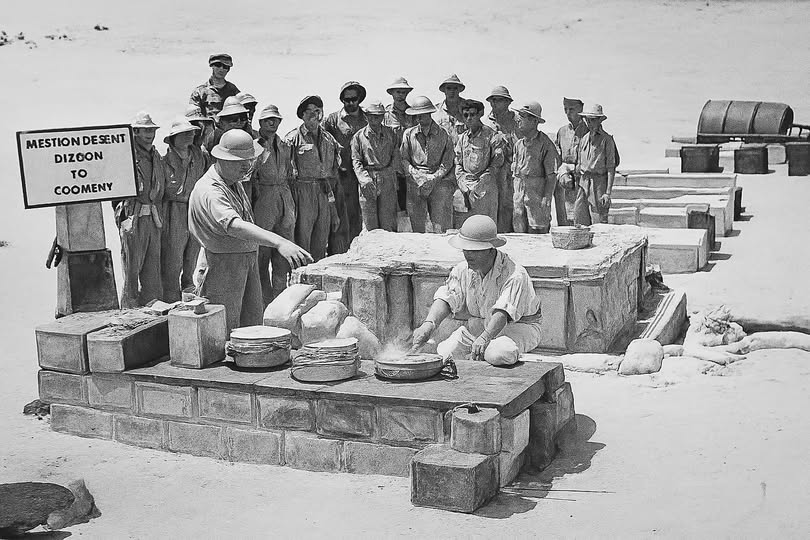
By early 1916, a number of commanders had had enough. The tasteless meals that the cooks were serving their men had to stop. They felt these were damaging to morale. Many soldiers working as cooks at the stoves knew next to nothing about how to prepare rations properly. This led to poor-quality meals and hygiene problems. A Cookery School of Instruction was set up in Alexandria. Its aim was to improve the quality of the meals. Under field conditions, trainees learn to prepare nutritious meals for large numbers of soldiers using military rations. Hendrik is selected and reports for his culinary training on 17 April. He misses a week because, on 12 May, he ends up in the Reception Hospital in Alexandria with mild diarrhoea.
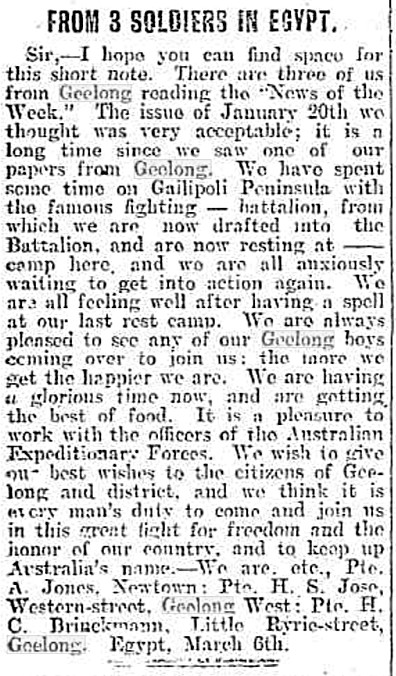
Once recovered, he returned to the 59th Battalion, which had in the meantime moved to Moascar. It is not known whether he actually worked in the kitchen there. It cannot have been for long, as on 18 June he boarded the HMTS Kinfauns Castle in Alexandria, a passenger ship requisitioned from the Union Castle Line. Via Malta – where, according to the War Diary entry of 26 June, a stowaway managed to get on board – they sailed to Marseille. They arrived there on 29 June. The battalion travelled by train to the front at Fromelles, even at night, judging by the times recorded in the July War Diary.
The Battle
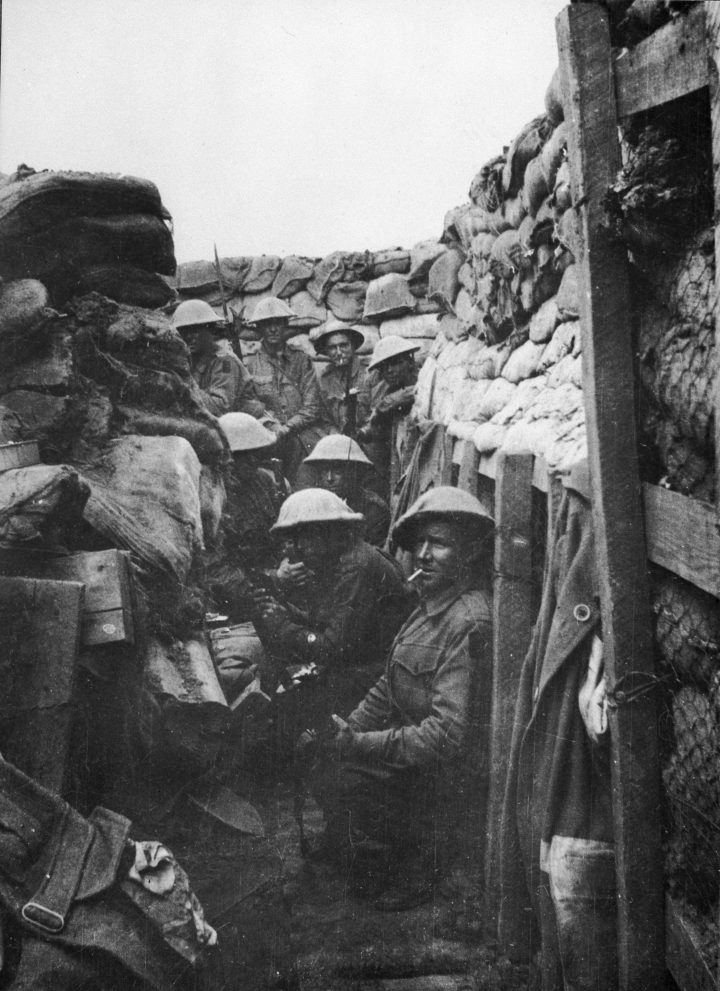
Near Armentières, three brigades – the 8th, 14th and 15th, each numbering around 4,000 men – receive a brief but much-needed course in trench warfare before being deployed for the first Australian operation in France. The front there has been relatively quiet over the past year. The army command refers to it as the ‘Nursery Sector’. On 19 July, however, the ‘nursery’ period came to an end and the calm turned to hell. The fighting on the Somme was in full swing and the High Command feared that the Germans would move their Bavarian divisions from the north, eighty kilometres further south, to reinforce the Somme front. To prevent this, an attack was planned on Sugar Loaf, an advanced German position.
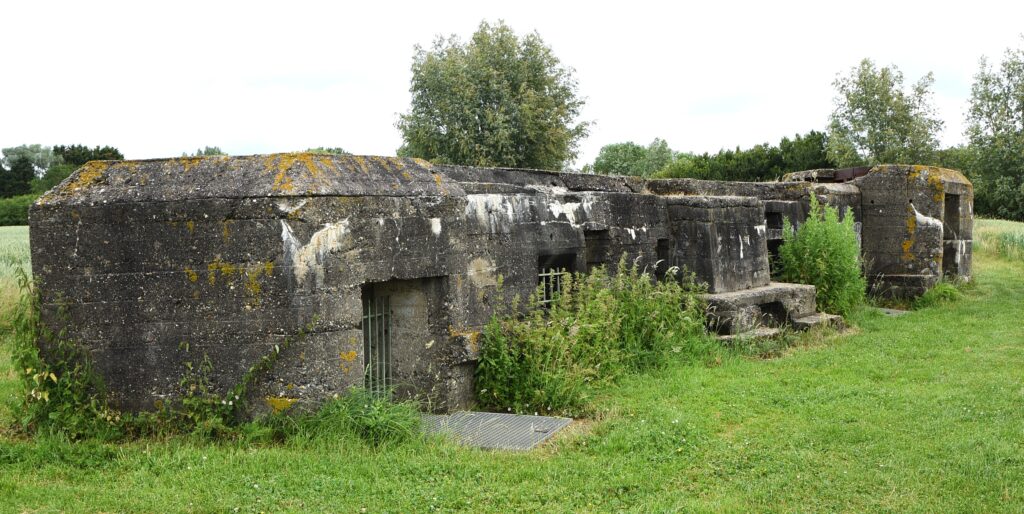
The 16th Bavarian Infantry Regiment had dug in firmly at Fromelles. Between their headquarters and the front line – such as the command bunker at L’Abbiette – a young corporal has been working as a courier for a year and a half: Adolf Hitler. A dangerous job, but not as perilous as that of a soldier in the trenches. He is awarded the Iron Cross and is wounded in the leg in 1916. The other soldiers thought he was a strange character. They found it odd that he received no letters or parcels and did not drink or smoke. In June 1940, during his triumphant tour of France, he stopped by briefly to reminisce about the old days.
The attack on Sugar Loaf was a poorly planned, hastily organised operation. Across a front nearly four kilometres wide, three Australian brigades and the British 61st (2nd South Midlands) Division scaled their parapets at a quarter to six in the evening on 19 July. It had been raining heavily for days, making the terrain virtually impassable. Anticipating the attack following the preceding seven-hour artillery barrage, the Germans waited in their bunkers for the assault. North of Sugar Loaf, the 8th and 14th Brigades managed to capture the first German trenches. However, without support from the 15th Brigade, they became isolated and were forced to withdraw. The artillery had failed to neutralise the German machine-gun nests on Sugar Loaf. For the Germans, it is a shooting gallery as the men try in vain to cross no man’s land. The attack is launched in four waves, five minutes apart. A and B Companies of the 59th Battalion lead the way, followed by C and D Companies. As a member of C Company, Hendrik is part of the later waves of an attack that has already been severely battered by German fire. Reports sent back during the attack reveal just how desperate the situation is: ‘Every man who rises is shot down’ and ‘Cannot get on — the trenches are full of the enemy.’
The first Australian operation in France ended in complete disaster in barely 15 hours. The figures are staggering: the Australians suffered 2,000 dead or missing, whilst 3,500 were wounded or taken prisoner. The British suffered 1,500 casualties.
Despite their strong position, the Germans also suffered heavy losses: 1,600 killed and wounded. Private George Martindale recalled the terrible roll call afterwards: ‘We went into battle… a regiment at full strength – ninety-seven answered their
names – not even one in ten.’
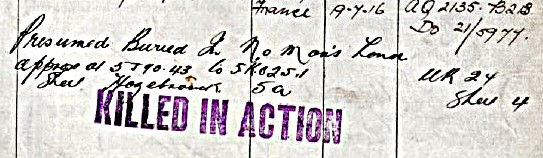
The Germans offered a ceasefire to remove the wounded from the battlefield, but Major-General McCay, commander of the 5th Australian Division, refused permission. Hendrik was left behind. His Statement of Service records ‘killed in action’ on 4 August, and with partially legible coordinates: ‘Presumed Buried in No Man’s Land’.
Commonwealth graves
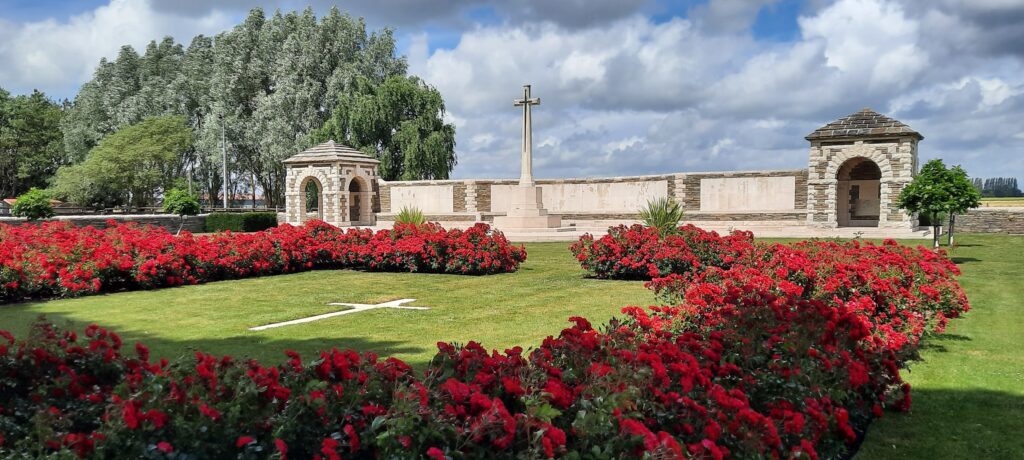
France has 1,620 cemeteries managed by the Commonwealth War Graves Commission, containing the remains of those who fell in the First World War. There are five in and around Fromelles. The two most significant are VC Corner Cemetery and Memorial and Pheasant Wood Military Cemetery.
VC Corner is a mass grave containing the remains of 410 unidentified soldiers. Following the armistice on 11 November 1918, their remains were found on the battlefield near Fromelles two years after the battle. They rest in individual graves, without their own headstones, in two large communal graves, each marked by flower beds and a Cross of Sacrifice. The memorial wall bears the names of 1,299 missing Australians, including that of Brinckmann H.C.
Cobbers
Metal relief panels in the Australian Memorial Park depict the battle. Above it all, the Australian flag bearing the Southern Cross flies alongside the French flag.
‘It was no easy task to make headway with such a weight on your back. You had to lie down and hoist the wounded man onto your back. Then get up again and crouch down to stay alive, at the risk of being hit by a bullet before you were out of danger,’ wrote Sergeant Simon Fraser.
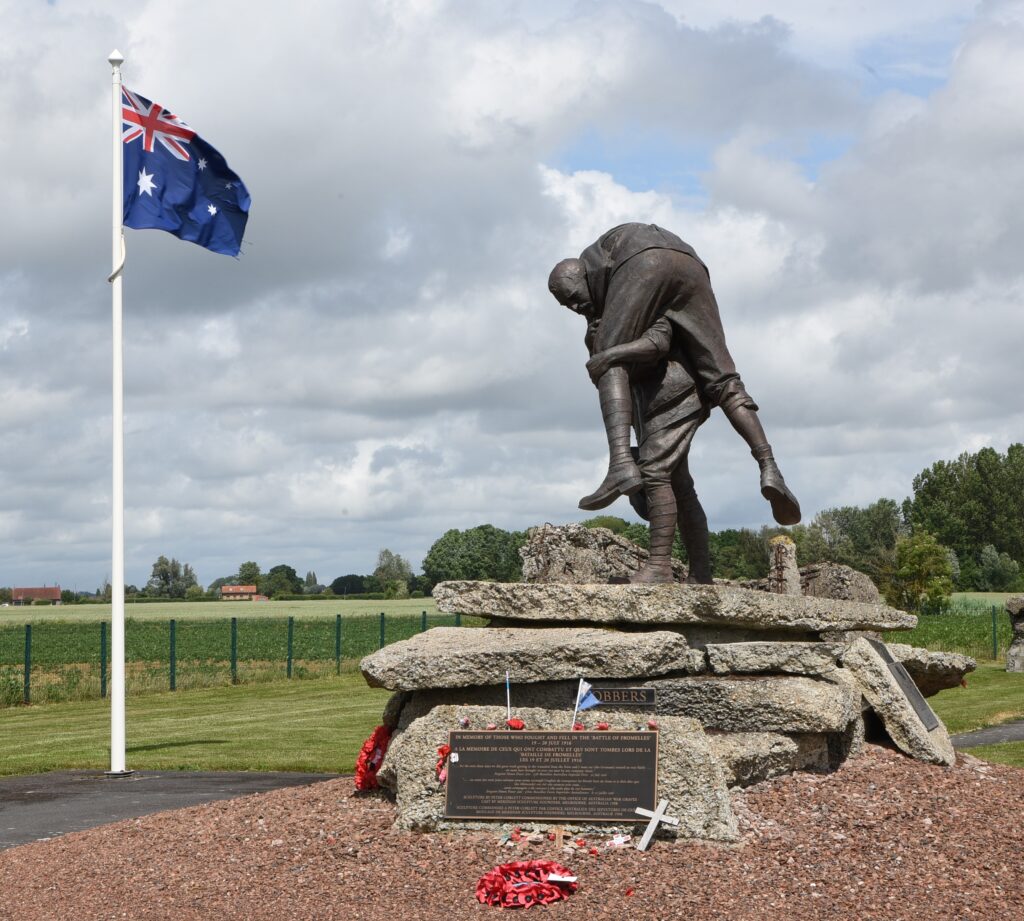
After the battle, hundreds of Australian wounded were left behind in no man’s land. Disregarding orders, men like Fraser ventured between the front lines to retrieve the wounded. With a wounded man on his back, he heard another shout: ‘Don’t forget me, cobber.’ He went back and brought the man to safety.
That courage is commemorated in Peter Corlett’s sculpture Cobbers. It depicts Fraser in the act of rescue. On 11 May 1917, he went missing in action during the Second Battle of Bullecourt. ‘Cobber’ is the Australian, informal term for comrade or mate.

Frances
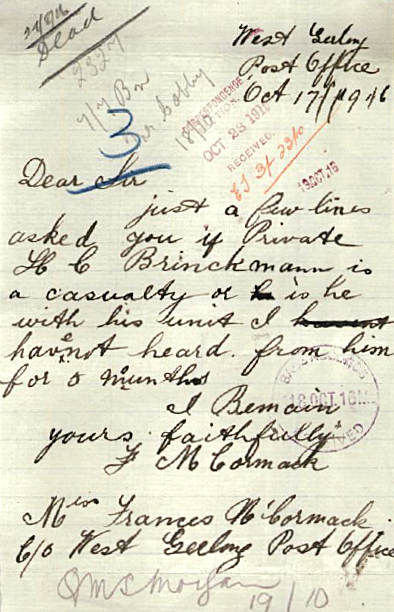
Just one year after Frances McCormack waved goodbye to her Hendrik in Melbourne, he was killed in action far from home on a muddy field. In his will, drawn up on 16 September 1915 shortly after his departure for Gallipoli, he left all his possessions to her. Around half of the 47 items in Hendrik’s file at the National Archives of Australia consist of correspondence with Frances. On 17 October, for example, she enquired whether any further news was available, as she had not heard from him for five months.
On 1 December 1916, she received official confirmation of his death.
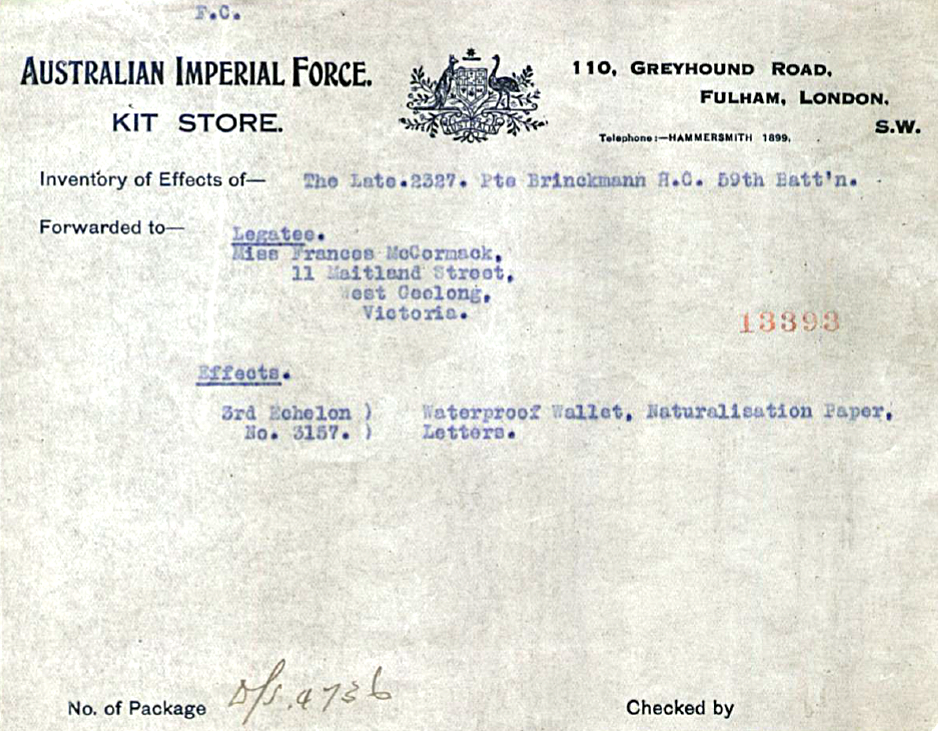
Later letters concern the parcel she received containing the only things he left behind: his waterproof wallet, naturalisation papers and various letters. She also received the 22 pounds and 18 shillings in deferred pay, amounting to one shilling per day served. Of the six shillings’ pay, one shilling was withheld each day to be paid out upon his return or in the event of his death.
In September 1920, she enquired whether, as his heir, she was entitled to Hendrik’s decorations: the British War Medal, the 1914–1918 Star and the Victory Medal. It transpired that these had been sent to his father via the AIF headquarters in London.
On 19 July 1917, she placed a notice in the Geelong Advertiser.
Frances remained unmarried and died in 1950, aged 61.
Missing Persons
Lambis Englezos, an art teacher born in Greece, realised during a visit to VC Corner in 2002 that something was amiss with the figures. Where were the rest of those missing people, he wondered. He had a few clues suggesting that there must be mass graves somewhere in the vicinity. One came from an Australian prisoner of war who had seen the Germans burying his dead comrades in a mass grave. Other evidence also pointed to a mass grave. However, the Australian government remained reluctant to launch an investigation. It was not until 2006 that a German document dating from 1916 proved decisive. In it, Colonel Julius Ritter von Braun, commander of the Bavarian Reserve Infantry Regiment 21, against whom the Australians were fighting, ordered mass graves to be dug behind the Bois des Faisans, the Pheasant Wood, on the outskirts of Fromelles, for 400 British soldiers.
Archaeological research using advanced geophysical techniques revealed five mass graves in 2009. The excavations unearthed the remains of 250 soldiers, the majority of whom were Australian. DNA samples made it possible to identify 181 of them. In 23 cases, it was not possible to determine whether they were British or Australian. 6,200 artefacts shed further light on the soldiers’ lives.
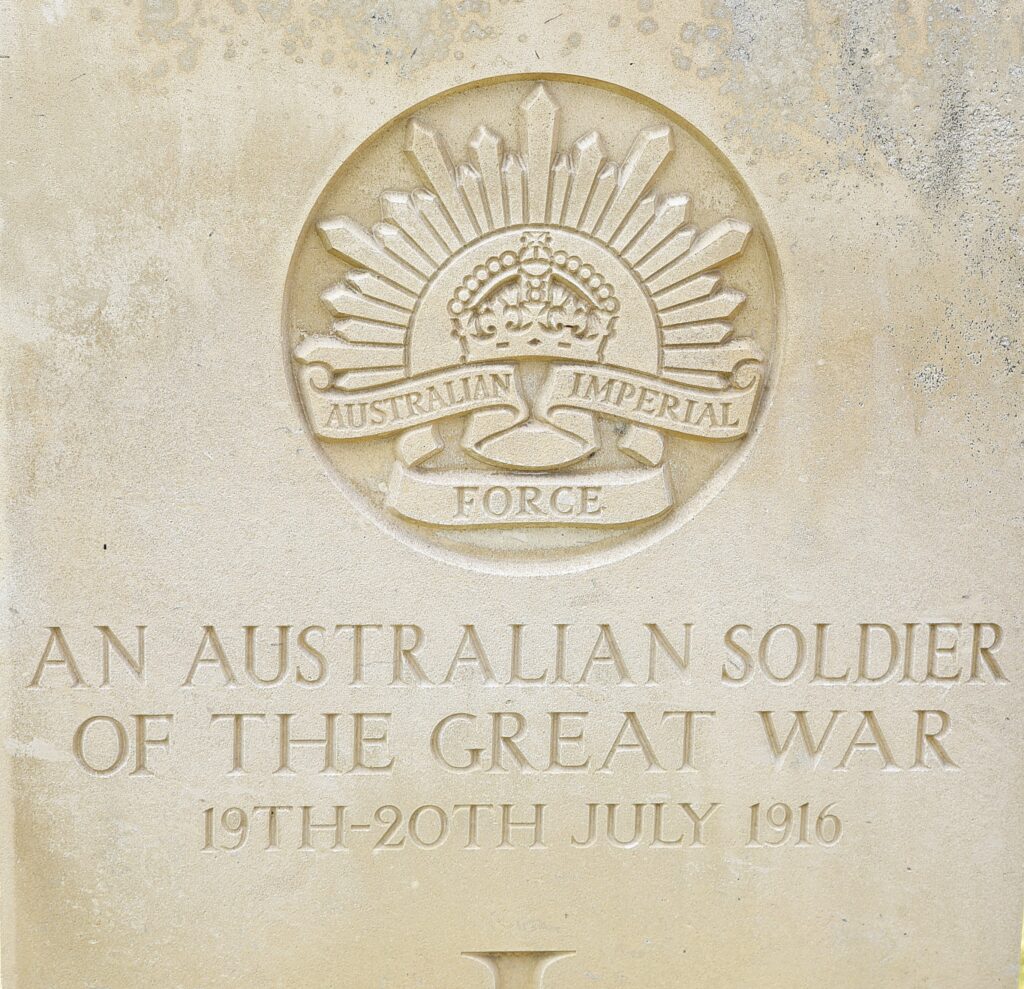
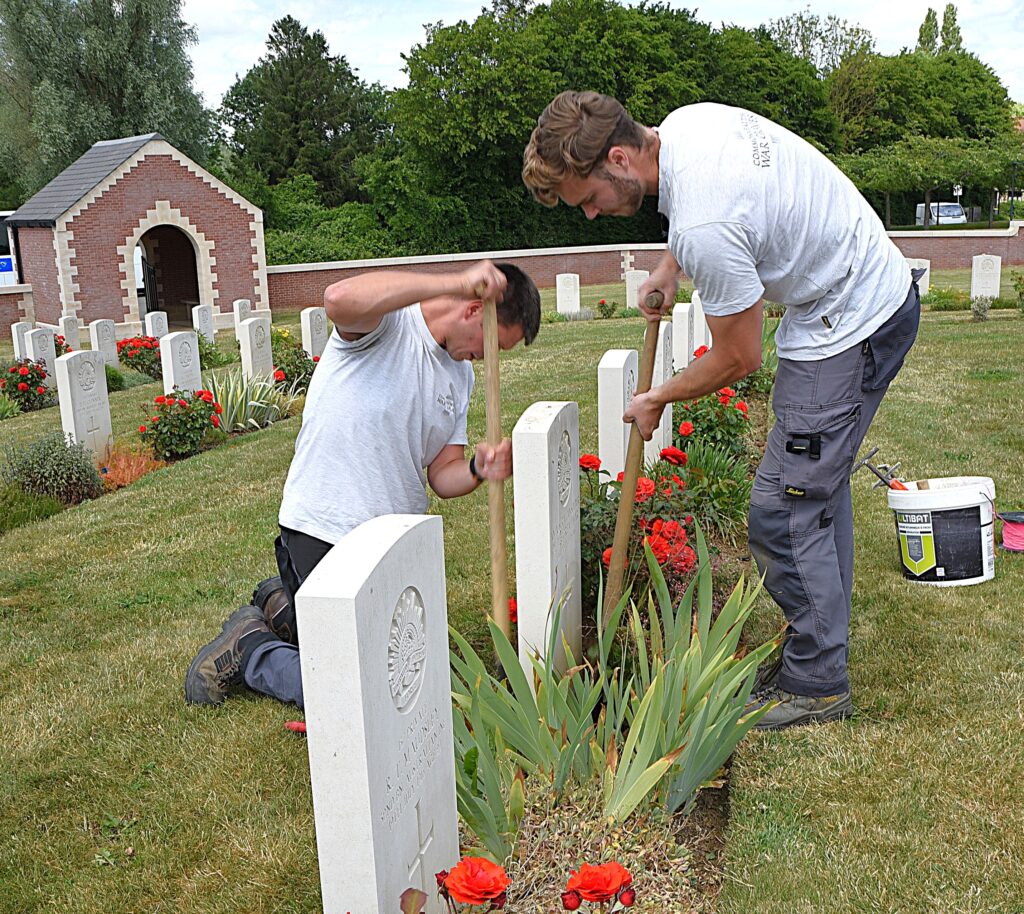
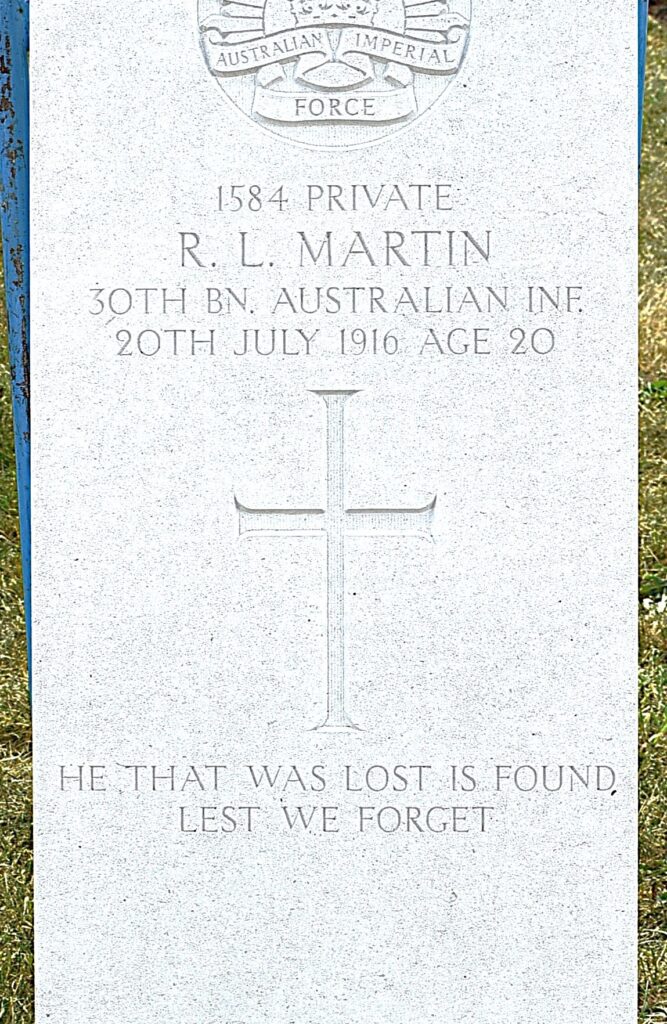
When Pheasant Wood Military Cemetery was inaugurated in 2010, it became the first CWGC cemetery to be established since the 1960s. The last burial took place on 19 July 2010, the anniversary of the battle.
At the cemetery, two men are hard at work with a wheelbarrow. James and Guillaume are prying a gravestone loose with a crowbar and a concrete drill. They explain that they are replacing the gravestone of an unnamed Australian soldier from the Great War. Thanks to DNA testing, Private R.L. Martin is no longer unnamed and is to be given a new Portland stone gravestone bearing his name and unit. ‘This is already the fourth one this year,’ says James.
William Polding Ryan
The story of William Polding Ryan is a fine example of a family that lived in uncertainty for almost a century regarding the death of a loved one.
Lawyer Geoffrey Benn (1956) grew up in a family of thirteen children on a farm in New South Wales. His grandfather always took part in the Anzac Day parade, but he never spoke of the horrors he had experienced in Gallipoli, Egypt and Palestine. Nor did he ever mention his brother William. Geoffrey’s mother never mentioned her uncle either. When he delved into his family history in 1999, he came across William’s name for the first time. Seven years later, he picked up the thread again and, in November 2007, found the military records stating that William, aged 20, was buried at the VC Corner Cemetery in Fromelles. Following a radio programme in 2008 about the excavations at the Pheasant Wood, he contacted the Ministry of Defence for further information. A year later, he was told that William’s name did not appear in German archives. As his own DNA was unsuitable, he arranged for his uncle Cyril Ryan to provide a sample.
On 16 March 2010, four months before the dedication of Pheasant Wood Cemetery, he learnt that Corporal William Polding Ryan, of the 31st Infantry Battalion, had been identified using a DNA sample from his uncle. His uncle asked him to write the inscription for the gravestone. It read: ‘Lost so far from home, and found so close to our hearts’.
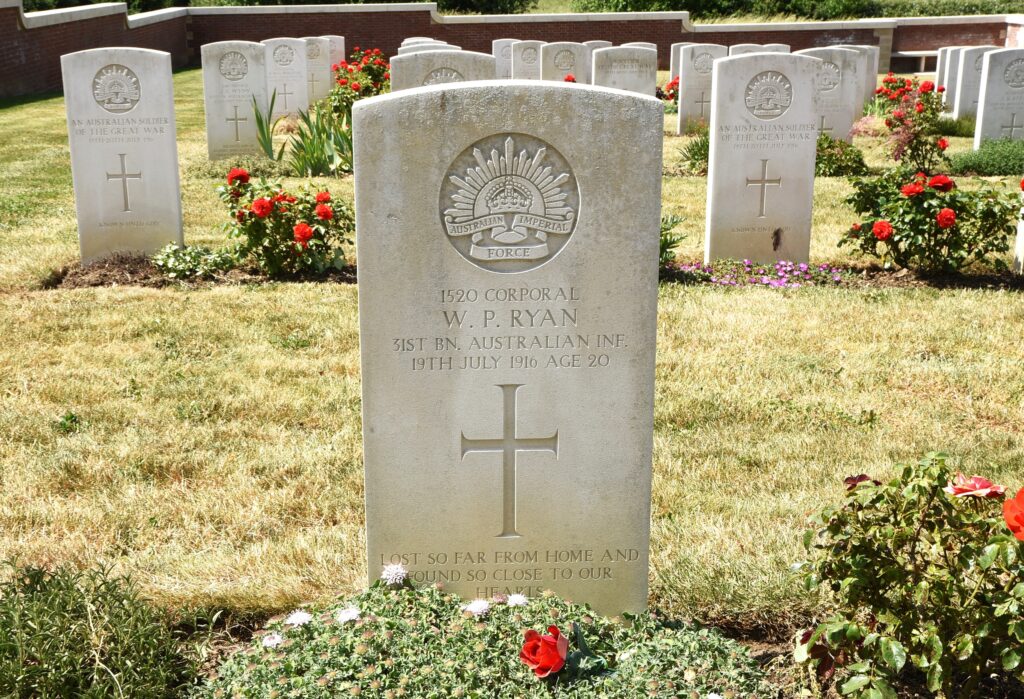
In 2017, Geoffrey Benn began work on his magnum opus, Fromelles: 100 Years of Myths and Lies. Following an initial edition in 2021, a more comprehensive second edition of 682 pages was published in 2025. This also addresses the incorrect official classification of the Battle of Fromelles as a ‘raid’ rather than a ‘battle’, and the resulting absence of a Battle Honour. As a result, the soldiers of the 5th Division who fought at Fromelles do not receive the recognition they deserve for their courage and hardships.
Australia honours their fallen in a special way. Every night 1,200 names from the Roll of Honour are projected onto the dome of the Hall of Memory at the Australian War Memorial in Canberra. Hendrik Brinckmann’s name appears there once every quarter.