On 12 September 1944, Australian airmen Steve Sykes and Lee Turner returned from a daring attack on German shipping near Den Helder with an unusual souvenir. Embedded in the nose of their Bristol Beaufighter was part of a ship’s mast. During the low-level strike, their aircraft had passed so close to the target that it literally collided with part of a vessel. More than eighty years later, modern sonar surveys have identified the wreck of one of the ships involved, linking an extraordinary wartime incident to a rediscovered relic on the seabed off the Dutch coast.
The story brings together Australian airmen, Dutch shipyards, German naval operations and modern maritime archaeology in a remarkable example of shared wartime heritage.
A German warship built in occupied Holland
The vessel at the centre of the story was T61, a German Type 40 torpedo boat. Although built for the Kriegsmarine, the ship was constructed in the occupied Netherlands at the Wilton-Fijenoord shipyard in Schiedam.
Following the German occupation of the Netherlands in 1940, Dutch shipyards and industrial facilities were increasingly absorbed into the German war economy. T61 was one of several modern torpedo boats ordered by Germany and built using Dutch industrial capacity.
The vessel was launched in August 1944, at a time when Allied forces were advancing rapidly across Western Europe. Although not yet fully operational, T61 was being moved through Dutch waters as Germany attempted to complete and deploy new naval assets despite increasing Allied pressure.
Australians over the North Sea
While most Australians associate the Second World War with the Pacific campaign, many Australian airmen served in Europe. Among them were the crews of No. 455 Squadron RAAF, which operated as part of RAF Coastal Command.
Flying the heavily armed Bristol Beaufighter, the squadron specialised in anti-shipping strikes. Its crews regularly attacked German shipping along the Norwegian, Danish, Dutch and German coasts. These operations were among the most dangerous undertaken by Allied airmen. To achieve accuracy, attacks were often conducted at extremely low altitude, bringing aircraft within range of concentrated anti-aircraft fire from ships and shore batteries.
No. 455 Squadron formed part of the famous ANZAC Strike Wing, serving alongside No. 489 Squadron RNZAF. Together, Australian and New Zealand aircrews became highly effective at disrupting German coastal shipping throughout the final years of the war.
The attack on Den Helder
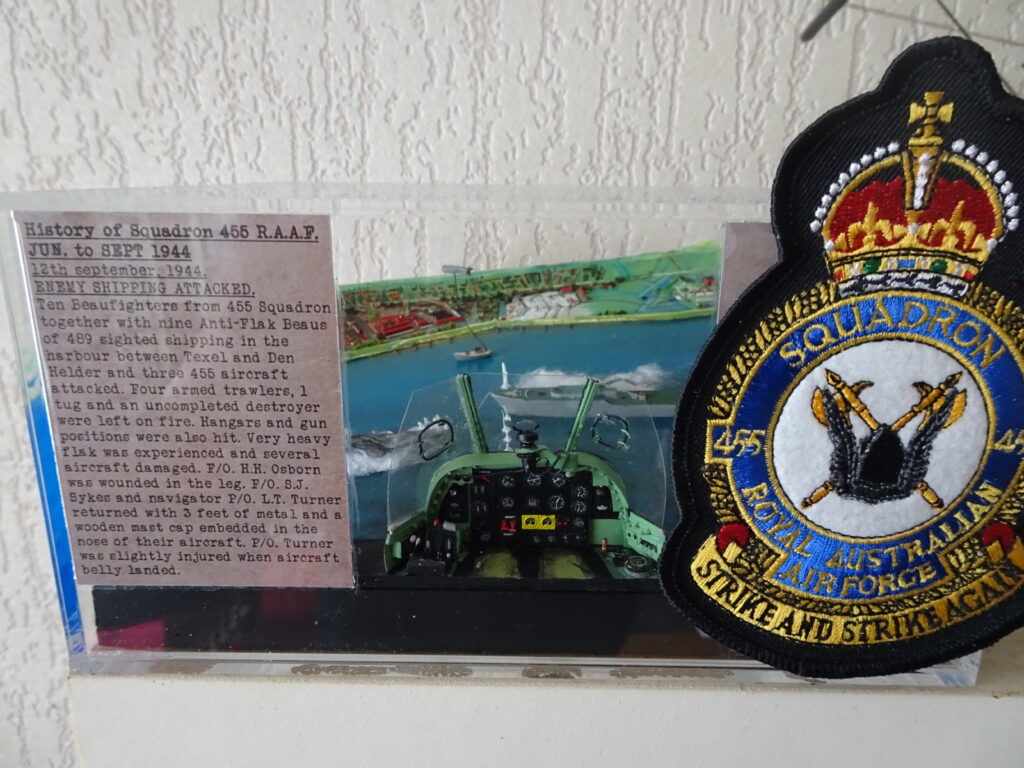
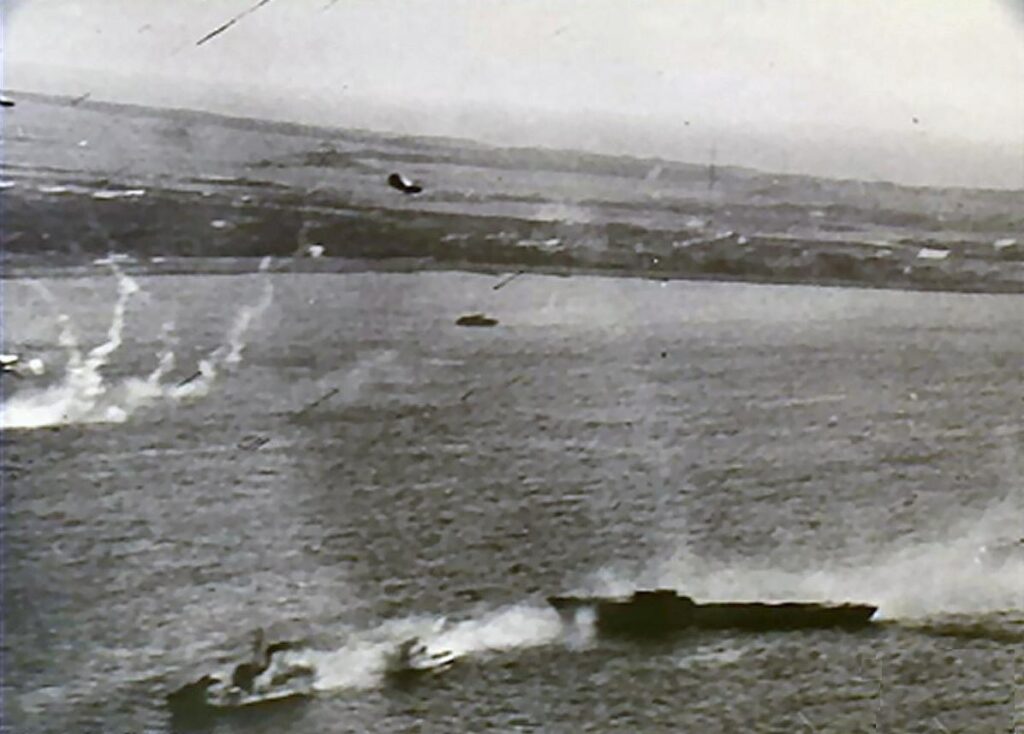
On 12 September 1944, ten Beaufighters from No. 455 Squadron joined aircraft from No. 489 Squadron in a major strike against German shipping in and around Den Helder.
The Dutch naval base remained one of Germany’s most important maritime strongholds in occupied Europe. Allied intelligence had identified a concentration of vessels in the harbour and approaches, including armed trawlers, support vessels and larger naval craft.
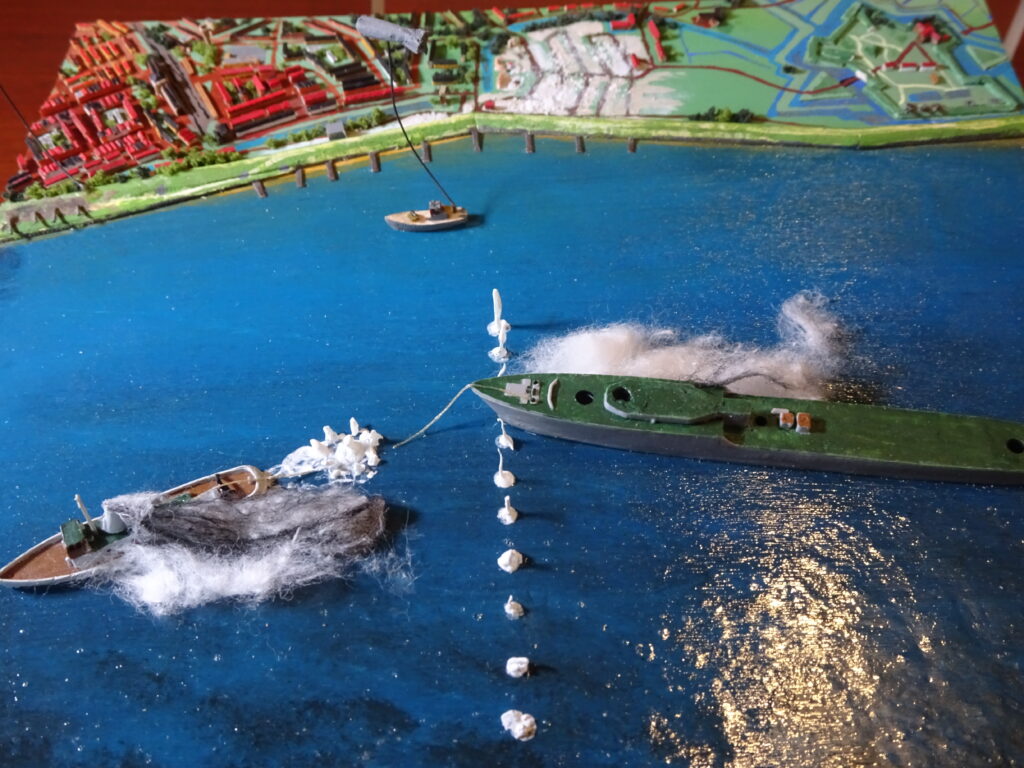
According to squadron records, the attack inflicted considerable damage. Four armed trawlers, a tug and an unfinished destroyer were left burning. Hangars and gun positions were also hit despite heavy anti-aircraft fire.
One aircraft crew experienced a particularly extraordinary encounter.
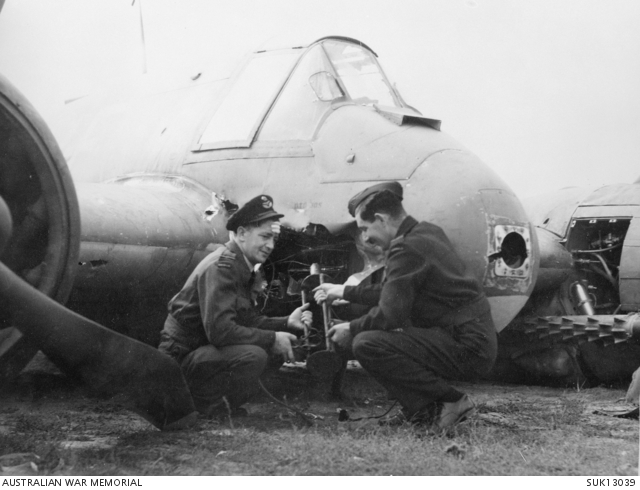
Flying Officer Steve Sykes, the pilot, and Flying Officer Lee Turner, the navigator, attacked at such low altitude that part of a ship’s mast struck their aircraft and became embedded in the nose of the Beaufighter. Turner suffered minor injuries, while the aircraft itself sustained significant damage. Despite this, the crew managed to return safely to England, where the damaged aircraft was photographed with the mast fragment still lodged in its nose.
The incident became one of the most remarkable stories in the history of No. 455 Squadron.
A photograph that tells the story
A photograph preserved by the Australian War Memorial shows Flying Officer Lee Turner of South Australia and Flying Officer Steve Sykes of New South Wales examining the damaged nose of their Beaufighter after the operation.
The image captures the reality of low-level anti-shipping warfare. Rather than being damaged by enemy shells, the aircraft bears evidence of a direct collision with part of its target during the attack.
Few photographs illustrate more vividly the dangers faced by Coastal Command aircrews.
Rediscovering T61
For decades the fate of T61 remained largely forgotten outside specialist naval circles.
Recent sonar surveys conducted near Den Helder have changed that. Detailed seabed mapping has identified the wreck of the torpedo boat lying between sandbanks off the Dutch coast. The sonar imagery clearly reveals the outline of a vessel approximately matching the dimensions of T61, including recognisable structural features.
The discovery has generated interest among maritime archaeologists and historians because it provides a rare opportunity to examine a wartime casualty directly connected to Allied operations in Dutch waters.
The wreck also serves as a reminder of the complex wartime history of the Netherlands. Built in a Dutch shipyard under German occupation, attacked by Australian and New Zealand airmen, and rediscovered by Dutch researchers decades later, T61 embodies multiple layers of shared history.
The following sonar images show the wreck on the bottom of the harbour of Den Helder. Source: Cultural Heritage Agency of the Netherlands .
Shared heritage beneath the North Sea
The story of T61 demonstrates how Australian and Dutch wartime histories often intersect in unexpected ways.
The Netherlands is usually associated in Australian memory with the Netherlands East Indies and the Pacific War. Yet Australian servicemen were also active in the skies above occupied Europe and the North Sea. Their operations directly affected Dutch waters, Dutch ports and Dutch communities living under German occupation.
Likewise, the rediscovery of T61 shows how modern archaeology continues to uncover new connections between nations that fought together during the Second World War.
For Australia, the wreck is a reminder of the courage and skill of the aircrews of No. 455 Squadron. For the Netherlands, it highlights the wartime experiences of occupied Dutch shipyards and coastal communities. Together, they form part of a shared historical legacy that stretches from Schiedam and Den Helder to Britain and Australia.
More than eighty years after the attack, the wreck of T61 remains on the seabed, a silent witness to one of the many forgotten episodes that connected Australia and the Netherlands during the Second World War.
Dioramas
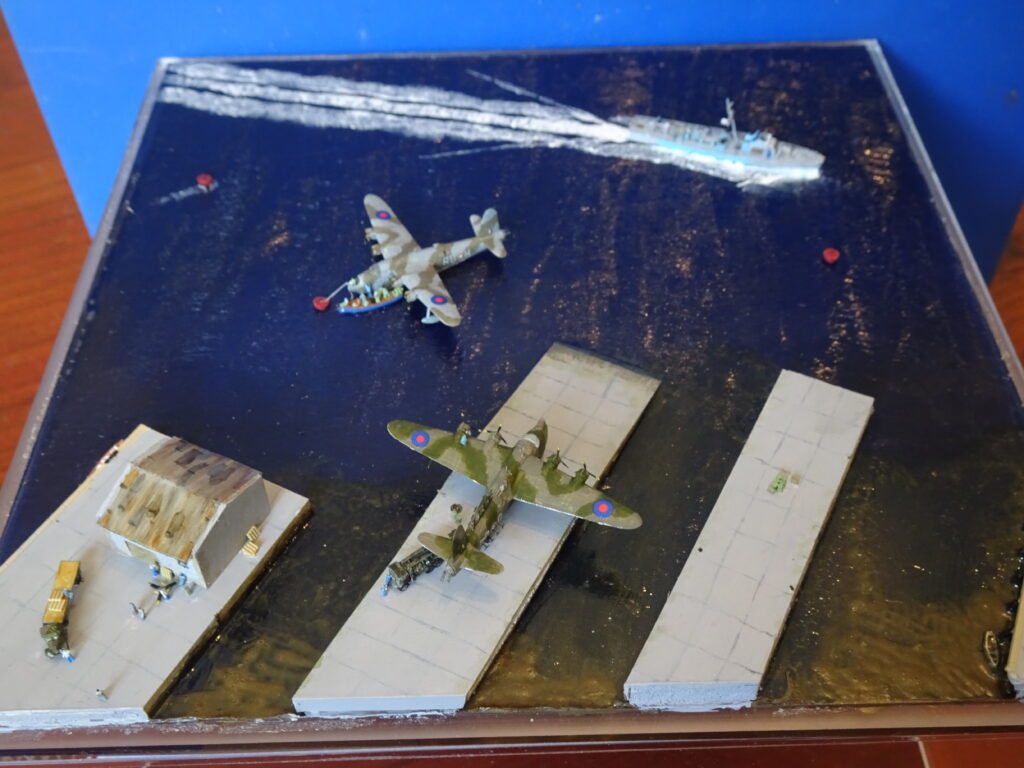
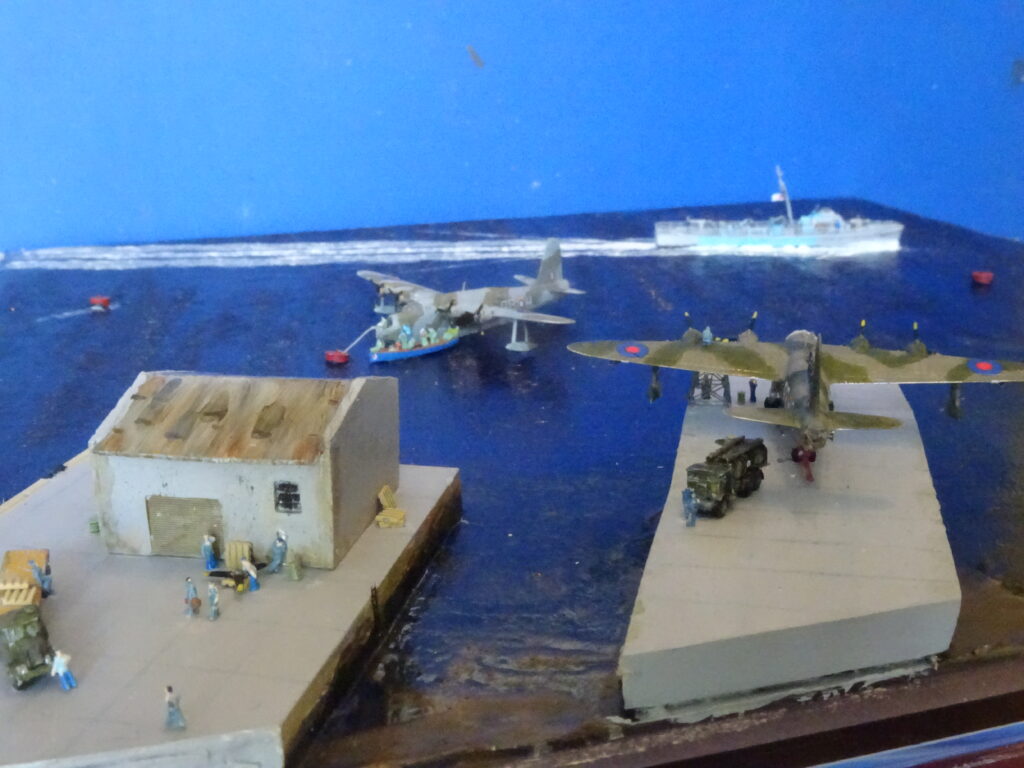
The story of the attack has also been brought to life through a series of detailed dioramas created by Menne Kosian from the Cultural Heritage Agency of the Netherlands Using contemporary photographs, squadron records and historical research, Kosian reconstructed key moments of the operation, including the attack on German shipping near Den Helder and the damaged Beaufighter flown by Steve Sykes and Lee Turner. His work provides a vivid visual interpretation of an event that occurred more than eighty years ago and helps connect modern audiences with this remarkable episode of Australian and Dutch wartime history.