Scroll down to read the announcement in Dutch.
The Dutch Australian Cultural Centre (DACC) is pleased to announce the beginning of a collaborative relationship with the Online Indisch Museum in the Netherlands, creating a new opportunity to strengthen awareness of the shared heritage that connects Indonesia, the Netherlands and Australia.
While the history of the former Dutch East Indies is often viewed through a Dutch or Indonesian lens, Australia also played an important role in this story. During the Second World War, Australia became a place of refuge, administration and military cooperation for thousands of people displaced by the Japanese occupation of the Netherlands East Indies. In the decades that followed, many Indisch migrants and their families chose Australia as their new home, becoming an important part of Australia’s multicultural society.
Both organisations are committed to preserving and sharing these interconnected histories.
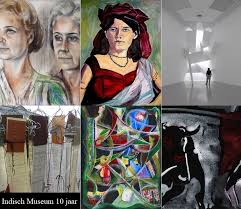
The Online Indisch Museum is a volunteer-run organisation with the visual arts of artists from the Indisch diaspora worldwide at its core. It collects, preserves and makes accessible a rich heritage of creative expression. Its focus encompasses the history, culture and experiences of the Indo-Dutch community and the legacy of the former Netherlands East Indies.
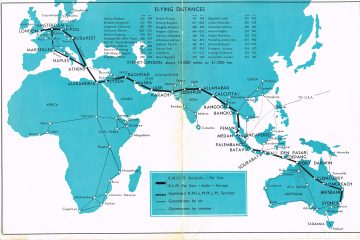
The DACC documents and promotes the broader Dutch Australian experience, including the significant contribution made by Indisch migrants and their descendants in Australia. The new partnership between our organisations celebrates the contributions of Indisch artists, migrants and their descendants in Australia and beyond. The collaboration recognises that many family stories span all three countries. Wartime evacuation routes, migration journeys, military service, family connections and cultural traditions often link Indonesia, the Netherlands and Australia across several generations.
As a first step, the two organisations will support each other through the sharing and cross-referencing of relevant articles and historical resources. This will allow visitors to both websites to access a wider range of information and gain a deeper understanding of the international dimensions of these shared histories.
The partnership will be particularly valuable in highlighting Australian perspectives that are often less visible in European discussions of Indisch history. Australia was not merely a destination for post-war migrants. It was also an important wartime centre for the Netherlands East Indies government-in-exile, Dutch military units, merchant marine personnel, refugees and civilian evacuees. These experiences created enduring connections that continue to shape communities today.
A second initiative involves cultural exchange through the arts. The Online Indisch Museum has extended an invitation to Australian artists whose work reflects Indisch heritage or explores connections between Indonesia, the Netherlands and Australia. Through digital exhibitions and artist profiles, these artists will have an opportunity to share their work with audiences in the Netherlands and internationally.
Although these first steps are modest, they represent an important beginning. By sharing stories, research, creative work and historical resources, both organisations hope to strengthen understanding of a heritage that transcends national borders.
For the DACC, this collaboration provides another opportunity to highlight an important aspect of Australian history: the role Australia has played in the lives of Dutch, Indisch and Indonesian communities, and the enduring connections that continue to link all three countries.
As the partnership develops, both organisations look forward to exploring further opportunities to document, preserve and promote this unique shared heritage for future generations.
Aankondiging van een samenwerking met het Online Indisch Museum
Het Dutch Australian Cultural Centre (DACC) is verheugd de start aan te kondigen van een samenwerking met het Online Indisch Museum. Daarmee onstaat een nieuwe kans om het bewustzijn te vergroten van het gedeelde erfgoed dat Indonesië, Nederland en Australië met elkaar verbindt.
Hoewel de geschiedenis van het voormalige Nederlands-Indië vaak vanuit Nederlands of Indonesisch perspectief wordt bekeken, heeft ook Australië een belangrijke rol gespeeld in dit verhaal. Tijdens de Tweede Wereldoorlog werd Australië een toevluchtsoord en een centrum voor bestuur en militaire samenwerking voor duizenden mensen die ontheemd waren geraakt door de Japanse bezetting van Nederlands-Indië. In de decennia die volgden, kozen veel Indische gezinnen Australië als hun nieuwe thuis, waar ze een belangrijk onderdeel werden van de multiculturele Australische samenleving.
Zowel het DACC als het Online Indisch Museum zetten zich in voor het behoud en het toegankelijk maken van deze onderling verweven geschiedenissen.
Het Online Indisch Museum is een door vrijwilligers gerunde organisatie die zich richt op de beeldende kunst van kunstenaars uit de wereldwijde Indische diaspora – het verzamelen, bewaren en toegankelijk maken van een rijk erfgoed aan creatieve expressie. Het Museum richt zich op de geschiedenis, cultuur en ervaringen van de Indische gemeenschap en de nalatenschap van het voormalige Nederlands-Indië.
Het DACC documenteert en promoot de bredere Nederlands-Australische ervaring, met inbegrip van de belangrijke bijdrage die Indische mensen en hun nakomelingen in Australië hebben geleverd. Het nieuwe partnerschap tussen onze organisaties is een eerbetoon aan de belangrijke bijdrage die Indische kunstenaars, migranten en hun nakomelingen in Australië en daarbuiten hebben geleverd. De samenwerking erkent dat veel familieverhalen zich over alle drie de landen uitstrekken. Evacuatieroutes tijdens de oorlog, migratiereizen, militaire dienst, familiebanden en culturele tradities verbinden Indonesië, Nederland en Australië vaak over meerdere generaties heen.
Als eerste stap zullen de DACC en het Online Indisch Museum elkaar ondersteunen door relevante artikelen en historische bronnen met elkaar te delen en naar elkaar te verwijzen. Hierdoor krijgen bezoekers van beide websites toegang tot een breder scala aan informatie en kunnen ze een beter inzicht krijgen in de internationale dimensies van deze gedeelde geschiedenis.
De samenwerking zal met name van grote waarde zijn om Australische perspectieven onder de aandacht te brengen die in Europese discussies over de Indische geschiedenis vaak minder zichtbaar zijn. Australië was niet alleen een bestemming voor naoorlogse migranten. Het was tijdens de oorlog ook een belangrijk centrum voor de Nederlandse regering in ballingschap in Nederlands-Indië, Nederlandse militaire eenheden, personeel van de koopvaardij, vluchtelingen en geëvacueerde burgers. Deze ervaringen hebben blijvende banden gesmeed die tot op de dag van vandaag bepalend zijn voor de gemeenschappen.
Een tweede initiatief betreft culturele uitwisseling via de kunsten. Het Online Indisch Museum heeft Australische kunstenaars uitgenodigd wier werk het Indisch erfgoed weerspiegelt of de banden tussen Indonesië, Nederland en Australië onderzoekt. Via digitale tentoonstellingen en kunstenaarsprofielen krijgen deze kunstenaars de kans om hun werk te delen met het publiek in Nederland en daarbuiten.
Hoewel deze eerste stappen bescheiden zijn, vormen ze een belangrijk begin. Door verhalen, onderzoek, creatief werk en historische bronnen te delen, hopen beide organisaties het begrip voor een erfgoed dat de nationale grenzen overschrijdt, te versterken.
Voor het DACC is deze samenwerking opnieuw een gelegenheid om een belangrijk aspect van de Australische geschiedenis onder de aandacht te brengen: de rol die Australië heeft gespeeld in het leven van Nederlandse, Indische en Indonesische gemeenschappen, en de blijvende banden die deze drie landen nog steeds met elkaar verbinden.
Naarmate de samenwerking zich verder ontwikkelt, kijken beide organisaties ernaar uit om nieuwe mogelijkheden te verkennen om dit unieke gezamenlijke erfgoed vast te leggen, te behouden en te promoten voor toekomstige generaties.