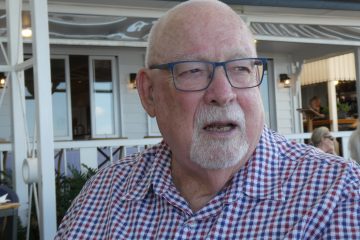
Hans de Vries was a Netherlands East Indies pilot who escaped from Java in 1942, trained in Australia and the United States and subsequently flew B-25 Mitchell bombers with No. 18 (Netherlands East Indies) Squadron RAAF.
From Batchelor airfield in the Northern Territory, he participated in dangerous bombing and anti-shipping operations against Japanese positions across the occupied Netherlands East Indies. After the war, he settled permanently in Australia.
Hans de Vries was born on 22 April 1923 and died on 12 January 2019, aged 95.
Childhood and flying in Java
Hans grew up in the Netherlands East Indies. His ancestry connected him with both Dutch settlers and the Sundanese people of Java.
His father, Herman de Vries, was an accounts manager for a shipping company. The family enjoyed a relatively comfortable life before the war, with servants, chauffeurs, tennis parties and dances. Hans became an accomplished ballroom dancer and reportedly won a dancing competition when he was fifteen.
Aviation was another early interest. He obtained a light-aircraft pilot’s licence at the age of seventeen—before he was old enough to obtain a driving licence.
When Japan invaded the Netherlands East Indies, Hans was serving or training as a sergeant pilot within the Dutch naval aviation organisation.
Escape aboard the Boissevain
As Japanese forces advanced through the Netherlands East Indies, Hans and other Dutch military personnel were ordered to evacuate.
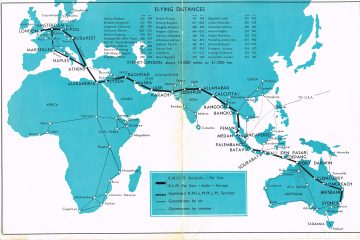
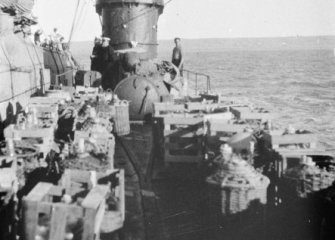
He escaped aboard the Koninklijke Paketvaart-Maatschappij ship Boissevain. According to Hans’s later account, personnel were distributed among three ships travelling in secrecy. Two were subsequently lost, while the Boissevain passed through dangerous waters and reached Fremantle in Western Australia.
Hans was eighteen years old when he arrived in Australia.
From Fremantle, the Dutch personnel travelled by train across Australia to Awaba, near Lake Macquarie in New South Wales. There, Hans undertook further training with the RAAF.
He later recalled the long railway journey with humour. Because of his small stature, he was able to sleep in the train’s luggage rack. His time with the Australians also introduced him to a much more colourful English vocabulary than he had learned at school.
Training in the United States
Hans and other Dutch trainee pilots subsequently crossed the Pacific aboard the liner Mariposa. They were sent to the Royal Netherlands Military Flying School at Jackson, Mississippi, where aircrew were being prepared for the reconstructed Dutch aviation forces.
At Jackson, Hans trained to fly the North American B-25 Mitchell medium bomber.
After completing his training, he travelled to California while his aircraft was prepared for the long journey to Australia.
Hans later recalled visiting the Stage Door Canteen in San Francisco, where actors and entertainers appeared for Allied servicemen. Drawing upon his prewar ballroom-dancing experience, he reportedly danced with film star Rita Hayworth. He also remembered meeting Ronald Reagan, then serving in the United States Army while working on the film This Is the Army.
These recollections provide a remarkable contrast with the dangerous operational flying that awaited him in northern Australia.
No. 18 Squadron at Batchelor
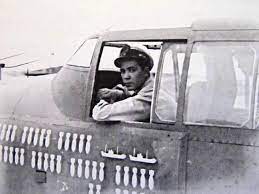
Hans was assigned to No. 18 (Netherlands East Indies) Squadron RAAF.
The squadron operated B-25 Mitchell bombers from Batchelor airfield in the Northern Territory. Its crews attacked Japanese airfields, shipping, supply centres and military installations throughout the eastern Netherlands East Indies.
The squadron operated B-25 Mitchell bombers from Batchelor airfield in the Northern Territory. Its crews attacked Japanese airfields, shipping, supply centres and military installations throughout the eastern Netherlands East Indies.
ies’s personal recollection rather than as a fully documented squadron operation.
He was not the first Dutch pilot associated with such a flight. On 14 May 1942, three former KNILM aircraft had flown under the Sydney Harbour Bridge shortly before being transferred into Allied service.
Read the related DACC article: Dutch aircraft flew under the Sydney Harbour Bridge.
Returning for his family
Following Japan’s surrender, Hans returned to Java.
Later accounts state that he helped bring his parents, his two sisters and his younger brother to safety after their release from Japanese internment. This was a deeply personal conclusion to a war during which Hans had been separated from his family while flying combat missions against the forces occupying his homeland.
This return should be understood within the post-surrender recovery and evacuation of former prisoners and civilian internees rather than as a wartime bombing mission.
Marriage and life in Australia
Hans returned to Australia and married Brenda de Gruchy, whom he had met in Queensland.
He became an Australian citizen and pursued several different occupations during his postwar life, working as a geologist, dairy farmer and computer programmer.
Hans and Brenda had six daughters. Brenda died in 2000. By the time of Hans’s death in 2019, the family included 21 grandchildren and 18 great-grandchildren.
Remembering No. 18 Squadron
Hans remained actively connected with the memory of No. 18 Squadron.
On 18 April 2017, he attended a ceremony at Parafield Airport in Adelaide associated with the restoration of a B-25 Mitchell in the markings of the No. 18 Squadron aircraft Pulk. Hans and Fred Pelder Jr, the son of No. 18 Squadron pilot Fred “Pulk” Pelder, received medallions in recognition of the squadron’s wartime service.
At the age of 94, Hans climbed into the cockpit of the restored aircraft. Photographs and film of the occasion recorded his immediate familiarity with the B-25’s controls.
Oral history
Hans recorded his experiences for the South Australian World War II in Words oral-history project. The recording preserves his own account of leaving the Netherlands East Indies, reaching Australia and serving as a wartime pilot.
Listen to Hans de Vries telling his story through the Veterans SA oral-history project.
This recording is an especially valuable addition to the written article because it allows readers to hear the story in Hans’s own voice.
Historical significance
Hans de Vries’s life connects several elements of Dutch–Australian wartime history:
- the prewar aviation community of the Netherlands East Indies;
- the evacuation from Java in 1942;
- Dutch aircrew training in Australia and the United States;
- the joint Dutch–Australian organisation of No. 18 Squadron;
- B-25 operations from the Northern Territory;
- the recovery of families following Japanese internment; and
- the settlement of former Netherlands East Indies servicemen in postwar Australia.
His story also illustrates how former Netherlands East Indies personnel became part of Australian society while maintaining the memory of the multinational squadron in which they served.
Related DACC articles
- DACC Air Force Research Portal
- No. 18 (Netherlands East Indies) Squadron RAAF
- The Dutch at Batchelor Airport
- Dutch aircraft flew under the Sydney Harbour Bridge
- Fred “Pulk” Pelder and the restored B-25 Mitchell
- Gerard Johan Lugt: letters of a No. 18 Squadron pilot
Sources and further reading
- Veterans SA, Hans de Vries—World War II in Words oral-history recording.
- Virtual War Memorial Australia, “Dutch Courage”—Hans de Vries and No. 18 Squadron.
- NOS, ‘Pulk’ is eerbetoon aan vergeten Nederlands-Indische gevechtspiloten.
- Reevers Warbirds B-25 Mitchell restoration—“Pulk”, a Dutch tribute.
- Australian War Memorial, No. 18 Squadron personnel with B-25 Mitchell “Pulk”, NWA0292.