Following the collapse of the Netherlands East Indies (NEI) in early 1942, Dutch military and intelligence operations had to be rapidly reorganised from exile. Australia became central to this effort. One of the most critical elements in rebuilding Dutch operational capability was the establishment of a secure wireless communications network linking Dutch forces, intelligence parties, and Allied headquarters across the Southwest Pacific Area and the Netherlands East Indies.
Two important Australian locations in this network were Batchelor in the Northern Territory and Craigieburn near Melbourne. Together, they formed part of the communications infrastructure supporting Dutch and Allied wartime operations.
Re-establishing Dutch communications after the fall of the NEI
After the Battle of the Java Sea and the Japanese occupation of the NEI, surviving elements of the Royal Netherlands Navy and associated intelligence personnel evacuated via Ceylon and Australia. The loss of territory made long-range, secure radio communication essential. Dutch forces now depended on Australia not only as a base for military reorganisation, but also as a platform for maintaining contact with personnel operating across a vast and hostile region.
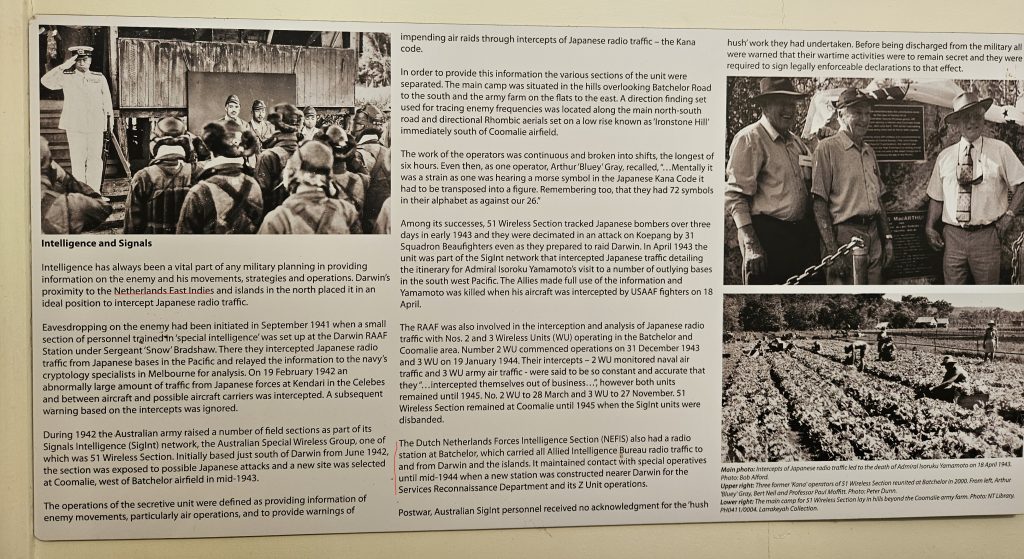
As Dutch military and intelligence activities were reorganised in Australia, radio facilities were established to maintain communications between bases in Australia, Dutch headquarters and personnel operating in or near the Japanese-occupied Netherlands East Indies. Batchelor in the Northern Territory became an important forward point in this network.
The Batchelor wireless telegraphy station
Batchelor in the Northern Territory became an important forward communications point for Dutch intelligence operations directed towards the occupied Netherlands East Indies.
Its geographic position south of Darwin made it particularly useful for maintaining radio contact with intelligence parties operating in the islands to Australia’s north. Surviving accounts of clandestine operations show agents in the field attempting to communicate directly with Batchelor, sometimes under extremely difficult conditions with limited batteries and damaged or improvised radio equipment.
Batchelor could therefore provide a vital communications link between operatives inside Japanese-held territory and the Dutch intelligence organisation in Australia. Reports could be received from the field and instructions or arrangements for supplies and evacuation transmitted back to the parties.
The Dutch wireless function at Batchelor should be distinguished from signals-intelligence activities also conducted in the area. Australian wireless units operating at Batchelor monitored Japanese radio traffic, but the Dutch station discussed here was primarily concerned with operational communications: maintaining contact with Dutch and Allied personnel and intelligence parties operating to the north. The presence of different wireless organisations at the same location can easily lead to confusion between communications and radio interception.
Connection with NEFIS
The station at Batchelor formed an integral part of the communications framework supporting NEFIS, the Netherlands Forces Intelligence Service. NEFIS was established in Australia after the fall of the NEI to coordinate Dutch intelligence activities in exile and to work closely with Allied intelligence organisations.
Initially, NEFIS headquarters operated from Melbourne. Communications from Batchelor were routed south to Melbourne for processing, coordination, and onward distribution. In June 1944, NEFIS headquarters relocated to Camp Columbia at Wacol, near Brisbane, reflecting the growing importance of Queensland as an Allied command and intelligence centre. From that point, Batchelor communications were increasingly directed toward Brisbane.
Batchelor thus functioned as a forward communications gateway linking remote intelligence and operational parties to the analytical and command structures of NEFIS and its Allied partners.
Craigieburn and the Australia–Ceylon communications link
While Batchelor provided an important forward link with intelligence parties operating to Australia’s north, the Dutch also required reliable long-distance communications between their forces in Australia and the Dutch command in Ceylon, present-day Sri Lanka.
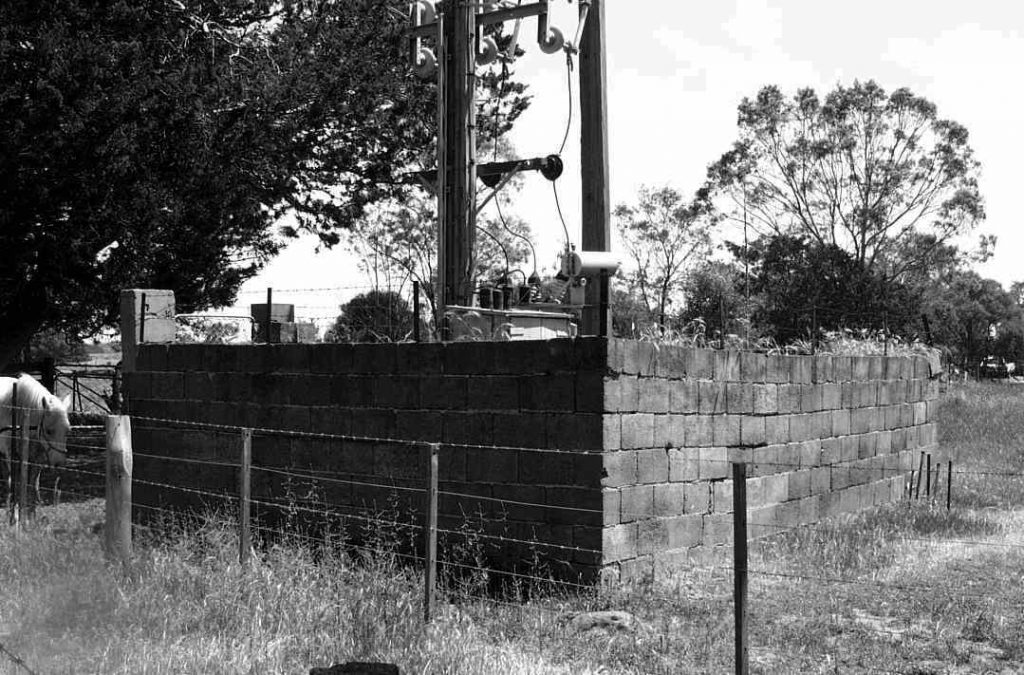
In July 1942, a Royal Netherlands Navy wireless station was established at Yuroke, near Craigieburn on the northern outskirts of Melbourne. Lieutenant Commander J. J. Quéré, who was also closely involved in the early Dutch intelligence organisation in Australia, was given responsibility for establishing the station, with engineer Jansen overseeing the technical work.
The need was urgent. Following the fall of the Netherlands East Indies, Vice-Admiral Conrad Helfrich, Commander of the Netherlands Forces in the East, had established his headquarters in Ceylon, while substantial Dutch naval, military and intelligence personnel had regrouped in Australia. Initially the Dutch in Australia had to rely on Australian communications facilities.
The Craigieburn station provided the Netherlands with its own direct radio link between Australia and Helfrich’s headquarters. A regular radio service between Australia and Ceylon was operating by August 1942.
Craigieburn was also connected by teleprinter with Dutch intelligence facilities in Melbourne, allowing messages received over the long-distance radio network to be passed rapidly to the organisations that required them.
Its role was therefore different from that of Batchelor. Craigieburn was particularly important for strategic communications between Dutch headquarters and forces separated by thousands of kilometres. Batchelor, being much closer to the Netherlands East Indies, was better placed to communicate with clandestine parties using relatively low-powered portable radio equipment inside Japanese-occupied territory.
Together, the two stations illustrate the different layers of the Dutch wartime communications system in Australia: long-distance command communications through Craigieburn and forward operational communications through Batchelor.
Integration into the Allied communications system
The Dutch wireless network in Australia did not operate in isolation. It formed part of a much larger Allied communications and intelligence environment in which Australian, Dutch and American organisations exchanged information, facilities and technical support.
The different elements of the Dutch network served different purposes. Craigieburn provided long-distance communications linking Dutch organisations in Australia with the Netherlands command in Ceylon, while Batchelor provided a forward link with intelligence parties operating much closer to the Japanese-occupied Netherlands East Indies.
NEFIS was an important user of these communications, particularly for clandestine operations. Intelligence collected by parties in the field had limited immediate value unless it could be transmitted back to Australia. Wireless operators therefore formed a crucial part of many intelligence parties, carrying portable radio equipment, batteries, codes and communications schedules into occupied territory.
The network also illustrates the degree of practical cooperation between Allied intelligence organisations. Australian and American organisations could make use of Dutch communications facilities and personnel, while Dutch intelligence depended in turn on Australian infrastructure and the wider Allied communications system.
These communications activities should be distinguished from signals intelligence and codebreaking. Organisations and units engaged in intercepting and analysing Japanese communications performed a different function. The Dutch stations discussed here were principally concerned with maintaining the communications links through which operational messages and intelligence could move.
Significance
The Batchelor and Craigieburn wireless stations illustrate an easily overlooked part of the Dutch and Allied war effort in Australia: the communications infrastructure that made intelligence and clandestine operations possible.
Their roles were different but complementary. Craigieburn helped reconnect Dutch forces and authorities in Australia with the Netherlands command in Ceylon, while Batchelor provided a forward communications link with intelligence parties operating much closer to, and sometimes inside, the Japanese-occupied Netherlands East Indies.
For clandestine intelligence parties, wireless communication could be a matter of survival. Gathering information behind enemy lines was only useful if that information could be transmitted back to Australia. Radio also enabled headquarters to send instructions, coordinate resupply and, where circumstances permitted, arrange extraction.
The stations were therefore part of a much larger operational chain extending from intelligence headquarters and training establishments in Australia to wireless operators and agents working inside occupied territory. Dutch facilities and personnel operated within this wider Allied system alongside Australian and American organisations.
This communications network also demonstrates how Dutch military capability was reconstructed after the rapid collapse of the Netherlands East Indies in 1942. Operating from exile, Dutch forces established new connections between Australia, Ceylon and personnel attempting to operate within the occupied archipelago.
Batchelor and Craigieburn were not the most visible elements of that wartime effort, but without reliable communications many of the intelligence and special operations described elsewhere in this Research Portal could not have functioned.
Paul Budde – September 2026
Sources and further reading
- Australian War Memorial, Allies in Adversity: Australia and the Dutch in the Pacific War – NEFIS. Overview of the establishment, organisation and operations of the Netherlands Forces Intelligence Service in Australia.
- Australian War Memorial, Allies in Adversity: Australia and the Dutch in the Pacific War. Broader account of Dutch military, naval, intelligence and government activities from Australia during the Pacific War.
- Nationaal Archief (Netherlands), Inventaris van het archief van de Marine en Leger Inlichtingendienst, de Netherlands Forces Intelligence Service en de Centrale Militaire Inlichtingendienst in Nederlands-Indië, 1942–1949. Primary archival collection covering the organisation, activities and operations of NEFIS and its predecessor and successor intelligence organisations.
- Nationaal Archief (Netherlands), records of the Bevelhebber Strijdkrachten Oosten. Includes wartime intelligence reports, NEFIS intelligence summaries, liaison records and material relating to communications and operations in the Southwest Pacific Area.
- Ford, Jack M., Allies in a Bind: Australia and the Netherlands East Indies in the Second World War, Australian Netherlands Ex-Servicemen & Women’s Association, Queensland Branch, 1996. Detailed study of Dutch-Australian military and intelligence cooperation during the Pacific War.
- Rosenzweig, Paul A., research on wartime military and intelligence activities in the Northern Territory. Includes material relating to Dutch wireless communications and intelligence activities at Batchelor.
- Library & Archives NT, 2 Wireless Unit. Records the presence at Batchelor from 1943 to 1945 of the Australian RAAF wireless unit responsible for monitoring Japanese radio signals, helping distinguish signals interception from the Dutch operational communications function at Batchelor.
- Luisterpost Gorinchem, research on Dutch wartime radio and intelligence communications from Australia and Ceylon. Contains detailed material on the Royal Netherlands Navy wireless network, Craigieburn/Yuroke, Batchelor, Dutch naval telegraphists and communications with intelligence parties operating in the Netherlands East Indies.
Related DACC Research Portal articles
The Forgotten Dutch and Indonesian Story of Cairns’ Z Experimental Station.
Netherlands Forces Intelligence Service (NEFIS): Dutch Intelligence in Exile in Australia.
Dutch, Australian and Indonesian Agents: The NEI Section of Australia’s Secret War.
NEFIS III: Dutch and Indonesian Special Operations from Australia during WWII.