No. 18 (Netherlands East Indies) Squadron RAAF brought together personnel of different nationalities and backgrounds. Dutch, Indonesian and Australian airmen served as pilots, observers, navigators, wireless operators, air gunners and ground personnel.
Some members—including Joop van Doorn, Hans de Vries, Max Horstink and Harry Burgers—are covered in separate DACC articles. The following short profiles record other members whose service should also be remembered.
This is not a complete nominal roll. Further names and personal histories can be found through the DACC Air Force Research Portal.
Sidney Rudi de Kadt
Sidney Rudi de Kadt escaped from the German-occupied Netherlands, travelling through Portugal to the United States. There he joined the Dutch armed forces and was subsequently assigned to the Military Aviation service of the Royal Netherlands East Indies Army.
Following the Japanese conquest of the Netherlands East Indies, he reached Australia and later underwent further training in the United States. He subsequently joined No. 18 Squadron and completed 37 operational sorties.
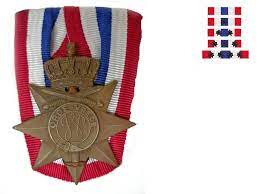
De Kadt was honourably discharged in 1946 and received the Ereteken voor Orde en Vrede—the Decoration for Order and Peace—for his post-war service.
Dirk Lucas Asjes
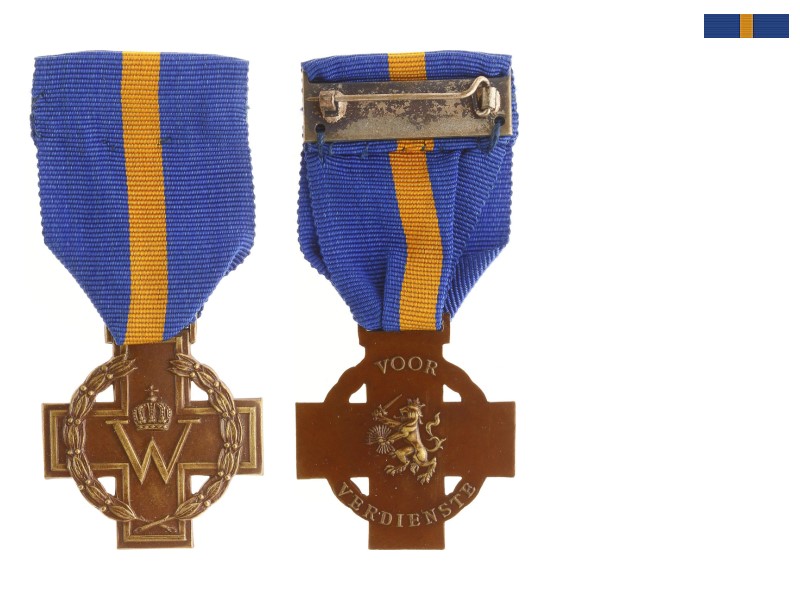
Dirk Lucas “Dick” Asjes was an experienced Dutch aviator who had already taken part in the 1934 London–Melbourne air race as a crew member of the Panderjager.
After the fall of the Netherlands East Indies, he helped establish the Royal Netherlands Military Flying School in the United States. He later returned to Australia with Dutch-trained B-25 crews and served with No. 18 Squadron.
Between 27 February and 22 September 1944, Asjes participated in numerous operations against Japanese-occupied territory in the southern Moluccas, Timor, Flores, New Guinea and the islands of the Banda and Arafura seas. He initially served as deputy commander and chief flying officer and became commanding officer of the squadron in July 1944.
He frequently led difficult missions personally, including daylight attacks, photographic reconnaissance flights and searches for missing aircrews. His service was recognised by the award of the Military William Order and the Airman’s Cross.
Everhardus Johannes Gerhard “Eddy” te Roller
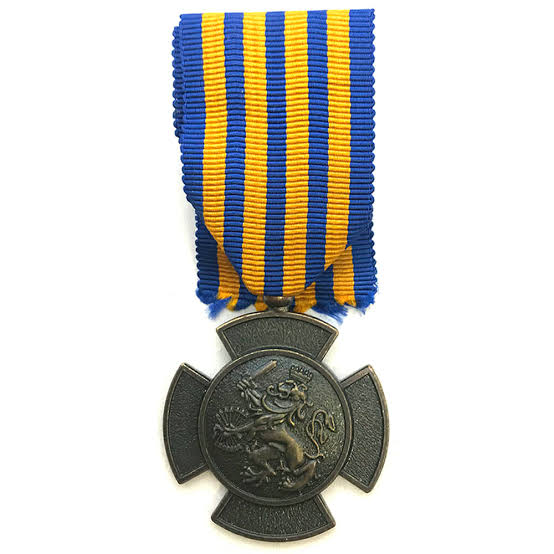
Lieutenant Colonel Everhardus Johannes Gerhard “Eddy” te Roller was born at Doesburg on 1 February 1902. Before joining No. 18 Squadron, he served as head of the aviation department of the Netherlands Purchasing Commission in the United States.
In April 1944, Te Roller succeeded J.J. Zomer as commanding officer of No. 18 Squadron.
On 23 June 1944, Te Roller was aboard B-25 Mitchell N5-162 during an operation over the Banda Sea. The aircraft was struck by Japanese anti-aircraft fire near Tioor, exploded and fell into the sea. Everyone aboard was killed.
Te Roller was posthumously awarded the Bronze Lion. His name appears on the Dutch Roll of Honour and the Air Force Memorial at Soesterberg.
Pieter Gerard Tideman
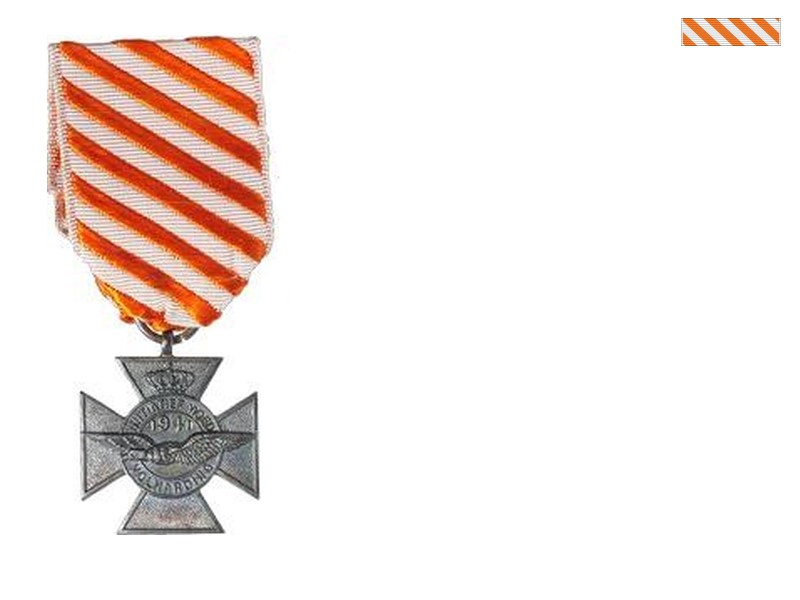
Captain pilot-observer Pieter Gerard Tideman served with No. 18 Squadron and was awarded the Airman’s Cross.
His citation recognised the initiative, courage and perseverance he displayed during the defence of Java in February and March 1942. As a section commander and fighter-patrol leader, Tideman repeatedly engaged numerically superior Japanese fighters near Bandung. On several occasions, he succeeded in bringing badly damaged aircraft safely back to the ground.
The award was confirmed by Royal Decree No. 63 of 9 January 1948.
Tan Sien Ien
Tan Sien Ien was born on 22 August 1917. He served as a Chinese militia sergeant first class and air gunner in the KNIL Military Aviation and with No. 18 Squadron.
After the end of the Second World War, he continued serving in the Netherlands East Indies. He was killed on 4 August 1946 when B-25 Mitchell N5-230 crashed near Kalibanteng, Semarang. He was 28 years old.
Tan Sien Ien was posthumously awarded the Airman’s Cross in 1949.
Pieter Johan Wallin
Reserve First Lieutenant pilot-observer Pieter Johan Wallin was born at Oud-Beijerland on 9 November 1923 and served with No. 18 Squadron.
He was killed on 4 September 1945 when B-25 Mitchell N5-255 crashed at Muntjoa, near Makassar. Although Japan had announced its surrender the previous month, dangerous flying operations and transport duties continued throughout the Netherlands East Indies.
Wallin was awarded the Airman’s Cross. His name is also included on the Netherlands East Indies memorial in Oud-Beijerland.
Pieter Cornelis André de la Porte
Reserve Captain pilot-observer Pieter Cornelis André de la Porte was recognised for his service during the Japanese offensive in Burma in May 1942.
He repeatedly piloted an unarmed aircraft of a type with which he was initially unfamiliar, conducting high-altitude photographic reconnaissance missions as far as approximately 1,000 miles into enemy-held territory. The resulting photographs and intelligence helped the United States Army Air Forces plan and conduct bombing operations.
Reinier Emil Jessurun
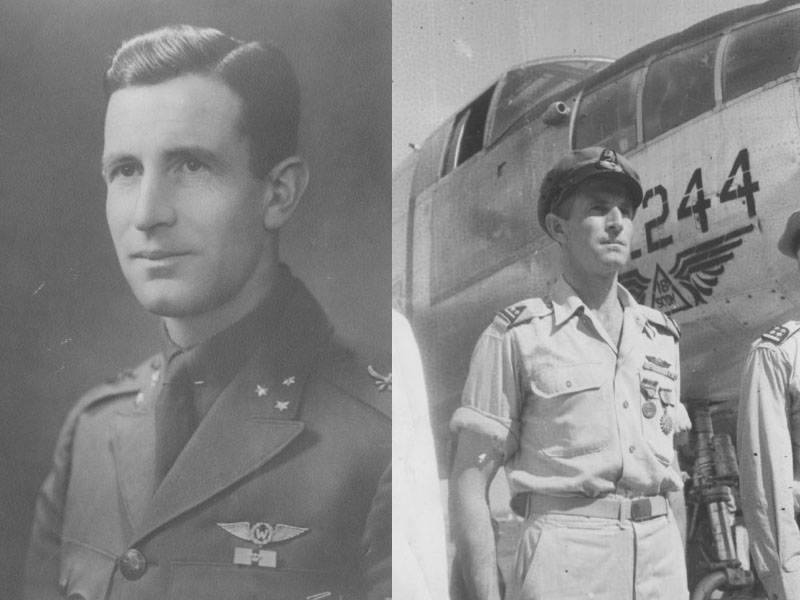
Reinier Emil Jessurun was born at Haarlem on 15 February 1904. He served as a reserve observer with the Military Aviation service of the KNIL and reached Australia following the Japanese conquest of the Netherlands East Indies.
Jessurun participated in No. 18 Squadron operations and later became its commanding officer. He continued serving in the Netherlands East Indies after the Second World War and also served for a period as acting commander of the ML-KNIL.
On 14 May 1949, Jessurun was killed when a B-25 Mitchell crashed near Kroja, Java. All eight occupants of the aircraft died. The Royal Netherlands Air Force subsequently named the Jessurunkamp military complex at Soestduinen in his memory.
Jessurun received several decorations for his wartime service, including the Bronze Cross and the Military William Order.
Benjamin Wetters
First Lieutenant short-service pilot Benjamin Wetters served with No. 18 Squadron.
On 18 February 1943, Wetters commanded a formation of three aircraft during a bombing operation. When the formation was attacked by a Japanese fighter, his direction of the aircraft’s defensive fire contributed to the fighter being shot down.
Three further Japanese fighters then attacked the formation. After seeing that one of his aircraft had been damaged and could no longer maintain formation, Wetters moved to protect it and helped drive away the attackers.
Paul Leo Zeijdel
Paul Leo Zeijdel was born at Modjokerto, Java, on 10 August 1917. He served as a reserve second lieutenant observer with No. 18 Squadron.
On 8 October 1943, Zeijdel was the observer aboard B-25 Mitchell N5-136 during a reconnaissance mission near Waingapu on Sumba. The lone aircraft came under repeated attack from a superior number of Japanese fighters.
Although the Mitchell was badly damaged and Zeijdel himself was wounded, he continued returning fire. The aircraft was eventually forced down near Manangafuru. The pilot was killed, while Zeijdel and other survivors attempted a difficult journey after reaching land. Zeijdel died during that ordeal at the age of 26.
He was posthumously awarded the Airman’s Cross for his initiative, courage and endurance.
Remembering the wider squadron
These short profiles show the diversity of experience within No. 18 Squadron. Some members had fought during the defence of Java or Burma; others had escaped occupied Europe, trained in the United States or continued serving in Indonesia after 1945. Several survived the war but were killed during the dangerous post-war operations that followed.
Their stories should be read together with the DACC’s individual biographies and its broader history of No. 18 (Netherlands East Indies) Squadron RAAF.
Sources and further reading
- TracesOfWar: Dutch aviation units serving overseas, 1940–1945
- TracesOfWar: Reinier Emil Jessurun
- Oorlogsgravenstichting: Pieter Johan Wallin
- Oorlogsgravenstichting: Paul Leo Zeijdel
- Oorlogsgravenstichting: Reinier Emil Jessurun
- oorlogsgravenstichting.nl
- Dutch National Military Museum: Paul Leo Zeijdel collection
- DACC Air Force Research Portal