Following the Second World War, Australia embarked on one of the largest migration programs in its history. Between the late 1940s and the 1960s, thousands of migrants from the Netherlands chose Australia as their new home. While Bonegilla in Victoria is perhaps the best-known migrant reception centre, many Dutch migrants destined for South Australia began their Australian journey at the Woodside Migrant Hostel in the Adelaide Hills.
Woodside was one of Australia’s major post-war migrant reception centres and became South Australia’s principal Commonwealth migrant hostel. For many Dutch families it was their first introduction to Australia—a temporary home where they adjusted to a new language, climate and way of life before moving on to permanent employment and housing.
This article forms part of the Dutch Australian Cultural Centre’s research series Dutch Gateways to Australia, documenting the migrant reception centres and hostels that played an important role in Dutch migration to Australia.
From Army Camp to Migrant Hostel
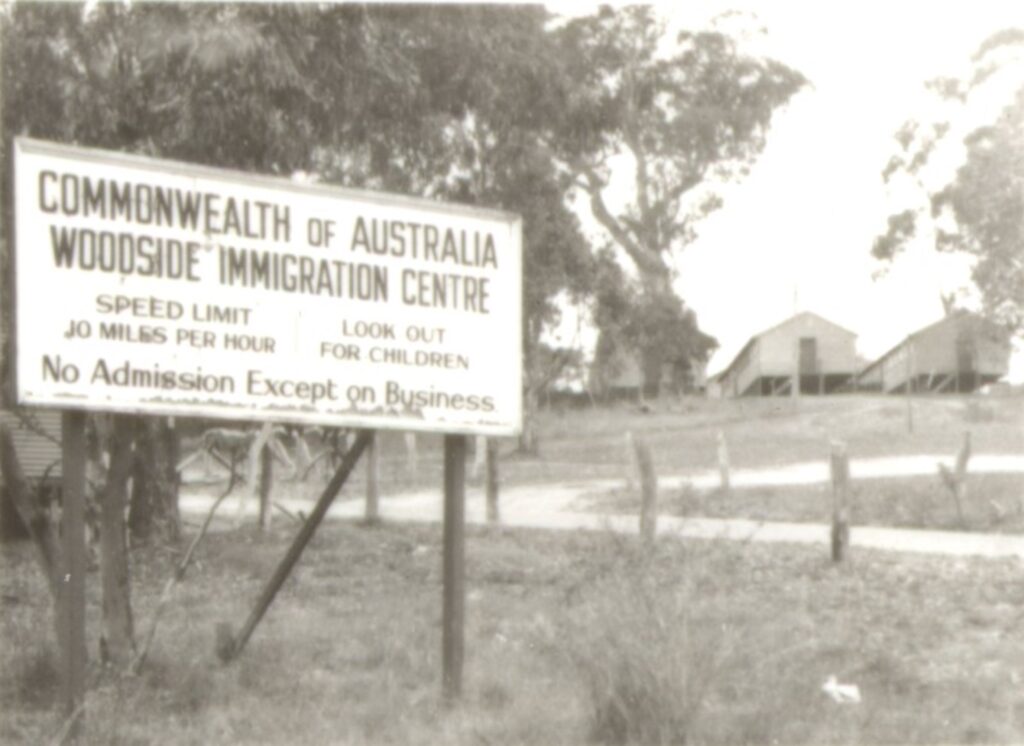
The Woodside Migrant Hostel occupied part of the existing Australian Army camp at Woodside, about 35 kilometres east of Adelaide. In 1949 the Commonwealth Government converted former military barracks into accommodation for newly arrived migrants as Australia’s post-war immigration program gathered momentum. The hostel remained in operation until 1963, after which the buildings were returned to military use.
Over its fourteen years of operation, approximately 26,000 migrants passed through Woodside. Initially the hostel accommodated large numbers of Displaced Persons from war-torn Europe. Following the completion of the Displaced Persons program in the early 1950s, Woodside increasingly received assisted migrants from countries including the Netherlands, Italy and Greece.
A First Home in Australia
Like most migrant hostels of the period, Woodside was never intended as a permanent home. Families generally remained only until employment had been arranged and suitable accommodation became available elsewhere.
Accommodation consisted of converted army barracks. Some buildings remained dormitory-style, while others had been divided into small family rooms. Kitchens, dining rooms, laundries, showers and toilets were shared by all residents. Although the facilities were basic, they represented a fresh start for families who had often experienced years of war, occupation and hardship.
The hostel developed into a small multicultural community. It included a hospital with maternity and children’s wards, a crèche, baby clinic, primary school, recreation hall, cinema, canteen and sporting facilities. English language classes helped migrants prepare for work and everyday life in Australia. Churches and community organisations, including the Red Cross and the Good Neighbour Council, played an important role in assisting new arrivals.
The Dutch at Woodside
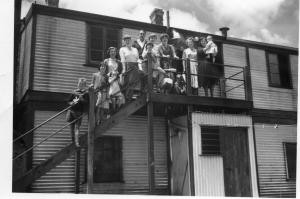
Although the first residents were mainly Displaced Persons from Eastern Europe, Dutch migrants became an increasingly familiar presence at Woodside during the 1950s under Australia’s assisted migration schemes. Most had chosen to leave the Netherlands in search of greater opportunities, particularly in farming, construction, engineering and skilled trades.
For Dutch families, Woodside marked the beginning of a new chapter. While the hostel itself was only a temporary stop, it was here that many first experienced Australian schools, workplaces and communities. From Woodside they dispersed across Adelaide and regional South Australia, where they became valued contributors to the state’s economic and social development.
As research for this series progresses, the DACC will identify Dutch migrants who stayed at Woodside and link this article to their personal stories, photographs and oral histories preserved within the DACC archives.
See also: Adriaan and Johanna Rutte arrived at Woodside SA
Everyday Life
Life at Woodside was a mixture of uncertainty and optimism. Adults searched for employment while children quickly adapted to their new surroundings. Sporting competitions, concerts, dances and cultural activities helped bring together people from many different nationalities. One of the hostel’s soccer teams, made up of players from six different countries, competed successfully in local South Australian competitions, illustrating how sport became an important means of building new friendships and community connections.
Many former residents later remembered both the challenges and the beauty of the Adelaide Hills setting. While the camp’s relative isolation and limited public transport could be frustrating, the surrounding countryside provided a peaceful environment in which families could begin rebuilding their lives.
An Important Place in Australia’s Migration Story
Unlike Bonegilla, relatively little of the Woodside Migrant Hostel remains today. The site reverted to military use following the hostel’s closure in 1963, and much of its migration history has faded from public memory. Nevertheless, Woodside occupies an important place in South Australia’s post-war history and in the story of Dutch migration to Australia.
For the Dutch Australian Cultural Centre, Woodside represents another important gateway through which Dutch migrants entered Australian society. Together with camps such as Wacol, Bonegilla, Smithfield, Greta and Northam, it forms part of a national network of migrant reception centres that helped shape modern multicultural Australia.
As this research project develops, the DACC will continue to expand this article by linking it to the personal stories of Dutch migrants who passed through Woodside, ensuring that their experiences become part of Australia’s enduring migration heritage.
See also Woodside Migration Hostel
Can you help us?
We are keen to receive stories, photographs, documents and memories from people who stayed at this migrant centre. With your permission, we would be delighted to include them in this article, helping to preserve this important chapter of Australia’s and the Dutch-Australian community’s migration history. Contac: dutchaustraliancc@gmail.com