From wartime Netherlands to post-war migration
The story of Cornelis (Cor) and Anna Koopman is an unusual chapter in the history of Dutch migration to Australia. When they emigrated in 1951, they brought not only their three young children and personal possessions, but an entire prefabricated house that Cornelis had built in the Netherlands.
Their story illustrates the resourcefulness and determination of Dutch families seeking to rebuild their lives after the Second World War.
Cornelis and Anna married in the Netherlands in 1943, during the German occupation. Following the war, the couple decided to seek a future in Australia. By then they had three children: Catharina, Cees and Marianne.
Building houses for a new life
Before emigrating to Australia, Cornelis Koopman and his friend Leendert (Lenny) Visser built two prefabricated houses in the backyard of the Koopman family’s home in Bergen, the Netherlands. Cornelis operated a car and bicycle repair business and had sufficient land for the project.
The two houses were purpose-built for their new lives in Australia. They were designed to be dismantled, packed and shipped overseas, then reassembled after arrival.
The Koopman and Visser families emigrated together aboard the Sibajak in 1951. Both families settled in Yarragon, Victoria, where Cornelis and Leendert rebuilt their respective houses.
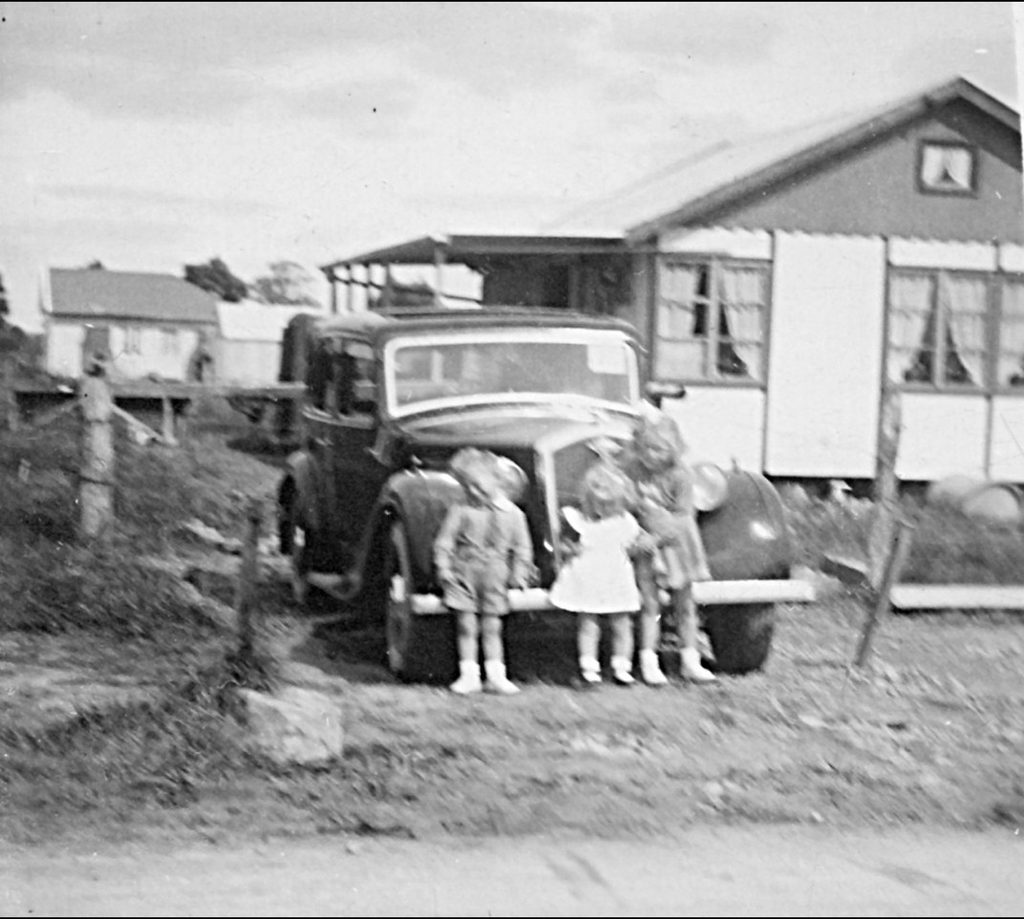
Cornelis also shipped a Wolseley motor car, carefully packing the house’s windows inside it for safekeeping during the voyage.
The families’ cooperation illustrates the practical ingenuity and mutual support that characterised Dutch post-war migration. Their longstanding friendship, which began in Bergen, continued throughout their lives in Australia.
The Visser family’s migration and settlement are documented separately in the DACC article From Bergen to Yarragon – The Visser family’s migration to Australia in 1951.
A difficult beginning in Yarragon
The family initially settled in Yarragon, a small town in Victoria.
Their early months were marked by difficulties. The shipment of their possessions was delayed by customs procedures, and the family had to adapt to unfamiliar conditions and a cold Victorian winter.
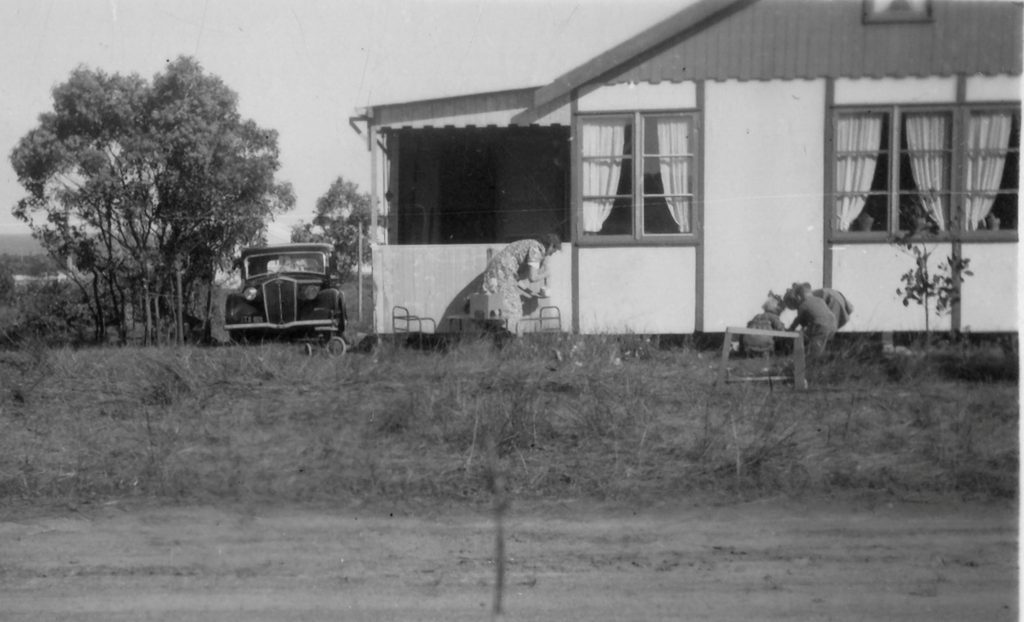
Cornelis eventually assembled the prefabricated house, but the Wolseley remained held up in customs for several months. Consequently, the family spent part of its first winter in a house without windows.
This detail, recalled by Peter, illustrates the practical difficulties of establishing a new home in Australia.
Cornelis found work as a motor mechanic, but the family’s circumstances encouraged them to consider other places to settle.
Moving the house to Torquay
In 1952, the Koopmans moved to Torquay, then a small seaside settlement near Geelong.
This time, the house was split into two halves and loaded onto two semi-trailers for transportation, a hair-raising journey through Melbourne traffic involving multiple flat tyres.
The family gradually improved the house, adding facilities and extra accommodation as their circumstances permitted.
In 1952, they also constructed a smaller building on their property, enabling them to rent the main house to summer holidaymakers. Their accommodation sometimes provided temporary lodging for Dutch friends, relatives and newly arrived migrants.
Hard work and family life
Cornelis undertook a variety of occupations to support the family. His work included mechanical repairs, refrigeration, transport and cartage, employment with the Geelong Harbour Trust and the Country Roads Board, and operating a sand, loam and gravel business.
He also assisted neighbours with building and maintenance work and contributed to the construction of St Therese’s Catholic Church in Torquay.
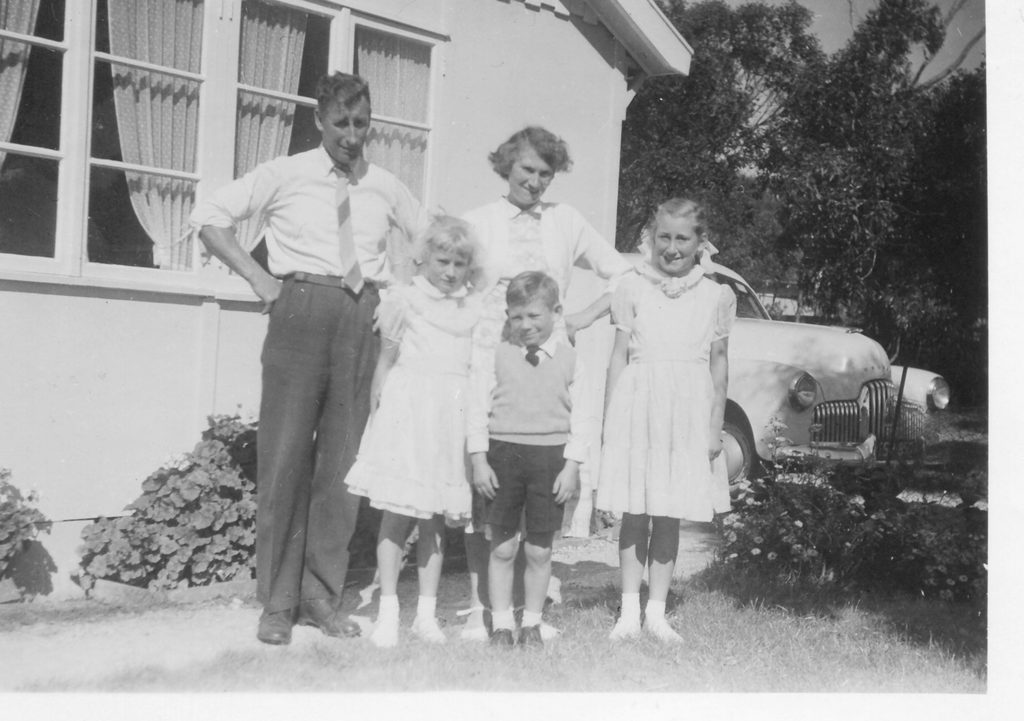
Anna made an equally important contribution. She cultivated vegetables for the household, worked part-time as a cleaner and managed family life under financially demanding circumstances.
The family maintained close friendships with other Dutch migrants in Torquay and the wider Geelong region.
Their youngest son, Peter, who was born in Geelong in 1959, later reflected:
“Those early years were marked by austerity, hard work and determination to succeed. While there were few luxuries as I was growing up, we had everything we needed, thanks to our parents’ extraordinary resourcefulness and drive.”
The family eventually comprised four children: Catharina, Cees, Marianne and Peter.
The next generation
The Koopman children grew up in Australia while retaining connections with their Dutch family background.
Their youngest son, Peter, became an internationally recognised developmental geneticist. His research helped establish the role of the Sry gene in initiating male development in mammals.
He subsequently became Emeritus Professor at the University of Queensland and was elected a Fellow of the Australian Academy of Science.
His career is documented in the DACC article Peter Koopman – From a Dutch Migrant Family in Torquay to a Pioneer of Genetic Research.
Reflecting on his parents’ decision to emigrate, Peter observed:
“What courage they had, packing up their livelihood and heading into the unknown, unable to even speak the language.”
He also credited their Dutch pragmatism and straightforwardness with helping them overcome the obstacles they encountered.
A house that survives
Cornelis died in August 1999, aged 86, and Anna died in 2010, aged 95.
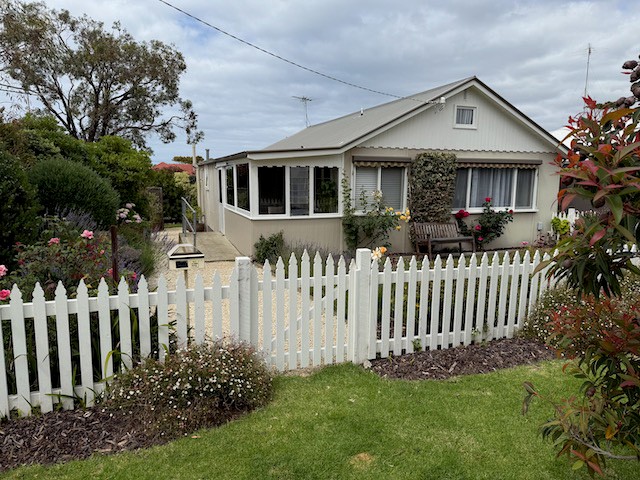
The bungalow constructed in the Netherlands in 1951 still stands in Torquay.
Peter continues to maintain the property, including the roses planted and cared for by his mother.
The house is a tangible reminder of a remarkable migration journey: built in the Netherlands, transported across the world, assembled in rural Victoria, dismantled and moved again, and finally established as the family’s home in Torquay.
It also represents the broader experience of Dutch post-war migrants who brought their skills, determination and practical ingenuity to Australia.
Sources and acknowledgements
- Josie Wepster, “A House from Across the Sea,” originally published in The Turn of the Tide, Torquay (Spring Creek) Community House, 1999; republished in History Matters, Torquay Museum Without Walls, Issue 41, September 2026, pp. 10–14.
- Peter Koopman, family recollections and corrections provided to the Dutch Australian Cultural Centre, October 2026.
- Dutch pioneers of Torquay – From post-war migration to a new life on Victoria’s Surf Coast.
- MS Sibajak – From Netherlands East Indies mail ship to Dutch emigration ship.
The Dutch Australian Cultural Centre acknowledges Josie Wepster and Torquay Museum Without Walls for preserving the family’s early migration history, and Peter Koopman for his additional information and personal recollections.