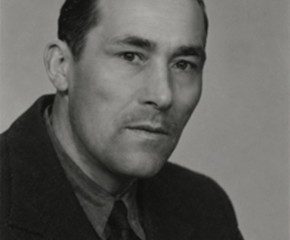
The story of Leendert and Neeltje Visser, their journey aboard the Sibajak, and the Dutch migrant families who established new lives in regional Victoria.
In June 1951, the Visser family arrived in Melbourne aboard the Dutch passenger ship Sibajak. They had left behind their family, friends and familiar surroundings in the Netherlands to begin a new life in Australia.
Leendert Visser, his wife Neeltje (née Kok), and their four children were among the many Dutch families who emigrated during the post-war years. Their story, preserved by their daughter Tini (Visser) Cook, provides a personal account of migration, settlement and the enduring friendships that helped Dutch newcomers establish themselves in Australia.
An especially interesting aspect of their migration was that they brought a prefabricated house from the Netherlands, which they erected in Yarragon, Victoria.
Life in the Netherlands
Leendert Visser was born in Dirkshorn, North Holland, in 1912. He trained as a carpenter and builder, later establishing his own poultry farm.
Neeltje Adrianna Kok was born in 1910 and grew up in Rustenburg, where her family operated a hotel. Leendert and Neeltje married on 30 August 1939, shortly before the outbreak of the Second World War.
The German occupation brought considerable hardship. Leendert became involved in activities that placed him at risk, including transporting goods under German occupation restrictions. A certificate issued in December 1950 on behalf of the Australian Legation in The Hague recognised him as an active resistance worker who had assisted people hiding from the Germans and supported the Allied forces.
The war years, followed by the difficult economic circumstances of post-war Europe, contributed to the family’s decision to emigrate.
A new beginning in Australia
By 1950, Leendert and Neeltje had decided that Australia offered better opportunities for their children.
Their decision was not an easy one. Emigration at that time often meant permanent separation from parents, siblings and friends. International travel was expensive, and the prospect of returning to the Netherlands was uncertain.
The family prepared carefully for their migration. Leendert, an experienced builder, constructed a prefabricated house in Bergen, working alongside his friend Cornelis Koopman, who was building a similar house for his own family. In an ingenious arrangement, Leendert used the floorboards of his house to construct one enormous wooden crate, or kist, containing the prefabricated house and virtually all the family’s possessions, including furniture, crockery, clothing and bedding. As Tini later described it, this was a complete household packed for shipment to Australia – a flat-pack home long before IKEA became a household name.
Both families travelled aboard the Sibajak in 1951 and subsequently reassembled their houses in Yarragon, Victoria.
On 9 May 1951, the family departed aboard the Sibajak, arriving in Melbourne on 14 June after a voyage of approximately five weeks. See: A voyage to a new life – Firsthand accounts of the Sibajak in 1951
The ship carried hundreds of migrants, including other Dutch families beginning new lives in Australia.
The journey aboard the Sibajak
Tini Cook’s family history includes several firsthand accounts of the voyage, providing insights into everyday life aboard a migrant ship in 1951.
Passengers described shared dining rooms, children’s activities, entertainment, stops at ports along the journey and the experience of travelling through unfamiliar climates.
The journey was also an emotional transition. Families had left behind relatives whom they might never see again, while looking forward to the possibilities of a new country.
Among the passengers were members of the Koopman family, whose friendship with the Vissers had begun in the Netherlands and continued after their arrival in Australia.
The families’ shared experiences helped sustain their relationships during the difficult early years of settlement.
Establishing a home in Yarragon
After arriving in Melbourne, the Visser family eventually settled in Yarragon, in Victoria’s Gippsland region.
Their Dutch house had been shipped in sections, but establishing their home was far from straightforward. The family initially lived in temporary accommodation while the building materials were transported and the house assembled.
Leendert’s building experience proved invaluable. He erected the house and subsequently found work in the building industry.
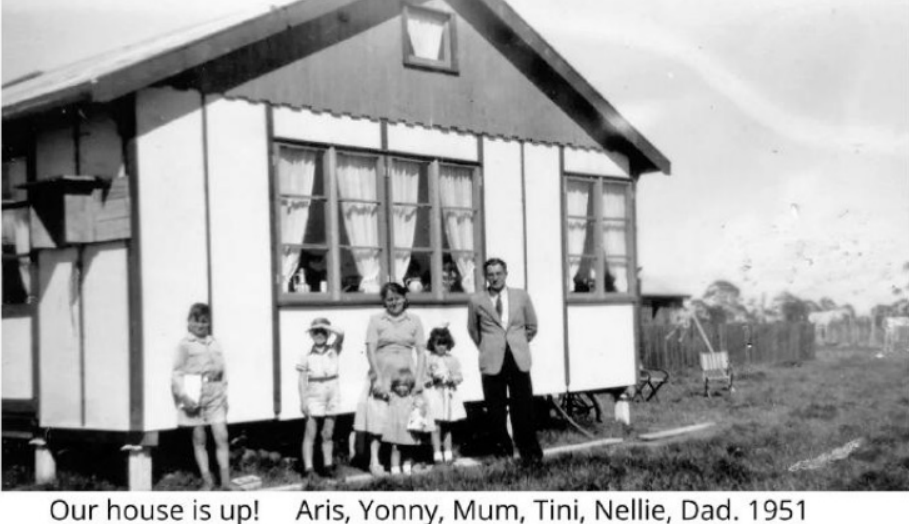
The family lived initially in relatively isolated circumstances, with limited facilities and few of the conveniences they had known in the Netherlands.
The children began attending local schools, while Neeltje adapted to the challenges of managing a household in an unfamiliar country.
Language presented another obstacle. Although the family spoke Dutch at home, the children gradually became fluent in English, while their parents worked to develop their language skills.
The family history describes both the difficulties of adjustment and the determination with which the newcomers approached their new lives.
Dutch friendships and community life
An important feature of Dutch migration to regional Victoria was the informal network of families who helped one another.
The Visser and Koopman families had known each other in Bergen before emigrating. Their friendship continued in Australia, where they shared experiences, visited one another and maintained close family connections.
Other Dutch families also settled in Yarragon and surrounding districts. These relationships provided practical assistance and opportunities to maintain familiar customs and language.
The Vissers also maintained connections with Dutch families in Torquay, where they spent summer holidays.
Over time, many Dutch families moved elsewhere, and some eventually returned to the Netherlands. The Visser family, however, retained its connection with Yarragon.
Tini Cook, who was not yet two years old when she arrived in Australia, has continued to live in the town.
Building a life in Australia
Leendert established himself as a builder, contributing to housing construction in the district. His work and practical skills helped the family achieve greater financial independence.
The family subsequently moved to Darnum for a period, where Leendert operated a service station and motor-related business, before returning to Yarragon.
Like many Dutch migrants, Leendert and Neeltje gradually combined elements of their Dutch heritage with their Australian way of life.
They maintained contact with relatives in the Netherlands and eventually made a return visit in 1965, fourteen years after emigrating.
By then, Australia had become their home.
The Visser family history – A record of Dutch migration
In 2021, Tini (Visser) Cook compiled a 134-page illustrated family history entitled Visser Family History – Oma & Opa’s Life, documenting the lives of her parents, Leendert and Neeltje Visser, and their family’s experiences across two continents.
The book traces the family’s origins in North Holland, their lives before and during the Second World War, and the circumstances that led them to leave the Netherlands in 1951. It includes accounts of Leendert’s wartime experiences and involvement in resistance activities, as well as the difficult decision to leave relatives and familiar surroundings behind.
Particularly valuable are the firsthand recollections of the voyage aboard the Sibajak, including contributions from other passengers. These provide a picture of everyday life aboard a Dutch migrant ship, from accommodation and meals to children’s activities and the emotional experience of leaving Europe.
The Australian chapters describe the challenges of establishing a home in Yarragon, rebuilding the prefabricated Dutch house, learning English, finding employment and adapting to life in rural Victoria. They also document the friendships and informal support networks that developed among Dutch migrant families, particularly the longstanding relationship between the Visser and Koopman families.
The family history is illustrated with photographs, correspondence and other historical documents, providing a personal perspective on the wider story of post-war Dutch migration to Australia.
The book was compiled primarily for the Visser family’s descendants and remains a private family publication. This DACC article has been prepared with Tini Cook’s permission, drawing on selected historical material from her research.
The Dutch Australian Cultural Centre thanks Tini Cook for sharing her family’s history and contributing to the preservation of Dutch-Australian migrant heritage.
Source and acknowledgement
This article is based on Visser Family History – Oma & Opa’s Life, compiled by Tini (Visser) Cook in December 2021.
The Dutch Australian Cultural Centre thanks Tini Cook for sharing her family’s history and preserving this material for future generations.
The article also connects with the DACC’s research into Dutch settlement in Torquay and regional Victoria, including the history of the Koopman family.