Wil Hamers, Party Apple and the Dutch Catalina intelligence missions
On 13 January 1945, a Dutch Catalina flying boat approached an isolated stretch of the east coast of Japanese-occupied Borneo.
On board were eight NEFIS intelligence agents — four Dutch and four Indonesian servicemen — together with two rubber boats, radios, weapons and supplies packed into sealed petroleum tins.
Their destination was a point about 90 kilometres south of Tarakan, the strategically important oil-producing island off the north-east coast of Borneo in the Netherlands East Indies.
Their mission was to gather intelligence about Japanese forces and possible landing areas ahead of the planned Allied invasion of Tarakan.
At the controls was Dutch naval aviator Wil Hamers. The intelligence party had come from Cairns, where NEFIS III operated its secret training centre at the Z Experimental Station. Behind them lay the wider Dutch military and intelligence organisation operating from Australia, including the NEFIS headquarters at Camp Columbia in Brisbane.
Ahead lay Japanese-occupied territory.
The operation provides a remarkable glimpse of how the Dutch secret war from Australia was actually fought.
Wil Hamers – from merchant shipping to naval aviation
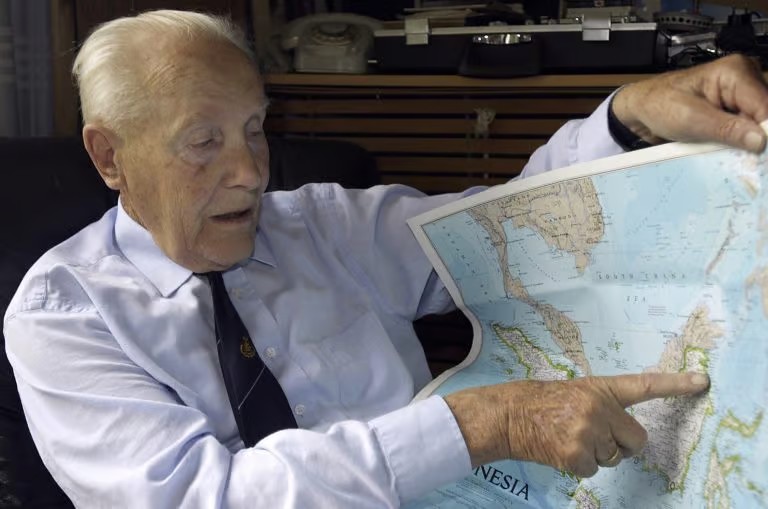
Wil Hamers was born in 1912 and trained at the nautical college on Texel before joining the Stoomvaart-Maatschappij Nederland. His first voyage took him to Batavia in the Netherlands East Indies.
During the war he became a pilot-observer with the Marine Luchtvaart Dienst (MLD), the Royal Netherlands Navy’s air service.
By 1944, after extensive operational flying in the Southwest Pacific Area, Hamers was flying clandestine missions for NEFIS III, the Secret Intelligence and Special Operations component of the Netherlands Forces Intelligence Service.
Hamers later recalled these experiences in an interview preserved in the Interview Collection Dutch Veterans of the Netherlands Veterans Institute. His recollections provide a rare first-hand account of what it was like to fly NEFIS agents from Australia into enemy territory.
NEFIS III and the secret war
The Netherlands Forces Intelligence Service had been developed in Australia following the Japanese conquest of the Netherlands East Indies in early 1942.
Within the organisation, NEFIS III became responsible for Secret Intelligence and Special Operations. Its task included preparing and inserting intelligence parties into Japanese-occupied territory, maintaining contact with them where possible and recovering personnel after their missions.
The task was formidable.
Unlike some European resistance organisations, the Dutch administration in the Netherlands East Indies had not been able to leave behind a substantial organised intelligence network before the Japanese occupation. Parties sent back from Australia therefore had to establish contacts, gather information and communicate with Allied headquarters while operating inside an enormous occupied archipelago.
Early operations were particularly costly. Parties inserted during the NEI Section period and subsequently under NEFIS responsibility suffered capture, disappearance and death. Japanese counter-intelligence was effective, while Dutch planners also had to contend with changing political and social conditions inside occupied Indonesia.
Experience from these failures contributed to improvements in training, equipment, communications and operational methods. NEFIS increasingly recognised the importance of regional knowledge, language skills and personnel familiar with the communities in which intelligence parties were expected to operate.
By 1944–45, improved Allied control of the seas and air also created new possibilities. Submarines remained important, but long-range Catalina flying boats could now be used for some clandestine insertions and extractions.
Wil Hamers became part of this later phase of NEFIS III operations.
The secret school at Cairns
An important part of the NEFIS III operational system was the Z Experimental Station at Mooroobool near Cairns.
Originally established in 1942 as an Allied special-operations training, communications and staging establishment, ZES had included Dutch and Indonesian personnel from its earliest period. Following the reorganisation of Allied clandestine organisations in 1943, the Cairns facility became increasingly associated with NEFIS III.
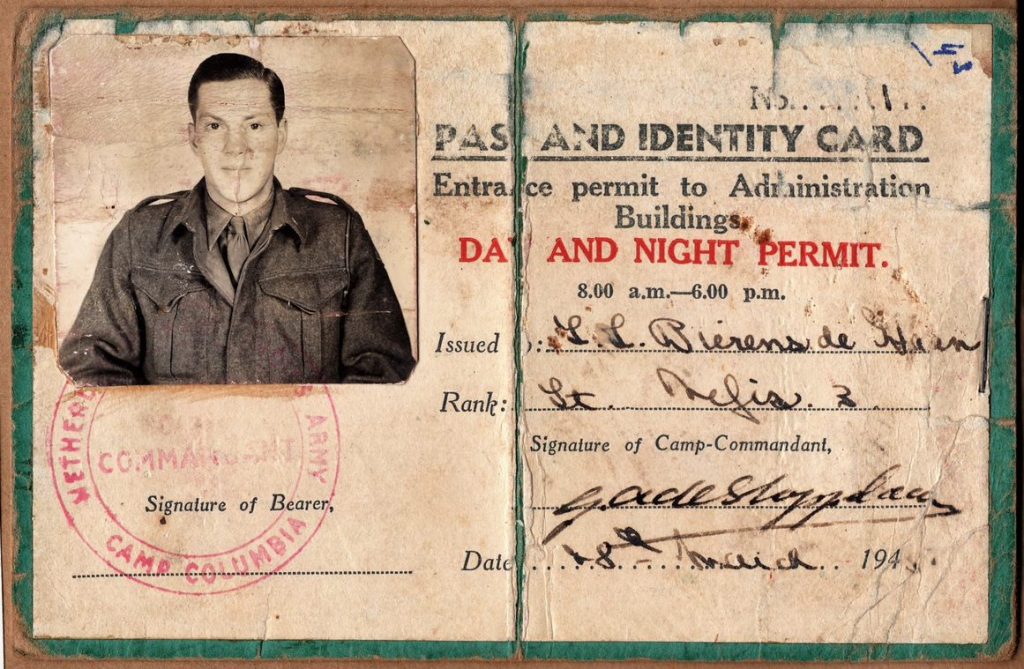
By February 1944, Major Frits Mollinger headed the intelligence training school at Cairns, with Lou Bierens de Haan serving as his second-in-command. Dutch and Indonesian personnel were trained and prepared there for clandestine operations in Japanese-occupied territory.
Later that year another remarkable Dutch officer became closely associated with the school: Captain Jean Victor de Bruijn
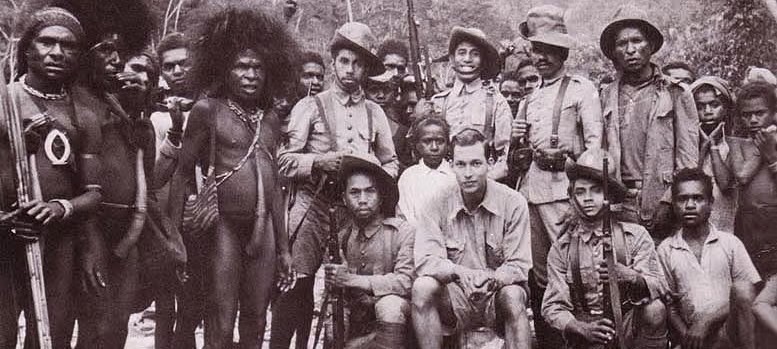
Before the war, Jean Victor de Bruijn had served as a government official in Dutch New Guinea. Following the Japanese advance, he remained in the interior around the Wissel Lakes, living among local Papuan communities and maintaining contact with the Allies. His experience gave him first-hand knowledge of survival, intelligence gathering and relations with local communities under wartime conditions.
In July 1944, NEFIS sent a Catalina to the Wissel Lakes to extract De Bruijn and bring him to Australia. According to Wil Hamers’ account preserved by the Netherlands Veterans Institute, De Bruijn was brought out so that he could take charge of the NEFIS III training centre at Cairns. By the period in which Hamers was flying clandestine missions for NEFIS III, De Bruijn was heading the centre.
His appointment brought valuable recent operational experience into the training system. Earlier intelligence missions had demonstrated how difficult it was to prepare agents in Australia for the very different geographical, social and political conditions they would encounter inside the Netherlands East Indies. De Bruijn had himself spent an extended period operating in isolated territory under Japanese occupation.
The changing leadership at Cairns also illustrates how rapidly NEFIS III was developing during 1944. The training centre drew upon personnel with different backgrounds and experience as the organisation attempted to improve the preparation of agents being sent back into occupied territory.
Catalinas become part of the intelligence system
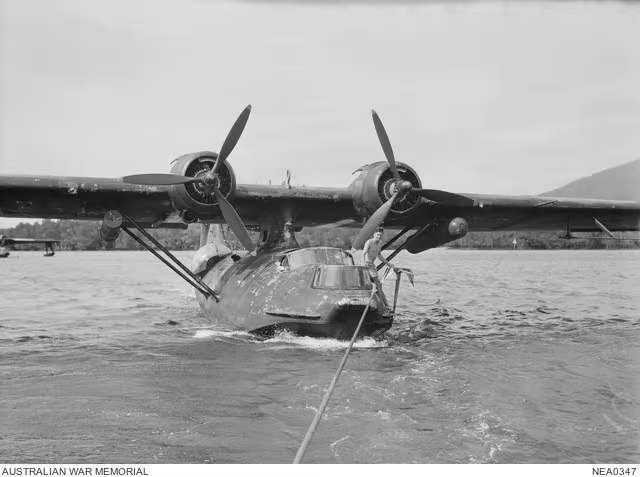
Dutch naval aviation provided NEFIS III with an important means of inserting and retrieving intelligence parties.
The Catalina flying boat was particularly suited to some of these clandestine operations. Its long range and ability to operate from water allowed it to reach remote coastal areas where conventional aircraft could not land.
Wil Hamers was transferred during 1944 to a Marine Luchtvaart Dienst detachment in Australia that flew secret missions for NEFIS III. He later recalled operating with two Catalinas, one amphibious and one conventional flying boat.
For suitable missions, intelligence parties could be flown from Australia towards their operational area and put ashore by rubber boat. Hamers described flying close to the coast, helping the agents and their equipment into rubber boats and watching them paddle towards the shore before disappearing into enemy-held territory.
The aircrew’s responsibility did not necessarily end with the landing. Hamers recalled maintaining radio contact long enough to establish that a party had apparently reached safety before returning to base.
If the operation went according to plan, the Catalina would return at an agreed time to recover the agents.
There was no guarantee that anyone would be waiting.
The use of Catalinas therefore represented more than transport. Dutch naval aircraft and crews became part of the operational system linking NEFIS headquarters, the Cairns training establishment and small intelligence parties working inside Japanese-occupied territory.
Party APPLE
One of Hamers’ best-documented NEFIS III missions was Party APPLE, inserted on the east coast of Borneo in January 1945.
The operation was connected with Allied preparations for the return to Tarakan, the strategically important oil-producing island off north-eastern Borneo. APPLE was to gather information about Japanese forces, possible approaches and landing areas, and conditions in the region before the planned Allied invasion.
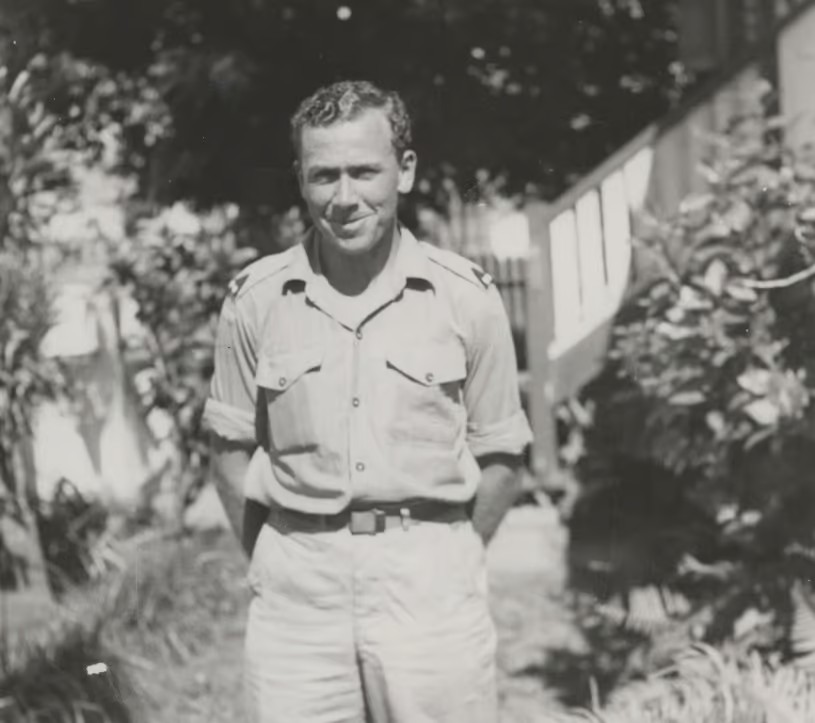
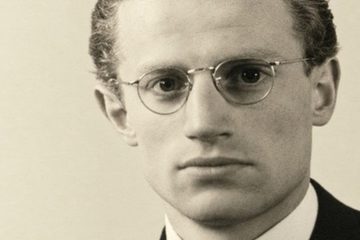
The party consisted of eight men: four Dutch and four Indonesian servicemen. Its commander was Lieutenant Oscar Drijber.
Drijber had followed an extraordinary route to Australia.
He was a professional Dutch Army officer who had fought against the German invasion of the Netherlands in May 1940. After the Dutch capitulation, he refused to sign the declaration of honour under which Dutch officers promised not to take further action against Germany and was consequently held as a prisoner of war.
In September 1941 he escaped from the German prisoner-of-war camp at Colditz and eventually reached Britain through Switzerland. There he received commando training before later volunteering for intelligence work and travelling to Australia.
Drijber was undoubtedly courageous and militarily experienced, but Hamers questioned his suitability to command an intelligence party in Borneo.
He had never lived in the Netherlands East Indies and spoke little Malay. For an operation whose success depended partly upon establishing relationships with local communities, this was a significant disadvantage.
Hamers’ criticism illustrates one of the persistent problems confronting Dutch intelligence planners in Australia: finding volunteers who combined military ability and courage with language skills, regional knowledge and an understanding of the diverse communities among whom they would have to operate.
Four Dutch and four Indonesian servicemen
The composition of Party APPLE is particularly significant.
This reflected the practical reality of NEFIS operations. Dutch intelligence depended heavily upon Indonesian and other locally knowledgeable personnel who possessed the languages, cultural understanding and geographical experience European operatives often lacked.
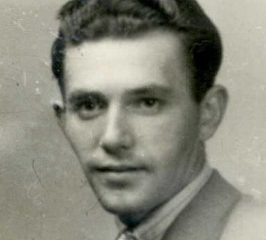
One of the Party Apple members was telegraphist W.F. Schenau, responsible for establishing radio contact once the party was ashore.
The eight men represented in miniature the multinational character of the intelligence organisation being operated from Australia.
Landing on Borneo
On 12 January 1945, Hamers flew a reconnaissance of the proposed landing area on the east coast of Borneo, south of Tarakan. A specialist reconstruction of Dutch wartime radio operations identifies the area as near Cape Tandjoengselor.
The original location was considered unsuitable. The following day, 13 January, Party APPLE was landed approximately 20 kilometres farther north, at a position closer to Tarakan. The landing point was still about 90 kilometres south of the island that was the principal target of the party’s intelligence mission.
Hamers’ Catalina carried the eight men from Cairns together with two rubber boats, radio equipment, weapons and supplies. Once close to the coast, the party transferred to the rubber boats and made its way ashore.
Their difficulties began almost immediately.
Equipment problems
The party’s supplies had been packed into sealed petroleum tins, a method traditionally used by KNIL patrols in the Netherlands East Indies.
For a clandestine party of only eight men, however, the system proved cumbersome. There were no porters to carry the equipment, and the contents of the tins were not always clearly identifiable without opening them.
Hamers recalled Drijber’s frustration at discovering how some of the supplies had been packed. In his subsequent report, Drijber complained sarcastically about items such as soap being packed together with biscuits.
The episode was more than an inconvenience. An intelligence party operating behind enemy lines depended upon equipment that was portable, reliable and immediately usable.
The most serious problem involved communications.
Telegraphist W. F. Schenau was responsible for establishing radio contact after the party went ashore. According to a specialist reconstruction of the Dutch wartime radio network, APPLE carried both an ATR4A set and a Dutch NEI field radio, but Schenau was unable to establish contact with the forward communications station at Morotai.
Allied forces had captured Morotai in September 1944 and developed it into a major forward base, placing NEFIS communications much closer to operations in the Japanese-occupied Netherlands East Indies than the earlier Australian bases.
The failure did not appear to result simply from an inexperienced operator. Schenau was an experienced telegraphist, and subsequent testing at Morotai indicated that the equipment was largely functional, although a problem was found with the pedal-generator operation of the NEI set.
Whatever the precise cause, Party APPLE was unable to establish the radio link upon which its original operational plan depended.
That significantly restricted what the party could achieve during its time ashore.
Limited local cooperation
Party APPLE’s mission depended partly upon obtaining information from people living in the area.
Drijber made contact with the head of a nearby inhabited kampong whose residents included Bugis people originating from Celebes. He soon concluded that they were unwilling to cooperate. Attempts to obtain assistance from other local inhabitants were similarly unsuccessful.
For NEFIS planners, this presented a fundamental problem.
Clandestine intelligence operations depended not simply upon radios, weapons and trained agents but upon human relationships. Local people could provide information about Japanese forces, guides, food, shelter and knowledge of routes through unfamiliar territory. Without that cooperation, a small intelligence party’s effectiveness was severely restricted.
The experience also occurred against a changing political background. By 1945, Dutch intelligence officers could not automatically assume that communities in the Netherlands East Indies would welcome representatives of the returning colonial administration.
Party APPLE alone cannot tell us why particular individuals declined to cooperate. Fear of Japanese reprisals, uncertainty about the military situation, local circumstances and changing political attitudes could all have influenced their decisions.
For Drijber and his men, however, the immediate consequence was clear: they had to operate with little local support and without a functioning radio link.
Eleven days behind enemy lines
Despite these difficulties, Party APPLE remained ashore for eleven days.
The mission achieved only part of its objectives, but the party gathered useful information, including intelligence concerning Japanese strength on Tarakan.
On 24 January 1945, Hamers returned with the Catalina to extract the party.
For the aircrew, successfully finding all eight men alive after eleven days inside enemy-held territory was an enormous relief. Hamers remembered sending his sergeant-pilot ashore in a rubber boat carrying a particularly welcome item for the exhausted agents: a bottle of cold beer.
All eight men were recovered and flown to Morotai.
The outcome illustrates the mixed character of the operation. APPLE had failed to establish its planned radio communications and had obtained little local cooperation, limiting what it could achieve. Nevertheless, the entire party survived eleven days in Japanese-occupied territory, gathered intelligence and was successfully extracted.
From Borneo to Allied intelligence
The mission did not end when the Catalina left the Borneo coast.
At Morotai, Party APPLE was debriefed and the information it had gathered entered the wider Allied intelligence system.
The men were questioned by intelligence personnel and reported what they had discovered about Tarakan and conditions in the area.
One incident again illustrates the multinational and sometimes confusing character of the Allied war.
An Indonesian member of Party Apple, suffering from malaria, collapsed near the beach after leaving the aircraft. He was subsequently detained because Allied personnel mistook him for a Japanese infiltrator.
He was eventually brought into the intelligence debriefing before the misunderstanding was resolved.
The episode is almost comic, but it also illustrates how Indonesian personnel serving within Dutch intelligence could be perceived by Allied servicemen unfamiliar with their role.
The Allies return to Tarakan
A little more than three months later, on 1 May 1945, the Allied assault on Tarakan began.
The main assault force was Australia’s 26th Infantry Brigade, accompanied by a KNIL company and Dutch and Netherlands East Indies personnel involved in intelligence and civil-affairs activities as Allied forces returned to Netherlands East Indies territory.
Party Apple’s intelligence had been gathered as part of the preparation for this return.
The mission itself was modest. It did not determine the outcome of the Battle of Tarakan, and its difficulties demonstrate the limitations under which NEFIS parties operated.
But that is precisely what makes the story valuable.
It shows how intelligence was actually gathered: by small groups of volunteers being landed on isolated beaches, attempting to establish contact with local communities, struggling with radios and equipment, and trying to survive long enough to report what they had learned.
From Australia into the secret war
Wil Hamers later regarded his period flying for NEFIS III in 1944 and early 1945 as one of the most interesting parts of his wartime service.
Party APPLE brings together many elements of the Dutch intelligence system operating from Australia. Dutch and Indonesian personnel served together in clandestine parties. Agents were prepared through facilities such as Z Experimental Station at Cairns. The Marine Luchtvaart Dienst supplied aircraft and crews capable of inserting and retrieving them. NEFIS coordinated intelligence operations, while forward bases such as Morotai brought communications and operational support closer to Japanese-held territory.
The mission also exposes the limitations of that system. Equipment was not always well adapted to clandestine operations, radio communications could fail, personnel with the necessary combination of military skills, languages and regional knowledge were difficult to find, and cooperation from local communities could never simply be assumed.
Yet Party APPLE also demonstrated what the system could achieve. Eight Dutch and Indonesian servicemen were inserted into Japanese-occupied Borneo, remained ashore for eleven days, gathered intelligence and were successfully recovered.
The operation did not determine the outcome of the subsequent Battle of Tarakan. Its importance lies elsewhere. It provides an unusually detailed example of how Dutch intelligence operations from Australia actually worked at ground level — from training and planning to aircraft, radios, local contacts, intelligence gathering and extraction.
Behind the major Allied campaigns were small operations such as APPLE, involving Dutch aircrew, Dutch and Indonesian intelligence personnel, Australian bases and the wider Allied military system.
Their story forms another important chapter in the shared wartime history of Australia, the Netherlands and Indonesia.
Paul Budde August 2026
Sources and further reading
- Nederlands Veteraneninstituut, Vliegboten en geheime agenten in de Indische Archipel. Based on an interview with Marine Luchtvaart Dienst pilot-observer Wil Hamers. Particularly valuable for Hamers’ first-hand account of NEFIS III, the Cairns training centre, Jean Victor de Bruijn, and the insertion and recovery of Party APPLE.
- Nationaal Archief, NEFIS/CMI archive 2.10.62. Extensive primary records concerning NEFIS intelligence and special operations. Inventory no. 318 relates specifically to Party APPLE, 1945.
- Nationaal Archief, Collectie archieven Strijdkrachten in Nederlands-Indië, 2.13.132. Contains records concerning intelligence parties sent into occupied Netherlands East Indies territory, including APPLE material from 1944–45.
- Australian War Memorial, Allies in Adversity – Netherlands Forces Intelligence Service (NEFIS). Useful overview of the establishment and development of NEFIS in Australia and the reconnaissance parties sent into Japanese-occupied territory.
- Luisterpost Gorinchem, Activities Dutch secret services and the use of radio from Australia and Ceylon in WWII. Specialist research on Dutch wartime intelligence communications. Particularly useful for the radio equipment carried by Party APPLE, telegraphist W. F. Schenau and the party’s attempted communications with Morotai.
- Dr Jonathan (Jack) Ford – Allies in a Bind: Australia and the Netherlands East Indies in the Second World War
DACC Research Portal – Dutch and Indonesian Intelligence and Special Operations from Australia during WWII.Links to the wider DACC research collection on NEFIS, the NEI Section, intelligence organisations, training, clandestine operations and the personal stories of Dutch and Indonesian participants.