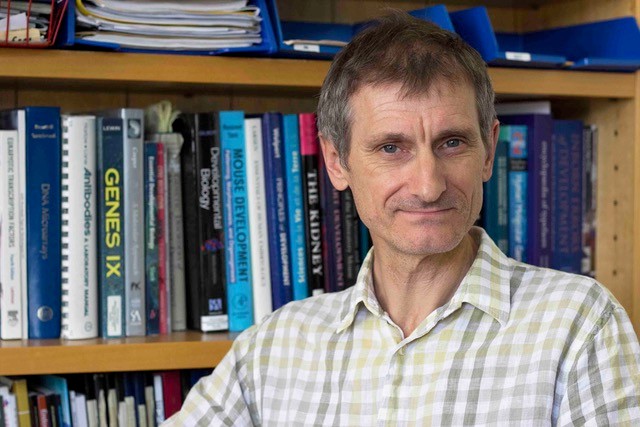
Emeritus Professor Peter Koopman is one of Australia’s internationally recognised developmental geneticists. His research identified the gene on the Y chromosome responsible for initiating male development, a discovery regarded as one of the major breakthroughs in twentieth-century molecular genetics.
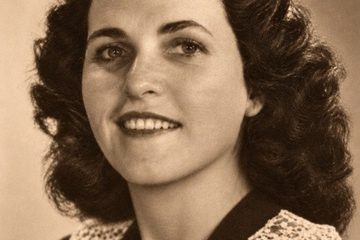
Behind his scientific achievements lies a remarkable Dutch-Australian family story. Born in Geelong in 1959 and raised in Torquay, Victoria, Peter was the youngest child of Dutch migrants Cornelis and Anna Koopman, who had arrived in Australia in 1951.
His career illustrates how the opportunities created by post-war migration could extend across generations, connecting the experiences of Dutch families rebuilding their lives in Australia with achievements in science, education and international research.
A Dutch family establishes itself in Torquay
Peter’s parents, Cornelis and Anna Koopman, married in the Netherlands in 1943. Like many Dutch families after the Second World War, they faced difficult economic circumstances and wanted to provide better opportunities for their children.
In June 1951, they travelled to Australia aboard the Sibajak with their three young children, Catharina, Cees, and Marianne.
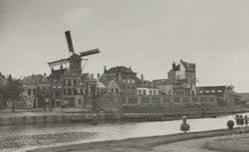
Their migration was unusual because Cornelis had built a house in his back yard in Bergen, the Netherlands, specifically with a plan that it would be dismantled, flat-packed and shipped to Australia, together with a Wolseley motor car.
After initially settling in Yarragon, Victoria, the family moved to Torquay in 1952. Cornelis rebuilt their house a few blocks from the beach, where the family established itself in the small but growing coastal community.
Cornelis worked in several occupations, including mechanical repairs and cartage. Anna grew all the family’s vegetables, worked part time as a cleaner, and maintained the family home. According to Peter, “Those early years were marked by austerity, hard work and determination to succeed. While there were few luxuries as I was growing up, we had everything we needed, thanks to our parents’ extraordinary resourcefulness and drive”.
Together, they built strong friendships with other Dutch migrants in the region.
While the family retained connections with its Dutch heritage, they also contributed to Torquay’s development. Cornelis assisted neighbours with practical building and maintenance work and participated in constructing the local Catholic church.
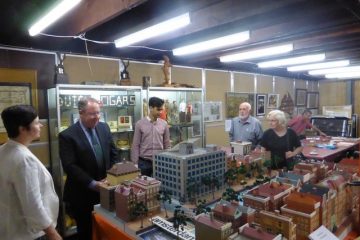
The family’s experiences were recorded in an interview conducted by fellow Dutch migrant Josie Wepster and published in The Turn of the Tide in 1999. The account was republished in History Matters, the magazine of Torquay Museum Without Walls, in September 2026.
The wider family story is documented in the DACC article Dutch Pioneers of Torquay – From Post-War Migration to a New Life on Victoria’s Surf Coast.
From Torquay to university and beyond
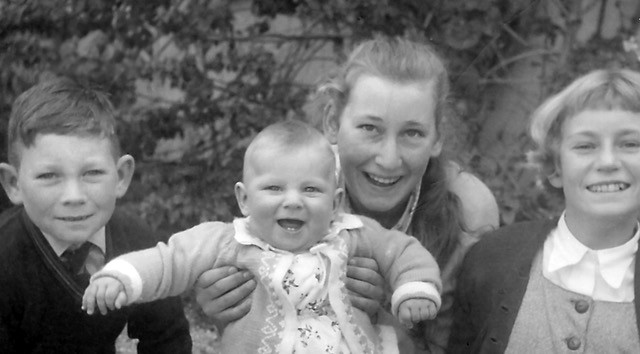
Eight years after Cornelis and Anna had arrived in Australia, Peter was born in Geelong.
He grew up in Torquay and attended Oberon High School in Geelong, where he was school captain.
He continued his education at the University of Melbourne, studying biochemistry, genetics and botany. He completed a Bachelor of Science, followed by honours studies in genetics.
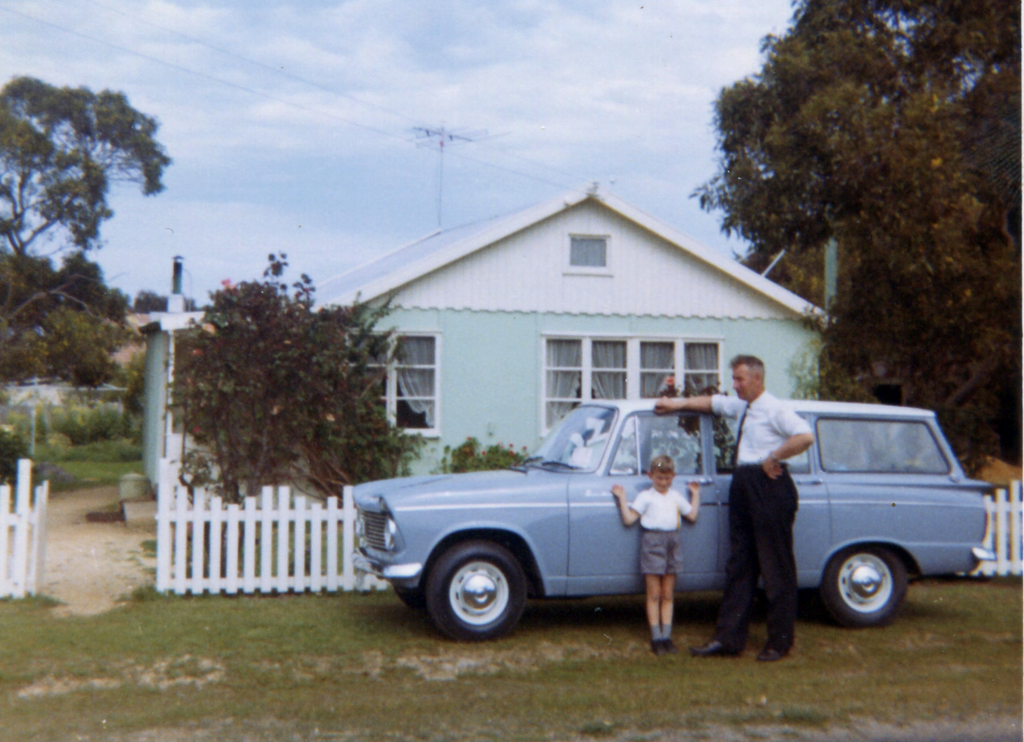
An interest in Dutch language and culture is a particularly noteworthy aspect of Peter’s Dutch-Australian background. In 1980, he spent three months living and working in the Netherlands and tracing his family’s roots. On returning to Australia, Peter also studied Dutch language and literature, completing a Bachelor of Arts in 1985.
In 1986, he received his PhD from the University of Melbourne for research into stem-cell differentiation. His doctoral work examined how cells acquire specialised functions during development, an area that would become central to his subsequent scientific career.
After completing his doctorate, Peter moved to London to undertake postdoctoral research with the United Kingdom’s Medical Research Council, working with the distinguished developmental biologist Dame Anne McLaren, to investigate mammalian embryo development.
He subsequently joined the laboratory of Robin Lovell-Badge at the National Institute for Medical Research, where he became involved in research that would lead to an internationally significant discovery.
Discovering the gene that initiates male development
For decades, scientists had known that the Y chromosome played a central role in determining whether a mammalian embryo developed testes and became male, but the precise genetic mechanism remained uncertain.
During the late 1980s, Peter was part of an international research effort to solve this mystery.
In July 1990, he and his colleagues published a landmark paper in the scientific journal Nature, identifying a gene in mice that appeared to have a role in causing maleness.
The decisive experimental confirmation followed in May 1991. In a paper with Peter as first author, the research team demonstrated that introducing the Sry gene into chromosomally female mouse embryos could initiate testis development and produce male characteristics.
This experiment proved that Sry was the gene responsible for initiating testis determination in mammals, finally providing an answer to how sex is determined in the embryo.
This work also opened new avenues for research into embryonic development, reproductive biology and differences of sex development.
It was a landmark scientific discovery that cemented Peter’s international scientific reputation.
“I think if you work hard enough for long enough, and keep believing in your goals, then success will eventually come. I was lucky this is how it worked out for me”, says Peter of his breakthrough research.
Building a research career in Australia
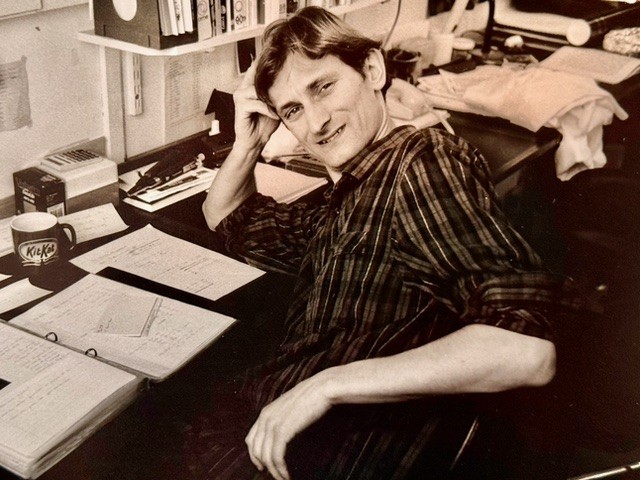
In 1992, Peter returned to Australia to establish a research group at the University of Queensland in Brisbane.
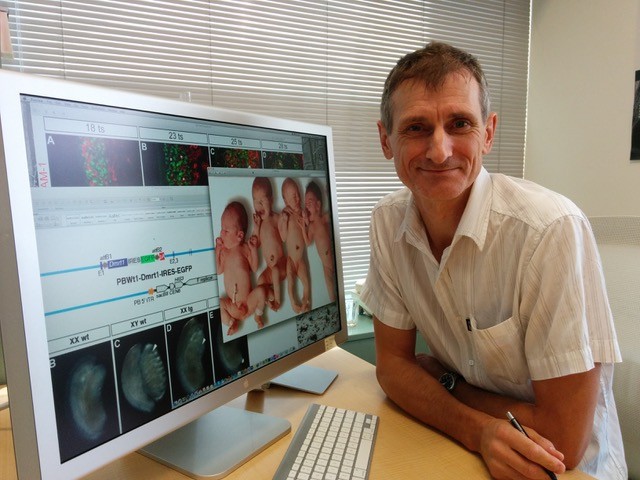
His research expanded from the initial discovery of Sry to the wider genetic networks responsible for controlling embryonic development.
He and his colleagues discovered genes that regulate the development of several important organs and tissues, including the skeleton and the lymphatic vessel network. These discoveries have not only shed light on the mysteries of embryo development but also provided explanations for some of the causes of genetic disease in babies.
The findings served as a springboard for further research aimed at understanding how fertility is regulated, how gonadal cancers form and could potentially be treated, and how environmental pest species such as cane toads might be genetically controlled.
National and international recognition
Peter’s achievements have received extensive recognition, earning him national and international research awards, medals and prizes. He has won the most prestigious Fellowships of the Australian Research Council and the National Health and Medical Research Council of Australia.
In 2008, he was elected a Fellow of the Australian Academy of Science, one of the country’s highest scientific honours.
Peter is listed in Who’s Who in Australia and has a Wikipedia page.
Peter has helped train the next generations of scientists, having mentored over 70 students and postdoctoral researchers in his laboratory. He has given nearly 300 invited presentations at international research institutions and conferences. He has edited scientific journals and contributed to research leadership and governance through executive roles on scientific committees in Australia and overseas.
Peter’s scientific output has included more than 300 research publications, and his work has attracted approximately $56 million in competitive research funding.
He also served as the University of Queensland’s inaugural Executive Director of Research Ethics and Integrity, reflecting his wider commitment to scientific standards and responsible research.
In 2024, the Australian Academy of Science awarded him the Suzanne Cory Medal in recognition of his outstanding career in molecular genetics.
A Dutch-Australian contribution to international science
Peter Koopman’s career represents an important example of the achievements of the second generation of Dutch migrants in Australia.
His parents arrived in the early post-war years, bringing with them their family, practical skills and determination to establish a better life.
Their initial years were marked by uncertainty, difficult living conditions and the challenge of adapting to a new country. But they viewed migration as an investment in the opportunities available to their children.
“What courage they had, packing up their livelihood and heading into the unknown, unable to even speak the language”, says Peter now.
In the following decades, all the Koopman children prospered in their adopted home. And Anna and Cornelis’s six grandchildren and ten great-grandchildren also face a bright future in Australia.
“Without a doubt, my parents’ Dutch pragmatism and straightforwardness helped them overcome incredible obstacles and achieve amazing things. I am grateful to have inherited at least some small part of that”, Peter reflects.
The story highlights the importance of commitment, focus, determination and education in the history of Dutch migration, and the lasting contribution of Dutch migrants and their descendants to Australian society.
Postscript
The prefabricated house built in the Netherlands, by Cornelis Koopman in 1951 still stands in Torquay, where Peter does his best to proudly maintain Anna’s magnificent roses.
Sources and further reading
Family history and migration
- Josie Wepster, “A House from Across the Sea,” originally published in The Turn of the Tide, Torquay (Spring Creek) Community House, 1999; republished in History Matters, Torquay Museum Without Walls, Issue 41, September 2026, pp. 10–14.
- Dutch Pioneers of Torquay – From Post-War Migration to a New Life on Victoria’s Surf Coast – Dutch Australian Cultural Centre.
Scientific career and recognition
- Emeritus Professor Peter Koopman – University of Queensland, Institute for Molecular Bioscience.
- Peter Koopman – Australian Academy of Science.
- UQ researchers honoured by Australian Academy of Science, 2024.
- UQ scientists elected to top national body, 2008.
- One big biology question solved, University of Queensland, 2006.
Landmark scientific publications in Nature
- Gubbay, J., Collignon, J., Koopman, P., et al. (1990), “A gene mapping to the sex-determining region of the mouse Y chromosome is a member of a novel family of embryonically expressed genes,” Nature, 346, 245–250.
- Koopman, P., Gubbay, J., Vivian, N., Goodfellow, P. and Lovell-Badge, R. (1991), “Male development of chromosomally female mice transgenic for Sry,” Nature, 351, 117–121.
Acknowledgement
The Dutch Australian Cultural Centre acknowledges Torquay Museum Without Walls and the original interviewer, Josie Wepster, for preserving the migration story of Cornelis and Anna Koopman, providing valuable context for their son’s subsequent scientific achievements.