Following the Second World War, Australia embarked on one of the largest migration programs in its history. Between the late 1940s and the 1960s, thousands of migrants from the Netherlands chose Australia as their new home. While Bonegilla in Victoria is perhaps the best-known migrant reception centre, many Dutch migrants destined for South Australia began their Australian journey at the Woodside Migrant Hostel in the Adelaide Hills.
Woodside was one of Australia’s major post-war migrant reception centres and became South Australia’s principal Commonwealth migrant hostel. For many Dutch families it was their first introduction to Australia—a temporary home where they adjusted to a new language, climate and way of life before moving on to permanent employment and housing.
This article forms part of the Dutch Australian Cultural Centre’s research series Dutch Gateways to Australia, documenting the migrant reception centres and hostels that played an important role in Dutch migration to Australia.
From Army Camp to Migrant Hostel
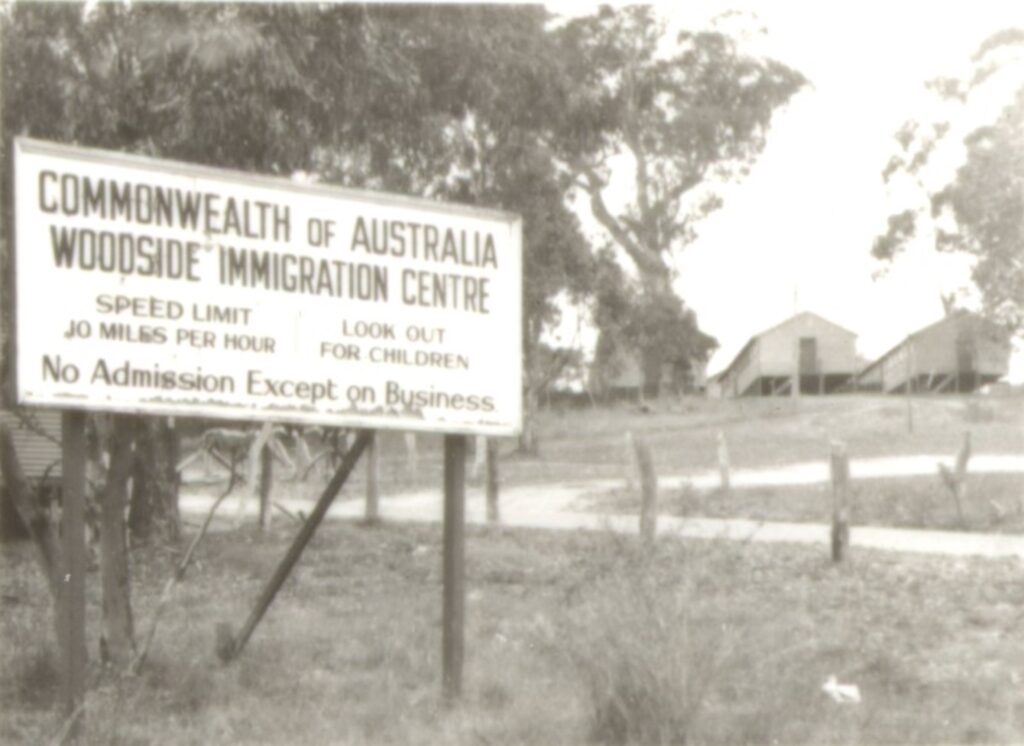
The Woodside Migrant Hostel occupied part of the existing Australian Army camp at Woodside, about 35 kilometres east of Adelaide. In 1949 the Commonwealth Government converted former military barracks into accommodation for newly arrived migrants as Australia’s post-war immigration program gathered momentum. The hostel remained in operation until 1963, after which the buildings were returned to military use.
Over its fourteen years of operation, approximately 26,000 migrants passed through Woodside. Initially the hostel accommodated large numbers of Displaced Persons from war-torn Europe. Following the completion of the Displaced Persons program in the early 1950s, Woodside increasingly received assisted migrants from countries including the Netherlands, Italy and Greece.
A First Home in Australia
Like most migrant hostels of the period, Woodside was never intended as a permanent home. Families generally remained only until employment had been arranged and suitable accommodation became available elsewhere.
Accommodation consisted of converted army barracks. Some buildings remained dormitory-style, while others had been divided into small family rooms. Kitchens, dining rooms, laundries, showers and toilets were shared by all residents. Although the facilities were basic, they represented a fresh start for families who had often experienced years of war, occupation and hardship.
The hostel developed into a small multicultural community. It included a hospital with maternity and children’s wards, a crèche, baby clinic, primary school, recreation hall, cinema, canteen and sporting facilities. English language classes helped migrants prepare for work and everyday life in Australia. Churches and community organisations, including the Red Cross and the Good Neighbour Council, played an important role in assisting new arrivals.
The Dutch at Woodside
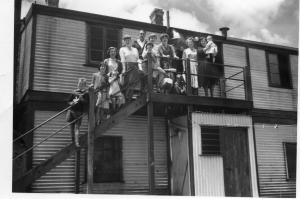
Although the first residents were mainly Displaced Persons from Eastern Europe, Dutch migrants became an increasingly familiar presence at Woodside during the 1950s under Australia’s assisted migration schemes. Most had chosen to leave the Netherlands in search of greater opportunities, particularly in farming, construction, engineering and skilled trades.
For Dutch families, Woodside marked the beginning of a new chapter. While the hostel itself was only a temporary stop, it was here that many first experienced Australian schools, workplaces and communities. From Woodside they dispersed across Adelaide and regional South Australia, where they became valued contributors to the state’s economic and social development.
As research for this series progresses, the DACC will identify Dutch migrants who stayed at Woodside and link this article to their personal stories, photographs and oral histories preserved within the DACC archives.
See also: Adriaan and Johanna Rutte arrived at Woodside SA
Everyday life: memories of former residents
Recollections shared by former residents and their families in response to a DACC Facebook appeal reveal contrasting experiences of Woodside. For some children, the camp offered opportunities for exploration and friendship. For parents, arrival could bring uncertainty, unfamiliar food, language difficulties and separation as family members moved elsewhere for work.
Annita White, whose family name was de Wit, recalled arriving aboard the Waterman in October 1959 and travelling overnight by train from Melbourne. As a child, she experienced Woodside as an adventure, roaming with other children, attending the camp school and learning Christmas carols. She also remembered reading her first English book, Charles Kingsley’s The Water-Babies. Giny van Donderen, who arrived with her parents and four siblings in 1958, also attended the camp school.
Other memories emphasise the difficulties of adjustment. Louise Tromp remembered the heat, flies and inability to speak English following her family’s arrival in 1957. Wilhelmina van Hennik recalled unfamiliar meals, uncomfortable accommodation and English lessons in which residents practised pronouncing “th”. Carla Poole remembered being cold at Woodside and starting school without understanding English.
Finding work could separate families. Rina Noble recalled remaining at Woodside with her heavily pregnant mother while her father was accommodated at Glenelg. Her brother was born at Woodside, and her father was unable to attend the birth. Marieke Draisey-Verspuy likewise remembered her father going to Port Augusta for work while the family stayed at the camp.
From Woodside to a settled home
The recollections show that Woodside was often one stage in a longer journey through South Australia’s migrant accommodation network. Families frequently moved to Glenelg or Pennington before securing private accommodation.
Hans Hoekman recalled arriving with his parents and a sibling in January 1960, travelling from Sydney to Adelaide by train and spending a few weeks at Woodside. The family subsequently moved to Pennington hostel and then Hillcrest. Joanna Paynter remembered arriving at Woodside in December 1959, moving to Glenelg after about four months and eventually settling in Plympton.
Employment helped determine both the length of a family’s stay and its next destination. Jeanette Bonney recalled that the Hogevonder family remained at Woodside for six months after arriving in December 1956, while her father worked locally for the Postmaster-General’s Department. They subsequently settled in Mount Gambier. Cobie Langbein, née van Droffelaar, remembered a stay of about nine months in 1957 because her father obtained work as an electrician on the adjoining Army site. The family then settled in Mount Barker, and he retained the job until retirement.
Other families moved further afield. Helma Bambridge recalled that the Bastens family arrived in September 1960 and moved through Glenelg and Thevenard before settling in Whyalla. Ella Pietersma remembered leaving Woodside for Mount Burr after her father secured a Woods and Forests Department job that included a house.
Together, these memories show how employment, accommodation and family circumstances shaped the transition from migrant reception to settlement across South Australia.
Source: recollections shared by former residents and family members in response to the DACC’s Facebook appeal concerning Woodside Migrant Hostel. Dates and experiences are presented as contributors’ recollections.
An Important Place in Australia’s Migration Story
Unlike Bonegilla, relatively little of the Woodside Migrant Hostel remains today. The site reverted to military use following the hostel’s closure in 1963, and much of its migration history has faded from public memory. Nevertheless, Woodside occupies an important place in South Australia’s post-war history and in the story of Dutch migration to Australia.
For the Dutch Australian Cultural Centre, Woodside represents another important gateway through which Dutch migrants entered Australian society. Together with camps such as Wacol, Bonegilla, Smithfield, Greta and Northam, it forms part of a national network of migrant reception centres that helped shape modern multicultural Australia.
As this research project develops, the DACC will continue to expand this article by linking it to the personal stories of Dutch migrants who passed through Woodside, ensuring that their experiences become part of Australia’s enduring migration heritage.
See also Woodside Migration Hostel
Can you help us?
We are keen to receive stories, photographs, documents and memories from people who stayed at this migrant centre. With your permission, we would be delighted to include them in this article, helping to preserve this important chapter of Australia’s and the Dutch-Australian community’s migration history. Contact: Can you help us?
We are keen to receive stories, photographs, documents and memories from people who stayed at this migrant centre. With your permission, we would be delighted to include them in this article, helping to preserve this important chapter of Australia’s and the Dutch-Australian community’s migration history. Contact: info@dutchaustralianculturalcentre.com.au