IA Dutch flying boat remembered: the Dornier Do 24 engine at Broome
A radial engine and propeller from a Dutch Dornier Do 24K flying boat are preserved at the Broome Historical Museum in Western Australia. Recovered from Roebuck Bay during the late 1970s, the artefact is a tangible reminder of the Japanese air raid on Broome on 3 March 1942 and the Dutch civilians and military personnel caught in the attack.
Although the engine came from one of the Dutch Dornier wrecks in the bay, it has not been conclusively connected with a particular aircraft.
The Dutch Dornier Do 24K
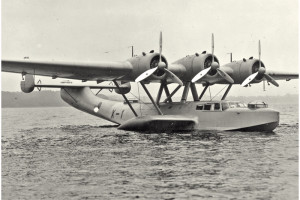
The three-engined Dornier Do 24K was operated by the Netherlands Naval Aviation Service—the Marine Luchtvaartdienst, or MLD—in the Netherlands East Indies.
Designed for maritime patrol, reconnaissance, rescue and transport, it was well suited to operations across the extensive island territories of the Netherlands East Indies. Each aircraft was powered by three Wright Cyclone radial engines.
During the Japanese advance in early 1942, the Dorniers were also used to evacuate military personnel, officials and civilians from threatened areas. Broome became an important stopping point on the route from Java to southern Australia.
Five Dorniers destroyed at Broome
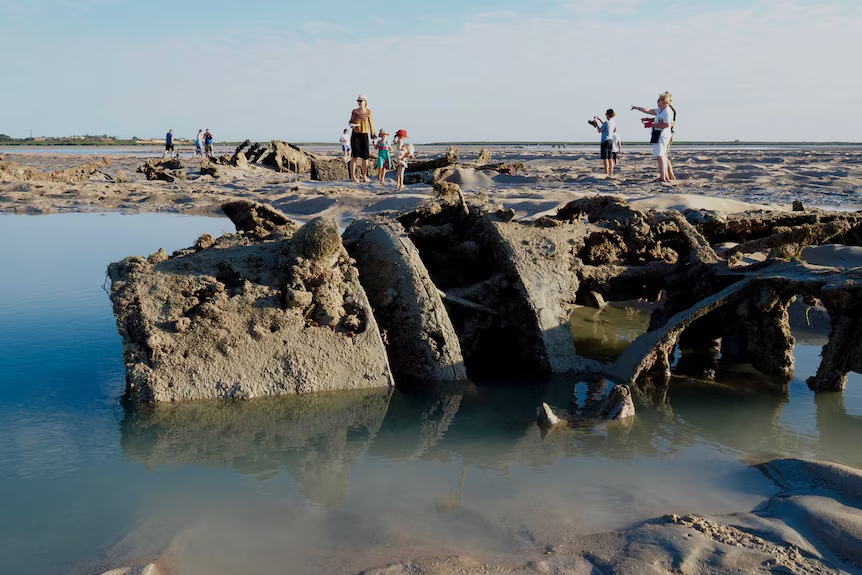
By the morning of 3 March 1942, fifteen flying boats were moored in Roebuck Bay. They included Dutch, American, British and Australian aircraft carrying evacuees from the Netherlands East Indies.
The five Dutch Dornier Do 24Ks present were:
- X-1;
- X-3;
- X-20;
- X-23; and
- X-28.
Nine Japanese Mitsubishi A6M Zero fighters, accompanied by a reconnaissance aircraft, attacked Broome shortly after 9.20 a.m. The fighters strafed the flying boats in Roebuck Bay and aircraft at Broome airfield.
The engine at the Broome Historical Museum
All five Dorniers were destroyed. Dutch civilians—including women and c1hildren—were among those killed during the attack. The aircraft wrecks and the surrounding waters therefore represent not only an important archaeological site but also a place of loss and remembrance.
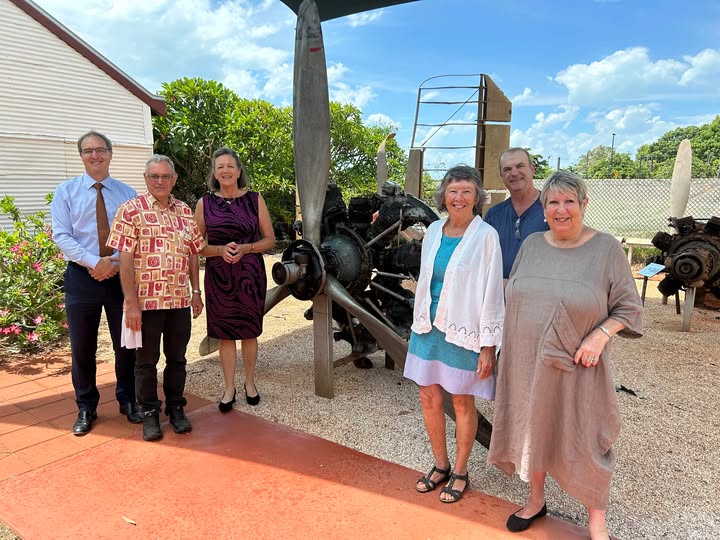
The conserved engine and propeller remain on display at the Broome Historical Museum at Town Beach Reserve.
They form part of a wider collection relating to the air raid, which includes personal possessions, photographs, documents and other objects recovered from the flying-boat wrecks.
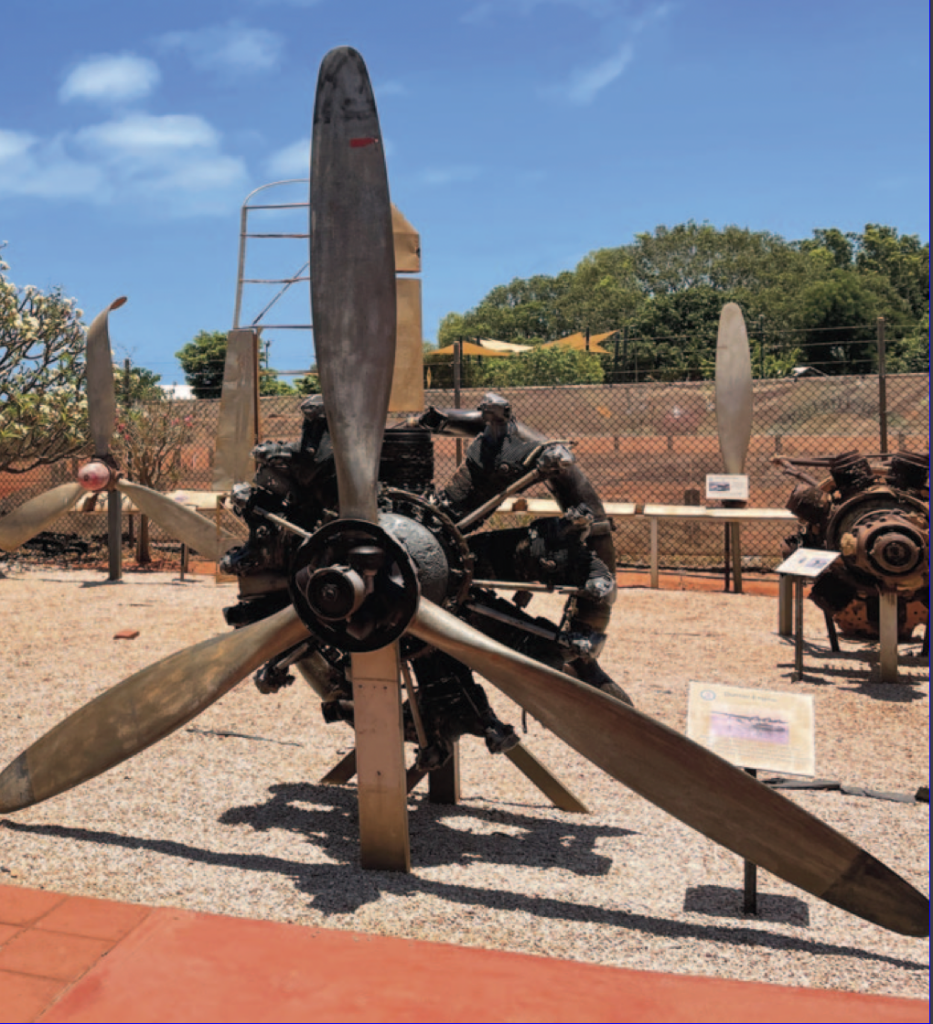
The artefact provides a direct physical connection with the Dutch evacuation from the Netherlands East Indies and the civilians and servicemen who lost their lives at Broome. Its preservation also demonstrates the continuing cooperation between Australian community organisations and the Netherlands in caring for their shared wartime heritage.
A separate engine at Broome Airport
Another Dornier engine and propeller are displayed at Broome International Airport. This should not be confused with the artefact preserved by the Broome Historical Museum.
If photographs of both engines are used by DACC, their locations must be identified clearly in the captions:
- Broome Historical Museum, Town Beach Reserve; or
- Broome International Airport.
Related DACC articles
- The Japanese air raid on Broome—3 March 1942
- Broome Historical Museum and the Dutch wartime presence
- The Dutch Dorniers in Australia: flying boats in exile during WWII
- From Dutch flying boat to houseboat: the surviving Dornier Do 24K at Lake Boga
- DACC Air Force Research Portal
Sources and further reading
- Tallulah Bieundurry, “Broome plane wreck could uncover lost secrets of deadly World War II air raid,” ABC News, 24 September 2022.
- Restoration of the Dornier engine—Uniquely Broome.
- Broome Historical Society and Museum.
- Geoff Goodall, Dornier Do 24 in Australia.