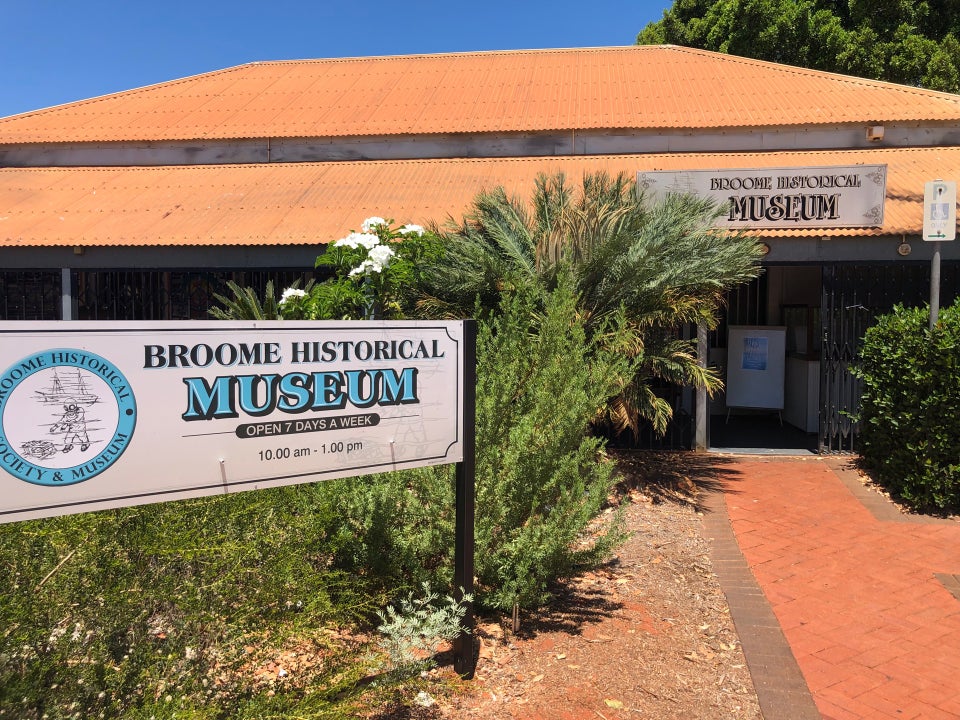
he Broome Historical Museum preserves one of Australia’s most important collections relating to the Japanese air raid on Broome on 3 March 1942 and the Dutch and Netherlands East Indies evacuees caught in the attack.
Operated by the Broome Historical Society, the museum occupies Broome’s former Customs House and adjoining historic buildings at Town Beach Reserve. Its wider collection documents the town’s Aboriginal, pearling, maritime, multicultural and wartime history.
For Dutch–Australian history, the museum is particularly important because it preserves objects, photographs, documents and personal accounts connected with the evacuation from the Netherlands East Indies and the destruction of Dutch aircraft at Broome.
Broome and the evacuation from the Netherlands East Indies
During February and early March 1942, Broome became an important refuelling point on the air route between Java and southern Australia. Civilian and military aircraft carried government officials, servicemen, aircrews, civilian evacuees and families escaping the Japanese advance through the Netherlands East Indies.
By the morning of 3 March, numerous flying boats were moored in Roebuck Bay. Other transport aircraft and American bombers were gathered at Broome airfield. Many of the passengers had only recently escaped from Java and were waiting to continue their journey south.
Japanese Mitsubishi A6M Zero fighters attacked shortly after 9.20 a.m. Twenty-four aircraft were targeted or destroyed, including fifteen flying boats in Roebuck Bay. At least 89 people are believed to have died, although the precise death toll has never been conclusively established.
The victims included American, British, Dutch, Netherlands East Indies, Indian and Japanese military personnel and civilians. Dutch women and children formed a particularly tragic part of the losses.
The raid became one of the deadliest wartime air attacks on Australia.
The wider history of the attack is covered in the DACC article The Drama of Broome, 3 March 1942.
The museum’s air-raid collection
The museum interprets the attack through photographs, documents, oral histories, personal possessions and objects recovered from aircraft wrecks.
These objects help explain the human consequences of the raid. One particularly poignant item is a small tinplate model of a Spitfire recovered from the wreckage of a Dutch Dornier flying boat. It is believed to have belonged to one of the Dutch children killed during the attack.
The Australian War Memorial has also used the toy in its interpretation of the Broome raid, with acknowledgement to the Broome Historical Society.
The collection places the aircraft and military operations within the experiences of the evacuees, aircrews, rescuers and Broome residents who witnessed the attack.
The Dornier engine and propeller
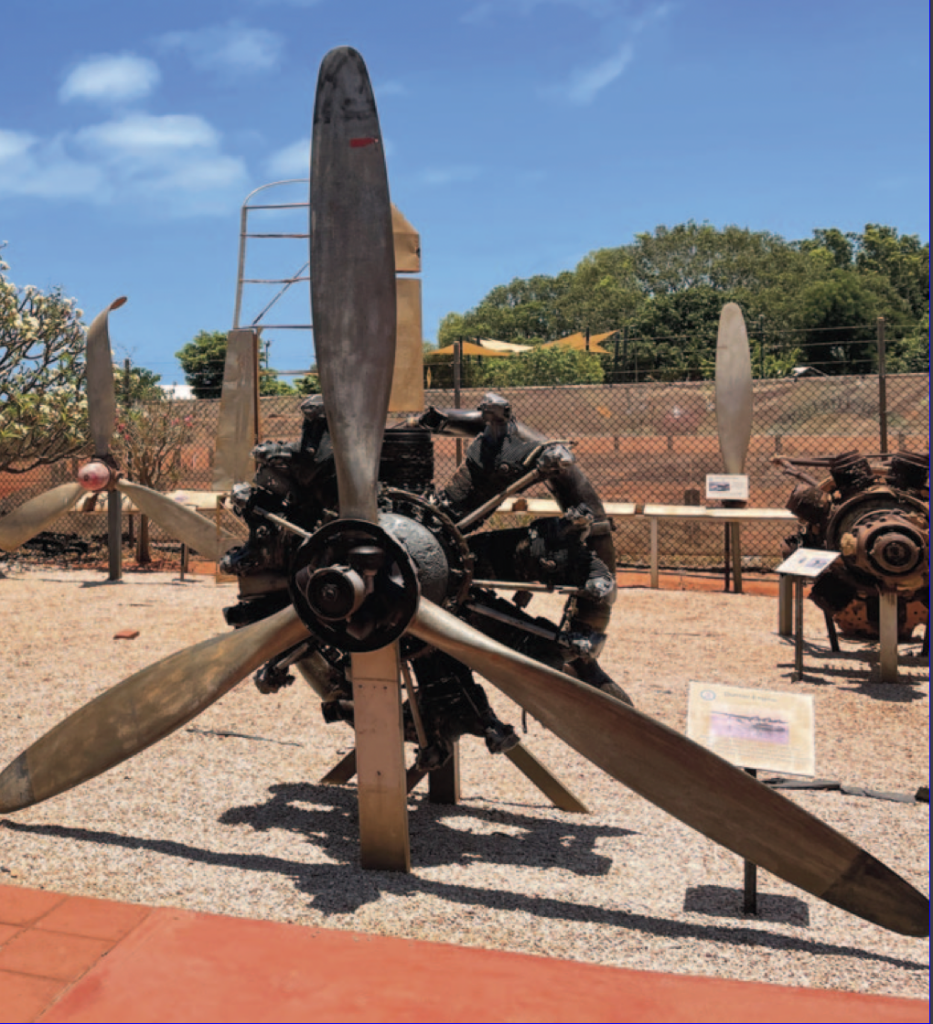
The largest Dutch aviation relic preserved by the museum is a radial engine and propeller recovered from one of the five Netherlands Naval Aviation Service Dornier Do 24K flying boats destroyed on 3 March 1942.
The five Dutch Dorniers carried the identification numbers:
- X-1;
- X-3;
- X-20;
- X-23; and
- X-28.
The engine was recovered from the Roebuck Bay wreck area during the late 1970s. Because its original archaeological context was not documented sufficiently, it has not been conclusively connected with one particular aircraft.
After many years on display, salt and chloride contamination caused serious deterioration. Financial assistance from the Embassy of the Kingdom of the Netherlands, the Shire of Broome and the Kimberley Community Grants program enabled specialist conservation work to be undertaken.
The history and conservation of this artefact are covered in greater detail in A Dutch flying boat remembered: the Dornier Do 24 engine at Broome.
The wreck sites in Roebuck Bay
The remains of fifteen flying boats are associated with the attack on Broome. They include aircraft operated by the Netherlands Naval Aviation Service, United States Navy, Royal Air Force, Royal Australian Air Force and British civil operators.
At exceptionally low tides, the remains of several aircraft can still be seen on the floor of Roebuck Bay.
The wreck sites are protected under Western Australian heritage legislation. They are also places of remembrance because passengers and crew died aboard or near several of the aircraft.
Research by the Western Australian Museum, Broome Historical Society and Dutch heritage organisations has helped identify individual wrecks and document their condition. The Broome Historical Society also played an important role in seeking legal protection for the sites after objects were removed without authorisation.
Preserving recovered objects within the museum allows visitors to learn about the wrecks without further disturbing these vulnerable underwater archaeological sites.
Personal and community history
The museum places the Dutch story within the experience of the Broome community. In 1942, Broome was a small and isolated pearling settlement whose residents suddenly had to assist large numbers of military personnel and civilian evacuees.
Local records, photographs and oral histories document the attack, rescue attempts, medical assistance, temporary burials and subsequent evacuation of the town. They also show how the events of 1942 were experienced and remembered by Broome’s Aboriginal, Asian and European communities.
The museum’s online exhibition Broome during World War II provides access to a selection of these stories and objects for people unable to visit the museum.
A place of remembrance
The Broome Historical Museum forms part of a wider heritage landscape that includes the surviving wreck sites, the Broome airfield, commemorative locations and memorials to those killed during the raid.
Together, these places record not only an important episode in Australian military history but also the experiences of Dutch and Netherlands East Indies families whose attempted escape ended in tragedy.
By preserving objects, documents, photographs and community memories associated with the raid, the Broome Historical Society maintains one of Australia’s most important collections documenting the Dutch wartime presence in Western Australia.
Related DACC articles
- The Drama of Broome, 3 March 1942
- A Dutch flying boat remembered: the Dornier Do 24 engine at Broome
- The Dutch Dornier Do 24 flying boats in Australian service
- From Pearl Harbor to Broome: Dutch seaplanes and the shifting tides of the Pacific War
- DACC Air Force Research Portal
Sources and further information
The Japanese raid on Broome—Australian War Memorial
Broome Historical Society and Museum
Broome during World War II—Broome Historical Society