Introduction
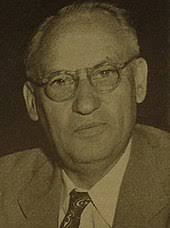
Peter Sitsen (Bergen op Zoom, 1 November 1885 – Sydney, 21 January 1945) was a Dutch engineer, senior civil administrator and one of the principal architects of plans for the economic recovery and reconstruction of the Netherlands East Indies after Japanese occupation.
Working in the United States during 1943–44, Sitsen led the development of a comprehensive programme for emergency relief, restoration of infrastructure and longer-term economic rehabilitation in the Netherlands East Indies.
His work became closely connected with the preparations of the Netherlands Indies Civil Administration (NICA) for the return to territories recovered from Japanese occupation.
In early 1945 Sitsen travelled to Australia to lead the Netherlands Indies delegation to a major UNRRA conference and was expected subsequently to play an important role in coordinating the implementation of the recovery programme.
He never had the opportunity to do so. Sitsen arrived in Sydney seriously ill and died there on 21 January 1945.
His plans nevertheless provide an important insight into the scale of Dutch preparations for relief, reconstruction and the restoration of civil administration as the Allied advance approached the Netherlands East Indies.
Early career and wartime contribution
Sitsen studied engineering at the Royal Military Academy in Breda. In 1907 he travelled to the Netherlands East Indies to serve as an officer in the Royal Netherlands East Indies Army (KNIL). After completing his military service in 1912, he worked as a municipal land surveyor in Batavia and later became Director of Public Works for the Sultanate of Yogyakarta. His subsequent work in construction, industry and government gave him extensive knowledge of the industries, infrastructure and resources on which the archipelago depended. This expertise became particularly important after the Japanese occupation disrupted production, transport and government administration throughout the Netherlands East Indies.
During the war Sitsen became involved in planning for the economic recovery of the territory after liberation. Working from the United States, he headed a group of Dutch and Netherlands Indies specialists examining what would be required immediately after Allied forces returned.
Their task extended well beyond conventional postwar reconstruction. After years of occupation, the returning authorities expected to face severe shortages of food, medicines, transport, machinery and other essential supplies, together with damaged infrastructure and disrupted economic activity.
Sitsen’s work therefore sought to bridge the period between emergency relief and longer-term economic recovery.
The Sitsen Plan
During 1943–44, Sitsen worked in the United States on a comprehensive programme for the relief, rehabilitation and economic reconstruction of the Netherlands East Indies.
The plan was ambitious. It was intended to address both the immediate humanitarian needs expected after liberation and the longer-term restoration of the economy. Emergency requirements included food, medicines, clothing and housing, while reconstruction would require the restoration of transport, communications, industry, agriculture, plantations and mining.
Sitsen recognised that preparations could not wait until the Japanese occupation ended. Supplies, machinery and equipment would have to be purchased and stockpiled in advance so that they could be distributed as soon as territory became accessible.
The programme was conceived on a large scale. Sitsen developed a five-year reconstruction plan estimated at approximately US$2.4 billion, covering both immediate relief and the rebuilding of economic activity throughout the archipelago.
His planning also envisaged that relief requirements would differ considerably between islands and districts. Supplies therefore had to be prepared and allocated according to anticipated local needs rather than treated simply as one general relief programme.
This work became an important framework for the preparations of the Netherlands Indies authorities and NICA. As Allied forces recovered territory, civil administrators would require not only personnel but also food, medical supplies, transport, equipment and other resources with which to restore essential services.
Sitsen published an outline of his thinking in 1944 in Far Eastern Survey under the title “Relief Program for the N.E.I.” His more extensive study, Relief, Rehabilitation and Economic Reconstruction in the Netherlands Indies, was published in New York in 1945.
The Sitsen Plan therefore provides an important economic and humanitarian dimension to the history of NICA. NICA was not simply preparing administrators to return behind Allied forces; extensive planning was also taking place for the supplies, infrastructure and economic recovery required once those administrators reached liberated territory.
Final mission to Australia
After completing his work in New York, Sitsen was appointed Director of the Department of Public Works (Verkeer en Waterstaat) within NICA.
In late 1944 he began the journey back to Australia. He was to lead the Netherlands Indies delegation to the forthcoming conference of the United Nations Relief and Rehabilitation Administration (UNRRA) and was expected to play an important role in implementing the relief and reconstruction programme he had helped develop.
During the journey across the Pacific, however, Sitsen became seriously ill. He reached Sydney but died there on 21 January 1945, aged 59, before the UNRRA conference began.
His death deprived the Netherlands Indies administration of the official who had been most closely associated with developing its comprehensive programme for postwar relief and economic recovery.
Sitsen’s legacy
Although Sitsen did not live to oversee its implementation, his recovery programme did not disappear with his death.
Preparations had already begun before the end of the war. Food, medicines, clothing, equipment and other essential materials were purchased and stockpiled so that supplies could be moved into territories as they became accessible to Allied forces and NICA.
Elements of the programme were first implemented in eastern parts of the Netherlands East Indies recovered from Japanese occupation. Relief supplies helped address immediate shortages while Dutch and Netherlands Indies authorities attempted to restore transport, public services and economic activity.
Implementation was much more difficult in Java and Sumatra, where the proclamation of Indonesian independence and the ensuing conflict fundamentally changed the political circumstances in which the original reconstruction programme had been conceived.
Sitsen’s importance therefore extends beyond NICA itself. His work represents one of the most comprehensive attempts made during the war to plan in advance for the humanitarian and economic consequences of liberation.
It also demonstrates that preparations for the return to the Netherlands East Indies involved much more than military operations and the restoration of government. Behind NICA stood extensive planning for food, medicine, transport, infrastructure, industry and the rebuilding of economic life after more than three years of Japanese occupation.
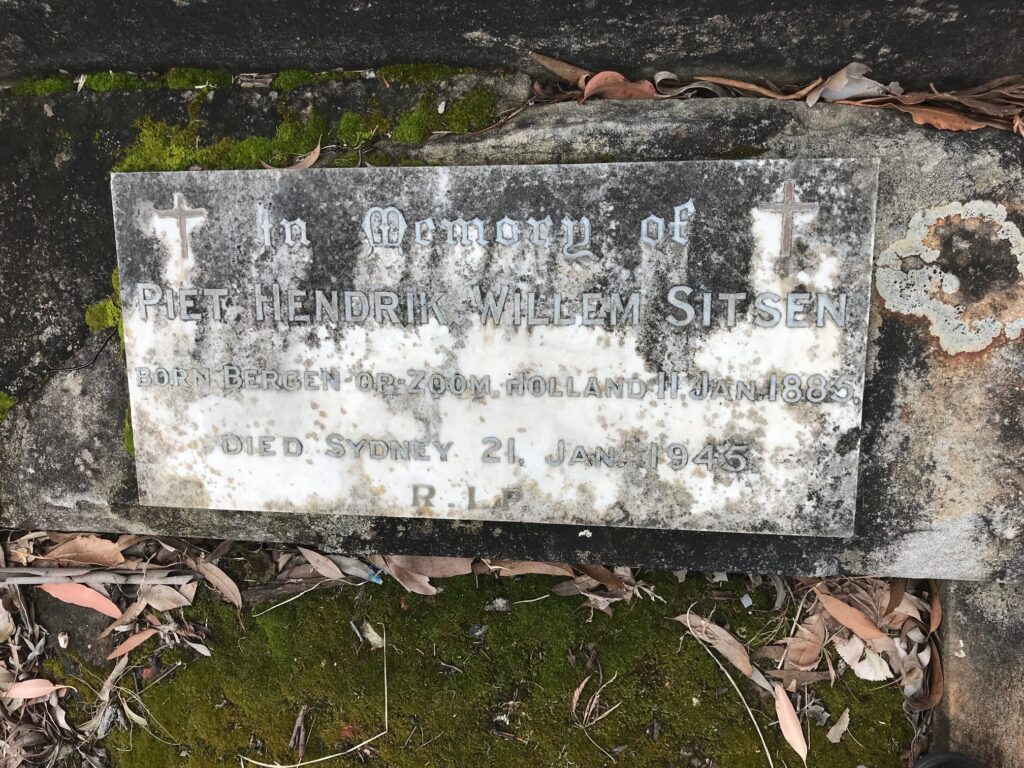
In 2021, historian and economist Pierre van der Eng photographed Peter Sitsen’s grave and memorial at Macquarie Park Cemetery and Crematorium—formerly Northern Suburbs Cemetery—in Sydney.
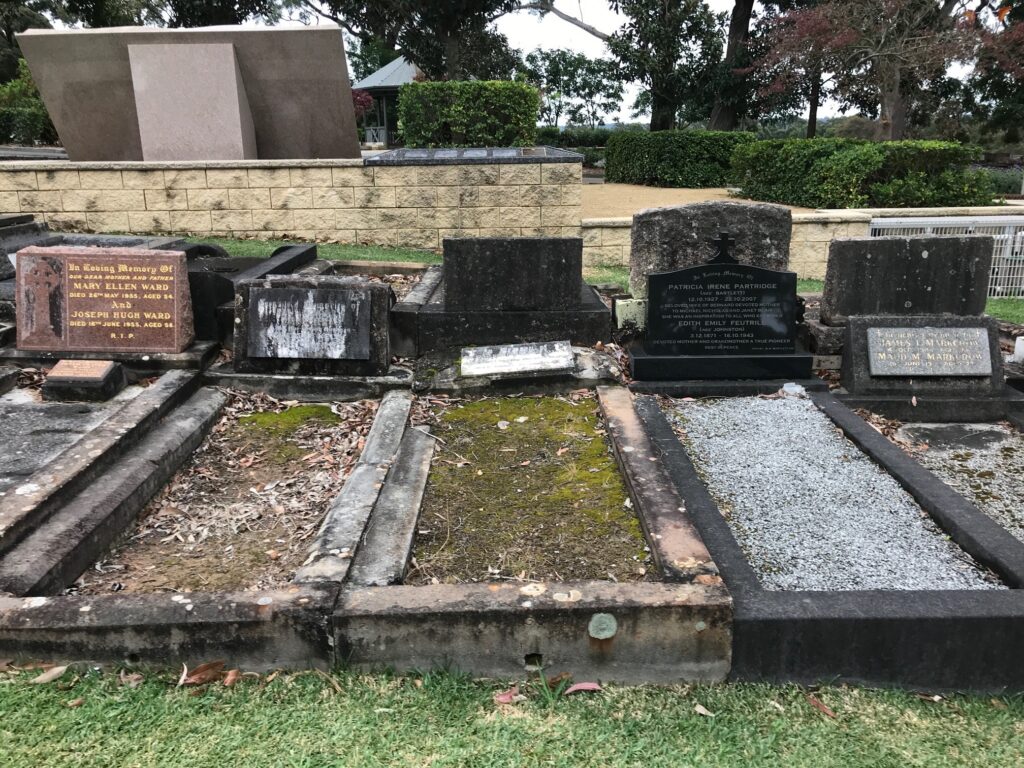
The following contemporary Dutch-language newspaper report records Peter Sitsen’s death and funeral in Sydney. It provides additional evidence of how his contribution to the planned recovery of the Netherlands East Indies was understood at the time.
Sources and further reading
- P.H.W. Sitsen, “Relief Program for the N.E.I.,” Far Eastern Survey, Vol. 13, No. 7 (1944), pp. 62–66. Particularly valuable because it presents Sitsen’s own explanation of his relief and reconstruction programme.
- P.H.W. Sitsen, Relief, Rehabilitation and Economic Reconstruction in the Netherlands Indies. Netherlands and Netherlands Indies Council, Institute of Pacific Relations, New York, 1945. Sitsen’s more developed account of plans for post-war relief, rehabilitation and economic reconstruction
- Albert Balink, “A Man to Remember,” Knickerbocker Weekly, 29 January 1945. Contemporary tribute published immediately after Sitsen’s death.
- Sydney Morning Herald, 23 and 24 January 1945. Contemporary notices concerning Sitsen’s death in Sydney. These can be located through the National Library of Australia’s Trove newspaper collection:
- Pierre van der Eng, “Government promotion of labour-intensive industrialization in Indonesia, 1930–1975,” in Gareth Austin and Kaoru Sugihara (eds), Labour-Intensive Industrialization in Global History, Routledge, 2013, pp. 176–200.
Further DACC research
For the organisation in which Sitsen was expected to serve, see Netherlands Indies Civil Administration (NICA): From Brisbane to the Liberated Netherlands East Indies.
For the wider history of NEFIS, NICA and the Dutch and Indonesian intelligence, administration and special-operations network operating from wartime Australia, see the DACC Research Portal – Dutch and Indonesian Intelligence and Special Operations from Australia during WWII.