Personal recollections of Dutch migrants travelling to Australia aboard the MS Sibajak in May and June 1951, preserved in the family history compiled by Tini (Visser) Cook.
In May 1951, hundreds of Dutch emigrants boarded the passenger ship Sibajak to begin new lives in Australia. Among them were the Visser and Koopman families, longstanding friends from Bergen, North Holland, who had decided to emigrate together.
Their preparations had begun well before departure. Cornelis Koopman and Leendert (Lenny) Visser jointly built two prefabricated houses in the backyard of the Koopman family home in Bergen, where Cornelis operated a car and bicycle repair business. Both houses were designed for shipment to Australia and reassembly after arrival.
Leendert devised an ingenious way of transporting his family’s belongings. Using the floorboards of the prefabricated house, he constructed a large wooden crate, or kist, containing the house and virtually all their possessions, including furniture, crockery, clothing and bedding. It was effectively a complete household packed for migration.
The two families departed the Netherlands aboard the Sibajak on 9 May 1951 and arrived in Melbourne on 14 June. They subsequently settled in Yarragon, Victoria, where they rebuilt their houses and maintained the friendship that had begun in the Netherlands.
Their voyage is documented in Visser Family History – Oma & Opa’s Life, compiled by Tini (Visser) Cook in 2021. The book includes photographs, correspondence and firsthand recollections from several passengers, including Kitty Koopman, providing a valuable picture of everyday life aboard a Dutch emigrant ship.
Leaving the Netherlands
For many emigrants, departure was an emotional occasion. They were leaving behind parents, siblings, friends and familiar surroundings, often knowing that they might never see their loved ones again.
Leendert and Neeltje Visser travelled with their four children, including their youngest daughter Tini, who was not yet two years old.
Although Australia promised better opportunities, the decision involved considerable uncertainty. The journey itself would take several weeks, and the families faced the challenges of finding employment, establishing homes and adapting to a different language and culture.
For the Visser and Koopman families, undertaking this journey together provided an important measure of reassurance. Their shared preparations, practical cooperation and continuing friendship illustrate the informal support networks that played a significant role in Dutch post-war migration to Australia.
Life aboard the Sibajak
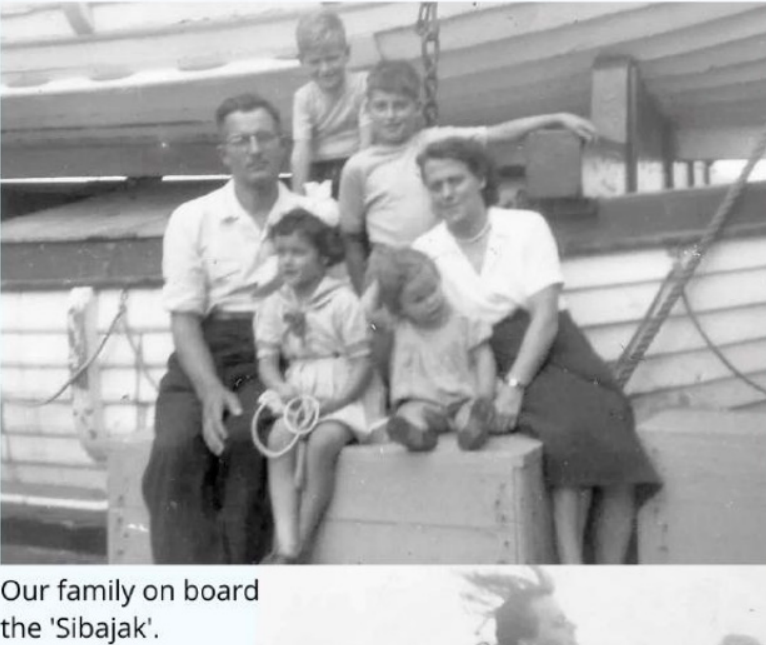
The Sibajak had previously operated as a passenger liner on the Netherlands–Netherlands East Indies route. Following the Second World War, it was used to transport emigrants to Australia.
The 1951 voyage carried approximately 900 passengers, many of them families with young children.
Accommodation was arranged in shared cabins and dormitories. Passenger recollections describe the daily routines of meals, recreation and activities organised during the long voyage.
Mrs Belgaver, one of the passengers whose account is preserved in Tini’s book, described the ship’s facilities, including a large dining room, sports deck, children’s play areas and organised entertainment.
Passengers could attend concerts, films, games and English-language classes. There was also a library and opportunities to participate in social activities.
For children, the ship offered an exciting environment, with other young passengers to play with and activities to occupy the long days at sea.
Memories of childhood aboard ship
Another account comes from Kitty Koopman, who was a child during the voyage.
She remembered the children’s playroom, the meals served aboard ship and the excitement of watching the sea through the portholes.
The children sometimes received treats from the ship’s staff, and their experiences contrasted with the more serious concerns of their parents, who were contemplating the challenges of settling in an unfamiliar country.
Kitty also recalled the passage through the Suez Canal and the sight of small boats approaching the ship.
Her memories provide a personal perspective on a journey that, for the younger passengers, combined the excitement of travel with the beginning of an entirely new life.
The voyage through the Suez Canal
The journey took passengers through the Mediterranean, the Suez Canal and the Indian Ocean.
The Suez Canal was particularly memorable. Passengers watched the landscape pass slowly by and observed small boats approaching the ship to trade goods.
Mrs Belgaver’s account describes the unfamiliar sights of Port Said, including the waterfront, local traders and the contrast between the surroundings and the Netherlands they had left behind.
Other ports and coastal landscapes offered further opportunities to observe places that many passengers had previously known only from books or photographs.
For Dutch families who had rarely travelled beyond Europe, the voyage was an introduction to a much wider world.
Entertainment, friendships and difficulties at sea
The shipboard community developed its own routines and friendships.
A recollection attributed to Mr Zoon describes the daily programme of meals and activities, illustrating the organised nature of the voyage.
Passengers could participate in games, exercise and social gatherings, while children occupied themselves with organised recreation.
However, the journey was not without difficulties. Some passengers experienced seasickness, particularly during rough weather in the Indian Ocean.
The crowded accommodation and long weeks at sea also required considerable patience and adjustment.
Despite these challenges, the accounts suggest that many passengers remembered the voyage as a remarkable experience and an important shared chapter in their lives.
Arrival in Melbourne
The Sibajak arrived in Melbourne on Thursday 14 June 1951.
For the passengers, arrival marked the beginning of another journey: finding accommodation, employment and a permanent home in Australia.
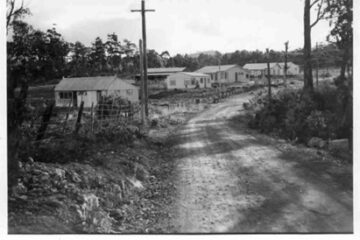
The Visser and Koopman families eventually settled in Yarragon, Victoria, where they reassembled the prefabricated houses they had prepared in the Netherlands.
Other passengers travelled to different parts of Australia, including migrant reception and accommodation centres.
The friendships formed or strengthened during the voyage often continued after settlement, providing valuable support as families adjusted to Australian life.
Preserving the memories of the Sibajak
The recollections preserved by Tini Cook offer an important personal dimension to the history of Dutch migration to Australia.
Passenger ships such as the Sibajak transported thousands of people who would contribute to Australia’s post-war development. While shipping records document the movements of vessels and passengers, personal accounts reveal what the journey meant to those aboard.
The memories of Mrs Belgaver, Kitty Koopman, Mr Zoon and other passengers help preserve the everyday experiences of families leaving the Netherlands for an uncertain but hopeful future.
Their stories form part of the wider history of Dutch-Australian migration and settlement.
Related DACC articles
- MS Sibajak – Maritime history
- From Bergen to Yarragon – The Visser family’s migration to Australia in 1951
- Cornelis and Anna Koopman – The Dutch family who brought a house to Australia
Source and acknowledgement
This article is based on the chapter concerning the 1951 Sibajak voyage in Visser Family History – Oma & Opa’s Life, compiled by Tini (Visser) Cook in December 2021.
The family history includes firsthand passenger recollections, photographs and other historical material relating to the voyage.
The Dutch Australian Cultural Centre thanks Tini Cook for making this historical material available for research and for her work in preserving these memories of Dutch migration to Australia.
The complete family history remains a private family publication.