Secret agents, submarines and intelligence missions into the Japanese-occupied Netherlands East Indies
Among the most dangerous activities undertaken by the Netherlands Forces Intelligence Service (NEFIS) during the Second World War were clandestine missions into the Japanese-occupied Netherlands East Indies.
Small parties of Dutch and Indonesian agents were trained and prepared for insertion into enemy-held territory by submarine, aircraft or small craft. Their objectives included gathering military and political intelligence, establishing wireless communications, contacting local populations and determining Japanese strength and movements.
These activities became particularly associated with the third component of NEFIS, responsible for Secret Intelligence and Special Operations and commonly referred to as NEFIS III.
Its history, however, cannot be understood simply as a succession of secret missions. It developed out of earlier Allied operations in Australia, operated within a much larger Dutch intelligence organisation, depended heavily upon Indonesian personnel, and formed part of a wider Dutch special-operations effort that also included Korps Insulinde operating from Ceylon.
From the NEI Section to NEFIS III
The Japanese conquest of the Netherlands East Indies in early 1942 left the Dutch authorities in Australia with little reliable information about conditions across much of the occupied archipelago.
The Allies faced the same intelligence problem.
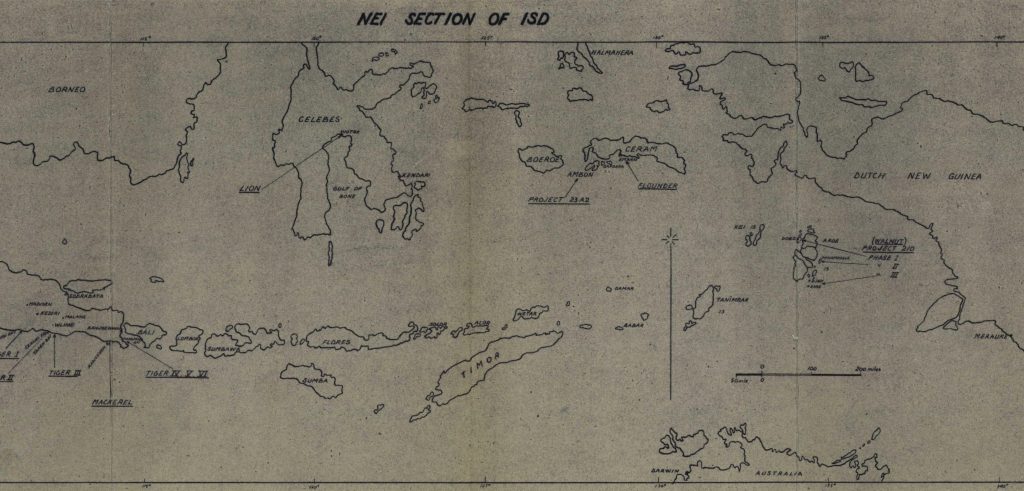
During 1942, Dutch and Indonesian personnel participated alongside Australians in clandestine operations organised through the Netherlands East Indies Section of the Inter-Allied Services Department (IASD), which subsequently came within the Allied Intelligence Bureau structure.
Parties were planned or inserted into Java, Ceram, the Aru Islands, Celebes and other areas. Some obtained useful intelligence, but the losses were severe. Parties disappeared, agents were captured and several were executed.
These early operations are examined separately in this Research Portal and should not automatically be described as NEFIS III missions.
As Dutch intelligence capabilities in Australia developed and organisational responsibilities changed during 1942–43, the Netherlands Forces Intelligence Service assumed a greater role in operations directed towards the occupied NEI.
NEFIS eventually developed into a substantial intelligence organisation with seven principal subsections. The third dealt with Secret Intelligence and Special Operations (SI&SO) and became widely known as NEFIS III.
The special-operations role
NEFIS III was intended to restore intelligence links with territories from which the normal Dutch administrative and military information networks had largely disappeared.
Its parties could be assigned several related tasks.
They might reconnoitre Japanese airfields, ports, shipping and troop concentrations; establish wireless communications with Allied bases; identify potential landing areas; assess local political conditions; locate Allied personnel; or establish contacts capable of providing continuing intelligence.
Some missions were also intended to establish networks that could assist the Allies as they approached the Netherlands East Indies.
This placed NEFIS III at the boundary between intelligence collection and special operations.
The principal objective was generally information rather than combat. These were not conventional military units intended to engage substantial Japanese forces. Their survival depended upon secrecy, communications and local support.
Part of a much larger intelligence organisation
NEFIS III was only one component of NEFIS.
The Australian War Memorial describes NEFIS as eventually comprising seven subsections covering collection, counter-intelligence, secret intelligence and special operations, military intelligence, civil-affairs intelligence, photographic reproduction, and military oil intelligence.
An additional propaganda function grew sufficiently large to become the separate Far Eastern Liaison Office (FELO).
The dramatic reconnaissance missions have consequently tended to dominate historical accounts of NEFIS. Yet the Australian War Memorial concludes that the organisation’s most valuable contribution may actually have been less spectacular: cartographic work, processing information and interrogating refugees and other people arriving from the occupied NEI.
NEFIS III should therefore be understood as the clandestine operational arm of a much broader intelligence system.
Camp Columbia and the NEFIS headquarters
During 1944, NEFIS moved its headquarters from Melbourne to Camp Columbia at Wacol, southwest of Brisbane.
The move reflected the changing geography of the Pacific War. Allied forces were advancing through New Guinea towards the Netherlands East Indies, while Brisbane had already become a major Allied command and intelligence centre.
NEFIS III was not created at Camp Columbia. Its special-intelligence and operational activities had developed before the move north.
Camp Columbia nevertheless became the Australian headquarters of the larger NEFIS organisation during the crucial final phase of the war. From there intelligence about the occupied NEI could be collected, analysed and distributed, while clandestine operations were supported through a network of training, communications and forward facilities elsewhere.
The relocation also placed NEFIS close to other Dutch military and administrative organisations increasingly concentrated in Brisbane as preparations began for the eventual return to the NEI.
For NEFIS III, Camp Columbia was therefore principally a headquarters rather than the location from which every secret mission was physically launched.
The detailed history of NEFIS at Camp Columbia, including surviving photographs of its offices, staff and intelligence library, is covered in the separate Research Portal article on NEFIS as an organisation.
Dutch and Indonesian personnel
Although NEFIS was a Dutch organisation, clandestine operations into the Netherlands East Indies depended heavily upon Indonesian personnel.
Indonesian agents brought languages, familiarity with local customs and communities, knowledge of terrain and, in some cases, personal connections in the areas where parties were expected to operate.
These capabilities could be essential.
European agents were conspicuous in many parts of the archipelago. Indonesian personnel could sometimes move with less immediate risk of detection and communicate with local populations in ways that European personnel could not.
Dutch officers and specialists brought military, naval, intelligence, communications and administrative experience. Mixed Dutch-Indonesian parties consequently became an important feature of clandestine operations.
The Indonesian contribution should not be regarded as peripheral to the NEFIS III story. Without Indonesian soldiers, agents, interpreters and wireless operators, many operations would have been considerably more difficult and some probably impossible.
At the same time, these operations took place within the colonial structures of the Netherlands East Indies. Dutch officers generally occupied command positions, while Indonesian personnel served within Dutch military and administrative organisations.
That relationship would acquire increasing political significance as Indonesian nationalism strengthened during the final years of the war.
A parallel development: the Prinses Irene Brigade and Korps Insulinde
Dutch special operations against Japan did not develop solely in Australia.
A separate strand originated with Dutch forces assembled in Britain after the German occupation of the Netherlands.
The Royal Netherlands Brigade, subsequently named the Prinses Irene Brigade, was intended primarily for conventional military operations. After Japan entered the war in December 1941, however, the Dutch government decided to send approximately 150 men from the brigade to reinforce the Netherlands East Indies.
The first contingent departed Britain on 10 January 1942.
Before it could reach its intended destination, the military situation collapsed. The detachment reached Colombo in Ceylon after the Netherlands East Indies had already been occupied by Japan.
Most of the personnel subsequently left Ceylon, some eventually travelling to Australia. A smaller group of volunteers remained in Asia and was selected for special-operations training.
They received instruction in amphibious operations, explosives, fieldcraft and other clandestine techniques. Because many had never lived in the Netherlands East Indies, training also included languages and knowledge of local cultures.
On 1 August 1942, the resulting special-operations organisation was formally established as Korps Insulinde.
Its principal operational focus became Sumatra, where small parties were inserted to gather intelligence and undertake other clandestine tasks.
Korps Insulinde and NEFIS III
Korps Insulinde and NEFIS III therefore had different origins.
Korps Insulinde emerged in Ceylon from the Prinses Irene Brigade detachment and developed within the British special-operations environment in South and Southeast Asia.
NEFIS III developed through the Dutch intelligence organisation in Australia and the experience of the earlier NEI Section.
They should not simply be described as the same organisation.
Nevertheless, their histories increasingly intersected. Both were Dutch organisations conducting clandestine operations against Japan in the Netherlands East Indies, and personnel and operational experience could move between the different organisations.
During the final year of the war, Korps Insulinde was reinforced by personnel from No. 2 (Dutch) Troop of No. 10 (Inter-Allied) Commando, another Dutch special-forces formation created in Britain.
Together these developments demonstrate that Dutch special operations against Japan evolved through several interconnected networks rather than through a single organisation.
Training in Australia
Agents preparing for clandestine operations required skills quite different from conventional military service.
They might have to operate for weeks or months in small groups without immediate support. Training therefore included intelligence gathering, wireless communications, fieldcraft, weapons, survival and clandestine procedures.
One of the principal Australian facilities associated with this work was the Z Experimental Station at Fairview House near Cairns.
Dutch and Indonesian personnel had already trained there during the earlier IASD period. Following subsequent organisational changes, the station became increasingly associated with Dutch special operations.
Cairns was geographically well placed for operations moving north towards New Guinea and the eastern Netherlands East Indies.
The Dutch and Indonesian involvement at Z Experimental Station is examined separately in this Research Portal.
The communications lifeline
Wireless communications were central to clandestine intelligence operations.
An agent could obtain valuable information, but it had little immediate military value if it could not be transmitted back to headquarters.
Parties therefore frequently included a trained wireless operator carrying portable radio equipment, batteries, codes and communications schedules.
Maintaining that link could be extraordinarily difficult.
Equipment could be damaged during insertion. Batteries deteriorated under tropical conditions. Terrain and atmospheric conditions could interfere with transmissions. Radio signals could also expose a party’s location to Japanese direction-finding.
Loss of communications left headquarters uncertain whether a party remained operational, had moved, had been captured or had been killed.
Wireless communication was therefore simultaneously the lifeline and one of the principal vulnerabilities of clandestine operations.
Submarines, flying boats and small craft
Getting agents into occupied territory presented another major problem.
Distances across the Indonesian archipelago were enormous, and most suitable landing areas were controlled or patrolled by Japanese forces.
Submarines offered one solution.
Dutch and American submarines could approach enemy-held coastlines under cover of darkness and put small parties ashore using collapsible boats or other small craft.
Flying boats provided another option as Allied bases moved closer to the NEI.
Dutch naval aviation became particularly important in supporting later intelligence operations. Catalina flying boats had the range to reach remote areas and could land on suitable coastal waters.
But successful insertion was only the beginning.
A party could quickly find itself compromised if Japanese forces were nearby, local conditions had changed or expected contacts were unwilling to cooperate.
The problem of local support
One of the hardest lessons learned from the early operations was that pre-war knowledge did not necessarily predict wartime behaviour.
Dutch planners sometimes expected former officials, police, soldiers or other contacts to assist returning agents.
Three years of Japanese occupation had transformed circumstances.
Potential contacts might have been killed, imprisoned, moved or placed under surveillance. Others understandably refused to risk themselves and their families.
Political attitudes were also changing.
Japanese occupation could be brutal, but opposition to Japan did not automatically mean support for restoration of Dutch colonial government.
This was particularly significant on Java and in other areas where Indonesian nationalism had developed strongly.
Successful clandestine intelligence therefore required much more than identifying people who had been considered reliable before the war.
A costly operational record
The reconnaissance parties for which NEFIS III became famous also produced some of its greatest tragedies.
The Australian War Memorial records the catastrophic fate of the TIGER I–VI parties sent to Java, together with heavy losses associated with WALNUT in the Aru Islands and WHITING in Dutch New Guinea. It estimates that nearly 40 lives were lost in these operations.
There is an important chronological qualification.
Some operations commonly associated in later accounts with NEFIS III originated during the earlier NEI Section/IASD-AIB phase. The organisational history changed while operations were being planned and conducted.
For this reason, the individual missions are examined elsewhere in this Research Portal rather than all being retrospectively treated as straightforward NEFIS III operations.
The losses nevertheless demonstrated the extreme difficulty of inserting small intelligence parties into territory under effective Japanese control.
Learning from experience
Methods changed as the war progressed.
Training and planning improved. Greater attention was paid to communications, local conditions, firepower and extraction arrangements.
The changing strategic situation also helped.
During 1942, agents might be inserted deep inside enemy territory with Allied bases far away. By late 1944 and 1945, Allied forces had advanced through New Guinea and established forward bases much closer to the Netherlands East Indies.
The Australian War Memorial notes that later NEFIS parties increased both their numbers and firepower. They were still not intended to fight conventional battles, but they were better able to defend themselves against Japanese patrols and establish authority when operating among local populations.
Operation OAKTREE – intelligence and resistance in Dutch New Guinea
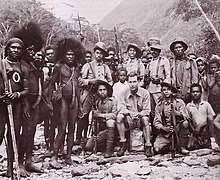
Operation OAKTREE provides an important contrast with many of the small clandestine parties inserted into Japanese-occupied territory from Australia.
OAKTREE developed around Jean Victor de Bruijn, a Dutch colonial administrator stationed in the remote central highlands of Dutch New Guinea. Following the Japanese occupation of much of Dutch New Guinea in 1942, De Bruijn remained in the interior and organised resistance and intelligence activities with Papuan personnel and members of the local colonial police.
De Bruijn travelled to Australia during 1942 and subsequently returned to the highlands with additional weapons and supplies. From this remote base, his group gathered information on Japanese movements and positions and maintained radio contact with the Dutch intelligence organisation in Australia.
Unlike many of the early intelligence parties that had to establish themselves after being inserted into hostile territory, OAKTREE already had local knowledge, contacts and support. This gave the group a considerable advantage. The Australian War Memorial describes OAKTREE as one of the exceptional successes among Dutch intelligence operations, supplying valuable information while tying down a substantially larger Japanese force between 1942 and 1944.
Papuan participation was fundamental to the operation. Local knowledge, intelligence, guides and armed support enabled De Bruijn’s group to continue operating in extremely difficult terrain while Japanese forces attempted to establish control over the region.
OAKTREE subsequently became part of the intelligence network supported by NEFIS. Its history therefore differs from that of parties specifically prepared in Australia and inserted by NEFIS III, but it demonstrates another way in which intelligence from Japanese-occupied Netherlands territory reached Allied headquarters.
The operation continued until 1944, when De Bruijn and members of his group were eventually evacuated as the Allied advance transformed the military situation in Dutch New Guinea.
OAKTREE was closely connected with Operation CRAYFISH, another intelligence party operating in central Dutch New Guinea. The surviving NEFIS archive includes De Bruijn’s later account concerning the activities of both OAKTREE and CRAYFISH and recommendations for decorations for members of the parties.
Operation FIRETREE – Ambon and the Moluccas
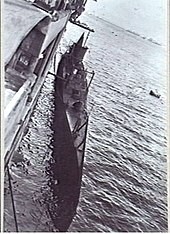
By 1945, NEFIS III was able to mount operations much closer to the Netherlands East Indies as the Allied advance provided new forward bases and improved opportunities for insertion into Japanese-held territory.
One example was Operation FIRETREE, led by Ambonese KNIL officer Julius Tahija. The party consisted of ten men and was tasked with gathering military and general intelligence in the Moluccas, particularly around Ambon. Its objectives included observing Japanese shipping and aircraft movements and providing information on local conditions and weather.
The party left Australia aboard the Dutch submarine K XV in February 1945. It was initially landed on Mangoli in the Sula Islands before operations were extended towards Saparua and the Ambon area.
FIRETREE illustrates how NEFIS III operations had developed since the extremely hazardous early missions of 1942–43. By this later stage of the war, Dutch and Indonesian intelligence personnel were operating within a much broader Allied advance towards the Netherlands East Indies, supported by Dutch naval and Allied operational resources.
Tahija was particularly well suited to such work. Born on Ambon, he had served with the KNIL and had already distinguished himself during the Japanese invasion, receiving the Military Order of William for his actions at Saumlaki. His later involvement in intelligence operations demonstrates the important role played by Indonesian and Ambonese personnel within the Dutch intelligence effort from Australia.
Read more: See the personal story of Julius Tahija, including his KNIL service, actions at Saumlaki and later career.
ADVANEFIS and the move north
The changing geography of the war was reflected in the establishment of ADVANEFIS — Advanced Echelon NEFIS.
Morotai became particularly important after Allied forces landed there in September 1944.
The island developed into a major forward air, naval, logistical and intelligence base supporting operations towards the Philippines, Borneo and the Netherlands East Indies.
Establishing a forward NEFIS presence there brought Dutch intelligence personnel much closer to Allied operational headquarters and to the territories into which agents were being inserted.
Camp Columbia remained the principal Australian headquarters, but the operational network was progressively moving north with the Allied advance.
The surviving Nationaal Archief collection includes a separate residual archive of ADVANEFIS at Morotai, reflecting the importance of this forward intelligence presence.
Party APPLE and Tarakan
One of the later operations illustrates both the increased Allied reach and the continuing difficulties of clandestine intelligence.
Party APPLE was inserted on the Borneo coast south of Tarakan in January 1945.
The mixed Dutch-Indonesian party was commanded by Lieutenant Oscar Drijber and was intended to obtain intelligence relevant to future Allied operations in the Tarakan area.
Dutch Catalina aircraft supported the operation.
The operation encountered serious difficulties. The party was unable to establish its planned radio contact with the forward communications station at Morotai and obtained little cooperation from local inhabitants.
Nevertheless, APPLE remained ashore for eleven days and gathered some intelligence, including information about Japanese strength on Tarakan. On 24 January 1945, all eight members were successfully extracted by Catalina and flown to Morotai.
The mission therefore achieved only part of its objectives, but it was not simply a failed operation. Its mixed results illustrate both the continuing difficulties of clandestine intelligence work and the improved ability of NEFIS III by 1945 to insert and recover parties operating inside Japanese-occupied territory.
Its members were successfully extracted, but the mission achieved limited results.
The operation is examined separately in this Research Portal through the story of Dutch naval aviator Wil Hamers and the Catalina intelligence missions.
Project SALMON
By 1945, NEFIS was also participating in more ambitious joint operations.
Between April and July, Australia’s Services Reconnaissance Department (SRD) and NEFIS developed Project SALMON, a proposal for a chain of small clandestine bases extending westwards from Dutch-held territory towards Java.
The intention was to establish a line of communication and intelligence posts across islands of the eastern archipelago.
Responsibility was divided between SRD and NEFIS, with NEFIS allocated five of the proposed eight bases.
A base was established on Damar, while another at Goenoengapi was partly supplied before the project was suspended.
Although the complete network was never established, SALMON demonstrates how far Dutch special-operations planning had developed since the small and frequently isolated parties of 1942.
Supporting the Allied return
By 1945 the role of NEFIS was changing again.
Allied forces were entering or approaching territories that had been inaccessible since 1942.
NEFIS personnel could now support conventional operations with maps, geographical intelligence, interrogation, captured documents, interpreters and knowledge of local conditions.
A NEFIS member participated in PLATYPUS XII in Borneo in July 1945. NEFIS was also involved in intelligence activity concerning the north-eastern Celebes and Manado area, while interpreters and specialists assisted Allied forces elsewhere.
This represented a different intelligence environment from the desperate clandestine penetrations attempted during the first years of the war.
NEFIS also encountered resistance networks that had developed independently inside occupied territory. In western New Guinea, the remarkable Kokkelink guerrilla group survived for more than two years after the Japanese occupation. Among its members was the young Moluccan resistance fighter Coosje Ayal. A surviving NIGIS photograph shows members of the Manokwari guerrilla group displaying captured Japanese weapons to Captain Akers of NEFIS. Their story illustrates another dimension of intelligence gathering as Allied and Dutch forces returned to areas where local resistance had survived Japanese occupation.
Intelligence about the society the Dutch were returning to
The information sought by NEFIS was not confined to Japanese military positions.
As Allied forces approached the Netherlands East Indies, political and administrative intelligence became increasingly important.
A surviving Australian War Memorial file provides a revealing example.
In July 1945, the Allied Intelligence Bureau issued Report No. 496, based on a Netherlands Forces Intelligence Service project, covering information from Java to Flores. Significantly, the report included information concerning the organisation of collaboration established under Japanese occupation.
This illustrates the widening intelligence requirements confronting NEFIS during the final months of the war.
Dutch authorities needed to know not only where Japanese forces were located, but what had happened to local administration and society during three years of occupation, which organisations had emerged, who had collaborated with Japan and what political conditions they would encounter when they returned.
Intelligence was therefore increasingly becoming connected with the problem of postwar government.
From intelligence to civil affairs
That development brought NEFIS into increasing contact with the Netherlands Indies Civil Administration (NICA).
NICA was intended to restore civil administration as Allied forces recovered territory from Japan.
Intelligence concerning populations, political conditions, officials, infrastructure and local organisations therefore had immediate administrative significance.
The Australian official special-operations history also shows NICA personnel becoming involved in guerrilla and intelligence activities in the Moluccas and elsewhere, sometimes with assistance from SRD.
The transition was therefore not simply from NEFIS intelligence to NICA administration. Intelligence, special operations and civil affairs overlapped as Dutch authorities prepared to re-establish control.
But the political environment had changed fundamentally.
On 17 August 1945, two days after Japan announced its surrender, Sukarno and Mohammad Hatta proclaimed Indonesian independence.
The clandestine war against Japan was ending just as a new political struggle over the future of Indonesia was beginning.
Courage, failure and adaptation
The history of NEFIS III contains extraordinary stories of courage, but it should not be presented simply as a succession of heroic secret missions.
Some operations failed catastrophically. Agents were betrayed, captured and executed. Planning sometimes rested on assumptions about local conditions that were no longer valid.
Those failures are an important part of the historical record.
They also produced adaptation.
Between 1942 and 1945, Dutch clandestine intelligence developed from participation in an improvised Allied system in Australia into a substantial intelligence capability with its own personnel, communications, headquarters and forward organisation.
NEFIS III formed the secret operational edge of that system.
Its history cannot be separated from Australian and Allied support, from the parallel development of Dutch special forces such as Korps Insulinde, or from the Indonesian personnel whose languages, knowledge and operational capabilities were indispensable.
Nor can it be separated from the broader history of NEFIS.
The secret agents and reconnaissance parties represent its most dramatic legacy, but they were part of a much larger intelligence effort that attempted to understand both the Japanese occupation and the profoundly changed Indonesia to which the Dutch hoped to return.
The intelligence traffic was not entirely one-way.
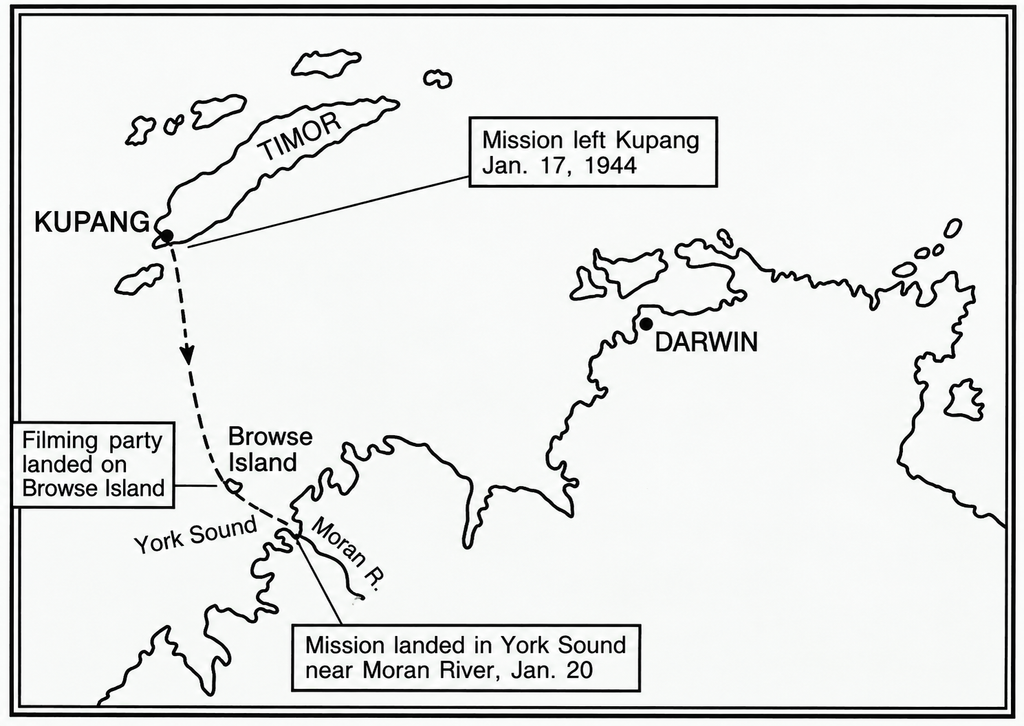
Japanese forces also used the occupied Netherlands East Indies as a base for reconnaissance towards Australia. In January 1944, a small party from the Japanese Matsu Kikan intelligence organisation sailed from Kupang in occupied Timor and secretly reconnoitred the remote Kimberley coast of Western Australia. The episode provides an interesting reverse perspective on the clandestine operations being mounted from Australia into Timor and other parts of the occupied NEI. There is no evidence identified that NEFIS was directly involved in detecting or countering this particular mission.
Note on terminology
The designation NEFIS III is widely used for the secret-intelligence and special-operations component of NEFIS. The Australian War Memorial identifies the third NEFIS subsection as Secret Intelligence and Special Operations (SI&SO) and attributes the service’s reconnaissance patrols to NEFIS III.
However, wartime organisational arrangements changed considerably between 1942 and 1945.
Operations originating with the earlier NEI Section of IASD/AIB should therefore not automatically be retrospectively labelled NEFIS III operations simply because personnel, responsibilities or later historical accounts connected them with NEFIS.
This Research Portal distinguishes between these organisational phases wherever the surviving evidence allows.
Sources and further reading
- Further research: Explore related articles, personal stories and archival sources in the DACC Research Portal – Dutch and Indonesian Intelligence and Special Operations from Australia during WWII.
- Australian War Memorial – Allies in adversity: Australia and the Dutch in the Pacific War – NEFIS. Particularly useful for the development of NEFIS in Australia, Dutch military cooperation and intelligence operations.
- National Archives of Australia, A3269, H7, Item 235285, NEI Section IASD.
- Victoria Collections, Official History of Operations and Administration of Special Operations – Australia (SOA), Vol. 2 Operations.
- Australian War Memorial, AWM54 424/2/1, Allied Intelligence Bureau Report No. 496, Netherlands Forces Intelligence Service Project – Information, Java to Flores, including information re-organisation of collaboration established by the Japanese, July 1945.
- University of leiden, Access 2.10.62, archives of the Marine and Leger Inlichtingendienst, Netherlands Forces Intelligence Service and Centrale Militaire Inlichtingendienst.
- J.J. Nortier, Acties in de Archipel: De intelligence-operaties van NEFIS-III in de Pacific-oorlog (1985). A specialist Dutch study of NEFIS III intelligence operations in the Pacific War; it is also listed among the principal publications in the Nationaal Archief NEFIS/CMI inventory.
- Dr Jonathan (Jack) Ford – Allies in a Bind: Australia and the Netherlands East Indies in the Second World War. An important study of wartime Australian–Dutch relations, including intelligence cooperation and the tensions surrounding Allied and Dutch objectives.
- L. de Jong, Het Koninkrijk der Nederlanden in de Tweede Wereldoorlog, Deel 11c: Nederlands-Indië III (1986). The major Dutch official historical treatment of the final wartime period in the Netherlands East Indies and another work identified in the Nationaal Archief finding aid.
- Netherlands Ministry of Defence, historical account of Korps Insulinde and the Dutch commando tradition.
Personnel associated with Dutch and NEI special operations in Australia
The following list has been preserved from earlier DACC research into Dutch and Netherlands Indies personnel associated with wartime intelligence and special operations in Australia. The original list described them collectively as “Dutch WWII Commandos”; however, this terminology is too broad, as the individuals had different national backgrounds, organisational affiliations and operational roles. The list is retained here as a research resource and will be progressively reviewed and expanded as further information becomes available.
Any information on these veterans would be welcomed by Cees Beyer (c.e.abeyer@home.nl)