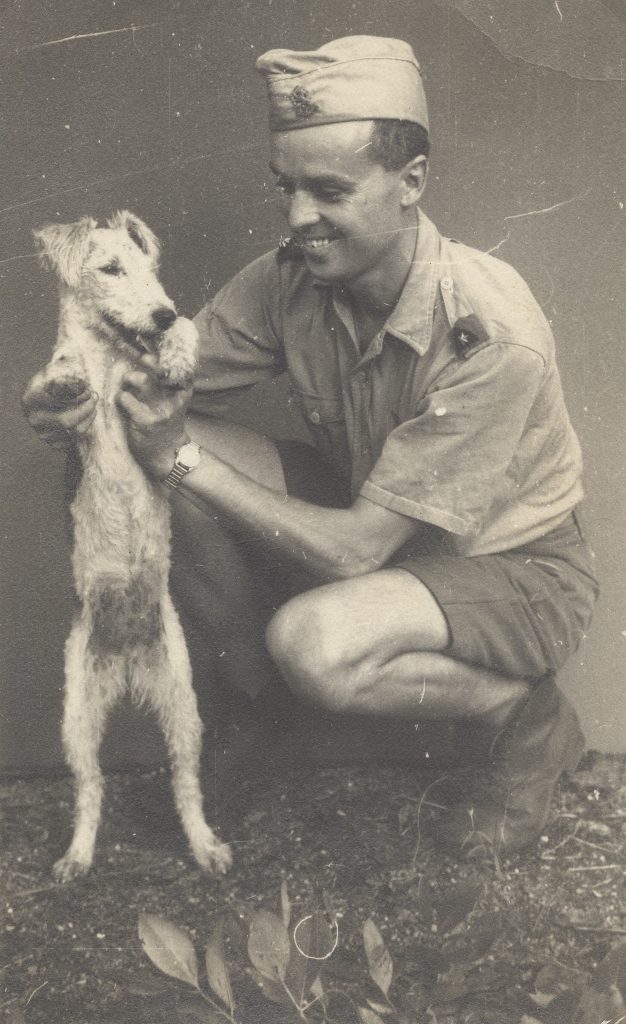
The story of Guus Hagers and his wife Lienke brings together several important aspects of the Dutch wartime presence in Australia: the airmen stranded after the fall of Java, the establishment of Dutch squadrons under Australian operational control, the emotional strain experienced by personnel whose families remained in occupied territory, and the extraordinary efforts made to communicate with people inside Japanese internment camps.
Guus escaped to Australia and became an operational pilot with No. 18 (Netherlands East Indies) Squadron RAAF. Lienke remained on Java, where she was eventually interned by the Japanese. For more than three years, neither knew with certainty whether the other was still alive.
From Java to Australia
Before the Pacific War, Guus trained as a teacher before volunteering for the Military Aviation Service of the Royal Netherlands East Indies Army—the ML-KNIL. He became a military pilot and flew Glenn Martin bombers during the defence of the Netherlands East Indies.
In February 1942, Guus was sent to Australia as part of a Dutch group preparing to receive newly acquired North American B-25 Mitchell bombers. The aircraft and personnel were to assemble at Archerfield Airport in Brisbane.
Before these arrangements could be completed, Japanese forces overran Java. The capitulation of the Netherlands East Indies in March 1942 left Guus and other Dutch airmen stranded in Australia. They had little reliable information about the fate of the families they had left behind.
For Guus, the uncertainty centred upon Lienke. He did not know whether she was safe, where she was living or whether she had survived the invasion.
Dutch airmen in Australia
The Dutch airmen who reached Australia were determined to return to operations, but the formation of an effective squadron took time. Problems involving aircraft, training, accommodation, command arrangements and relations between Dutch and Allied authorities contributed to growing frustration.
No. 18 (Netherlands East Indies) Squadron was formed in Canberra in April 1942 and became a combined Dutch–Australian formation. Its North American B-25 Mitchell bombers were supplied by the United States, its operational personnel were predominantly Dutch and Indonesian, and many of its ground staff and aircrew were Australian.
After an extended period of preparation, the squadron moved north and commenced operations against Japanese positions and shipping in the Netherlands East Indies. Its missions included bombing, reconnaissance, anti-shipping patrols and attacks on Japanese installations, particularly in Timor and the eastern islands.
Guus became recognised as an experienced and determined pilot. Published accounts credit him with more than one hundred operational missions and record that he received the Dutch Vliegerkruis and Bronzen Kruis for his wartime service.
Separation, frustration and Guus’s diary
Guus kept a wartime diary in which he recorded not only operational events but also the strained atmosphere within the Dutch forces in Australia. His writing described delays in becoming operational, dissatisfaction with senior officers, political divisions and the desperation of airmen who had been separated from their families.
Some men even discussed taking an aircraft and attempting to return to Java. In late 1942, three members of No. 18 Squadron were arrested and accused of planning to fly a Mitchell to the occupied Netherlands East Indies. The resulting proceedings became one of the most controversial episodes in the history of the squadron.
Guus’s diary is important because it records how at least some of the airmen understood the episode: not simply as disloyalty, but as the product of poor morale, family separation and a serious breakdown in confidence between aircrew and their commanders.
The case and the wider conditions within the squadron are examined separately in Between duty and desperation: the treason case within No. 18 (NEI) Squadron in 1942.
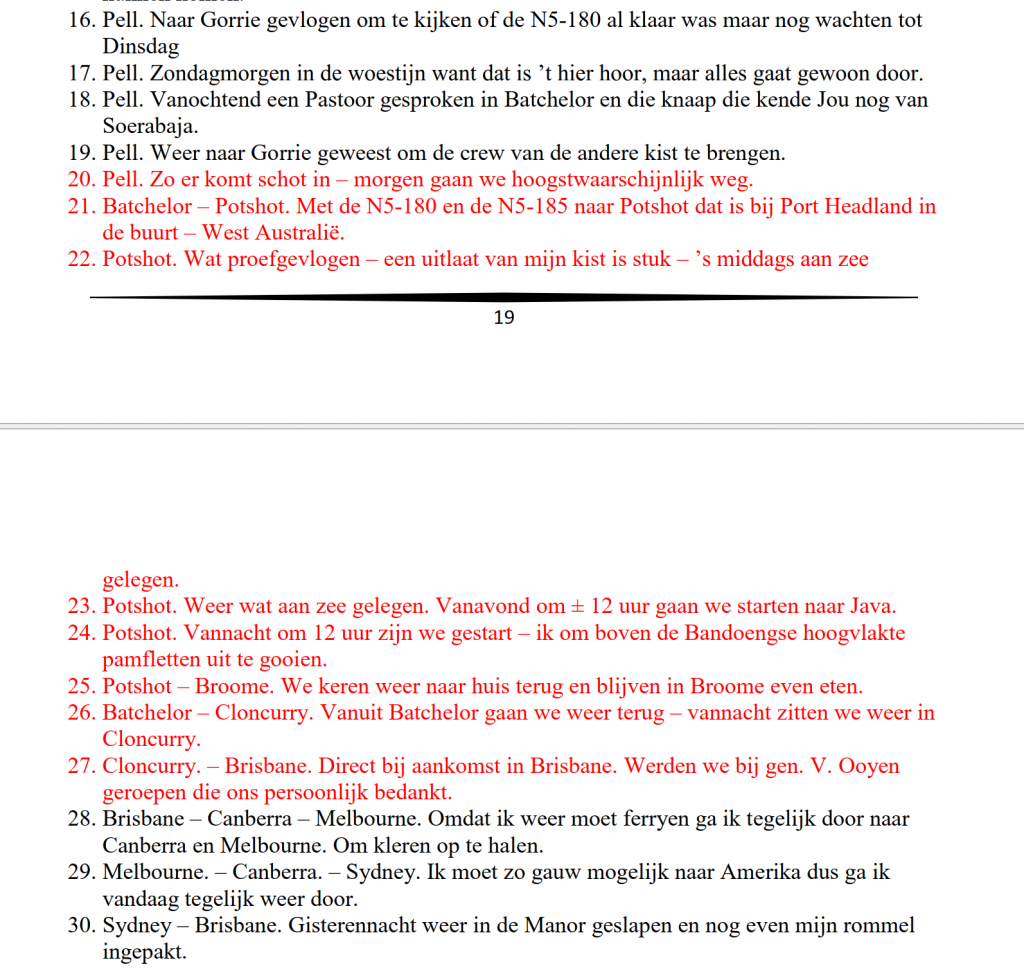
Extracts from Guus Hagers’ wartime diary
Guus Hagers kept a diary during his wartime service in Australia. His entries provide a rare personal perspective on the Dutch military aviation community in exile. He wrote about the prolonged delays before No. 18 Squadron became fully operational, disagreements within the squadron, dissatisfaction with senior officers and the distress experienced by airmen whose families remained in the Japanese-occupied Netherlands East Indies.
The diary also records discussions among airmen who considered taking an aircraft and attempting to return to Java. Hagers’ observations help explain the atmosphere in which three members of No. 18 Squadron were subsequently arrested and accused of treason.
These are personal and sometimes strongly expressed contemporary observations. They reflect Hagers’ experiences, opinions and emotional state at the time and do not necessarily represent the views of every member of the squadron. They should be read alongside the squadron’s official history and the recollections of other personnel.
The following extracts have been retained because they preserve Hagers’ own voice and provide evidence of the personal pressures experienced by Dutch airmen serving in Australia.
Lienke under Japanese occupation
While Guus was serving in Australia, Lienke remained on Java. Like thousands of other Dutch and Indo-European civilians, she was eventually confined in Japanese internment camps.
Conditions deteriorated as the occupation continued. Overcrowding, inadequate food, disease, forced labour and arbitrary punishments made survival increasingly difficult. Communication with the outside world was severely restricted, and Lienke had no reliable way of discovering whether Guus was still alive.
The experiences of Guus and Lienke represent two very different dimensions of the same war. Guus faced the hazards of long-range operational flying, while Lienke endured hunger, confinement and constant uncertainty inside occupied Java.
The B-25 Mitchell “Lienke”
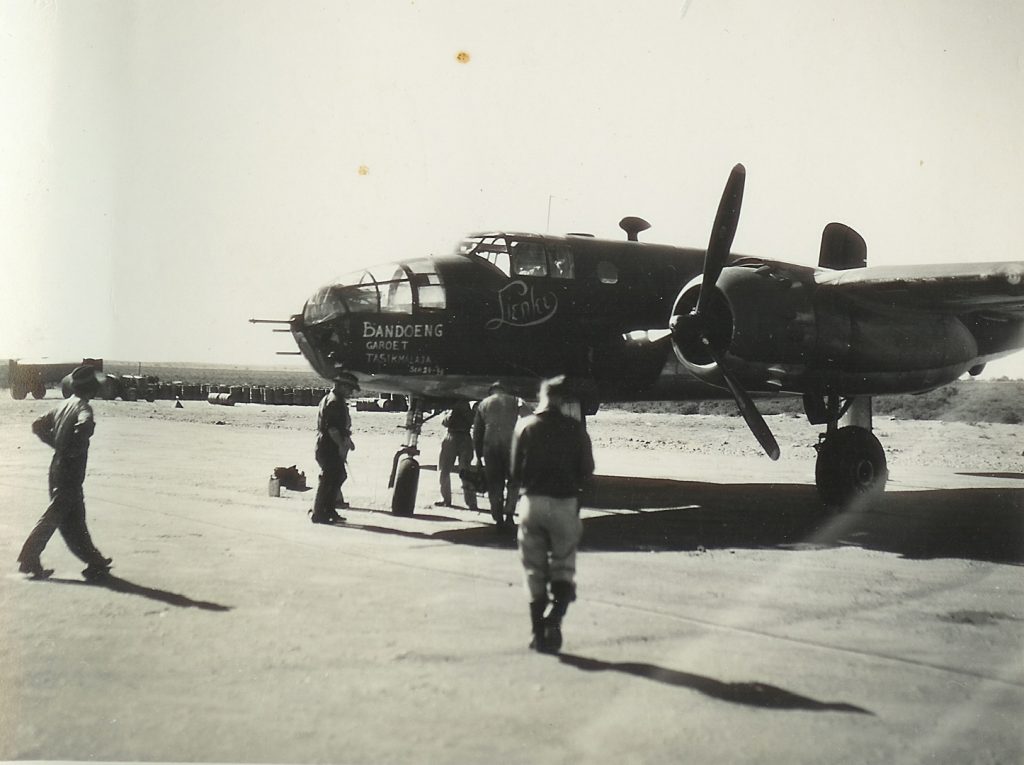
Guus’s separation from his wife became associated with the B-25 Mitchell N5-185, which carried the name Lienke.
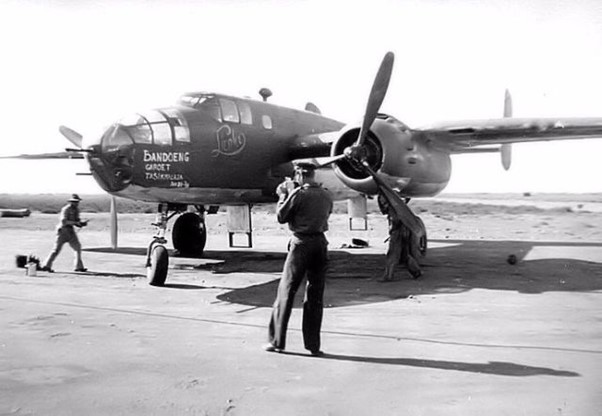
The aircraft was one of two Mitchells adapted for exceptionally long flights from Australia to Java. The modifications included additional fuel tanks, removal of equipment and much of the armament, and other measures intended to reduce weight and increase range.
These changes enabled the aircraft to undertake leaflet-dropping and photographic-reconnaissance flights over the occupied Netherlands East Indies.
The technical history, modifications, operations and unresolved postwar fate of the aircraft are described in B-25 Mitchell N5-185 “Lienke”: a Dutch aircraft, a personal story.
Flights over Java
During 1944 and 1945, specially modified B-25s operated from Western Australia on long-range missions over Java. They distributed Allied information and propaganda, photographed Japanese-controlled areas and demonstrated to the population and civilian internees that Allied aircraft could once again reach the island.
For Guus, these flights also had an intensely personal meaning. Accounts of the missions describe small messages bearing Lienke’s name being carried over Java in the hope that one might reach her—or at least provide some indication that Guus was still alive and searching for her.
One such message was reportedly found and preserved by a woman in an internment camp who did not initially understand its significance. Only many years later, after the story of Guus and Lienke became more widely known, was its meaning recognised.
The wider planning, aircraft modifications and psychological-warfare objectives of these operations are covered in WWII propaganda flights from Australia to Java.
Guus was not the only squadron member who tried to obtain information about a loved one. Navigator Ros van Loggem’s efforts to locate Anneke form a closely related personal account, told in Ros and Anneke van Loggem: a parallel story of love and war in the Pacific.
Guus Hagers’ wartime diary
Guus’s wartime diary provides a personal account of life among the Dutch airmen in Australia. It covers operational preparations, disagreements within the squadron, concern for families in occupied territory and his frequently critical observations about Dutch military and political leadership.
As a contemporary personal record, the diary reflects Guus’s own experiences, opinions and emotional state. It should therefore be read alongside the official history of No. 18 Squadron and the recollections of other squadron personnel.
The following document contains extracts or abstracts from Guus Hagers’ wartime diary.
Reunion and life after the war
Guus and Lienke survived the war and were eventually reunited. Their return to one another, however, did not mean that the effects of the preceding years disappeared. Both carried experiences that were difficult to communicate, even to each other.
Guus continued his military service for several years but found the transition from wartime operational flying to civilian life difficult. After leaving military service, he and Lienke emigrated to the United States.
Guus continued flying and found employment as an agricultural pilot. In 1952, he was killed in an aircraft accident in Oregon while undertaking crop-spraying work.
Lienke survived him by many years. She later remarried and lived in California, where she became known as Linda Duncan-Buriks.
Het vergeten verhaal

The history of Guus and Lienke was reconstructed from Guus’s wartime diary, Lienke’s recollections and surviving family and archival material. Their experiences formed the basis of the Dutch-language book Het vergeten verhaal: een onwankelbare liefde in oorlogstijd by Charles den Tex and Anneloes Timmerije.
The book is a historical novel rather than a documentary military history. It draws upon real diaries, recollections, people and historical events, but dialogue and some scenes were reconstructed by the authors.
The underlying experiences are nevertheless real: a pilot stranded in Australia, a woman imprisoned on Java, years without reliable communication and the uncertain prospect of ever seeing one another again.
Memory and significance
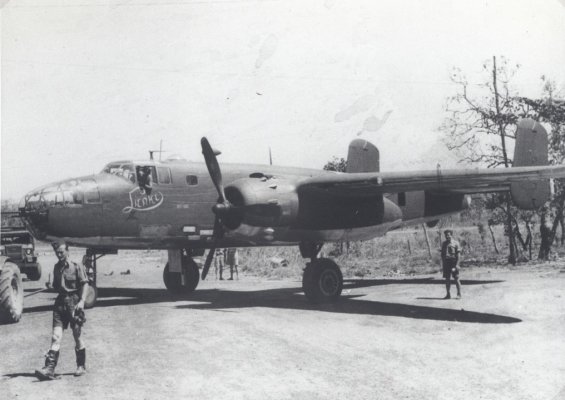
The story of Guus and Lienke gives a human face to the history of No. 18 Squadron and to the wider Dutch–Australian wartime relationship.
It shows that the squadron’s aircraft carried not only bombs, cameras and leaflets, but also the hopes of airmen searching for the families they had been forced to leave behind.
Guus’s diary also preserves an important perspective on the Dutch military community in Australia. It records the frustrations, political divisions and personal anguish that are not always visible in official operational histories.
The story is therefore both an account of military aviation and a record of separation, endurance and the lasting personal consequences of war.
The aircraft linked to these missions was the B-25 Mitchell N5-185, which carried the name “Lienke” after Guus Hagers’ wife. Towards the end of the war, the aircraft was modified for long-distance leaflet operations, with much of its armament and other equipment removed and additional fuel capacity installed.
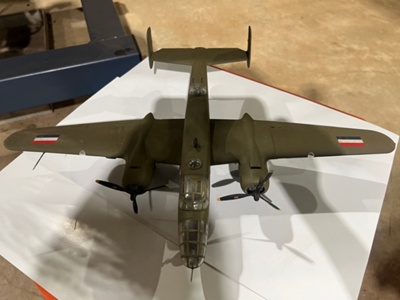
The story continues to be remembered in Australia through a small model of N5-185 “Lienke” displayed at the Darwin Aviation Museum. The model provides a tangible link between Guus and Lienke’s personal story, the wartime operations of No. 18 Squadron and the squadron’s long association with northern Australia.
Related DACC articles
- No. 18 (Netherlands East Indies) Squadron RAAF
- B-25 Mitchell N5-185 “Lienke”: a Dutch aircraft, a personal story
- WWII propaganda flights from Australia to Java
- Between duty and desperation: the treason case within No. 18 (NEI) Squadron in 1942
- Ros and Anneke van Loggem: a parallel story of love and war in the Pacific
- DACC Air Force Research Portal
Sources and further reading
- Charles den Tex and Anneloes Timmerije, Het vergeten verhaal: een onwankelbare liefde in oorlogstijd, De Geus, 2014.
- Guus Hagers’ wartime diary and Lienke Hagers’ recollections, as used in Het vergeten verhaal.
- Netherlands Institute of Military History, Military Aviation KNIL photographic collection.
- O.G. Ward, De Militaire Luchtvaart van het KNIL in de jaren 1942–1945, National Library of Australia catalogue record.
Paul Budde (updated October 2026)