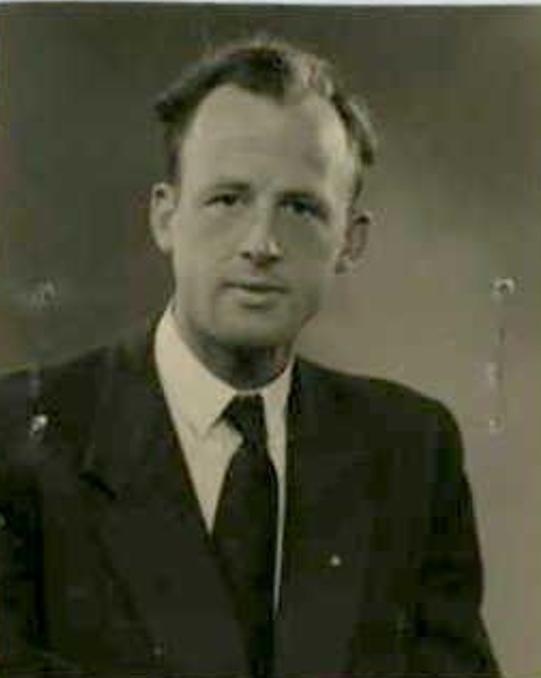
Jan Volker was born on 2 August 1923 in Haarlemmerliede en Spaarnwoude, North Holland. He was the son of engineer and company director Johan Hendrik Volker and Marianne Euphemia Catharina Kruiver. His mother died in 1929, when Jan was only five years old. The Volker family had earlier roots in the Sliedrecht region, an area closely associated with Dutch dredging, hydraulic engineering and maritime enterprise.
At the age of 26, Jan left the Netherlands aboard the KLM flight that departed Amsterdam on 22 June 1950. His Australian passenger card records his occupation as “Technical Supervisor” and links him with Australian Dredging and General Works. He arrived in Australia on 27 June and initially lived at 24 Power Street, Williamstown, close to the company’s dredging operations.
Jan was unmarried when he arrived. Later records place him at the tin-mining settlement of South Mount Cameron in north-eastern Tasmania, suggesting that his technical career subsequently took him beyond Victoria. An Australian naturalisation document also records that he had a child born in Tasmania, although the available material does not identify his partner or provide further details about the family.
A referee supporting Jan’s application described him as a person of good character and a respected member of his district. The application shows that he was taking formal steps to establish a permanent future in Australia. Further research may reveal more about his work in Tasmania, his family and whether he ultimately obtained Australian citizenship.
Jan Volker’s story illustrates how the organised dredging migration of 1950 could become the beginning of a much wider Australian life. What started with a technical appointment in Williamstown apparently led to work, family life and settlement in Tasmania.
This account is based on genealogical, migration and archival research undertaken by Fred Stuy. His research has helped identify Jan Volker among the passengers associated with the Dutch dredging project and reconstruct his early years in Australia.
Related DACC research
Read the broader account of the organised migration in From Sliedrecht to Williamstown: Dutch dredging workers in post-war Australia.
For related migration accounts, personal stories and company histories, visit the Dutch Dredging in Australia Research Portal.