This is the first article in the three-part DACC Research Series The Netherlands Government-in-Exile, Australia and the Netherlands East Indies during the Second World War. The series examines the constitutional and political foundations of the Dutch administration in exile: the authority retained in London, the position of the Netherlands East Indies and the different outlook that developed among senior Indies administrators working from Australia.
Introduction
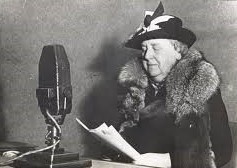
When Germany invaded the Netherlands in May 1940, Queen Wilhelmina and the Dutch Government escaped to London. Although the Netherlands itself was occupied, the Government-in-Exile remained internationally recognised as the legitimate government of the Kingdom of the Netherlands.
The Kingdom, however, extended far beyond Europe. It also included Suriname, Curaçao and the Netherlands East Indies—the vast colony that occupied most of the Indonesian archipelago.
For almost two years after the German invasion, the Netherlands East Indies continued to be administered from Batavia. This created an unusual wartime situation: the constitutional government of the Kingdom operated from London, while its largest and economically most important overseas territory remained under a colonial administration thousands of kilometres away in Southeast Asia.
Japanese conquest of the Netherlands East Indies (NEI) in early 1942 divided Dutch authority still further. Senior Indies officials, military personnel and administrative services were dispersed across Australia, Ceylon, the United States and other Allied territories. Australia became the principal base from which much of the civil and military machinery connected with the Netherlands East Indies was reconstructed.
The central question was no longer simply how Dutch sovereignty could be preserved. It was also how constitutional authority in London could be translated into effective administration and military cooperation on the other side of the world.
One Kingdom, different wartime realities
Constitutionally, there was no uncertainty about the position of the Netherlands Government-in-Exile. Queen Wilhelmina remained Head of State, while the government led by Prime Minister Pieter Sjoerds Gerbrandy exercised the recognised powers of the Kingdom.
The Government-in-Exile could conclude treaties, maintain diplomatic relations, direct Dutch armed forces and represent the Kingdom within the Allied coalition. Its authority extended formally to the Netherlands East Indies.
In practice, however, the distance between London and Batavia created difficulties.
The government in London viewed the war primarily through the experience of German occupation and the struggle for the liberation of the Netherlands. Its immediate priorities were preserving Dutch sovereignty, supporting resistance in occupied Europe and ensuring that the Netherlands retained its place among the Allied powers.
The administration in Batavia confronted a different threat. It had to manage the defence of an enormous archipelago, respond to increasing Japanese pressure and maintain relations with Britain, Australia and the United States. Its officials possessed direct experience of Indonesian society, regional politics and the strategic realities of Southeast Asia.
These were not rival governments. The administration in Batavia remained constitutionally subordinate to the Netherlands Government-in-Exile. Nevertheless, distance, disrupted communications and different wartime priorities gave the Indies administration considerable practical responsibility.
The collapse of the Netherlands East Indies
Japan’s entry into the war in December 1941 transformed this already complicated arrangement.
The rapid fall of British, American and Dutch positions across Southeast Asia culminated in the surrender of the Netherlands East Indies in March 1942. Governor-General A.W.L. Tjarda van Starkenborgh Stachouwer and many senior Dutch military and civil officials became prisoners of war.
Others escaped to Australia, among them Lieutenant Governor-General Dr Hubertus van Mook and Dr Charles Olke van der Plas. They brought with them administrative experience and claims to authority, but little of the physical machinery normally required to govern a territory.
Government records, personnel and financial resources were scattered. Military units had suffered heavy losses. Ships and aircraft had escaped to different Allied bases. Thousands of civilians and servicemen required accommodation, employment and support.
The Netherlands had now lost control of both its European homeland and its principal Asian territory. Yet the Kingdom remained a recognised Allied state, and the Dutch still intended to participate in the war and eventually restore administration in the Netherlands East Indies.
Australia becomes the administrative centre
Australia offered the location, infrastructure and political security needed to reconstruct the Indies administration.
In April 1942, the Netherlands East Indies Commission for Australia and New Zealand was established in Melbourne. It became the principal body responsible for coordinating the civil, economic and administrative interests of the Netherlands East Indies from Australian territory.
The Commission was not initially a separate sovereign government-in-exile. Its authority remained derived from the Netherlands Government-in-Exile in London. Nevertheless, it gradually assumed many of the functions required to keep the Indies administration operating.
Dutch organisations in Australia dealt with:
- military reorganisation;
- aviation and shipping;
- intelligence operations;
- finance and purchasing;
- refugee welfare;
- information and public diplomacy;
- civil administration; and
- preparations for the return to the Netherlands East Indies.
This brought Australian departments and military authorities into regular contact with Dutch and Indies officials on a scale that neither country had anticipated before the war.
On 24 March 1942, Prime Minister John Curtin sent Australia’s official message of welcome to Gerbrandy in London as head of the Netherlands Government-in-Exile. This reflected Australia’s initial recognition that constitutional authority over Dutch affairs, including those involving the Netherlands East Indies, remained with London.
As the war continued, however, Australian officials increasingly dealt directly with the Indies representatives operating from Melbourne and later Brisbane. This did not remove London’s authority, but it recognised that many practical decisions could not be managed effectively from Europe.
Constitutional authority and operational necessity
The Dutch wartime organisation consequently developed around several centres of power.
London remained the constitutional and diplomatic centre of the Kingdom. Queen Wilhelmina and Gerbrandy’s government possessed international recognition and the legal authority to determine Dutch policy.
Australia became the principal centre for the reconstruction of the Netherlands East Indies administration. Van Mook, Van der Plas and their colleagues possessed regional knowledge, administrative experience and direct access to the Australian Government.
Military operations were conducted within the wider Allied command system. After the establishment of the South West Pacific Area in 1942, General Douglas MacArthur’s headquarters exercised operational authority over Allied forces in the region. Dutch military objectives therefore had to be coordinated with American and Australian strategic priorities.
These arrangements worked because each centre performed a different function. They also created confusion, competition and occasional mistrust.
London wanted to ensure that practical cooperation in Australia did not develop into an independent Indies foreign policy. Indies administrators wanted sufficient freedom to deal effectively with Australia and the Allied command. Australia increasingly regarded developments in the Netherlands East Indies as matters directly affecting its own national security and therefore sought a greater voice in discussions about the region’s future.
The resulting tensions were not evidence that the wartime partnership had failed. They reflected the extraordinary difficulty of maintaining constitutional authority, civil administration and military cooperation after the territories concerned had been occupied and the machinery of government dispersed across several continents.
From Commission to government-in-exile
The Netherlands East Indies Commission developed into an increasingly substantial administrative organisation. Departments were reconstructed, civil servants recruited and plans prepared for the re-establishment of administration in liberated territories.
In 1944, the organisation was formalised as the Netherlands East Indies Government-in-Exile. Its administrative and military centre shifted towards Brisbane, with important elements operating from Camp Columbia in Brisbane and other locations across the city.
This formal government-in-exile should be distinguished from the Commission that had operated from Melbourne since 1942. The Commission represented an important stage in rebuilding the displaced Indies administration, but the official Netherlands East Indies Government-in-Exile belonged to the later phase of the war.
Even after this development, ultimate constitutional authority remained with the Netherlands Government-in-Exile in London. The administration in Australia exercised delegated authority and performed the practical work needed to prepare for liberation and the proposed restoration of Dutch rule.
Two Dutch perspectives
The geographical division of authority also revealed a deeper difference in outlook.
Gerbrandy and ministers in London were primarily concerned with maintaining the constitutional unity and sovereignty of the Kingdom. After the occupation of both the Netherlands and the Netherlands East Indies, they were understandably cautious about developments that might weaken Dutch authority.
Van Mook, Van der Plas and other senior Indies administrators shared a commitment to the Kingdom, but their experience led them to recognise that the Netherlands East Indies could not simply return unchanged to its pre-war political structure.
They were not advocates of immediate Indonesian independence. Their proposals remained within a Dutch constitutional framework. Nevertheless, they believed that Indonesians would require a greater role in government and that the post-war relationship between the Netherlands and the Indies would have to be based on greater autonomy and partnership.
The difference was therefore not simply between colonialism and independence. It was a debate within the Dutch administration about how the Kingdom could survive in a rapidly changing Asian and international environment.
Conclusion
The Dutch wartime presence in Australia can only be understood by distinguishing between constitutional authority and administrative reality.
The Netherlands Government-in-Exile in London remained the internationally recognised government of the Kingdom. The Netherlands East Indies administration reconstructed in Australia did not replace that authority. It translated it into practical organisation within the Pacific theatre.
This division enabled Dutch civil, military and diplomatic activities to continue despite the occupation of both the Netherlands and the Netherlands East Indies. At the same time, it created tensions between London’s determination to preserve the Kingdom, the more reform-minded outlook of some Indies administrators, Australia’s growing regional interests and the operational priorities of the Allied command.
The next two articles examine the leading figures on either side of this relationship: Queen Wilhelmina and Prime Minister Gerbrandy in London, followed by Van Mook and Van der Plas and their Indisch vision of the post-war Netherlands East Indies.
Sources
Ford, Jack, Allies in a Bind: Australia and the Netherlands East Indies in the Second World War (University of Queensland doctoral thesis; published edition, 1997).
Additional sources include Australian, Dutch and Indonesian archival material and published scholarship. References will be reviewed and expanded following the publication of the revised edition of Dr Ford’s work.
DACC Research Series
The Netherlands Government-in-Exile, Australia and the Netherlands East Indies during the Second World War
This three-part series examines the constitutional and political foundations of the Dutch administration in exile: the authority retained by the Netherlands Government-in-Exile in London and the different perspective that developed among Netherlands East Indies administrators working from Australia.
- A Kingdom divided by war: Australia, the Netherlands Government-in-Exile and the Netherlands East Indies
- The Netherlands Government-in-Exile: Gerbrandy, Queen Wilhelmina and constitutional authority
- Van Mook, Van der Plas and the Indisch vision for the post-war Netherlands East Indies
Related DACC series
Australia and the Netherlands East Indies on the eve of war
This four-part series examines how Australia and the Netherlands East Indies moved from limited contact towards direct diplomatic, military, public and economic cooperation immediately before the Pacific War.
The Challenge of Government in Exile: Wartime Cooperation and an Enduring Dutch–Australian Partnership
This six-part series continues the story by examining how the displaced Netherlands East Indies administration was reconstructed in Australia, how it worked with Australia and the Allied command, and how wartime cooperation was affected by the political transformation of Indonesia after 1945.
Dutch–Australian wartime cooperation
This six-part thematic series explores particular political, administrative and practical issues within the wartime relationship, including neutrality, tensions between London and the Indies administration, constitutional reform, Indonesian voices, wartime purchasing and the development of Dutch–Australian diplomatic relations.