This is the third article in the DACC Research Series The Netherlands Government-in-Exile, Australia and the Netherlands East Indies during the Second World War. The series explores the political, constitutional and administrative relationship between the Netherlands Government-in-Exile, Australia and the Netherlands East Indies during the Second World War.
Introduction
The previous article examined the Netherlands Government-in-Exile in London and the constitutional authority it retained over the Kingdom during the Second World War. Under Queen Wilhelmina and Prime Minister Pieter Gerbrandy, that government remained the internationally recognised authority over the Netherlands, Suriname, Curaçao and the Netherlands East Indies.
Yet constitutional authority was only one part of the wartime story.
The Japanese conquest of the Netherlands East Indies transformed Australia into the principal refuge for Dutch civil and military authorities in the Pacific. With the approval of the Australian Government, the Netherlands East Indies Commission for Australia and New Zealand was established in Melbourne in April 1942 under the leadership of Lieutenant Governor-General Dr Hubertus van Mook. Its task was to rebuild the administration of the Netherlands East Indies from Australian soil and to coordinate with Australian authorities and the Allied command in the South West Pacific.
This relocation did more than change geography. It also exposed Dutch administrators to a different political environment. Increasingly working alongside Australian ministers, officials and military planners, Van Mook and his colleagues found themselves discussing the future of the Netherlands East Indies in a country whose views on colonialism were beginning to diverge from those traditionally held in Europe.
Among the senior Indies officials who reached Australia, two figures were especially important: Van Mook and Dr Charles Olke van der Plas.
Both men were loyal to the Netherlands Crown. Neither was an Indonesian nationalist. Both remained committed to the continuation of the Kingdom. Yet they also understood, more clearly than many ministers in London, that the Netherlands East Indies could not simply return to its pre-war form.
Their outlook reflected what might be called an Indisch administrative perspective: shaped by long experience in the Indies, embedded in the colonial system, but more aware of Indonesian society and of the need for post-war reform than many metropolitan Dutch politicians.
An Indies rather than metropolitan perspective
Van Mook and Van der Plas belonged to a group of senior officials whose careers had been formed in the Netherlands East Indies rather than in the Netherlands itself.
This distinction matters.
The Netherlands Government-in-Exile in London viewed the war primarily through the experience of occupied Europe. Its priorities were national survival, Allied recognition, resistance to Germany, liberation of the Netherlands and the restoration of the Kingdom after victory.
The Indies administrators faced a different reality. They had governed a large, complex and politically changing Asian society. They had direct experience of Indonesian nationalism, Islamic organisations, Chinese commercial communities, Indo-European society, regional elites and the economic structures of the colony.
They were not anti-colonial figures. They were part of the colonial administration and benefited from its structures. However, their experience led them to recognise that the old relationship between the Netherlands and the Indies would require significant reform.
This did not necessarily bring them into direct conflict with London, but it did create a different set of assumptions.
London asked: how can the Kingdom be preserved?
Van Mook and Van der Plas increasingly asked: how can Dutch authority be restored in a Netherlands East Indies that has changed profoundly during the war?
Van Mook and constitutional reform
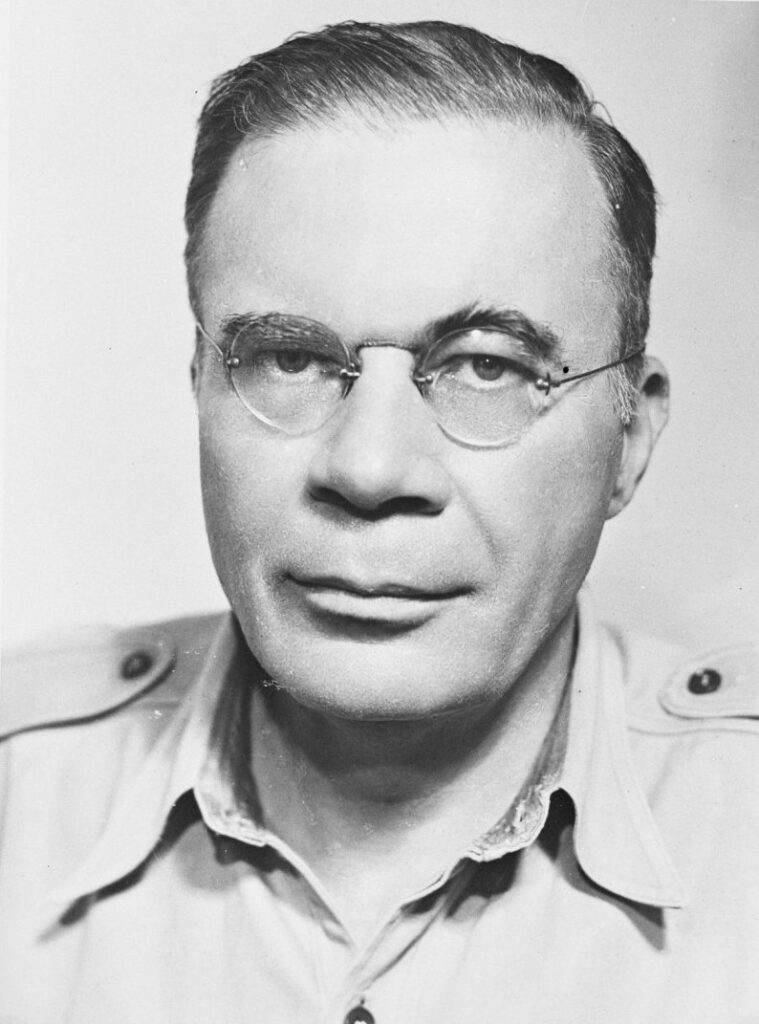
Hubertus van Mook was one of the most important Dutch colonial administrators of the twentieth century.
Before the war he had already argued that the Netherlands East Indies required greater political development and that Indonesians would need a larger role in the future administration of the country. He did not advocate Indonesian independence, but he understood that a purely European-controlled colonial structure was becoming increasingly difficult to sustain.
Van Mook believed that the post-war Kingdom would need to be reconstituted along more federal or commonwealth-like lines. The Netherlands, the Netherlands East Indies and the Caribbean territories would remain connected under the Crown, but the relationship would have to become more equal.
This vision found some support in Queen Wilhelmina’s December 1942 speech, in which she acknowledged that the Kingdom would require constitutional reform after the war. For Van Mook, that speech offered room for a more flexible post-war settlement.
For more conservative elements in London, however, reform could not be allowed to undermine Dutch sovereignty or the unity of the Kingdom.
This difference in emphasis would become increasingly significant.
Van der Plas and practical administration
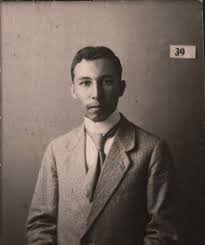
Charles Olke van der Plas was another key figure in the Indies administration.
Like Van Mook, Van der Plas had long experience in the Netherlands East Indies. He had served in senior administrative positions and possessed deep knowledge of Indonesian society, Islam, language and regional politics. His background made him especially valuable once the Dutch administration had to be rebuilt in exile.
Van der Plas was not merely a bureaucrat. He was a practical organiser and political intermediary. His experience enabled him to work across cultural and administrative boundaries in ways that many metropolitan Dutch officials could not.
In Australia, this became especially important.
After the fall of Java, the Netherlands East Indies administration had to be reconstructed almost from nothing. Civil servants, military officers, intelligence personnel, shipping officials and financial administrators were scattered across Australia and other Allied territories. The task was not simply to preserve Dutch authority in theory, but to rebuild enough of the Indies administration to make liberation and eventual restoration possible.
Van der Plas was central to that process.
The Stuw group and suspicion from London
The reformist outlook associated with Van Mook, Van der Plas and like-minded officials was often linked with the journal De Stuw, which had advocated social and constitutional reform in the Netherlands East Indies before the war.
To the Indies administrators, such reform was practical and necessary. To Gerbrandy and others in London, it could appear dangerous.
The Netherlands had already lost its European homeland to Germany and the Indies to Japan. In such circumstances, any suggestion that the Netherlands East Indies might develop a more autonomous political identity could be interpreted as a threat to the unity of the Kingdom itself.
This helps explain why Van Mook’s ideas were viewed with suspicion by some in London. The issue was not simply whether reform was desirable. It was whether reform might weaken Dutch sovereignty at the very moment when the Kingdom was fighting for survival.
Gerbrandy’s government could accept constitutional reform in principle. What it resisted was any development that might imply that the Netherlands East Indies possessed a separate international or political status outside the authority of the Netherlands Government-in-Exile.
Australia as the new administrative environment
The relocation of much of the Netherlands East Indies administration to Australia changed the political balance.
In London, Dutch policy was shaped by the war in Europe and by relations with Britain. In Australia, Dutch officials operated in a very different environment. They worked alongside Australian ministers, Australian departments, General Douglas MacArthur’s South West Pacific Area headquarters in Brisbane and Allied military organisations concerned with the Pacific War.
This practical setting mattered.
Australia was no longer simply a distant British dominion. After the fall of Singapore, it was becoming a more independent regional actor. Its government was deeply concerned with the future of the islands to its north, including Timor, New Guinea and the Netherlands East Indies. Australian officials increasingly regarded developments in the Indies not simply as Dutch colonial matters, but as issues directly affecting Australia’s own security.
Australia and the United States did not share the traditional European attachment to colonial empires. Their priorities were strategic rather than imperial. Although neither government advocated immediate Indonesian independence during the war, both increasingly recognised that some form of political change would be unavoidable after Japan’s defeat.
Living and working in Australia inevitably exposed Van Mook, Van der Plas and their colleagues to these discussions. They remained committed to Dutch sovereignty, but the Australian environment encouraged more open consideration of constitutional reform than might have been possible had the administration remained centred in Europe. Australia’s own growing confidence as an independent regional power, together with the influence of American thinking within MacArthur’s headquarters, formed part of the wider context in which Dutch policy evolved.
Van Mook and Van der Plas therefore found themselves operating in a political world very different from that of the Netherlands Government-in-Exile in London.
Their authority remained delegated from the Netherlands Government. But their day-to-day decisions were shaped by Australian geography, Allied military realities and the urgent need to prepare for the eventual return to the Indies.
Not nationalists, but not restorationists either
It is important not to misunderstand Van Mook and Van der Plas.
They were not Indonesian nationalists. They did not support the immediate independence of Indonesia. They remained committed to Dutch sovereignty and to the continuation of the Kingdom.
At the same time, they were not simple restorationists.
They did not believe that the pre-war colonial order could be re-established unchanged. Their proposed reforms remained within a Dutch imperial framework, but they recognised that the Netherlands East Indies had its own political development and that Indonesians would have to be given a greater role in the post-war order.
This placed them in a difficult position.
To Indonesian nationalists, their proposals did not go far enough.
To many Dutch conservatives, their proposals went too far.
To Australian officials, they increasingly appeared to be the Dutch representatives most capable of dealing with the practical realities of the Pacific War.
This intermediate position would define much of Van Mook’s wartime and post-war career.
The Indisch tragedy
There was also a human dimension to this story.
Many Dutch and Indo-European families had lived in the Indies for generations. For them, the Netherlands East Indies was not simply a colony; it was home. They were culturally and socially distinct from both metropolitan Dutch society and Indonesian nationalist movements.
The war placed this group in an impossible position.
During the Japanese occupation, many suffered internment, displacement and violence. After the proclamation of Indonesian independence in 1945, they were often regarded by Indonesian nationalists as part of the Dutch colonial order, even when their own identity was more complex. In the years that followed, many would leave Indonesia for the Netherlands, Australia and other countries.
This later tragedy should not be read back too simply into wartime policy. However, it helps explain why many Indies administrators viewed the future of the Netherlands East Indies with deep personal as well as political concern.
For them, the question was not only what would happen to Dutch sovereignty.
It was what would happen to the society in which they and their families had lived for generations.
Why their perspective mattered
The different perspective of Van Mook, Van der Plas and other Indies officials mattered because they became the people with whom Australia increasingly dealt.
The Netherlands Government-in-Exile in London retained constitutional authority. But the administration in Australia possessed proximity, expertise and operational relevance. It dealt with shipping, intelligence, military units, civil affairs, refugees, prisoners of war, finance and preparations for liberation.
In wartime, those practical functions mattered enormously.
Australia’s officials could not wait for every question to be resolved in London. MacArthur’s headquarters needed Dutch cooperation in the South West Pacific. Dutch military and civil organisations needed to function from Australian soil. The Netherlands East Indies Commission for Australia and New Zealand therefore became far more than an administrative convenience. It became the working centre of Dutch authority over the Indies in the Pacific.
This did not abolish the authority of London.
It did, however, create a new reality: the constitutional centre remained in London, while the practical centre of Dutch Indies administration increasingly operated from Australia.
Australia therefore became more than a place of refuge. It became the environment in which experienced Indies administrators could begin to rethink the future of the Netherlands East Indies while remaining loyal to the Netherlands Government-in-Exile. The interaction between Dutch experience, Australian strategic thinking and emerging Allied policy would become one of the defining features of the remainder of the war—and of the difficult years that followed.
Conclusion
Van Mook and Van der Plas represented a different Dutch perspective from that of the Netherlands Government-in-Exile in London.
They were not opponents of the Kingdom. They were loyal servants of it. But their long experience in the Netherlands East Indies led them to understand that post-war restoration would require reform, negotiation and adaptation.
That outlook placed them between several worlds: the Netherlands Government in London, the Australian Government, MacArthur’s Allied command, and the emerging Indonesian nationalist movement.
Their role helps explain why Australia became so important in the wartime Dutch story. The Netherlands East Indies administration in Australia was not merely carrying out orders from London. It was interpreting, adapting and implementing Dutch policy under the pressures of war in the Pacific.
The next article in this series turns to Australia itself: the fall of Singapore, the rise of American influence, Curtin’s strategic shift, Evatt’s diplomacy and the changing Pacific order that shaped Australia’s relationship with both the Netherlands Government-in-Exile and the Netherlands East Indies administration.
Sources
Ford, Jack, Allies in a Bind: Australia and the Netherlands East Indies in the Second World War (University of Queensland doctoral thesis; published edition, 1997). Page references will be added after verification against the published edition and updated where necessary following publication of the forthcoming revised edition currently being prepared by the Dutch Australian Cultural Centre in consultation with Dr Jack Ford’s family.
Additional sources include Australian, Dutch and Indonesian archival material and published scholarship.
DACC Research Series
The Netherlands Government-in-Exile, Australia and the Netherlands East Indies during the Second World War
This three-part series examines the constitutional and political foundations of the Dutch administration in exile: the authority retained by the Netherlands Government-in-Exile in London and the different perspective that developed among Netherlands East Indies administrators working from Australia.
- A Kingdom divided by war: Australia, the Netherlands Government-in-Exile and the Netherlands East Indies
- The Netherlands Government-in-Exile: Gerbrandy, Queen Wilhelmina and constitutional authority
- Van Mook, Van der Plas and the Indisch vision for the post-war Netherlands East Indies
Related DACC series
Australia and the Netherlands East Indies on the eve of war
This four-part series examines how Australia and the Netherlands East Indies moved from limited contact towards direct diplomatic, military, public and economic cooperation immediately before the Pacific War.
The Challenge of Government in Exile: Wartime Cooperation and an Enduring Dutch–Australian Partnership
This six-part series continues the story by examining how the displaced Netherlands East Indies administration was reconstructed in Australia, how it worked with Australia and the Allied command, and how wartime cooperation was affected by the political transformation of Indonesia after 1945.
Dutch–Australian wartime cooperation
This six-part thematic series explores particular political, administrative and practical issues within the wartime relationship, including neutrality, tensions between London and the Indies administration, constitutional reform, Indonesian voices, wartime purchasing and the development of Dutch–Australian diplomatic relations.